Ceramides for skin: the barrier, step by step
Ceramides are about half the weight of the lipids that hold the stratum corneum together. What that means when you choose a cream, and how to read the label.
Ceramides for skin are not an exotic active. They are the same lipids your own skin uses to build its barrier, and they make up roughly half the weight of the fats that fill the space between cells in the outermost layer. A ceramide cream does not give the skin a new function. It tops up material that is already supposed to be there.
That distinction matters in practice. An ingredient the skin makes for itself behaves differently from one it has never met: there is no biological sense in which you can overdose on it, and equally no reason to expect an overnight transformation. What follows is the whole ingredient, taken apart: what a ceramide is, where it comes from, how to read it on a label, and where in a routine it genuinely changes something.
- Ceramides account for about 50% by weight of the intercellular lipids in the stratum corneum, cholesterol for about 25% and free fatty acids for about 15% (Fujii, Cells 2021).
- Structure: a sphingoid base joined to a fatty acid by an amide bond. The name comes from the Latin cera, meaning wax.
- On a label look for “Ceramide” plus two letters: NP, AP, EOP, NS, AS. The first letter describes the fatty acid, the second the sphingoid base.
- Ceramide NP is the former Ceramide 3. The molecule did not change, only its INCI name did.
- In winter and with age there are measurably fewer intercellular lipids in the stratum corneum than in summer or in young skin (Rogers et al., Archives of Dermatological Research 1996).
- Ratios matter: in preclinical barrier-repair work, the mixture that performed best was ceramide-dominant, at a 3:1:1 molar ratio to cholesterol and free fatty acids.
- Pairing: ceramides do not clash with retinol, acids, vitamin C or niacinamide. They complete a routine rather than compete inside it.
What ceramides are and where skin gets them
A ceramide is a fatty molecule built from two parts: a sphingoid base (sphingosine, dihydrosphingosine, phytosphingosine or 6-hydroxysphingosine) and a fatty acid attached to it by an amide bond. From those few building blocks the skin assembles more than a thousand distinct molecules that differ in chain length and in the hydroxyl groups they carry. Chemically this is a family, not a single compound.
Production happens one floor below the surface. Keratinocytes in the granular layer pack lipid precursors, among them glucosylceramides and sphingomyelin, into vesicles called lamellar bodies. At the boundary between the granular and horny layers those vesicles empty into the space between cells, and enzymes convert the precursors into finished ceramides and fatty acids. Only there do they arrange themselves into ordered lipid sheets.
The ceramides used in cosmetics are now made synthetically or by fermentation, from plant or yeast-derived raw materials. A separate group are the pseudoceramides: molecules designed to mimic the three-dimensional shape of a ceramide without being an exact copy. In clinical papers they appear under supplier codes such as PC-104 or SLE66. What counts for the skin is whether a molecule fits the lamellar structure, not where it was sourced.
The basic chemistry of the group is set out in the ceramide entry on Wikipedia. We will stay with what it means for the face.
How ceramides for skin support the barrier
The epidermal barrier works like a brick wall. The bricks are corneocytes, the flattened dead cells of the stratum corneum. The mortar is a lipid mixture that fills the space between them and stacks into multiple sheets. That arrangement decides how much water escapes from the skin over a day and how easily irritants get in.
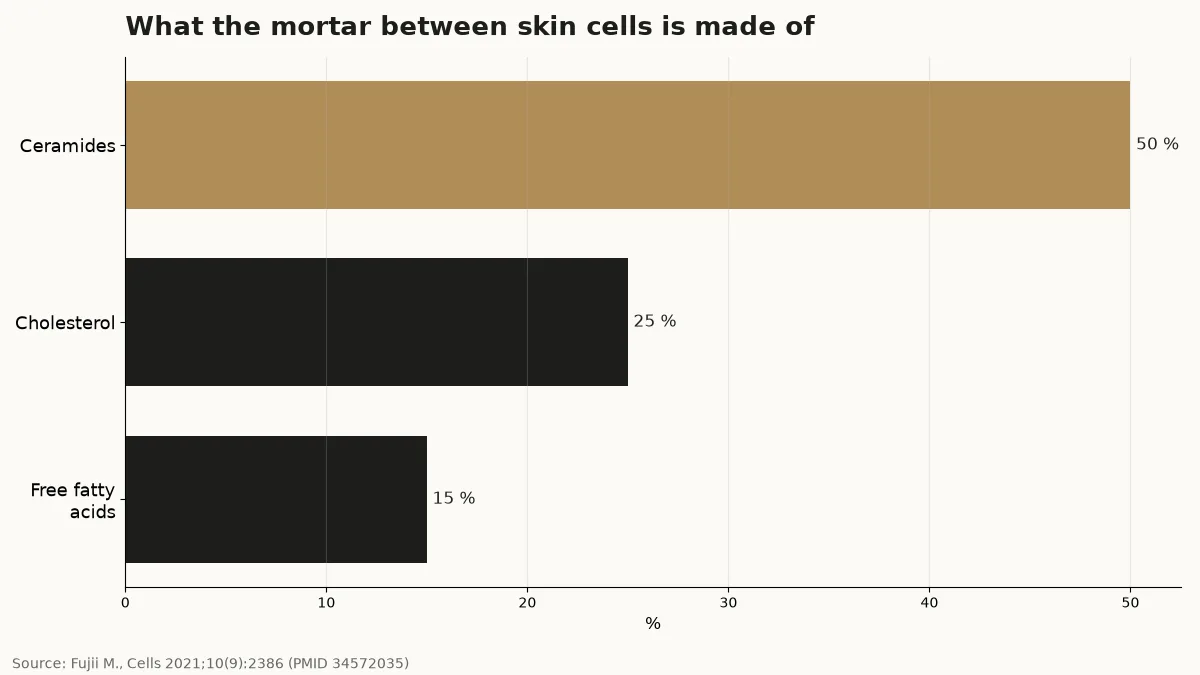
The proportions on the chart come from Masanori Fujii’s review in Cells (2021;10(9):2386). The paper makes two points at once: it gives those weight percentages, and it describes healthy stratum corneum as holding ceramides, cholesterol and fatty acids in a roughly equimolar ratio. The two statements are not in conflict. They are simply different ways of counting, and ceramides are the heavier molecules.
The same review describes a subgroup worth knowing: the EO ceramides, in which a very long omega-hydroxy acid carries a second fatty acid, usually linoleic. They represent between 6.4% and 14.8% of all ceramides in the stratum corneum, and their importance outweighs that share. The long chains thread through several lipid sheets at once and pin them together. They are also the first to suffer when the barrier is damaged.
This is where the tested ratio comes in. In preclinical studies of barrier recovery, the best result came from a ceramide-dominant lipid mixture at a 3:1:1 molar ratio with cholesterol and free fatty acids. A ceramide delivered on its own performs less well. That is why a well-built barrier cream rarely contains ceramides in isolation and almost always pairs them with cholesterol, fatty acids or plant oils rich in linoleic acid.
In people with atopic dermatitis this balance is disturbed: the ceramide-to-cholesterol ratio in the stratum corneum is significantly reduced. That is an observation from the dermatological literature, not an invitation to treat a diagnosed condition with a moisturiser. If you have atopic dermatitis or persistent inflammation, agree your routine with a dermatologist, because cosmetics sit alongside treatment rather than replacing it.
What drains the supply: age, winter and washing
The amount of lipid in the stratum corneum is not fixed. Rogers and colleagues collected it by tape stripping from the face, hands and legs of women of different ages and in different seasons. Their results in Archives of Dermatological Research (1996;288(12):765–770) showed two patterns that explain most winter complaints about skin.
First: the mass of intercellular lipids falls with age, and the composition of ceramide 1 (EOS) shifts as well. It loses linoleic acid and gains oleic acid, which changes the way the lipid sheets pack together. Second: at every site tested, lipid levels were markedly lower in winter than in spring and summer. The authors link this directly to the greater vulnerability of skin to barrier damage and dryness during the heating season.
On top of that sit everyday habits that remove lipids faster than the epidermis rebuilds them. Hot water dissolves fats better than lukewarm water does. High-pH soaps and cleansers wash away more than dirt. Exfoliating more than twice a week strips the horny layer faster than a new one forms. Dry indoor air pulls water out of the epidermis, and a dehydrated stratum corneum seals less well.
The practical conclusion runs the other way round from the usual one: before adding another jar to the shelf, look at what you can take away. Switching to lukewarm water and cutting face washing to under a minute costs nothing and sometimes does more for the barrier than a new product. We went through that mechanism in more detail in the piece on winter skincare and protecting the skin barrier.
Reading ceramides on an INCI list
“Ceramide NP” is not a brand code. It is an INCI name built on a simple system: the first letter (or pair of letters) describes the fatty acid, the second the sphingoid base. Once you know the shorthand, the ingredient list stops being a puzzle.
| On the label | What the letters mean | What to expect |
|---|---|---|
| Ceramide NP | N = non-hydroxy fatty acid, P = phytosphingosine | The most widely used cosmetic ceramide. Former name: Ceramide 3 |
| Ceramide AP | A = alpha-hydroxy fatty acid, P = phytosphingosine | Present in healthy stratum corneum, usually formulated alongside NP |
| Ceramide NS | N = non-hydroxy fatty acid, S = sphingosine | One of the more abundant natural fractions, rarer in cosmetics |
| Ceramide AS | A = alpha-hydroxy fatty acid, S = sphingosine | Found in multi-ceramide blends |
| Ceramide EOP / EOS | EO = esterified omega-hydroxy acid | The longest molecules, 6.4–14.8% of skin ceramides, they pin the lipid sheets together |
| Phytosphingosine, Sphingosine | the sphingoid base alone | A precursor rather than a finished ceramide. Often added beside them |
| Pseudoceramides | synthetic analogues, e.g. codes PC-104, SLE66 | They mimic the shape of a ceramide without being a copy |
The next question anyone reading a label asks is how much of it is in there. The label rarely says. Under article 19 of Regulation 1223/2009 ingredients are listed in descending order of weight, but anything below 1% may be listed in any order. Ceramides work at fractions of a percent, so a position near the end of the list is normal rather than a warning sign. More telling is whether cholesterol and a fatty acid or plant oil sit nearby.
Then there is the front of the pack. “Ceramide complex” tells you nothing until you turn the carton over, because the INCI list is the only part with no room for slogans. If you want to practise reading a full ingredient list rather than one family, our guide to hyaluronic acid and molecular weight on labels applies the same logic to a different group.
What to pair ceramides with, and what to avoid
Ceramides are among the most sociable ingredients in skincare. They have no pH that the rest of the routine must accommodate, they do not oxidise the way vitamin C does, and they do not deactivate anything else. The question is never whether you can combine them, only in what order.
| Ingredient | Pair with ceramides? | Time of day |
|---|---|---|
| Retinol | Yes. Ceramides applied after retinol ease the tight feeling of the first weeks | evening |
| AHA / BHA acids | Yes, but after the acids, not before. Exfoliate first, rebuild second | evening |
| Vitamin C | Yes. Serum first, the ceramide cream as the sealing layer on top | morning |
| Niacinamide | Yes, without reservation. Both work on the barrier from different angles | morning and evening |
| Hyaluronic acid | Yes. Hyaluronic acid on damp skin, ceramides over it so the bound water stays put | morning and evening |
| Sunscreen | Yes. Ceramides underneath, sunscreen always last in the morning | morning |
| High-pH soap, alcohol-heavy toners | No. Not a chemical clash, simply lipid stripping | — |
The only real limit is texture, not chemistry. Ceramides are usually carried in emulsions with a higher oil phase, so oily skin does better with lighter formulas applied thinly. Three rich creams layered on top of each other will not give you three times the barrier, only blocked pores and an uncomfortable film.
The mistake we see most often
Skin starts stinging after acids, so a ceramide cream joins the routine while the acids stay at the same frequency. The barrier never gets the quiet it needs. The order should be the other way round: cut the exfoliation first, then watch whether the cream alone is enough. A full turnover of the stratum corneum takes roughly four weeks, which is also how long the return to calm usually takes.
Which skin types benefit most
Ceramides for skin change most where the barrier is weak, and least where the issue is excess sebum. Four situations where their presence in a formula is a real argument for the product.
Dry and dehydrated skin. Tightness after washing, roughness across the cheeks, fine flaking around the nose. Here ceramides act at the root of the problem, because they replace material that is physically missing between cells.
Sensitised skin. After a retinol course, after acids, after a salon treatment, after a week in the mountains. Products that were fine last month suddenly sting. That is the barrier letting through more than it should.
Mature skin. Intercellular lipid mass declines with age, as Rogers and colleagues measured. A ceramide cream will not stop the clock, but it does top up a deficit that can be quantified.
Skin in winter. The heating season stacks three factors: lower lipid levels in the stratum corneum, dry indoor air and hot showers. Moving to a richer cream from November to March is, for many people, the only adjustment a routine needs.
Oily and combination skin have ceramides in the barrier too, and can lose them just as easily through aggressive cleansing. The difference is the vehicle: look for light gel-creams rather than rich balms. With diagnosed skin conditions, in pregnancy, or while using prescribed dermatological treatment, discuss your routine with a doctor or dermatologist.
The barrier, step by step: morning and evening
Ceramides rarely need a step of their own. They usually arrive inside a cream, so the useful question is what happens before and after it. Here is the sequence that works for a compromised barrier.
Morning:
- Wash with lukewarm water and a gentle cleanser, for well under a minute. On very dry skin, water alone is enough in the morning.
- Serum on slightly damp skin, if you use vitamin C or humectants.
- Day cream with ceramides, applied thinly and pressed in rather than rubbed.
- Sunscreen as the final skincare step. In winter too, since UVA passes through cloud and glass.
Evening:
- Remove make-up and sunscreen with an oil or milk cleanser if you have worn either.
- Cleanse properly, again with lukewarm water.
- The active step: retinol or acids, never both on the same night. On irritated skin, skip it for a few days.
- Night cream with ceramides. The skin rebuilds its own lipids more actively overnight, so material from outside arrives at a useful moment.
Two rules save a good deal of disappointment. Change one thing at a time, because with three new products you will not know which one helped and which one stung. And give a routine four weeks before judging it, since that is how long a full stratum corneum turnover takes.
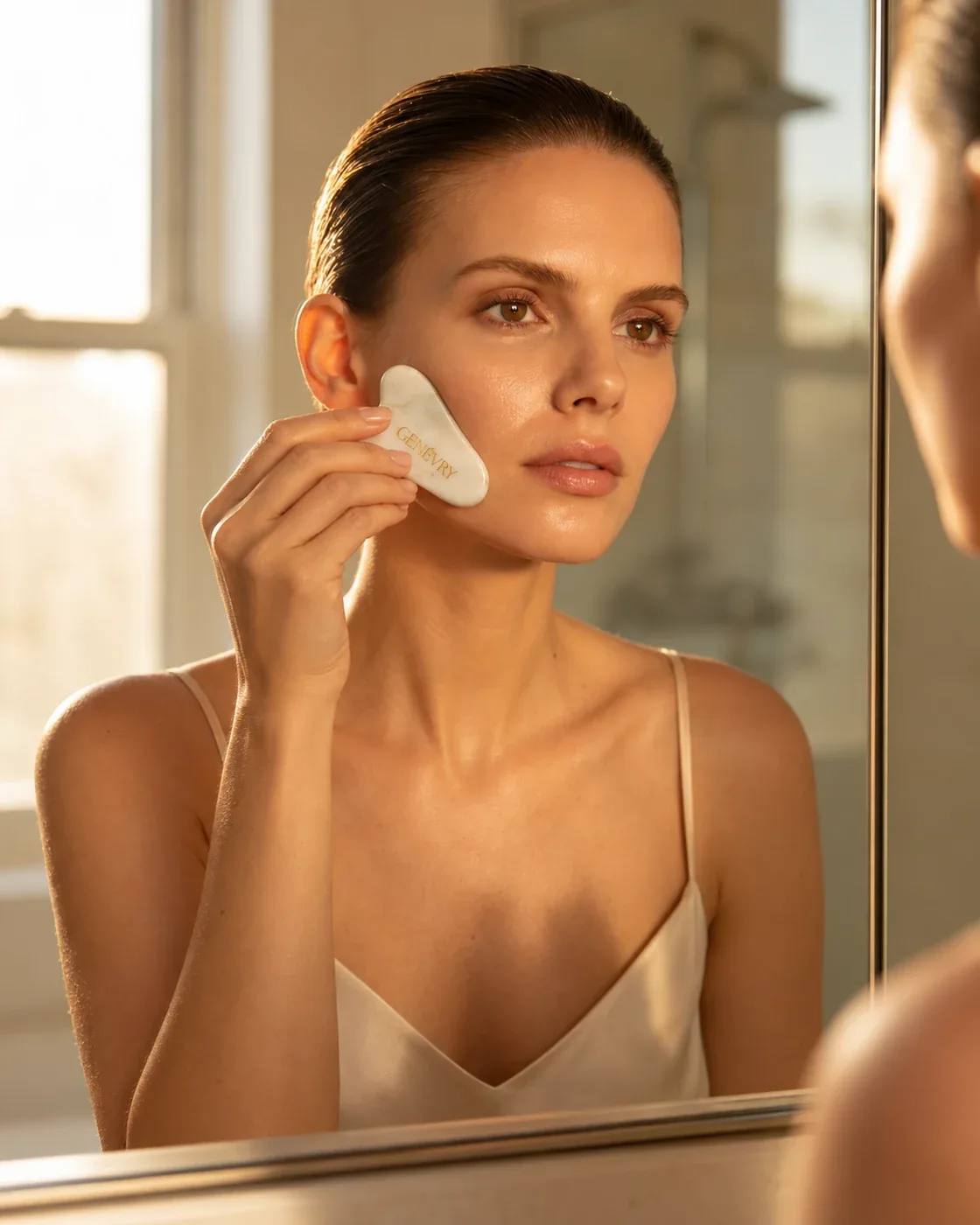
Fitting ceramides into a ritual with GENÉVRY
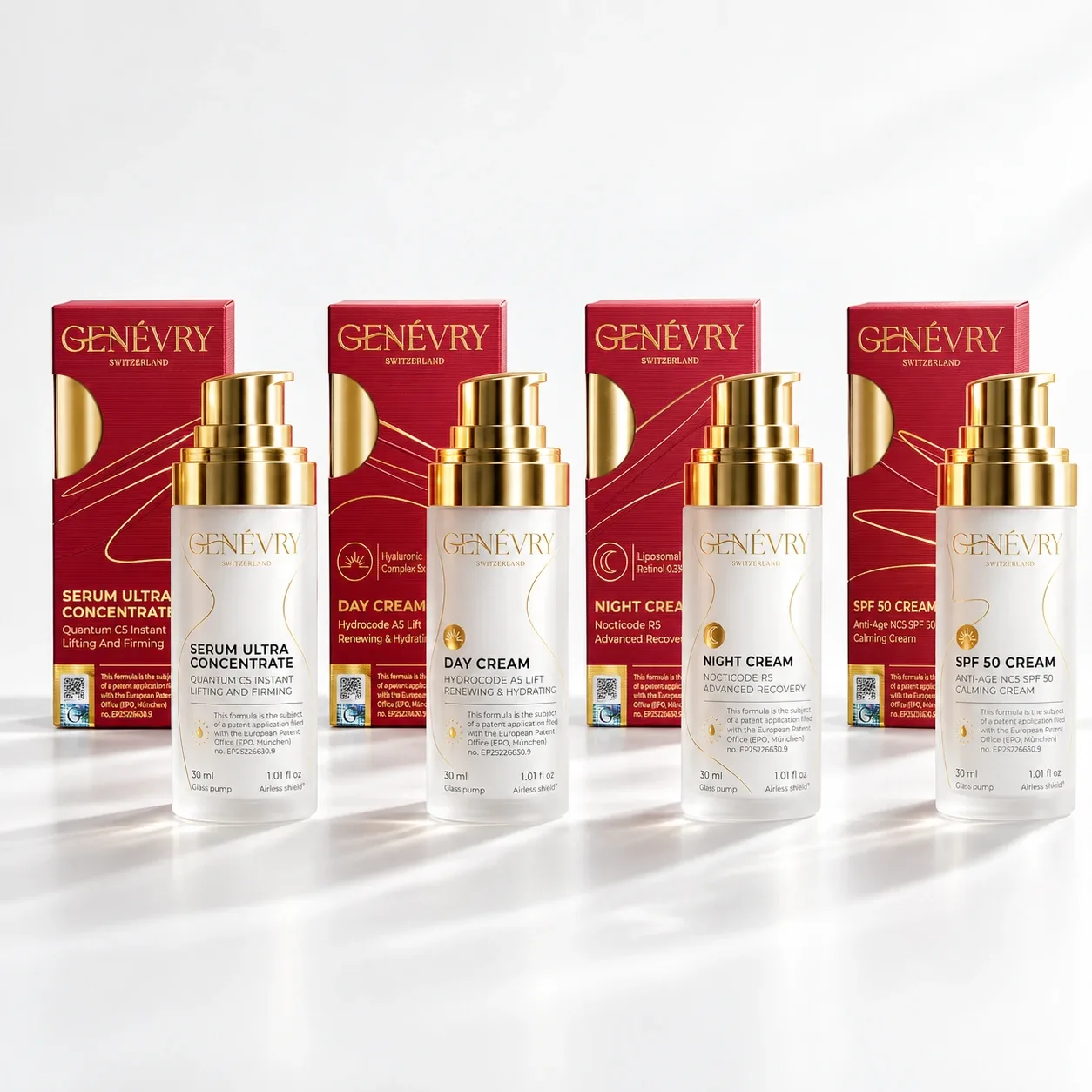
Ceramides belong to the palette of ingredients described in the GENÉVRY formulation materials, in the section on barrier care. What any individual formula contains is set out in the INCI list on the carton and on the product page. That is the only binding source, and it is worth treating every brand the same way, ours included.
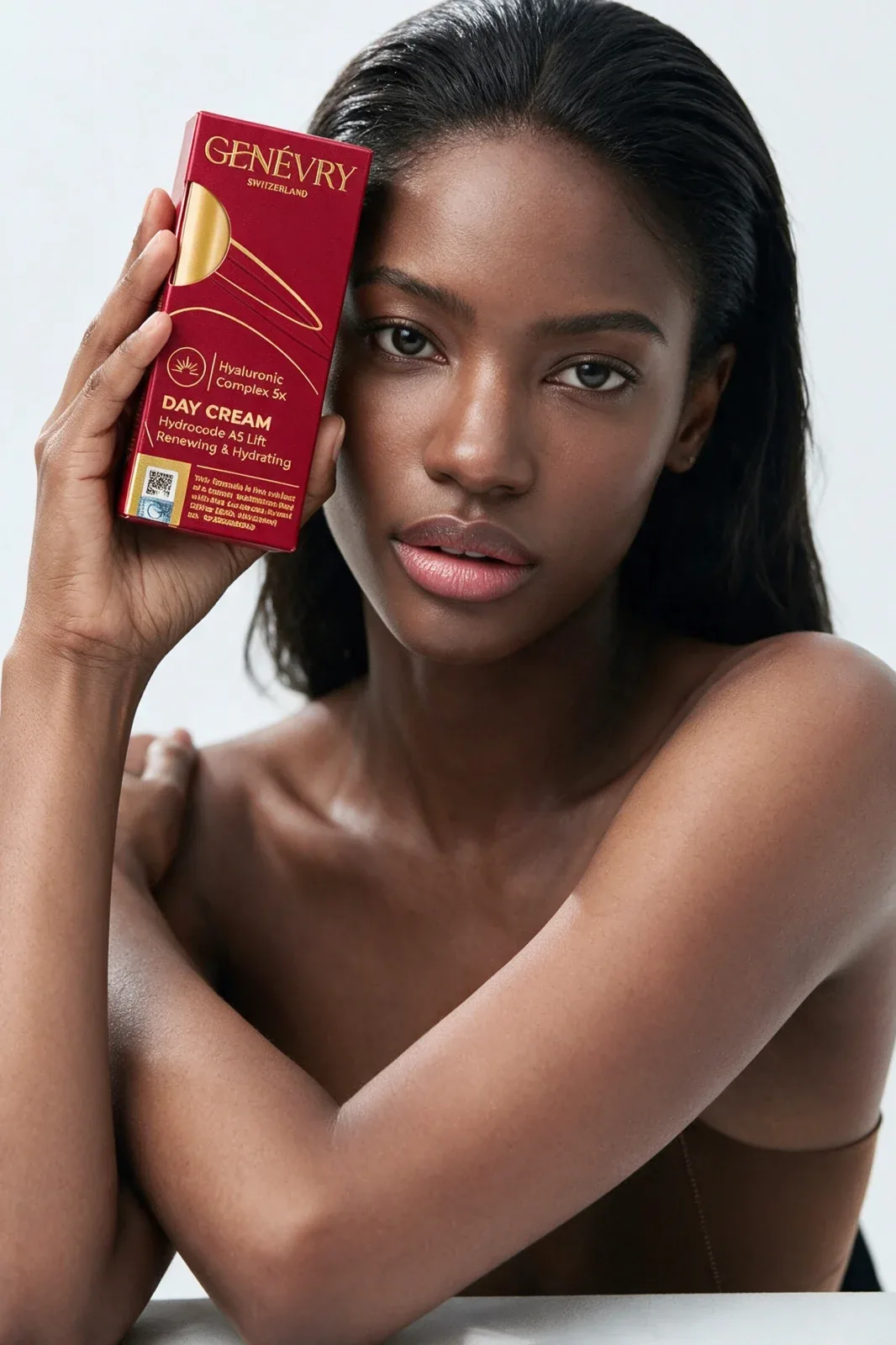
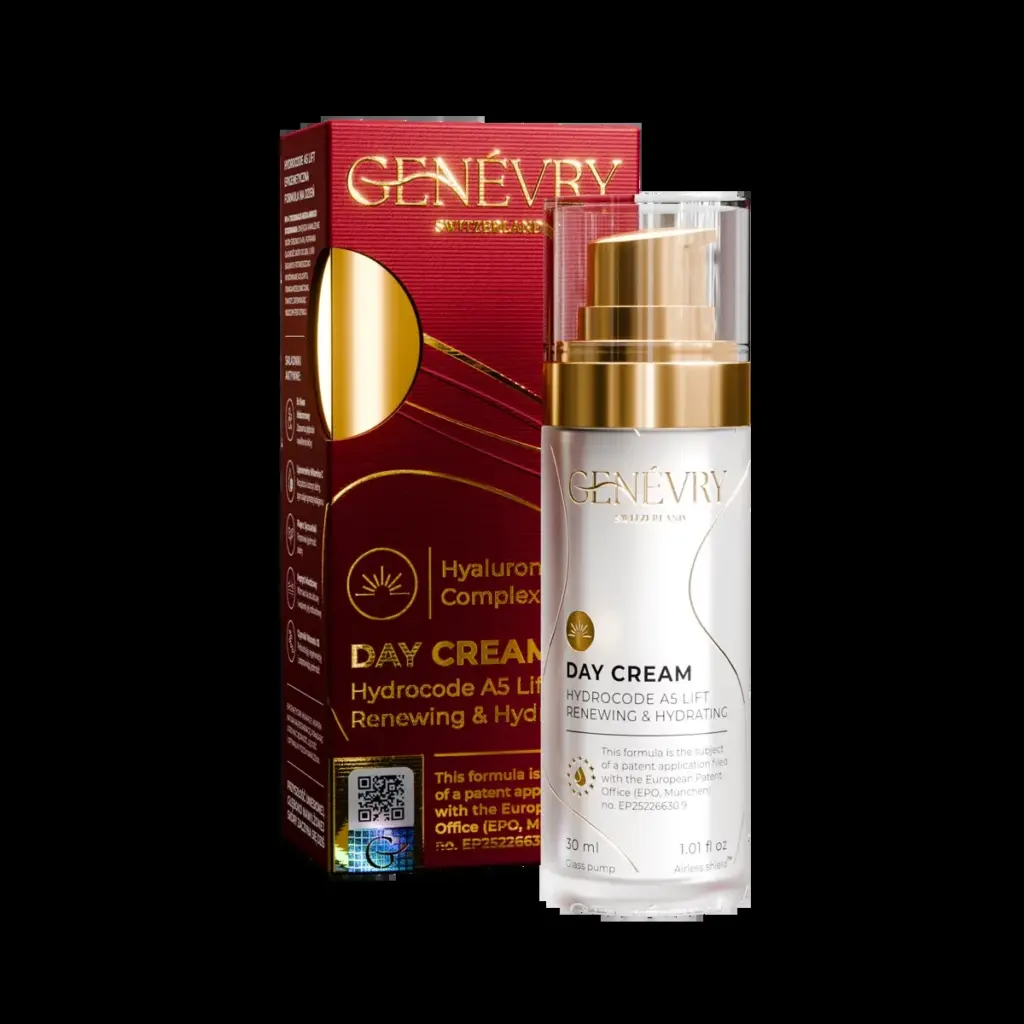
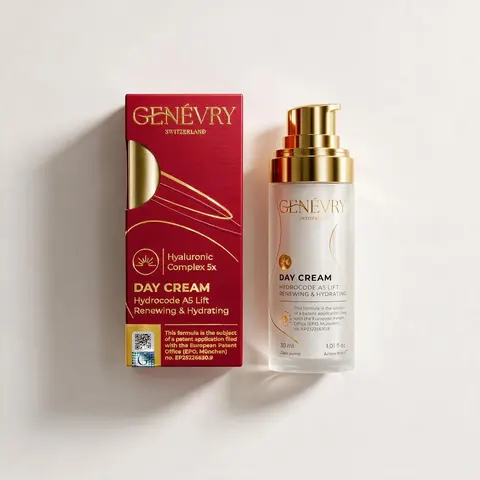
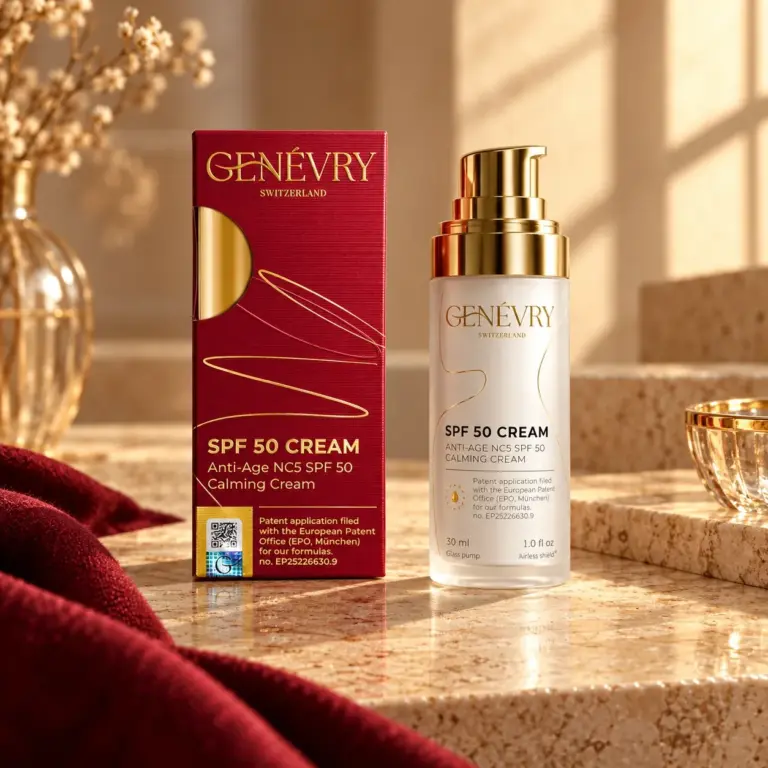
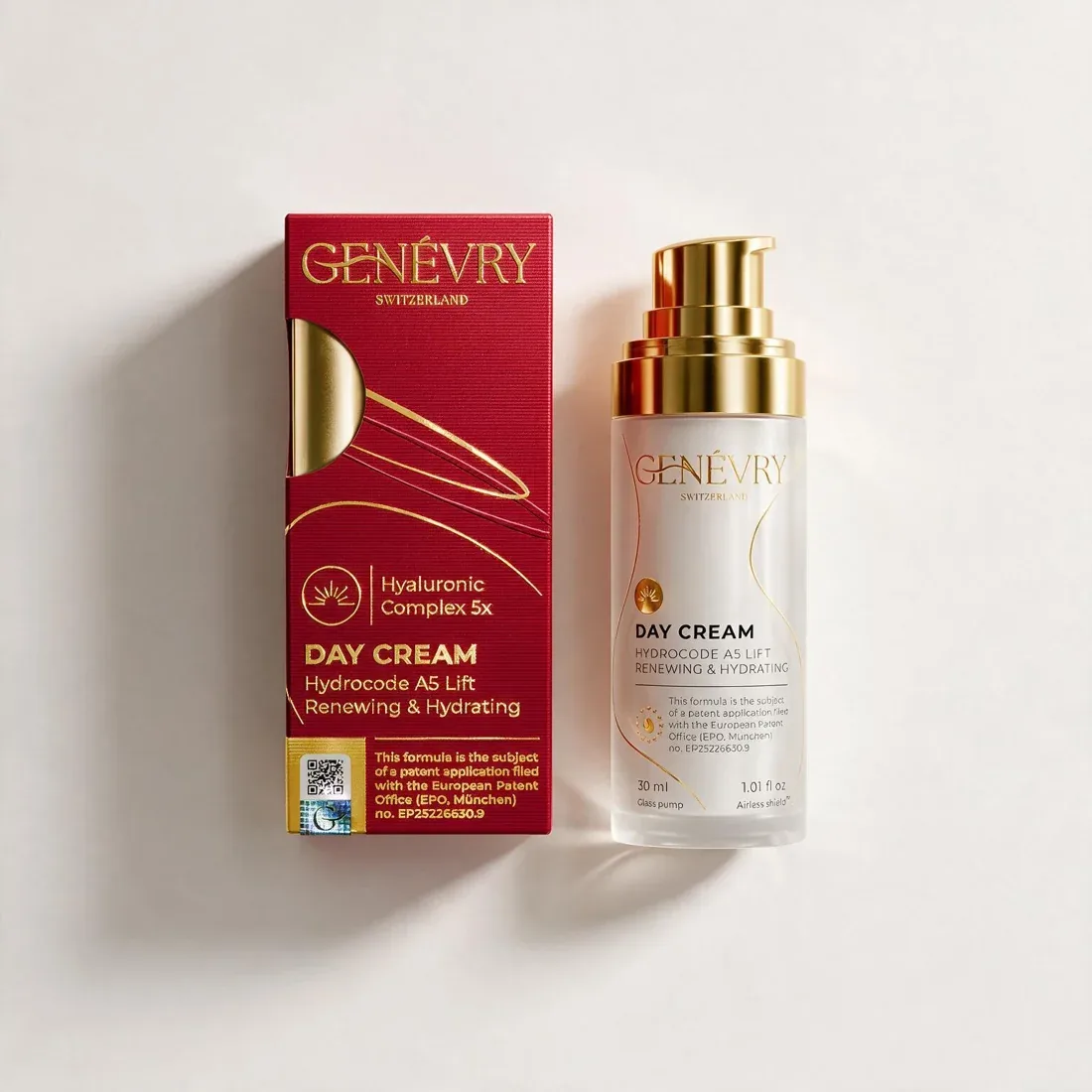
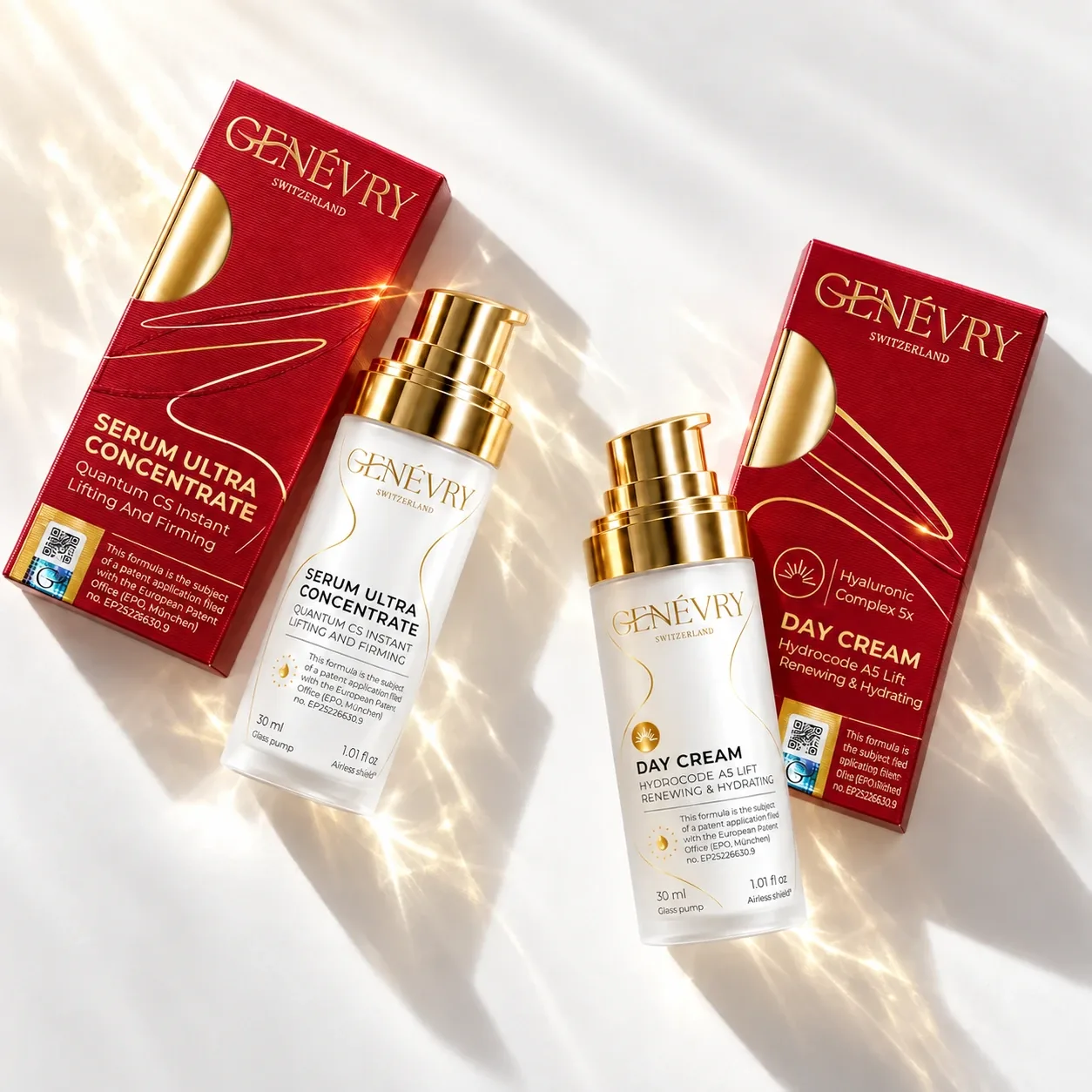
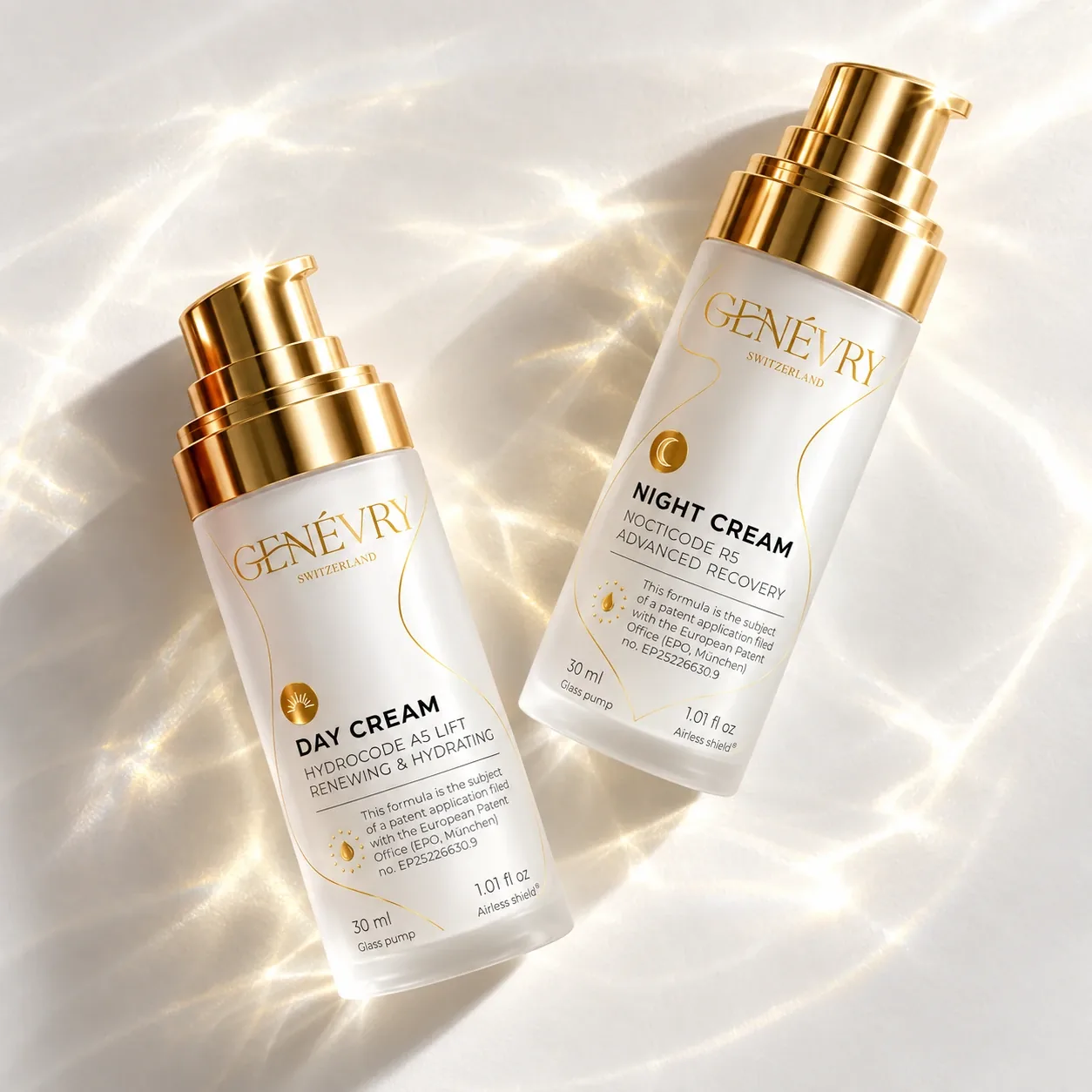
Hydrocode A5 Lift (genevry.com) is a Swiss day cream in a 30 ml airless bottle, designed as the second step of the morning ritual, after the serum. In instrumental testing of this formula, mean skin hydration rose by 41% after four weeks of regular use (Corneometer CM 825, n=10). The formula is the subject of patent application EP25226630.9 (patent pending).
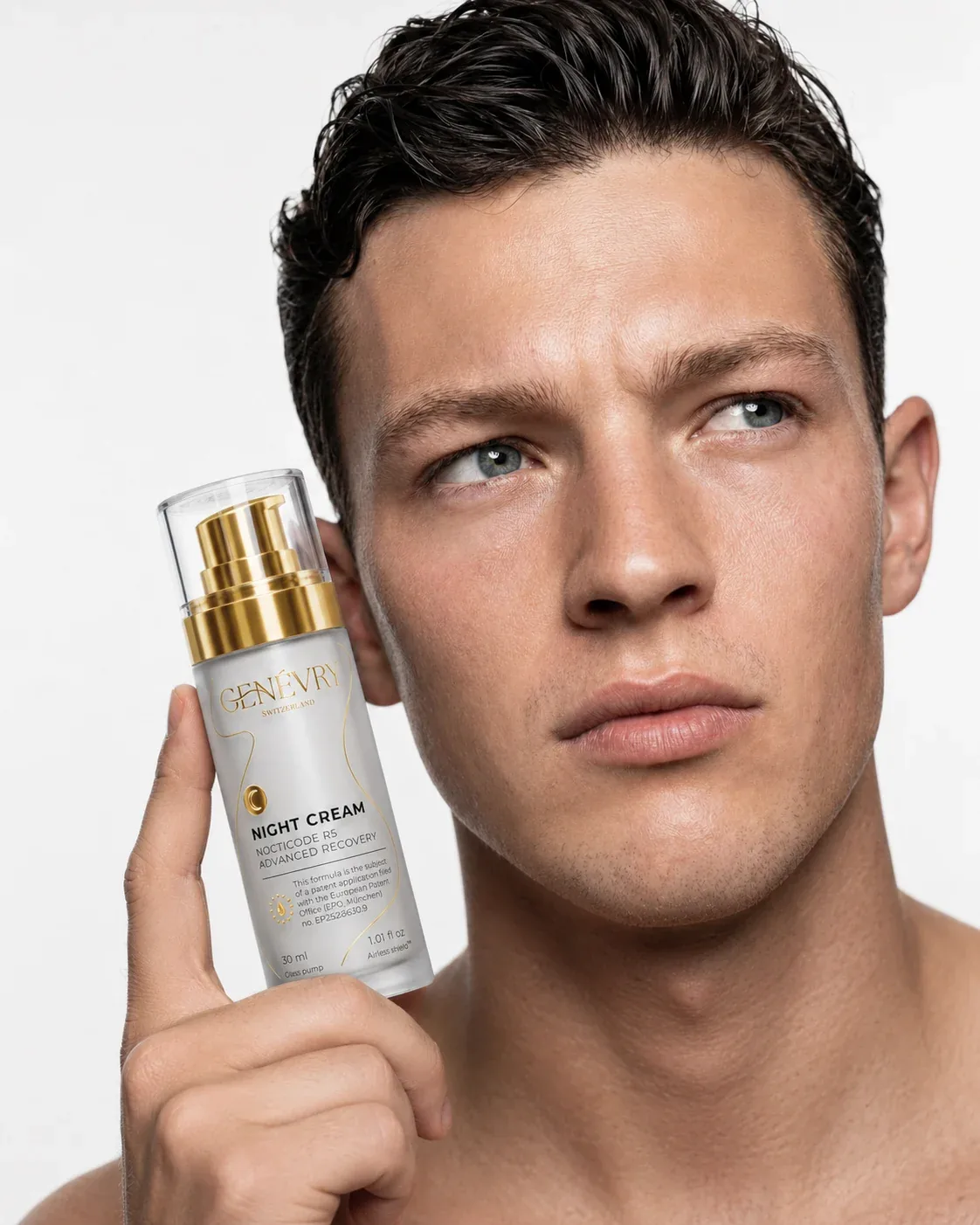
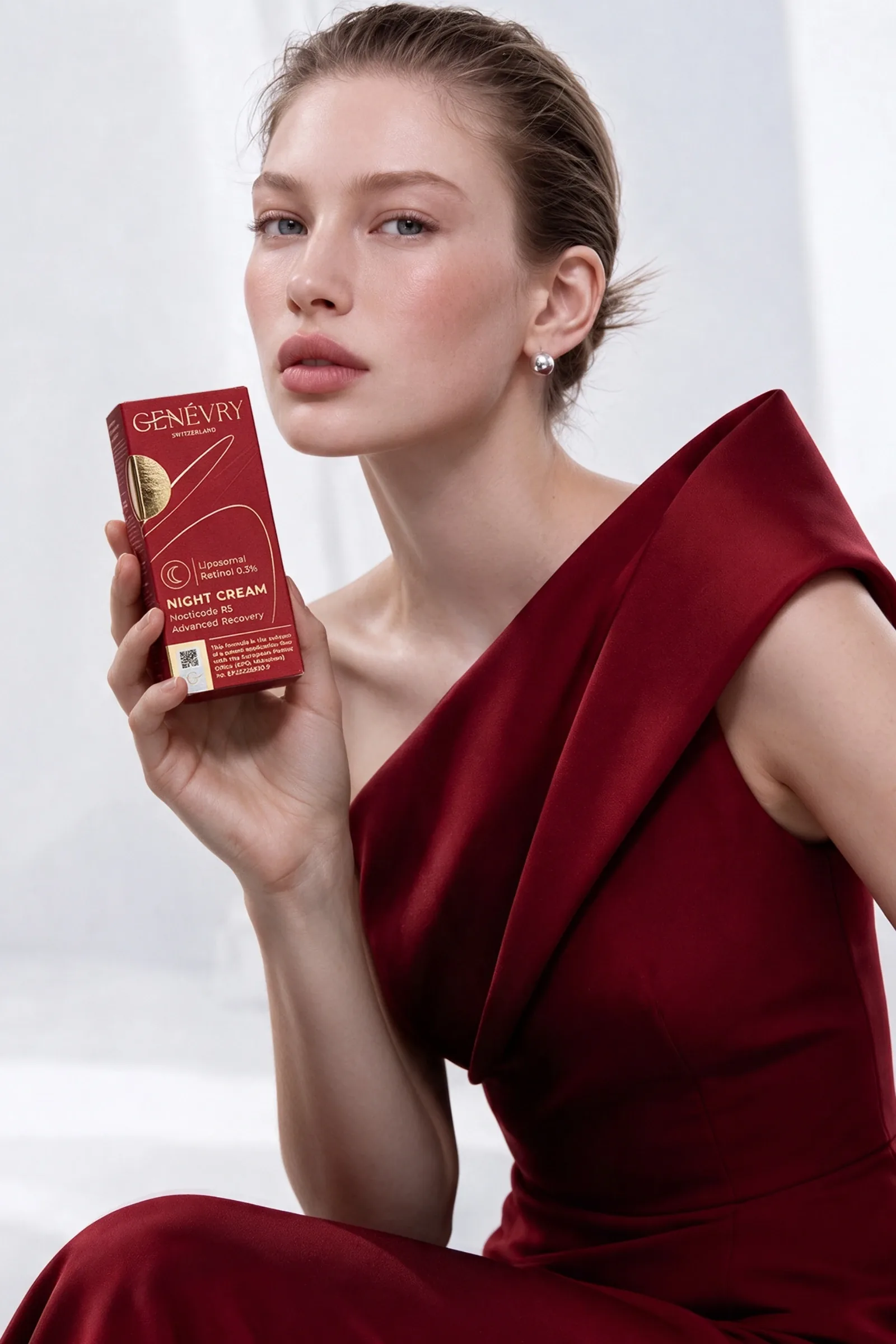
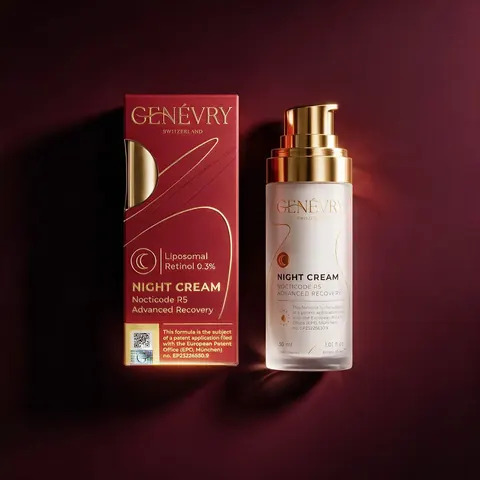
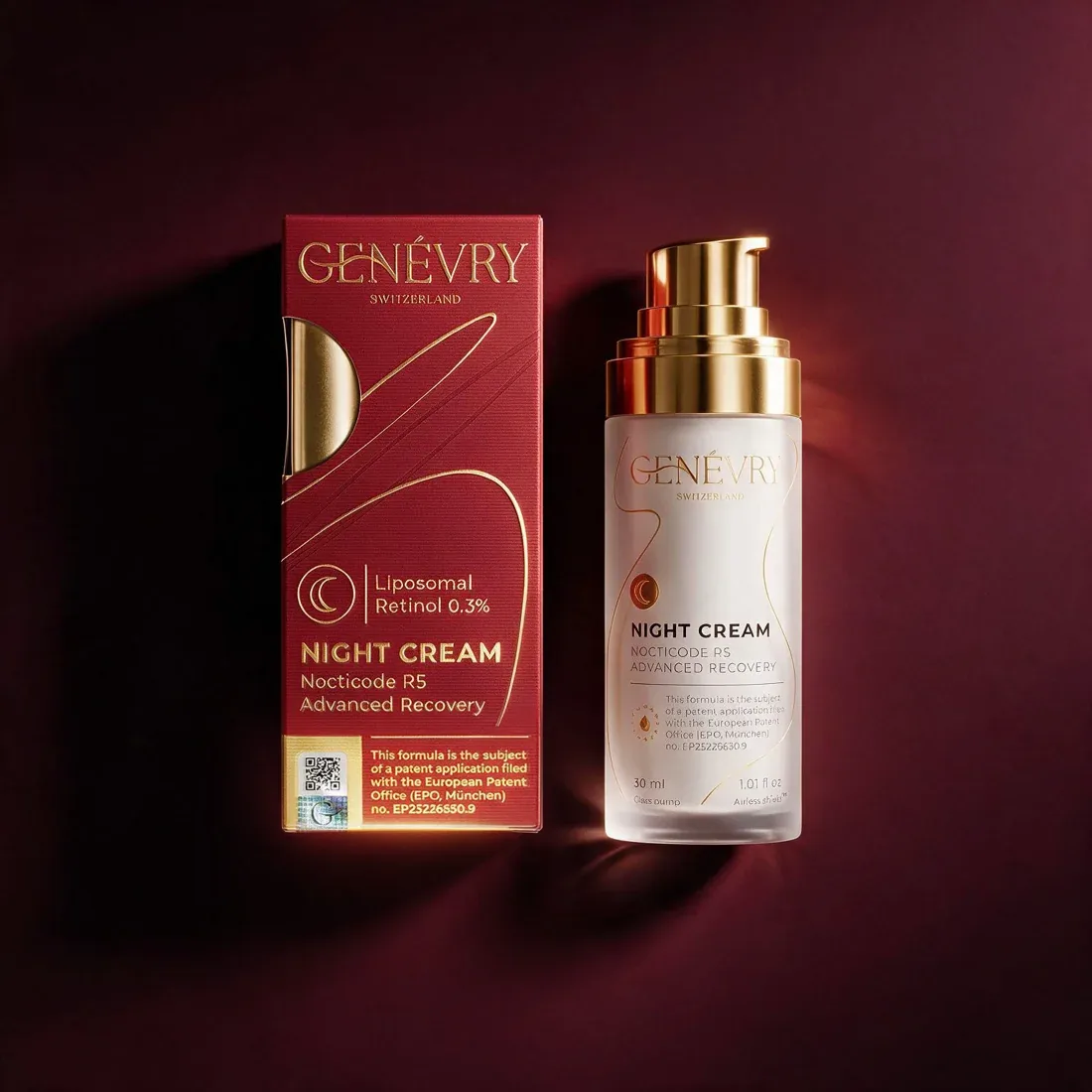
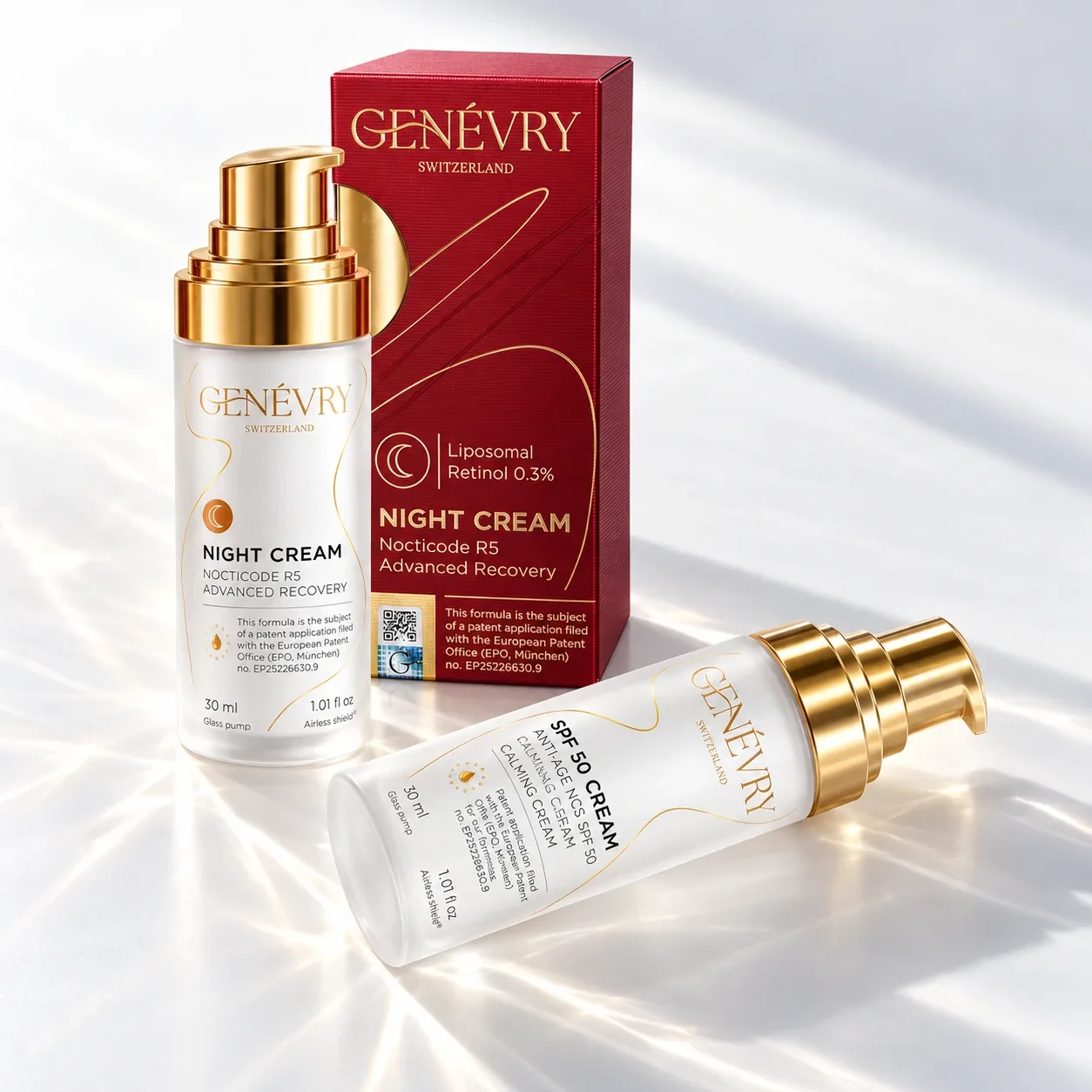
Nocticode R5 is a 30 ml night cream with liposomal retinol at 0.3%, which makes it the evening step where barrier care matters most. In instrumental testing, mean wrinkle length decreased from 2.08 to 1.88 mm after four weeks, a 10% reduction, with a decrease recorded in 9 of 10 participants (silicone replicas, VISIOLINE VL650). Retinol is introduced gradually, always with sunscreen the next morning, and is not used during pregnancy. Both creams come together in The Day & Night Duo.
The products are notified in the CPNP and made in a facility with an implemented HACCP system. The brand does not test on animals, in line with the cruelty-free rules that apply across the European Union.
Ceramides: frequently asked questions
Do ceramides from a cream reach the place they are needed?
Ceramides work in the stratum corneum, the outermost layer of the epidermis, and that is exactly where a cream delivers them. They do not have to cross the barrier because they are part of it. Barrier-repair research shows that blends with cholesterol and fatty acids outperform a ceramide delivered alone.
What is the difference between Ceramide NP and Ceramide 3?
None. It is the same molecule under two names: “Ceramide 3” is the older INCI entry, replaced by “Ceramide NP”. The letters describe the structure, with N for a non-hydroxy fatty acid and P for phytosphingosine.
Are ceramides comedogenic?
Ceramides themselves are not, since they occur naturally in every skin type. The vehicle can be: a rich, oil-heavy base may contribute to blocked pores on oily skin. The answer is a lighter formula rather than avoiding the ingredient.
Can you use ceramides with retinol?
Yes, and it is one of the more sensible evening pairings. Retinol speeds up cell turnover, which often feels like dryness and tightness in the first weeks. A ceramide cream applied afterwards replaces lipids and softens that stage.
How long does a ceramide cream take to work?
Comfort and the absence of post-cleansing tightness usually arrive within a few days. A visible change in texture and evenness takes around four weeks, the length of a full stratum corneum turnover cycle.
Are cosmetic ceramides animal-derived?
They once were. Today they are produced synthetically or by biotechnology, using yeast and plant-derived raw materials. Only the manufacturer’s declaration on the pack confirms it, because the INCI name says nothing about origin.
Do I need a different cream in winter?
Often, yes. Stratum corneum lipid levels are markedly lower in winter than in spring and summer, as Rogers and colleagues measured. A richer texture from November to March is frequently the only change a routine needs.
Start with one small move: pick up the cream you use at night and check the INCI list for the word “Ceramide”, then look at whether cholesterol or a plant oil sits near it. It takes five seconds and tells you more than the entire front of the pack. If you want a second well-documented barrier ingredient, read our entry on niacinamide, which works on the same territory from a different direction.
The formulas in this article
 Hydrocode A5 LiftObnavljajuća dnevna krema€34.90Discover the formula →
 Nocticode R5Napredna noćna krema€34.90Discover the formula →
Cosmetic product. Individual results may vary.

 English / EUR
 English (US) / USD
 English (UK) / GBP
 Deutsch / EUR
 Deutsch (Schweiz) / CHF
 Français / EUR
 Italiano / EUR
 Español / EUR
 Nederlands / EUR
 Polski / PLN
 日本語 / JPY
 한국어 / KRW
 中文 / CNY
 العربية / AED
 English (Australia) / AUD
 English (Canada) / CAD
 Svenska / SEK
 Dansk / DKK
 Norsk / NOK
 Suomi / EUR
 Português / EUR
 Türkçe / TRY
 Čeština / CZK
 Magyar / HUF
 Română / RON
 Ελληνικά / EUR
 Slovenčina / EUR
 Hrvatski / EUR
 Slovenščina / EUR
 Lietuvių / EUR
 Latviešu / EUR
 Eesti / EUR
 Български / EUR
 Українська / EUR