SPF 50 every day — in autumn, in winter and in the city
Sunscreen is not a seasonal product. How much you actually need, how UV shifts across the year and why office glass is not a shield.
Wearing SPF 50 every day sounds like advice for July, and it is advice for the whole year — including the months when the sun barely shows up. UVA, the range behind most of what we recognise as light-related skin ageing, holds a far steadier level across the seasons than UVB does, and it travels through cloud and through ordinary window glass. A grey afternoon in the city is not a pause in exposure. It is exposure that gives no signal.
What follows: what the number on the bottle actually measures, how much product that number assumes, how protection works in autumn, winter and between buildings — and what was measured in the instrumental study of Anti-Age NC5 SPF 50.
Why UV does not end in September
Two ranges of ultraviolet reach the skin. UVB has the shorter wavelength, depends heavily on season and sun angle, stops in the epidermis and causes sunburn. UVA has the longer wavelength, reaches the dermis, and — the point that matters most for daily care — varies far more gently through the year than UVB does. The Wikipedia entry on ultraviolet radiation sets out the characteristics of both.
Two practical conclusions follow. First, the absence of redness is not the absence of exposure: UVA offers no immediate feedback, no warning that the dose was generous. Second, cloud filters light less than instinct suggests. A thin, even layer of cloud lets a substantial share of radiation through, which makes a dull day surprisingly close to a bright one in this respect.
Winter adds reflection. Fresh snow bounces a significant portion of incoming UV back towards the face, so a day on the slopes or a walk through a snow-covered park is a different dose entirely from the same hour on a city pavement. Altitude contributes too — the higher you stand, the thinner the atmosphere overhead.
SPF 50 every day: what the number on the bottle means
SPF is a measure of protection against UVB, established in a standardised test. It describes how much longer it takes to redden protected skin compared with unprotected skin, at a strictly defined quantity of product: 2 mg per square centimetre. In practice that second figure matters more than the first, because it is the one that usually does not hold.
| SPF value | Share of UVB filtered | What it changes in practice |
|---|---|---|
| SPF 15 | around 93% | A baseline level, designed with brief exposure in mind |
| SPF 30 | around 97% | A clearly larger reserve at the same quantity of product |
| SPF 50 | around 98% | The widest margin for the thin layer most people actually apply |
The gap between 97 and 98 per cent looks cosmetic, and it would be, if everyone applied sunscreen the way it is applied in a laboratory. Since the bathroom layer tends to be two or three times thinner, a higher declared factor is simply a safety reserve. That is the case for SPF 50 on ordinary days, not only at the coast.
UVA is a separate matter. In the European Union a product may carry the circled UVA symbol only when its UVA protection reaches at least a third of the declared SPF. It is worth looking for that mark on the packaging — without it, the number speaks only about UVB.
City, office, car
Everyday exposure rarely looks like a sun lounger. It is ten minutes to the bus stop, a quarter of an hour by the window, the walk to lunch and the way home at dusk — which is precisely why it gets discounted. It accumulates over years, and it lands mainly on the face, the neck and the backs of the hands.
Glass is the next detail that slips the mind. A standard window pane stops virtually all UVB but lets a share of UVA through, so the desk by the window is not an exposure-free zone. In a car, the laminated windscreen protects well; the side windows usually far less.
The UV index helps set the proportions. Values up to 2 count as low and call for nothing special on a short errand; from 3 upwards, protection is advised. Across much of Europe the index sits above 3 for a large part of the year, though it stays low in December and January. That is a good reason to treat sunscreen as a fixed step in the ritual rather than a decision reopened every morning — routine simply outperforms calculation.
How much, and how often to reapply
- Measure the amount. Face and neck take roughly a third of a teaspoon. The simpler version: two strips of product along the index and middle fingers.
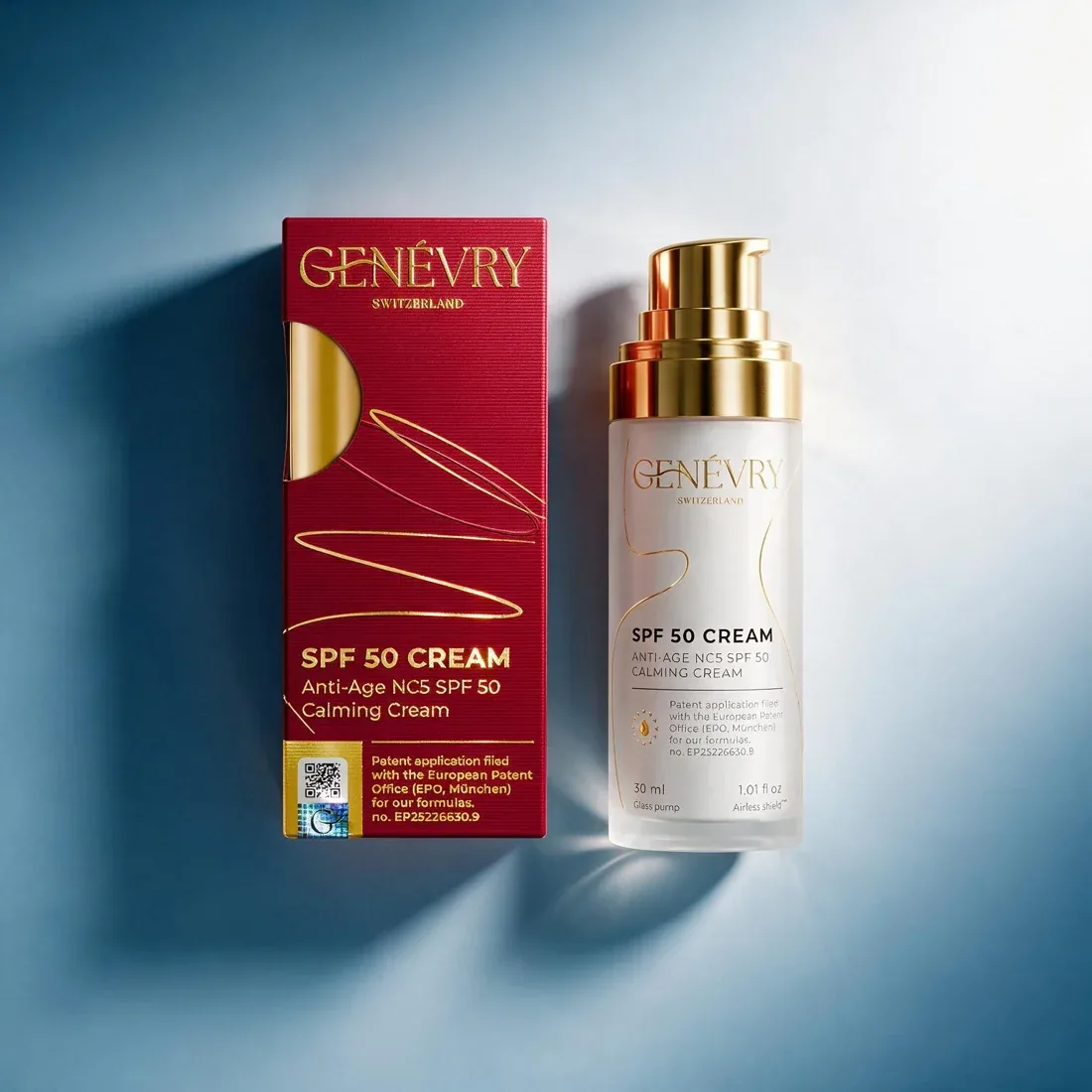
- Apply it last. Sunscreen goes after serum and day cream, before make-up. Spread Anti-Age NC5 SPF 50 evenly, without rubbing it in hard — the layer needs to stay continuous.
- Do not skip the edges. Ears, hairline, the sides of the neck, the nape and the backs of the hands are the places the ritual forgets first.
- Reapply according to the label. On days spent mostly indoors, one morning application usually does the work. After several hours outside, after sweating or after wiping the face, the layer needs renewing.
- Cleanse properly in the evening. Sunscreens are designed to cling to skin. If the day included SPF or make-up, a two-step cleanse earns its place.
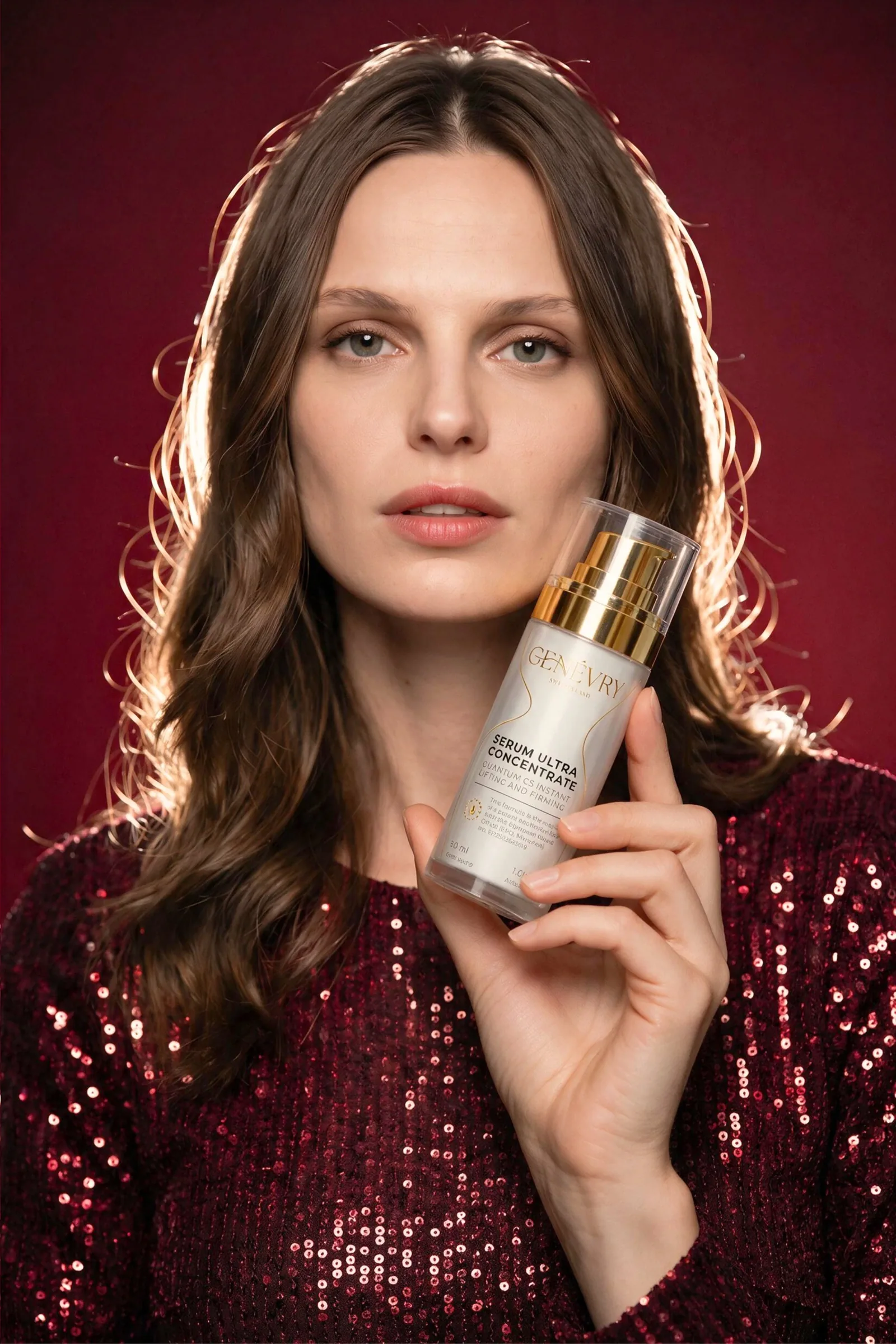
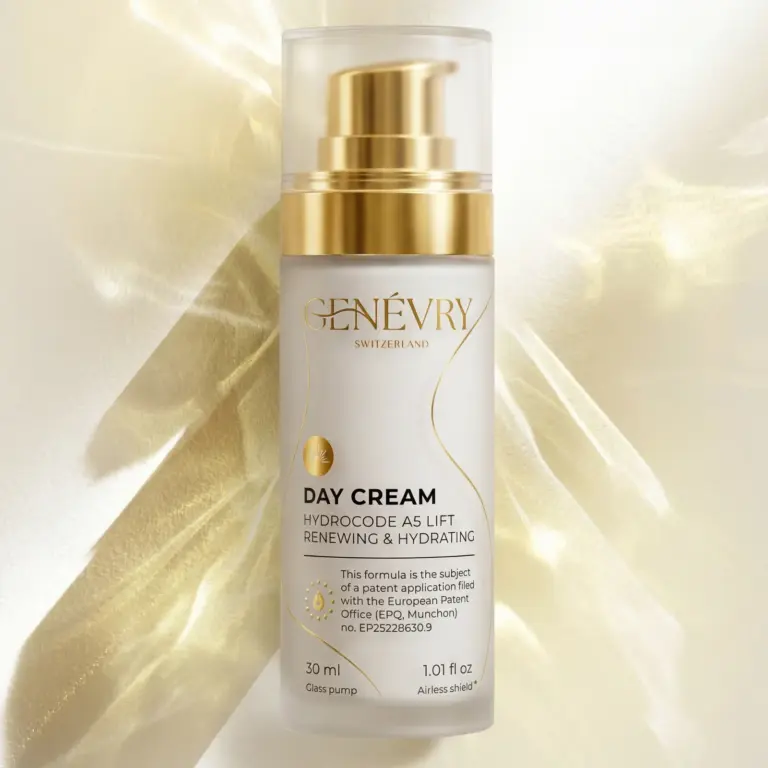
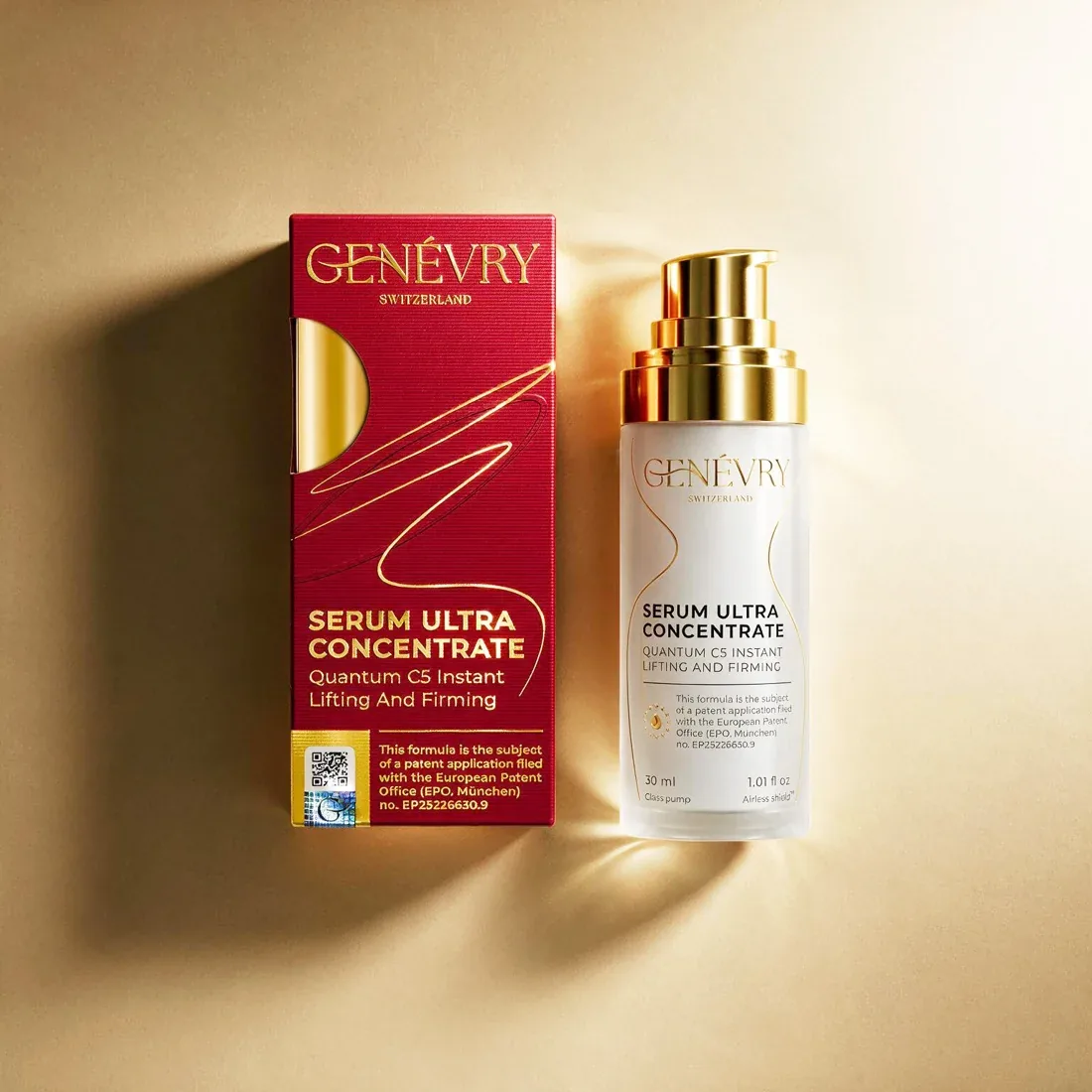
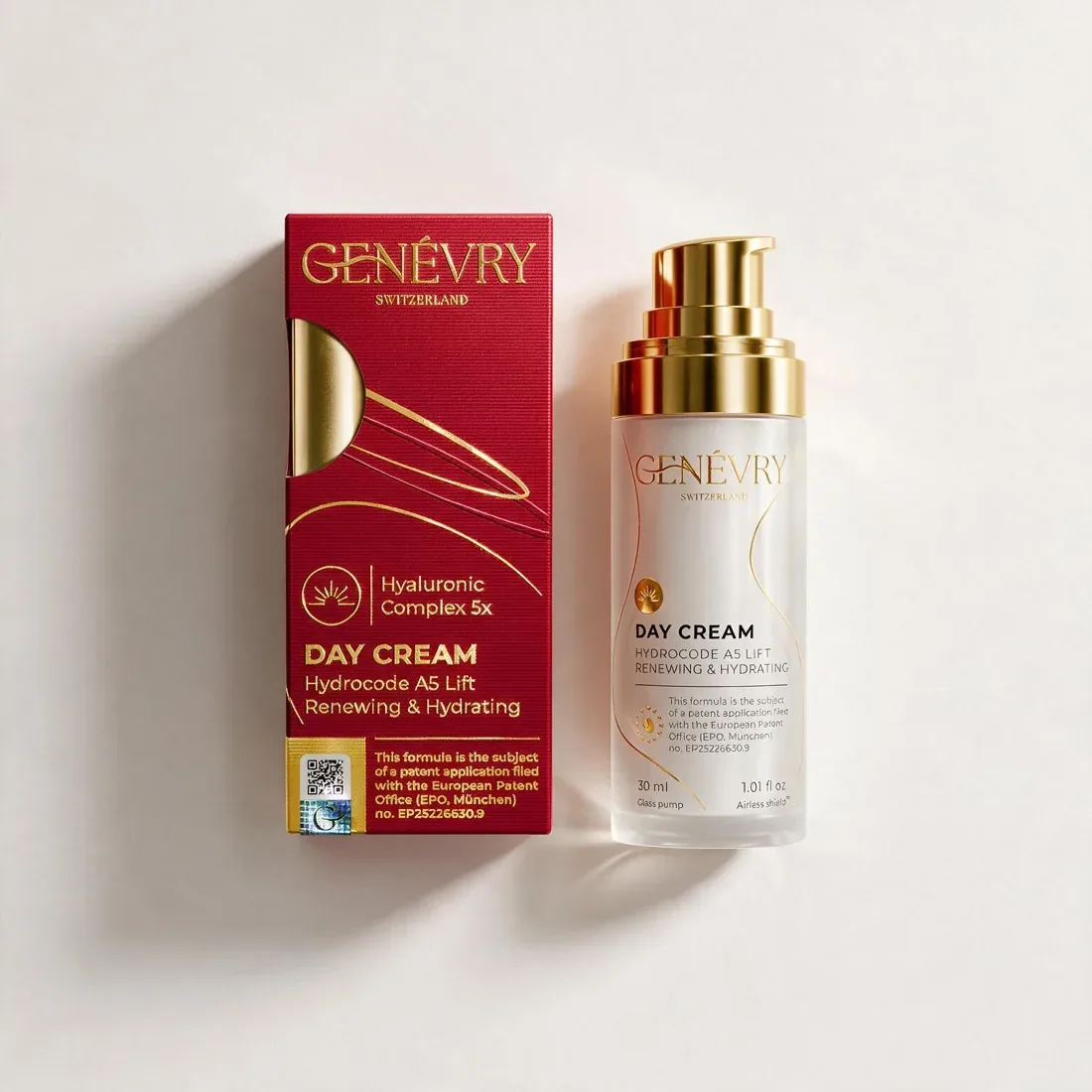
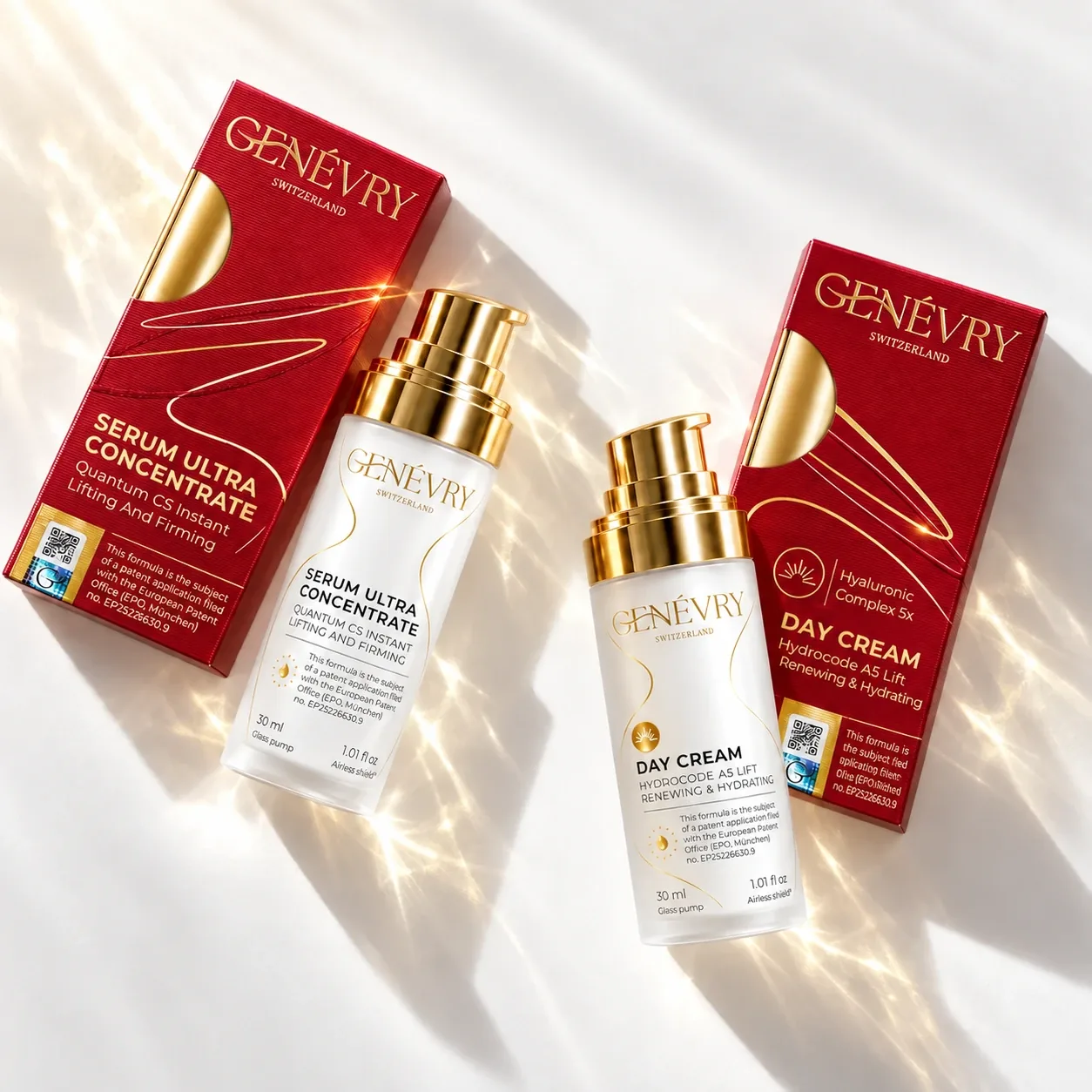
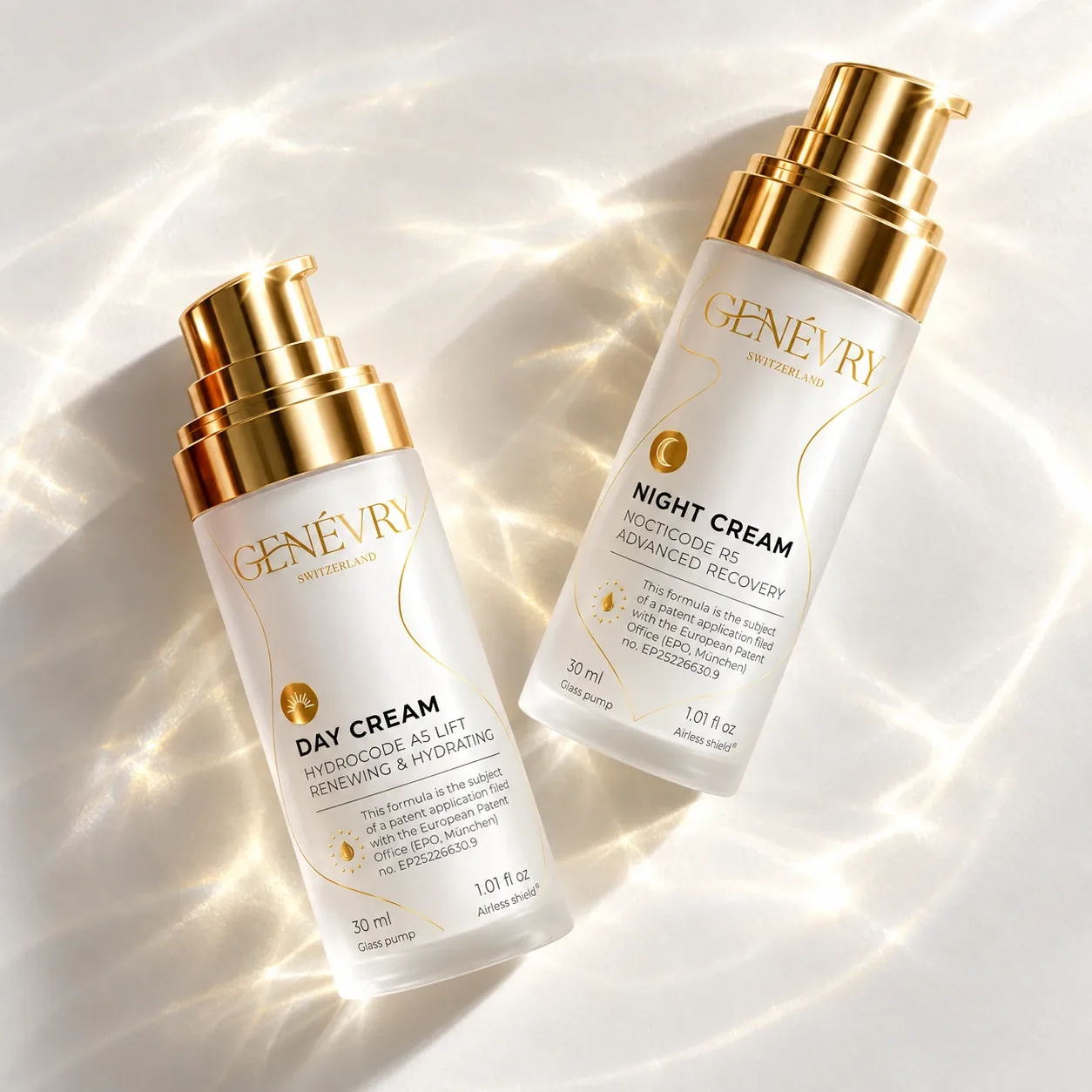
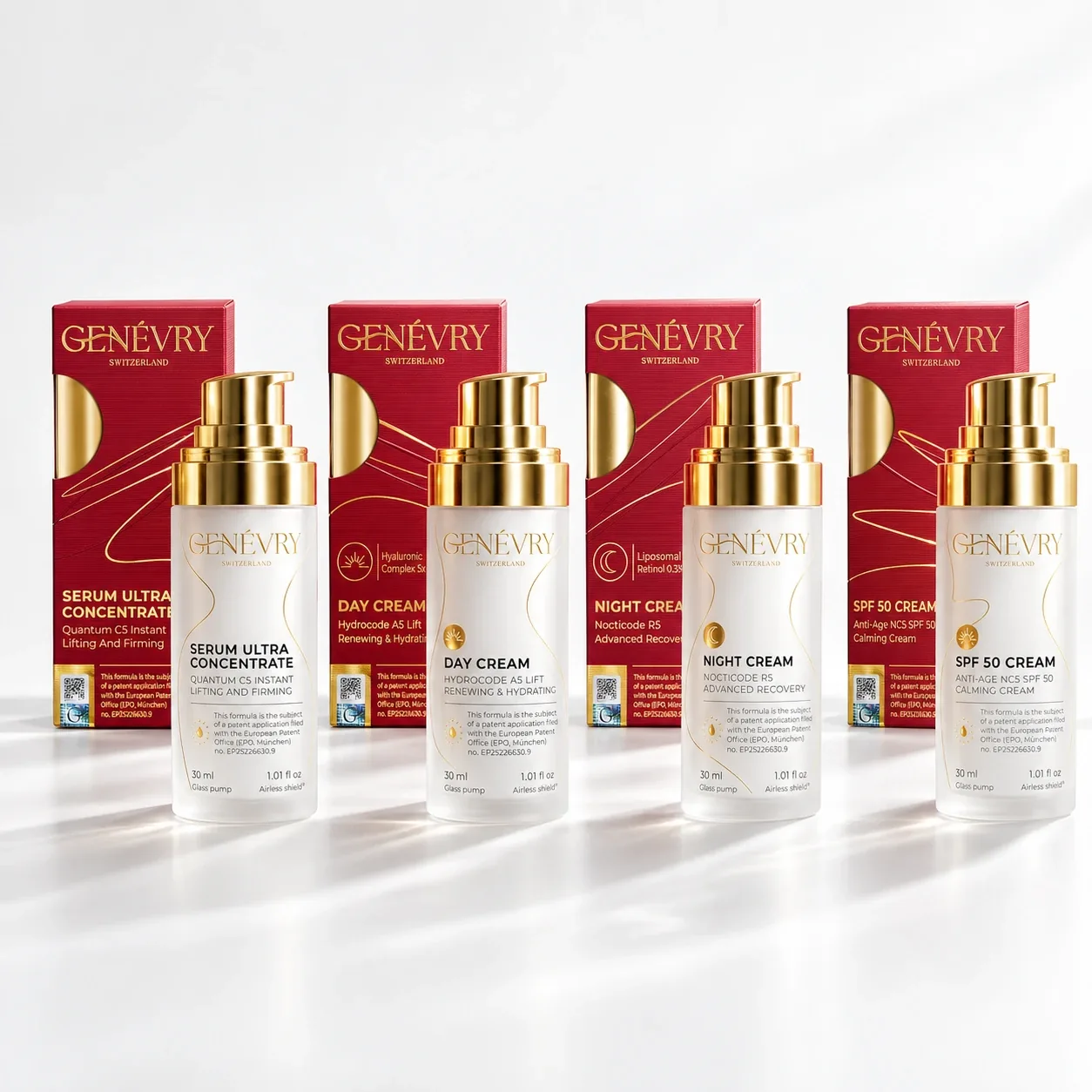
Sunscreen does not replace the rest of a routine and is not in competition with it. In the GENÉVRY collection the morning opens with Quantum C5 serum with copper peptide GHK-Cu and liposomal vitamin C, day cream follows, and SPF 50 closes the sequence. The evening runs differently and contains no sunscreen at all: that is the hour for night care.
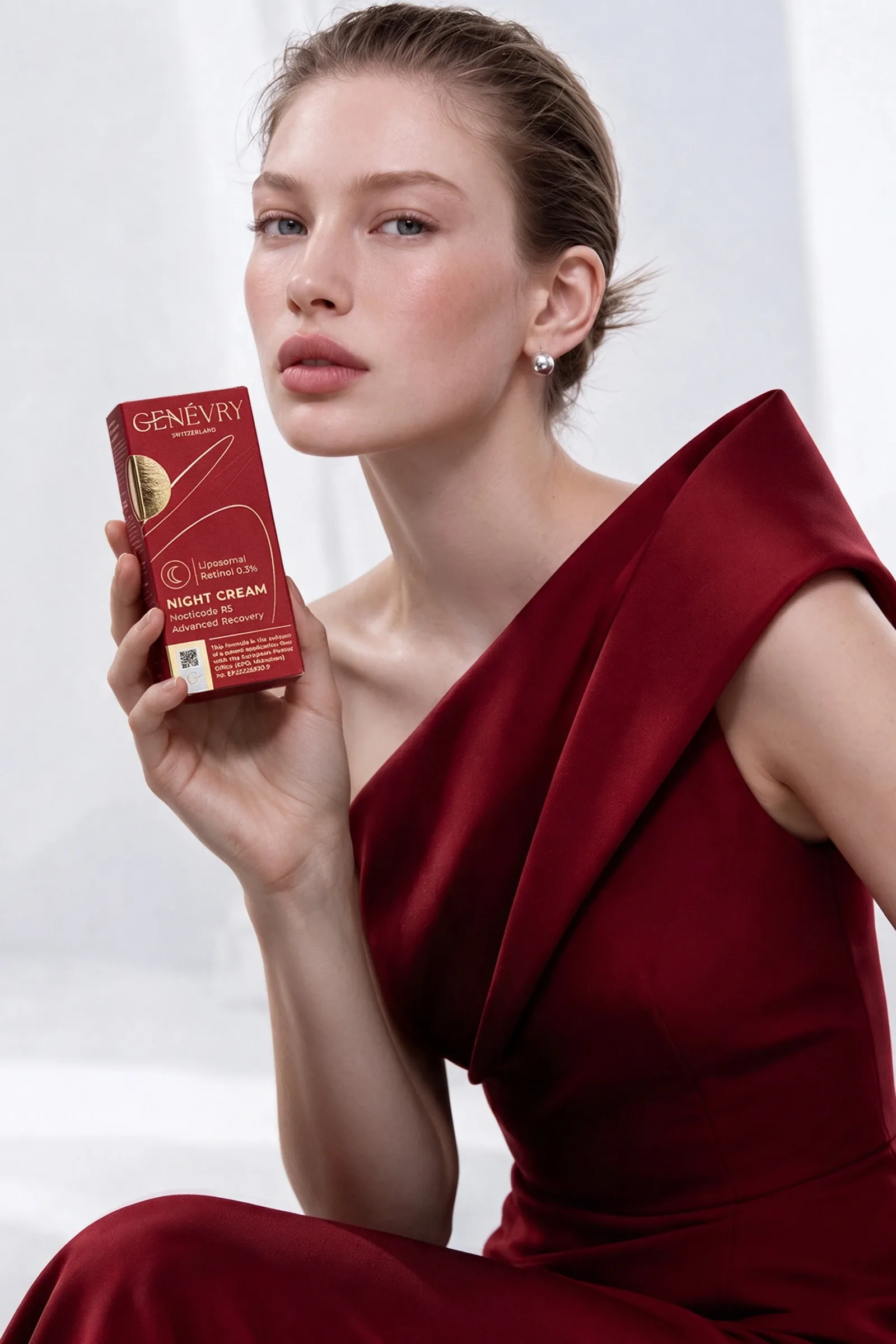
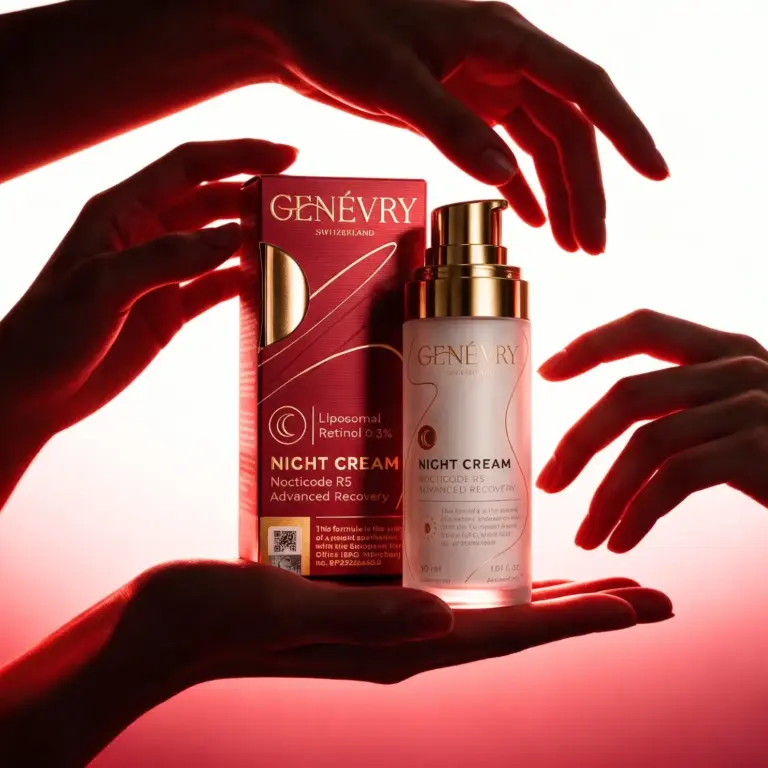
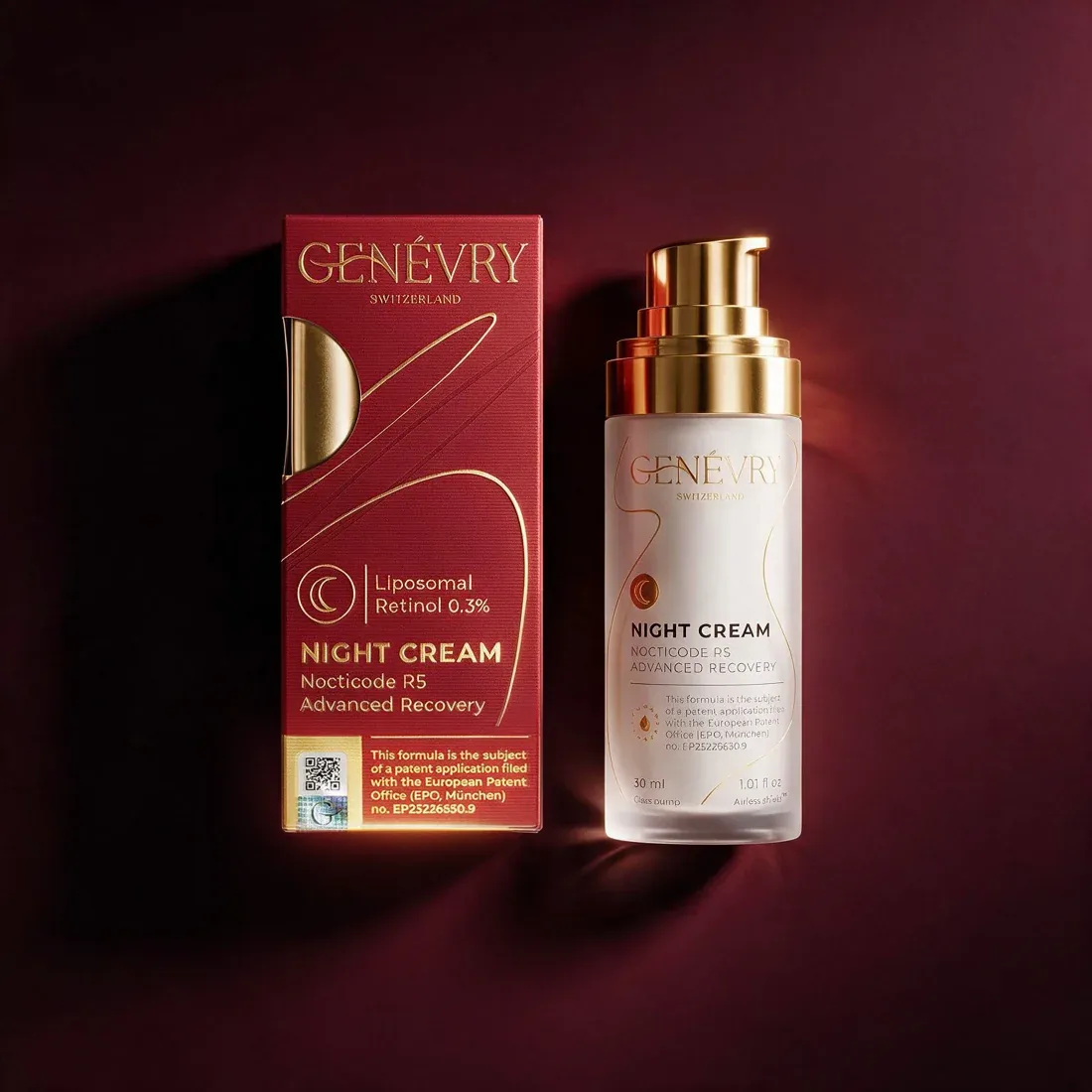
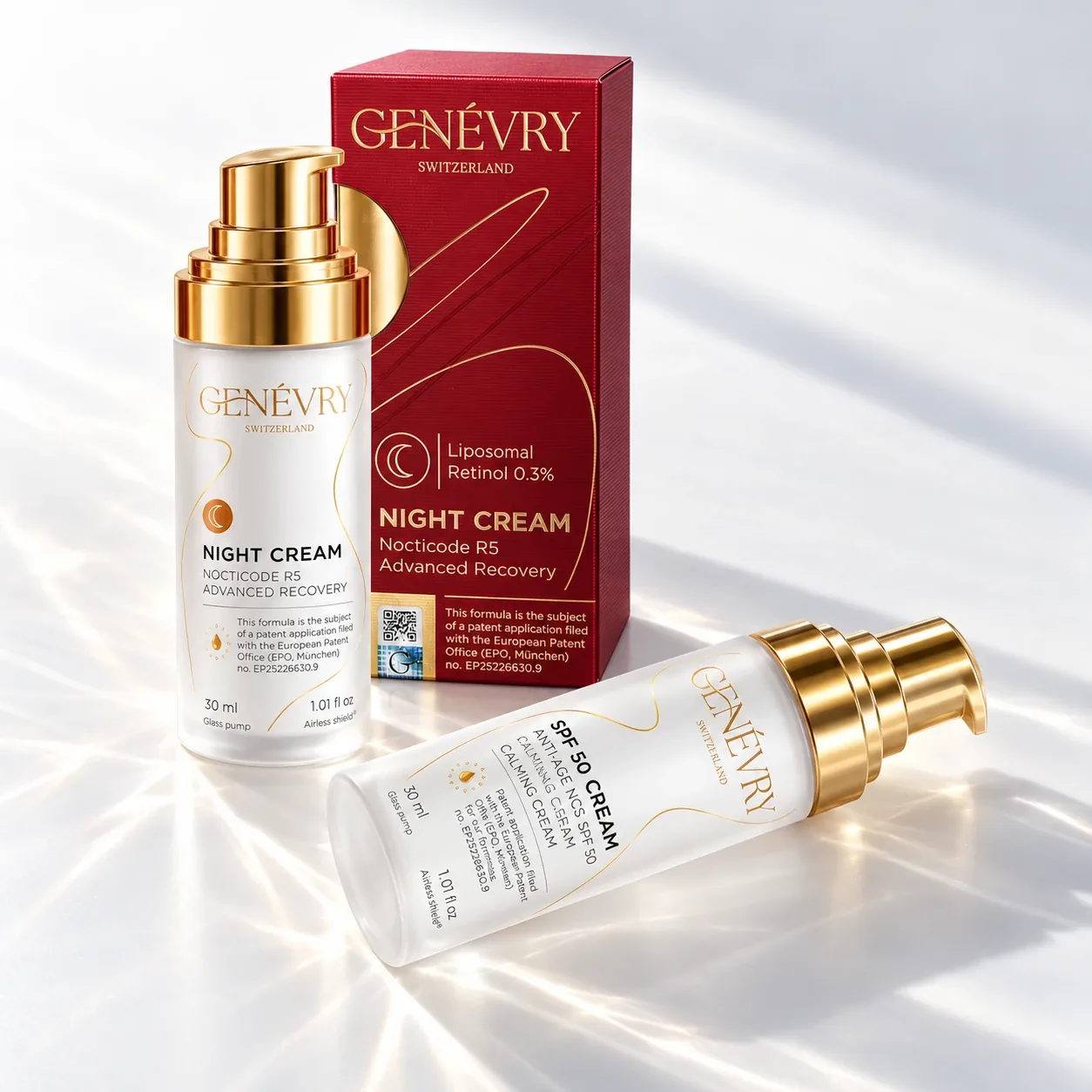
If retinol is part of your evenings, morning sunscreen stops being optional. The Night & Light Duo — Nocticode R5 with Anti-Age NC5 SPF 50 pairs the two steps: evening care with liposomal retinol 0.3% and protection for the morning after. Retinol is introduced gradually, starting with two evenings a week, and is not used in pregnancy or while breastfeeding. With a skin condition or ongoing dermatological treatment, discuss the plan with a doctor.
What was measured for Anti-Age NC5 SPF 50
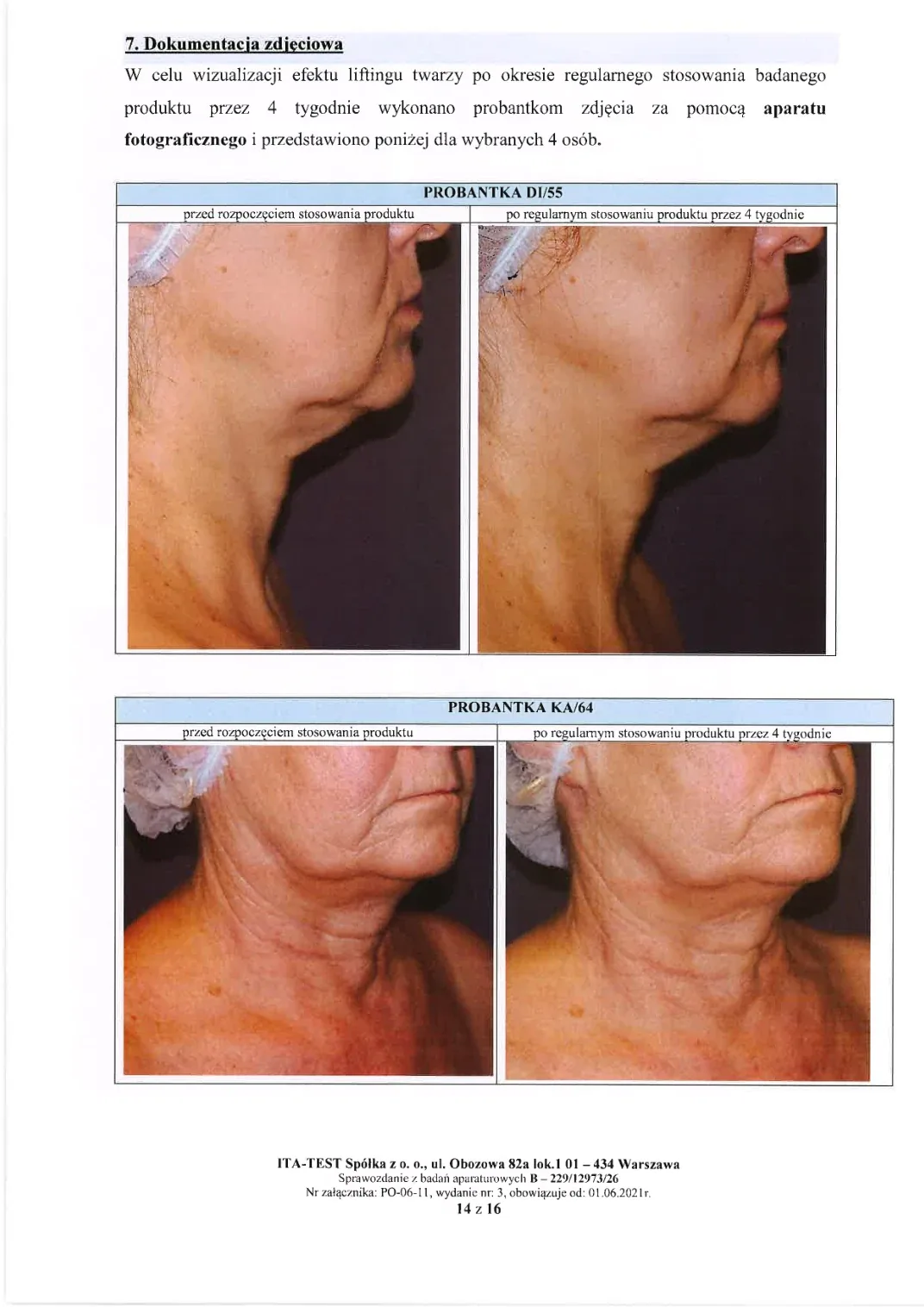
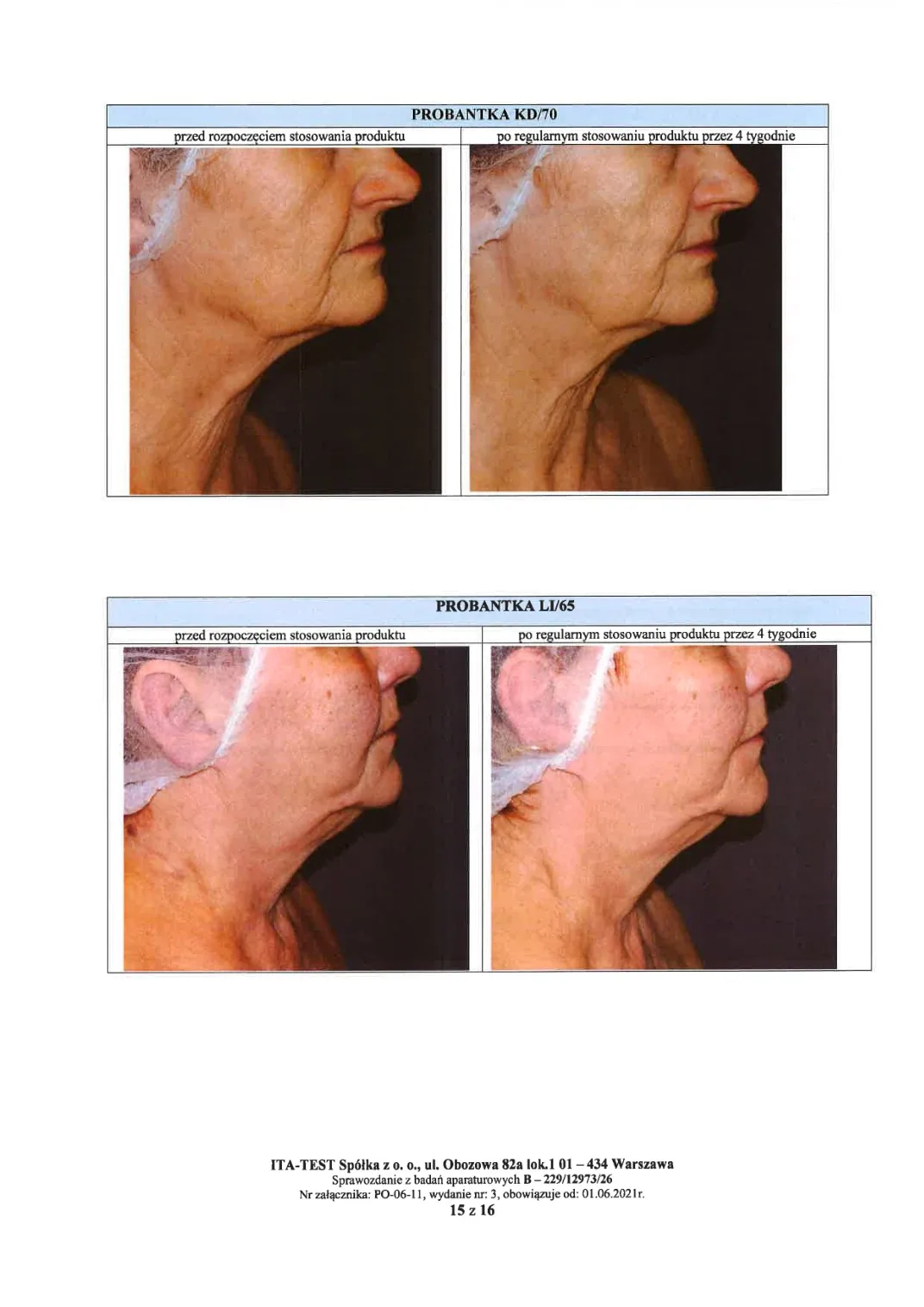
Beyond the declared level of protection, the formula was assessed in instrumental studies with 10 participants. That is a small group and the figures are group averages — a reference point, not a promise.
| Parameter | Result | Study conditions |
|---|---|---|
| Mean facial skin hydration | +23% | 3 weeks of regular use, instrumental, n=10, Corneometer CM 825 |
| Mean forearm hydration | +135% | 3 h after a single application, instrumental, n=10 (a protocol separate from the facial study) |
| Mean skin smoothing | +21% | 3 weeks, instrumental, n=10 |
| Mean melanin in pigmentation spots | −7% | 3 weeks, instrumental, n=10; this does not mean 7% fewer pigmentation spots |
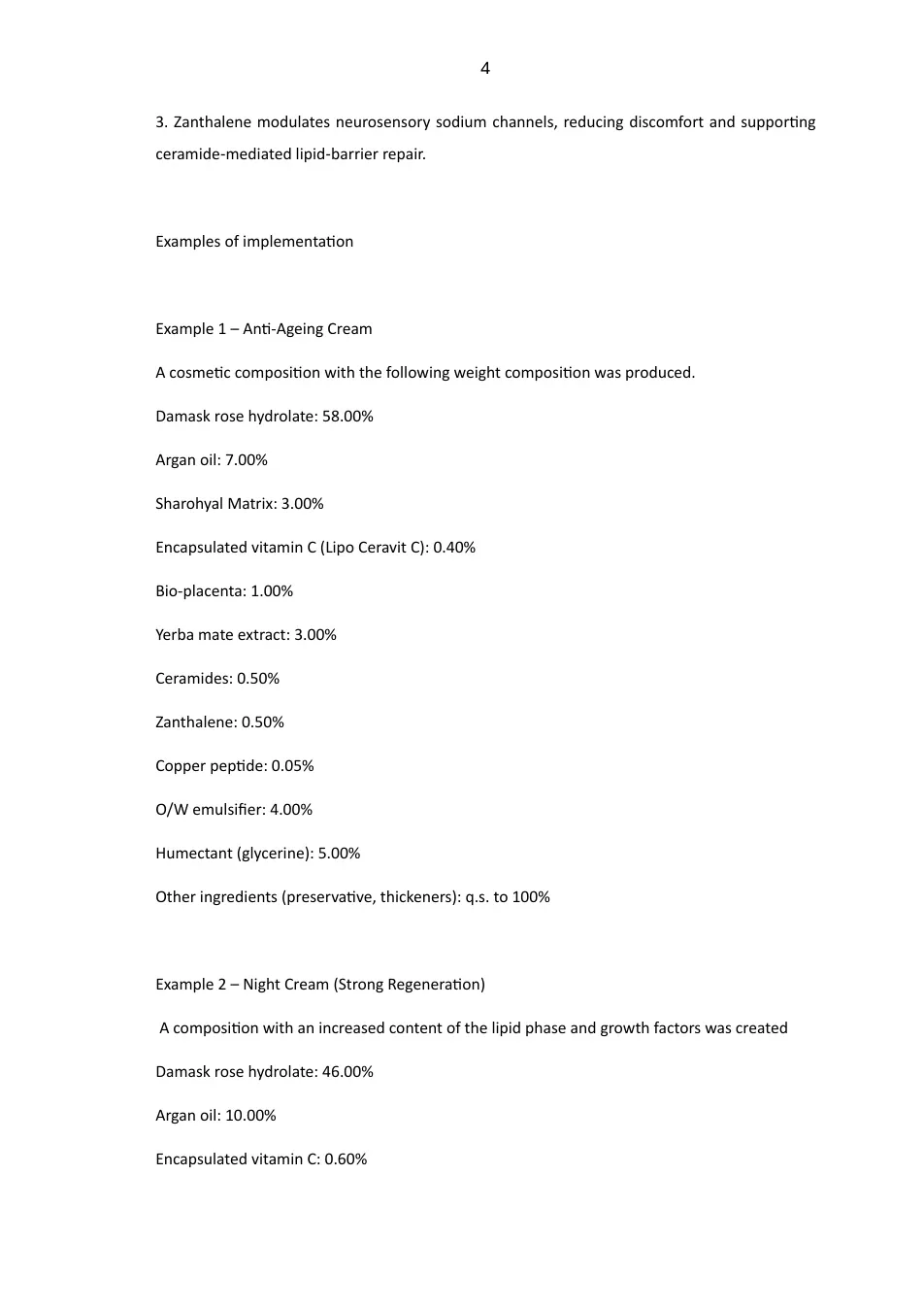
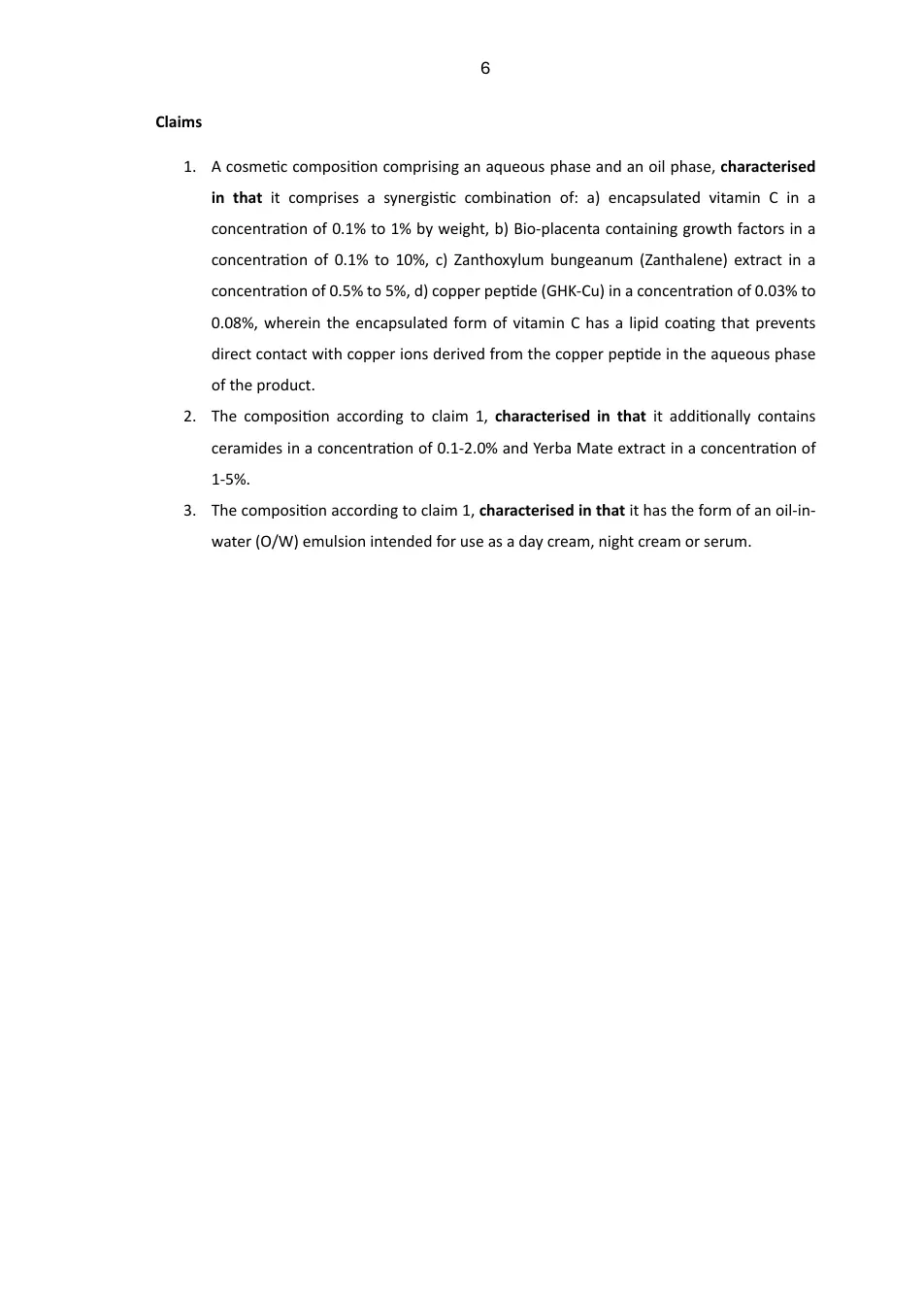
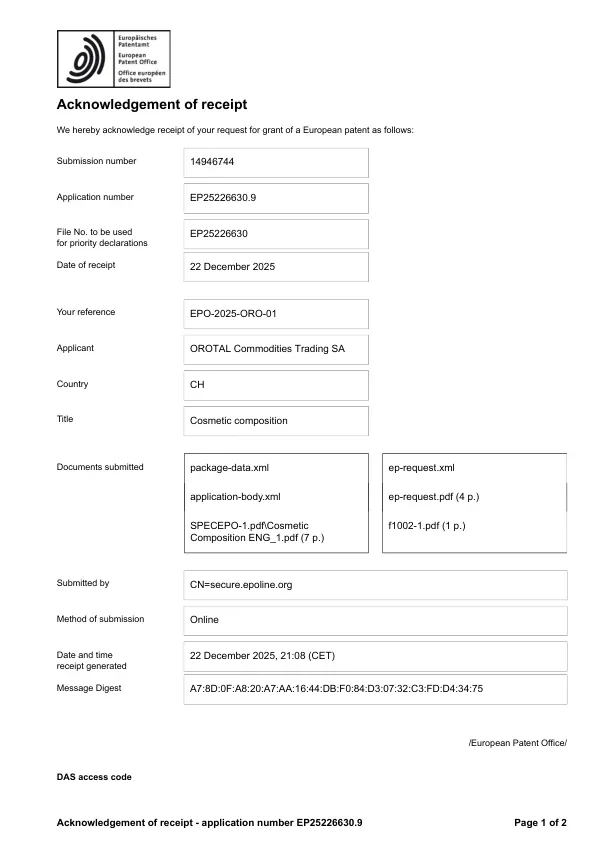
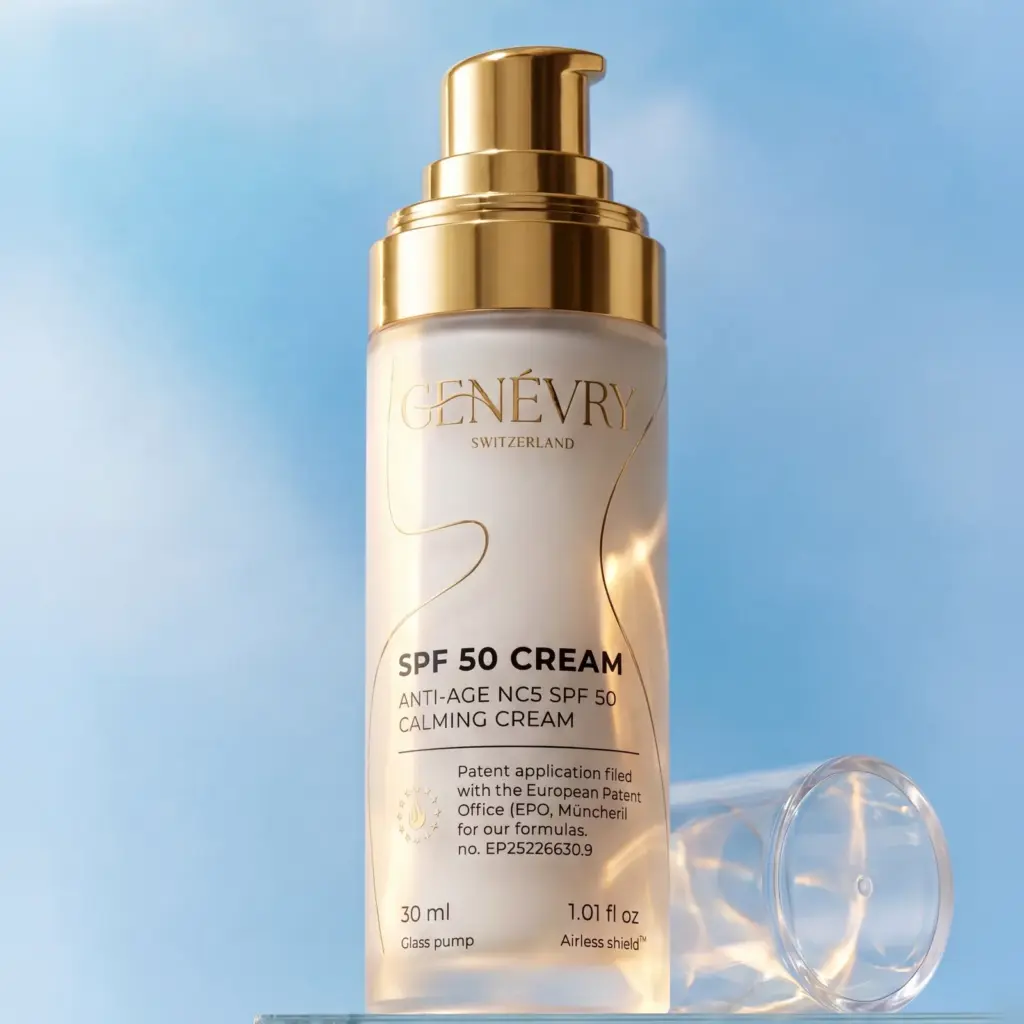
Hydration and protection are two different things: the +23% refers to a hydration measurement, while SPF 50 is a separately declared protection level. GENÉVRY formulas are the subject of patent application EP25226630.9 (patent pending) filed with the European Patent Office — an application, not a granted patent.
Frequently asked questions
Is sunscreen necessary on a cloudy day?
Yes. Cloud weakens radiation less than it appears to, and a large share of UVA passes through it. The absence of visible sun is not a reliable indicator of whether a protective layer is worth applying.
Is a day cream with SPF enough on its own?
It depends how much of it you use. A care cream is usually spread more thinly than a dedicated sunscreen, so real protection can fall below the declared figure. A separate step simply gives more certainty about quantity.
How often should SPF 50 be reapplied in the city?
On a day spent largely indoors, the morning application generally suffices. For longer stretches outdoors, renew the layer as the packaging directs.
Does SPF 50 interfere with vitamin D?
Sunscreens do limit part of the radiation involved in synthesis, but few people apply them thoroughly enough in daily life to block it entirely. If your vitamin D level concerns you, ask a doctor for a test — that question is settled by a result, not by dropping protection.
Can sensitive skin use a daily sunscreen?
Usually yes, though it is worth choosing simpler formulations and introducing one new product at a time while watching how the skin responds. With rosacea, atopic skin or ongoing dermatological treatment, discuss the choice with a dermatologist.
Sunscreen works when it becomes part of the morning rather than an exception to it. A third of a teaspoon, always last, in November as much as in July — that is the whole change. The skin will not thank you immediately, because protection is rarely dramatic; it is simply the one part of the ritual whose results show up years later.
The formulas in this article
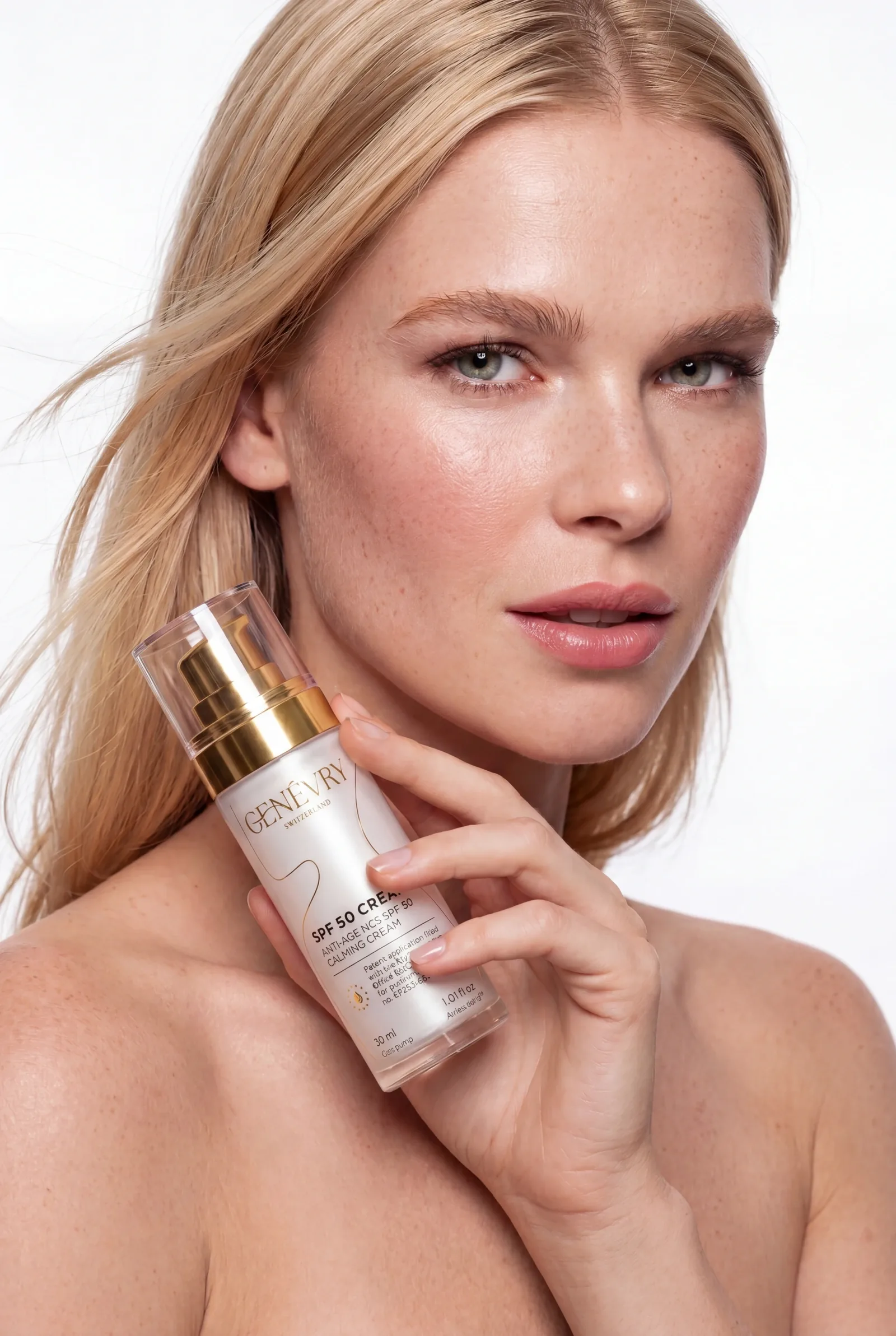
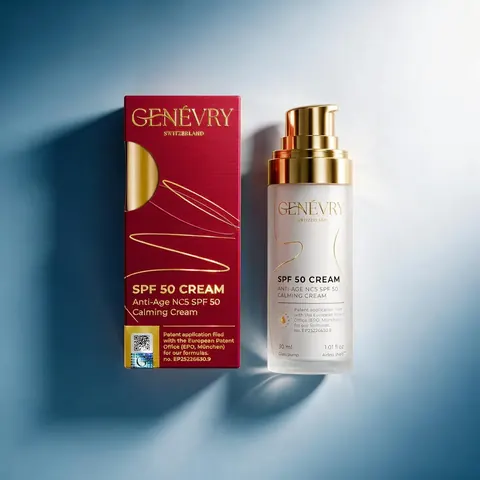 Anti-Age NC5SPF 50 舒缓防护霜¥279Discover the formula →
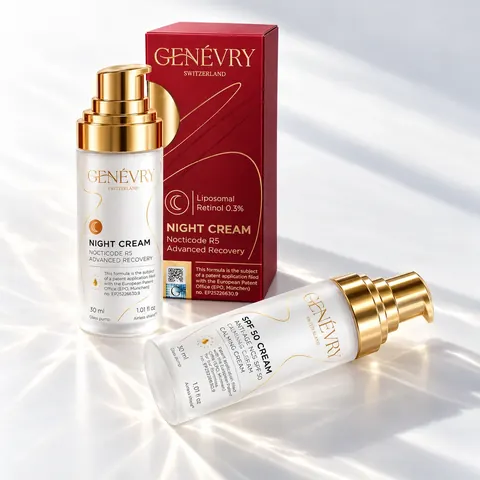 The Night & Light Duo晚霜 + SPF 50 · 2 × 30 ml¥519Discover the formula →
Cosmetic product. Individual results may vary.

 English / EUR
 English (US) / USD
 English (UK) / GBP
 Deutsch / EUR
 Deutsch (Schweiz) / CHF
 Français / EUR
 Italiano / EUR
 Español / EUR
 Nederlands / EUR
 Polski / PLN
 日本語 / JPY
 한국어 / KRW
 中文 / CNY
 العربية / AED
 English (Australia) / AUD
 English (Canada) / CAD
 Svenska / SEK
 Dansk / DKK
 Norsk / NOK
 Suomi / EUR
 Português / EUR
 Türkçe / TRY
 Čeština / CZK
 Magyar / HUF
 Română / RON
 Ελληνικά / EUR
 Slovenčina / EUR
 Hrvatski / EUR
 Slovenščina / EUR
 Lietuvių / EUR
 Latviešu / EUR
 Eesti / EUR
 Български / EUR
 Українська / EUR