How to determine your skin type at home
No appointment and no sebum meter. One unhurried morning with nothing on your face, good daylight and a few minutes of attention.
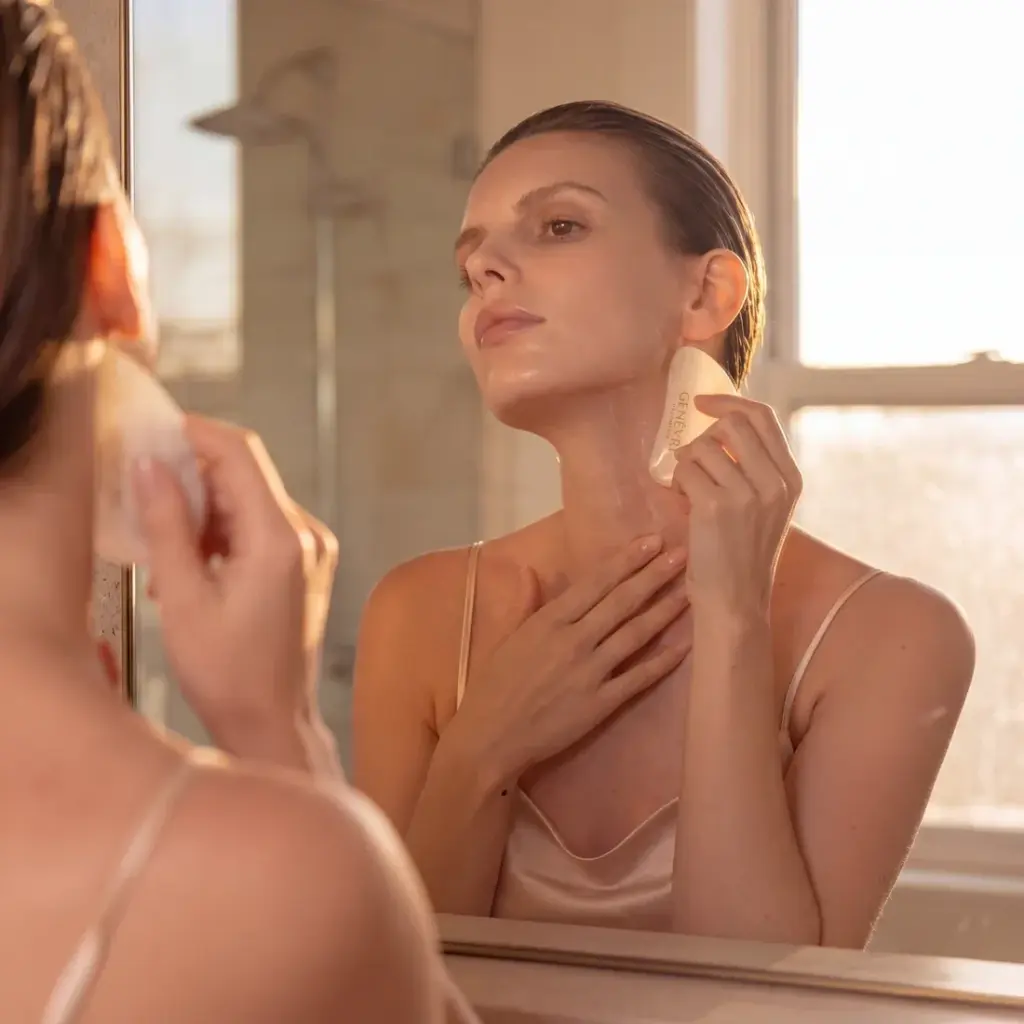
Knowing how to determine your skin type is the part of skincare that nobody sells you, and it is the part that decides whether everything else works. It does not need a clinic appointment or a sebum meter. It needs one unhurried morning with nothing on your face, decent daylight and a few minutes of attention. Your skin type is really a short answer to two questions: how much sebum your skin produces, and how well it holds on to water. Both are visible to the naked eye, as long as you look at the right moment.
How to determine your skin type with the bare-face test
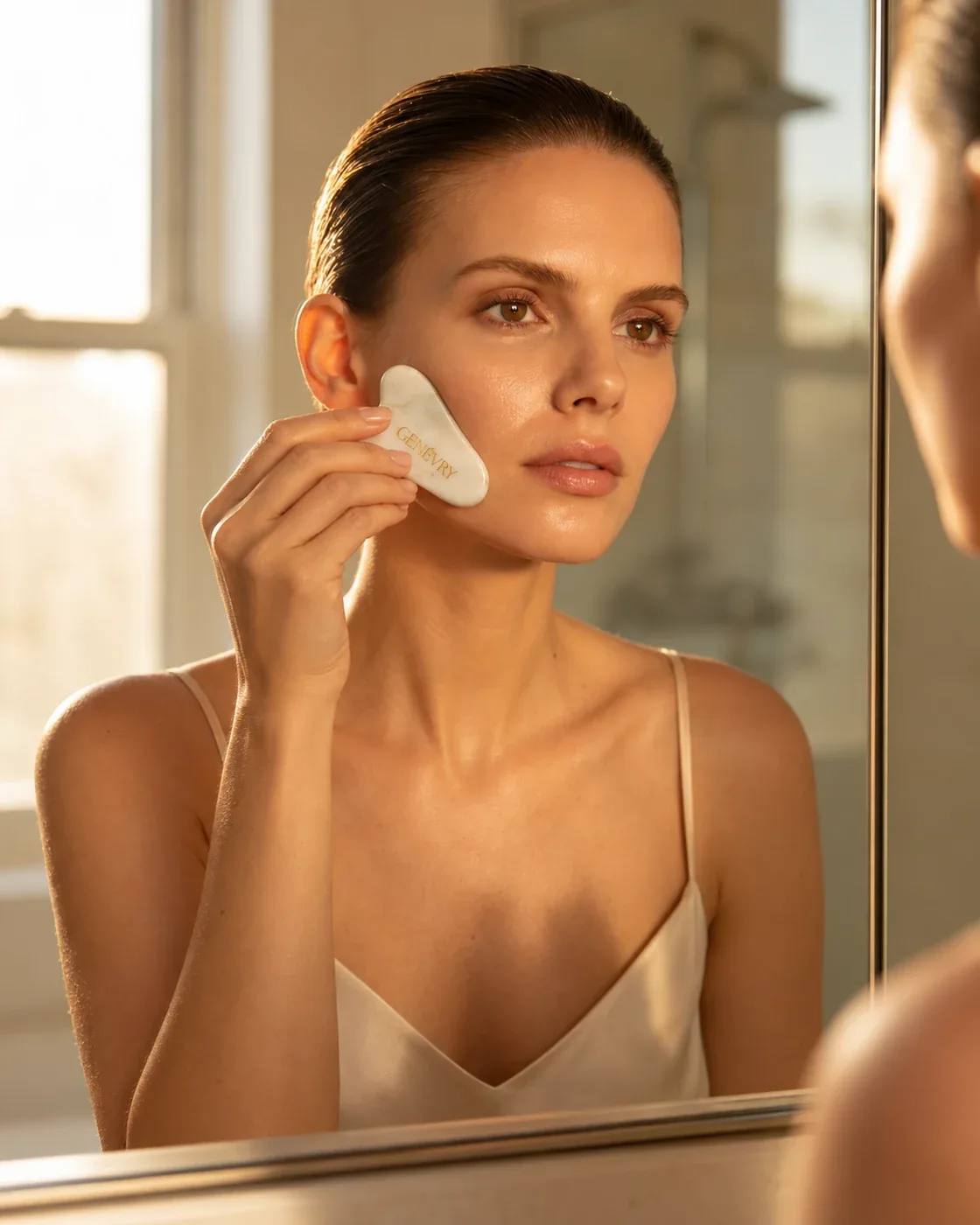
The method is to stop imposing anything on your skin for a few hours and watch what it does on its own. Pick a day at home — no makeup, no sun, no rush.
- In the morning, wash your face with a mild cleanser and lukewarm water, then pat dry rather than rubbing.
- Apply nothing at all: no serum, no moisturiser, no sunscreen. Stay indoors at normal room temperature.
- Wait two to four hours and keep your hands off your face.
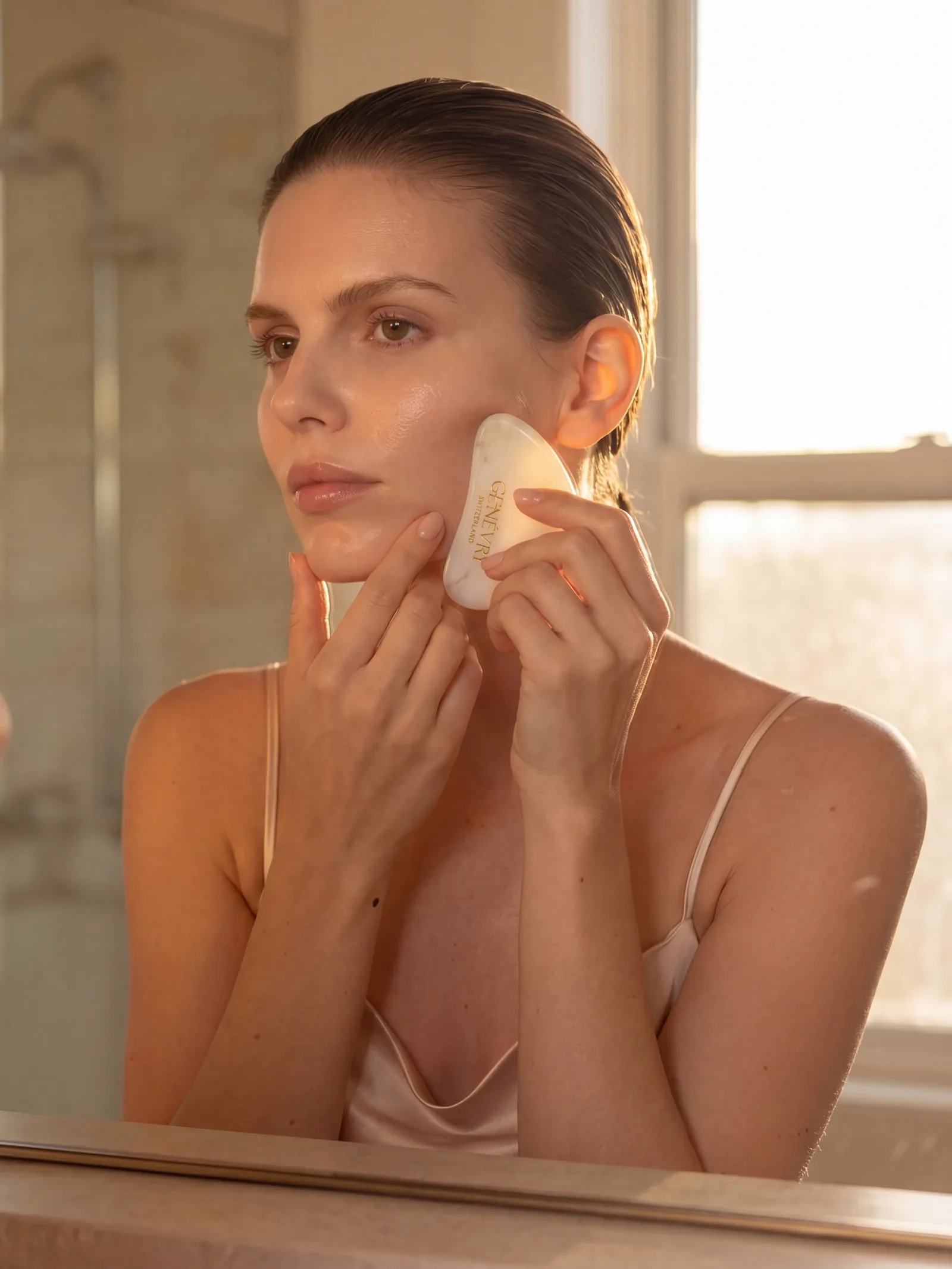
- Stand by a window and look in daylight, not under a bathroom spotlight that sharpens every shadow.
- Press a blotting sheet to your forehead, nose, cheek and chin for around twenty seconds each, then compare the oil marks.
You are reading two signals at once: shine and comfort. Shine tells you about sebum, a tight feeling tells you about the skin barrier. Both can appear together, and that combination is information in itself.
If mornings are never free, the test works in the evening too: cleanse as soon as you get home, apply nothing and assess before bed. The only condition is that nothing goes on the skin in between — no cream, no sunscreen, no walk in cold wind. Write the result down in one sentence with the date and the season. In six months you will have something to compare it to.
Five skin pictures in one table
Classifications differ in the details, but in practice they come down to five pictures. The table below puts what you see after the test next to what that skin usually needs.
| Skin type | What you see after 2–4 hours | How it behaves during the day | What to look for in a product |
|---|---|---|---|
| Normal | Even satin finish, blotting sheet almost clean, pores visible only up close | Slight shine on the nose by evening, no tightness | A light moisturiser, daily sunscreen, few changes |
| Oily | Clear shine on forehead, nose and chin; oil marks from every zone | Makeup slides within hours, pores look more open | Gel-cream textures, humectants, non-comedogenic formulas |
| Dry | Matte, rough to the touch, fine flaking around the nostrils, clean blotting sheet | Tightness after cleansing lasts for hours | Emollients and lipids, a richer texture, gentle cleansing |
| Combination | Shine across the T-zone, cheeks matte or rough | Two behaviours on one face, shifting with the season | Zone care: lighter in the centre, richer on the cheeks |
| Sensitive | Redness or stinging within the first quarter of an hour, sometimes with nothing visible | Fast reaction to a new product, wind or hot water | Short ingredient lists, fragrance-free, one new product at a time |
Sensitivity is often listed separately because it can sit on top of any of the other four. If you recognise yourself in the last row, treat it as the rule that overrides the others when you read a label.
Skin type and skin condition are not the same thing
Your type is relatively stable and depends mostly on the activity of the sebaceous glands — on genetics, age and hormones. A skin condition changes from week to week: dehydration, irritation after too much exfoliation, winter air, a long flight, a run of short nights.
The most common mix-up is dry versus dehydrated. Dry skin is short of lipids; it stays rough and matte all year. Dehydrated skin is short of water and can be oily at the same time: it shines, feels tight and shows a mesh of fine lines when you gently pinch the cheek and let go. Hydration can be measured instrumentally, which we cover in our piece on how skin hydration is measured. Oily and dehydrated at once is one of the most frequent results of the home test, and the reason that stripping cleansers tend to make things worse.
What to choose once you have the answer
Choosing starts with texture, not with the promises on the box. Oily and combination skin handles light emulsions well, dry skin wants a richer base, and sensitive skin wants the shortest ingredient list you can find. In the morning every type finishes with sunscreen, because protection is the one step all five pictures share.
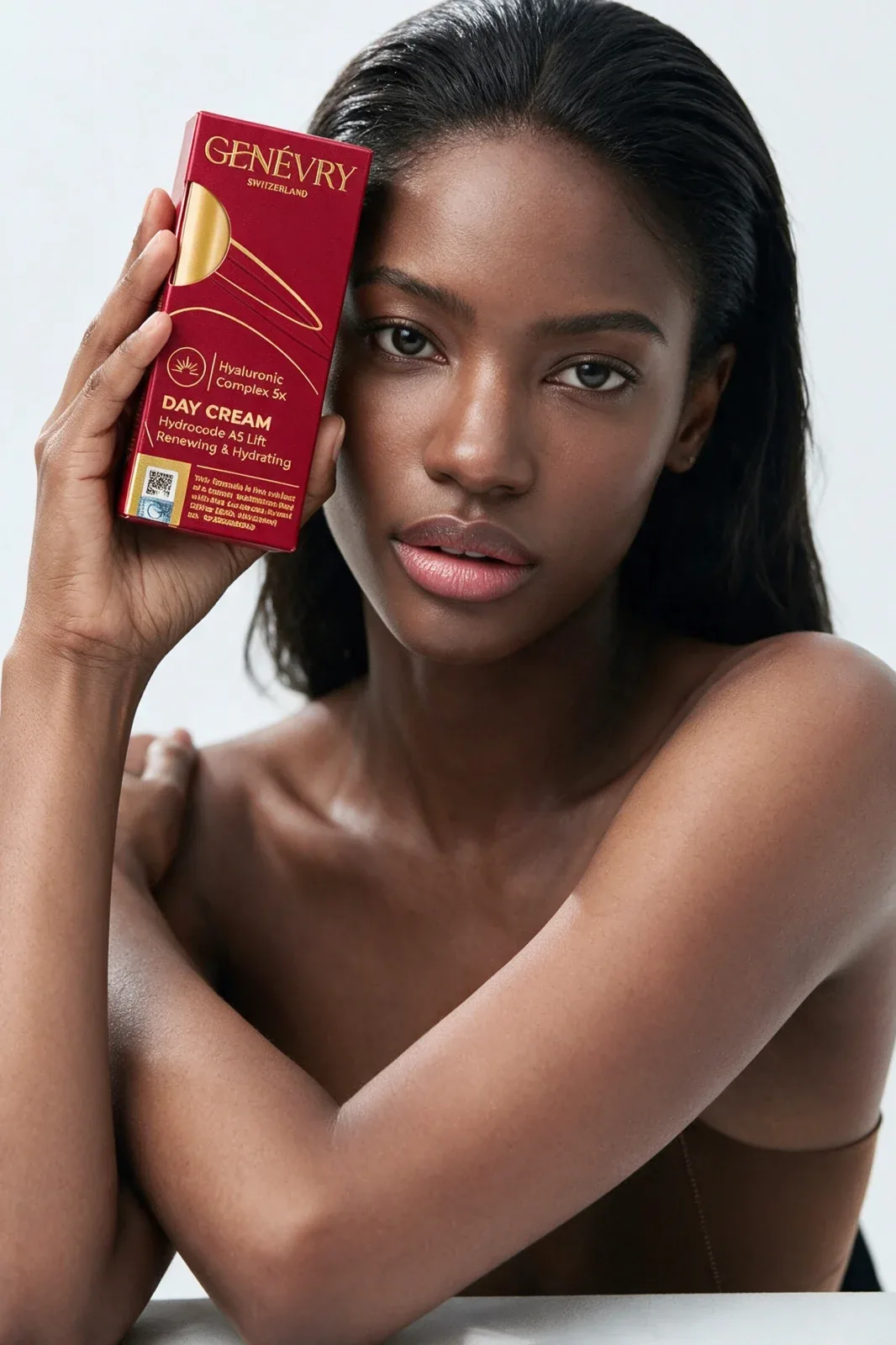
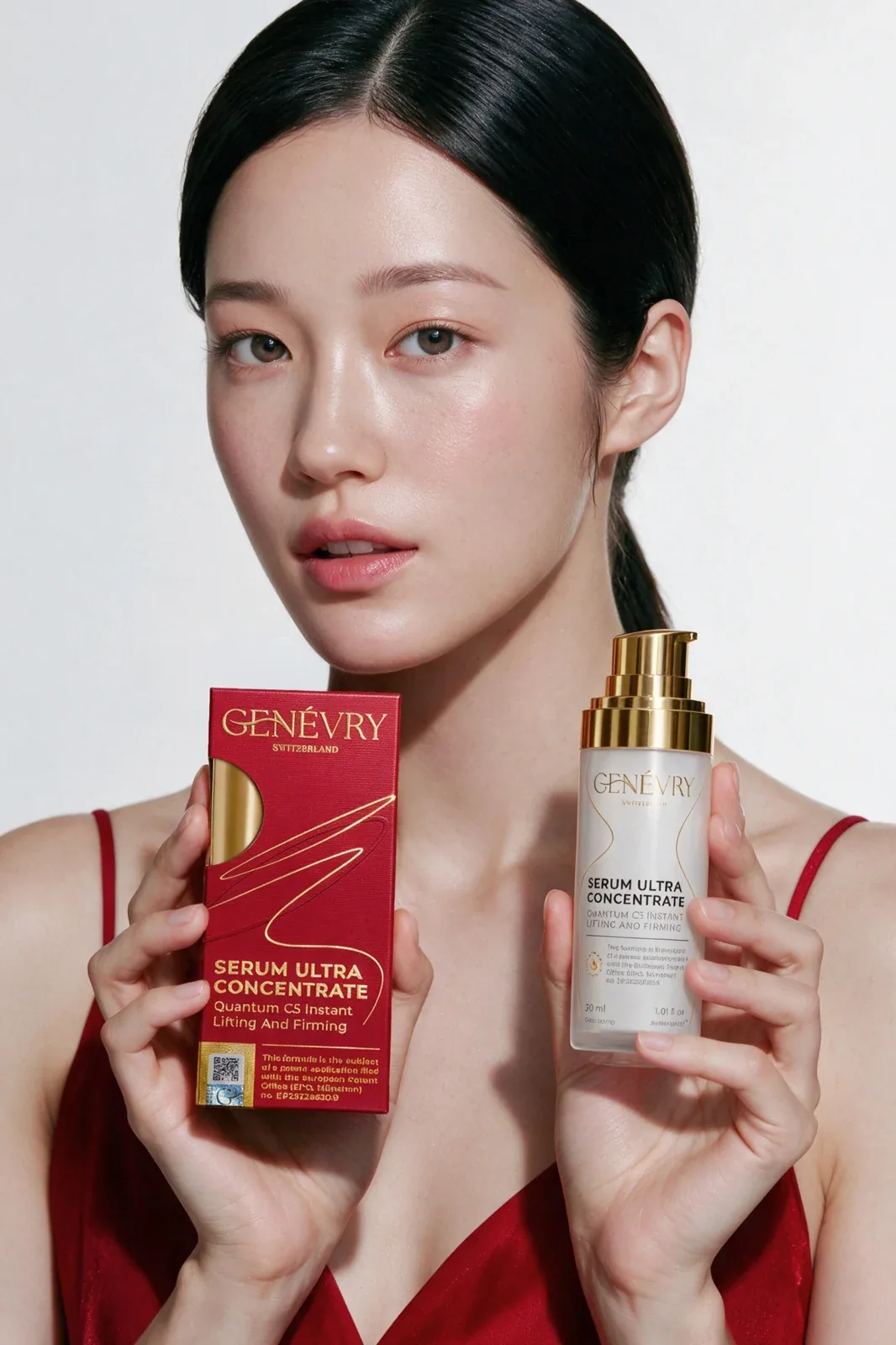
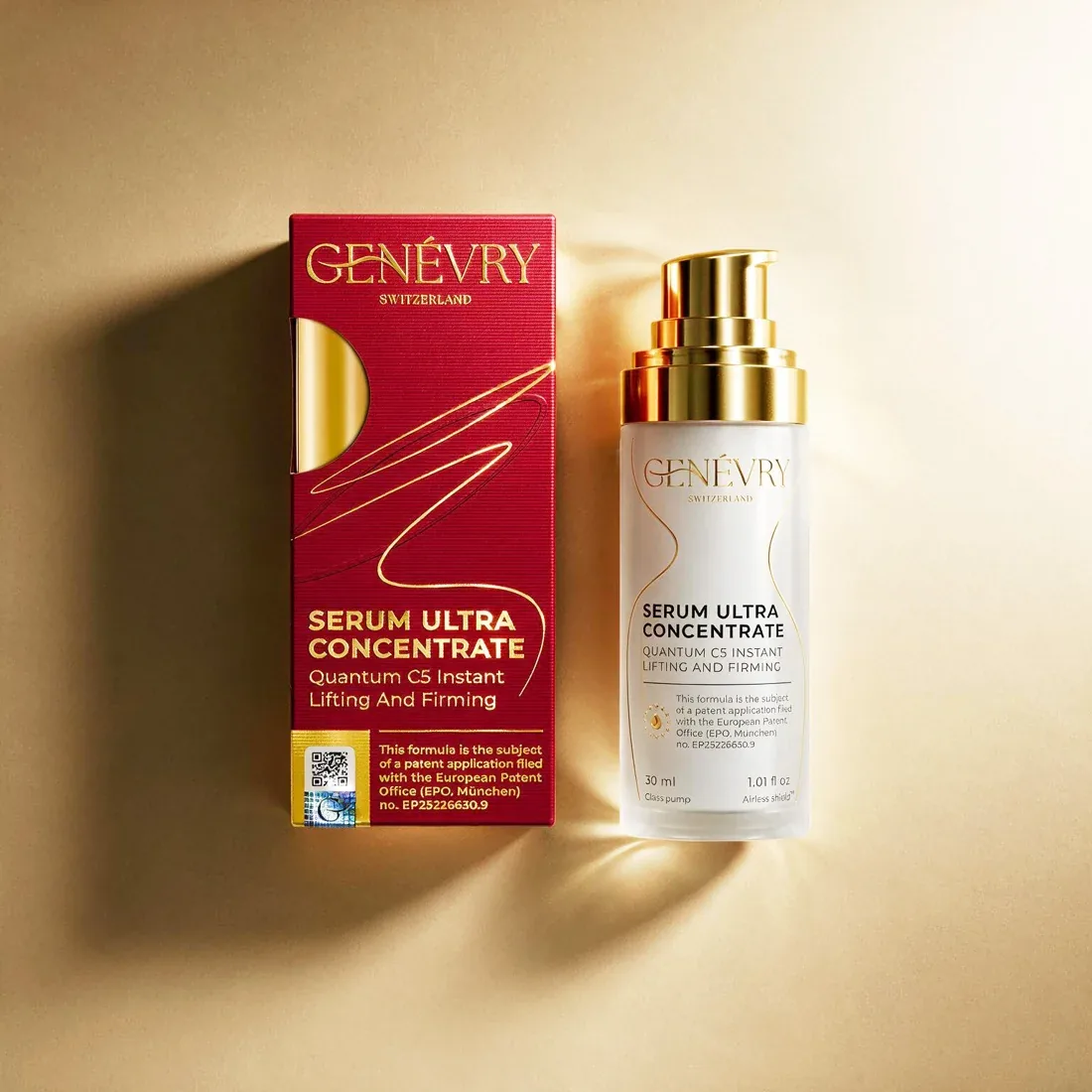
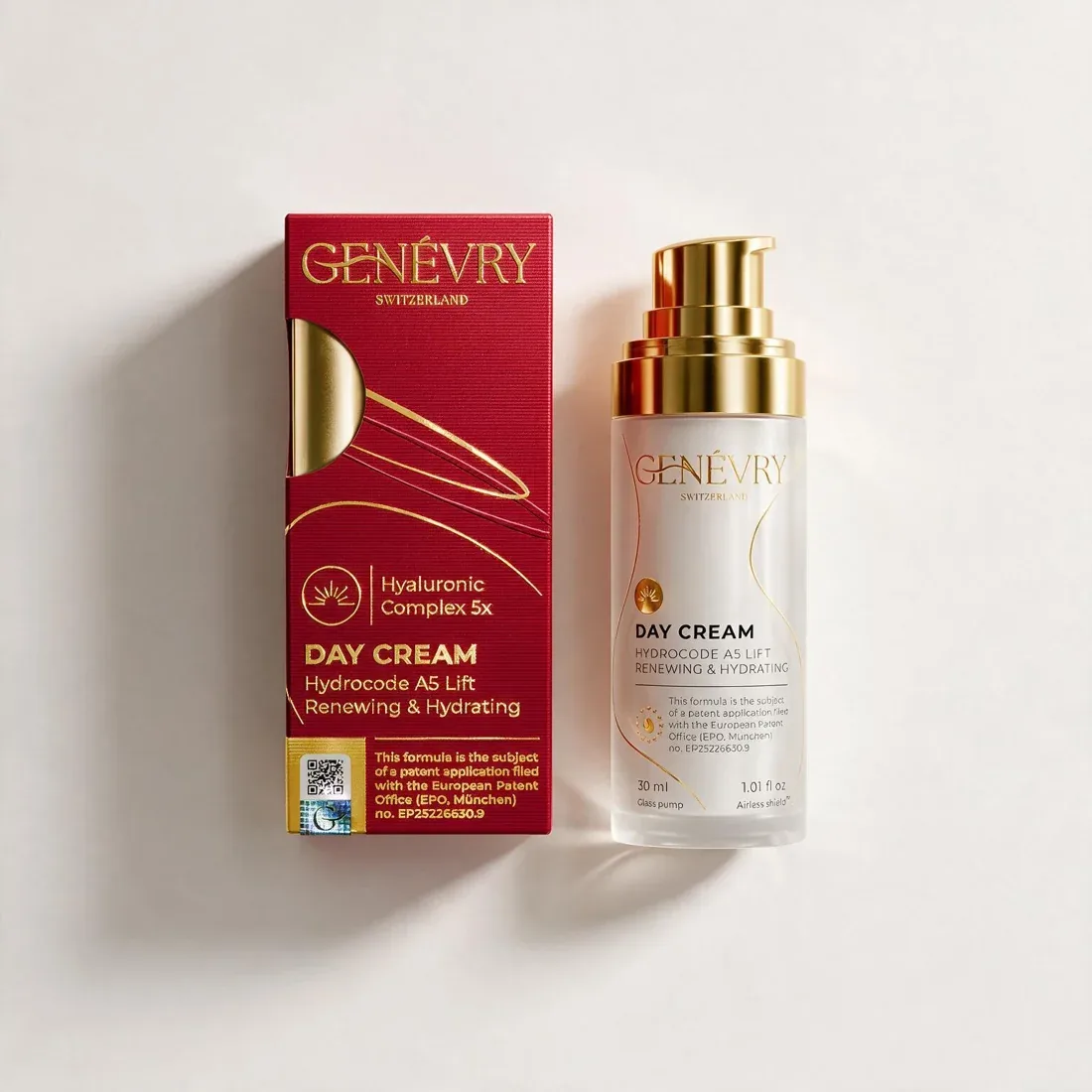
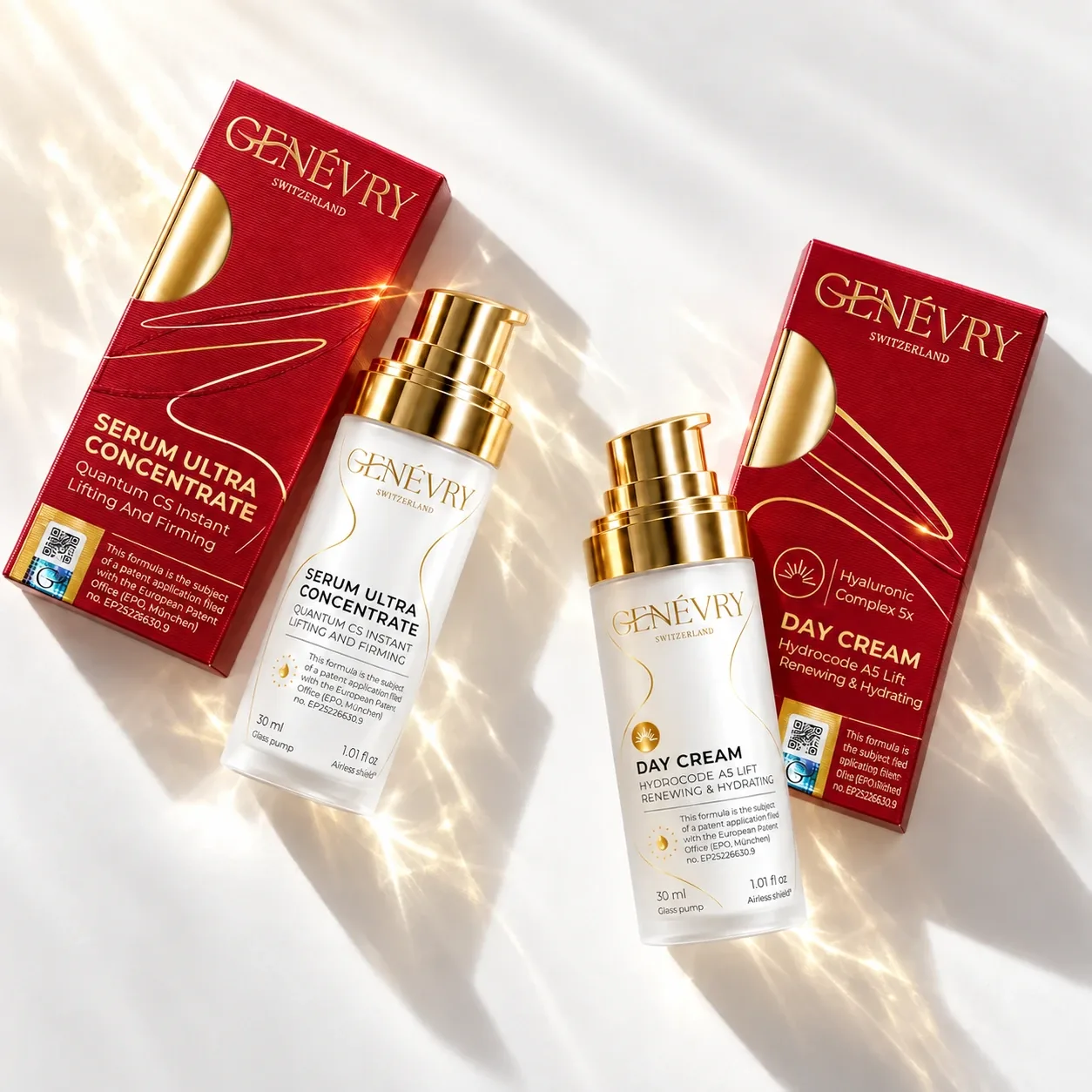
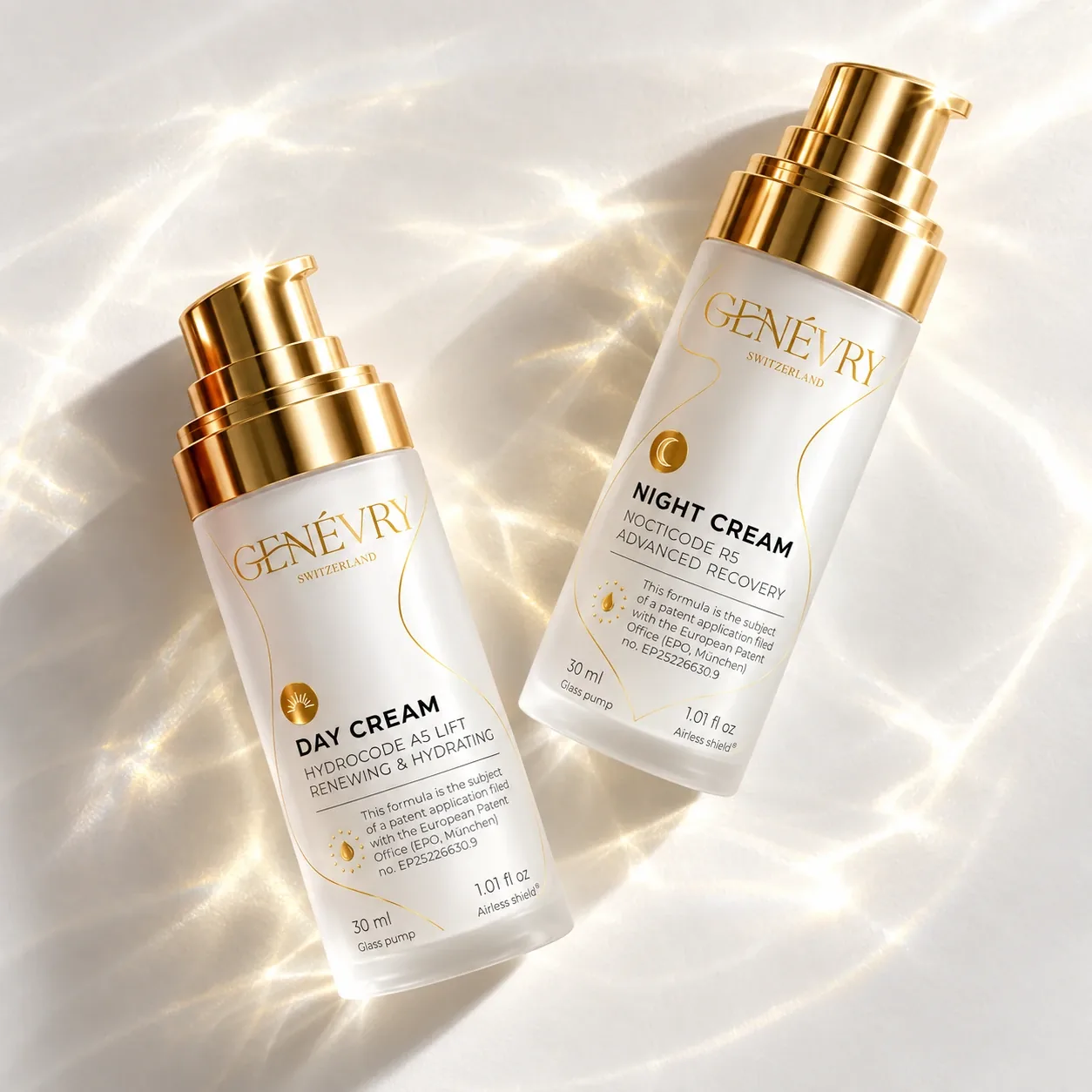
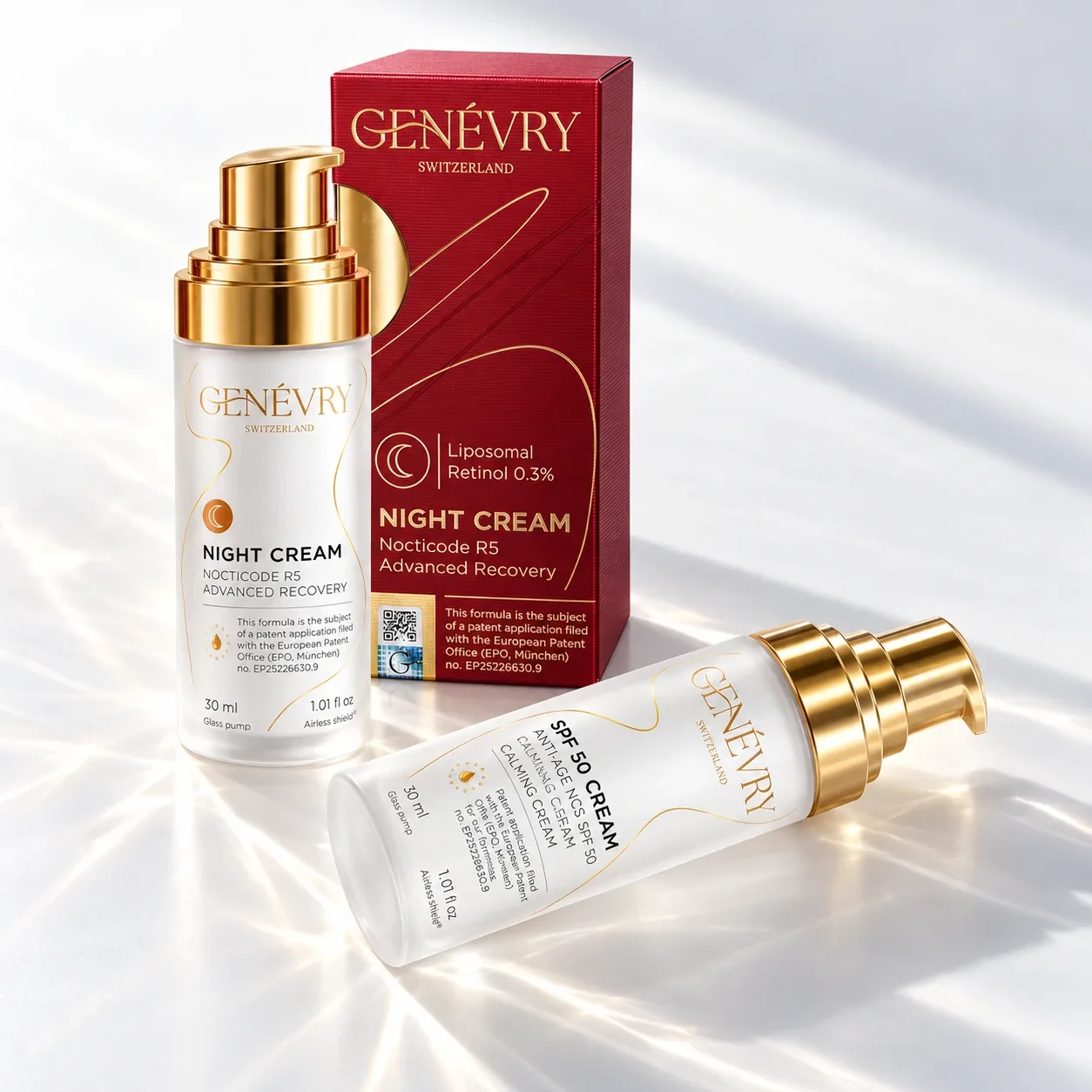
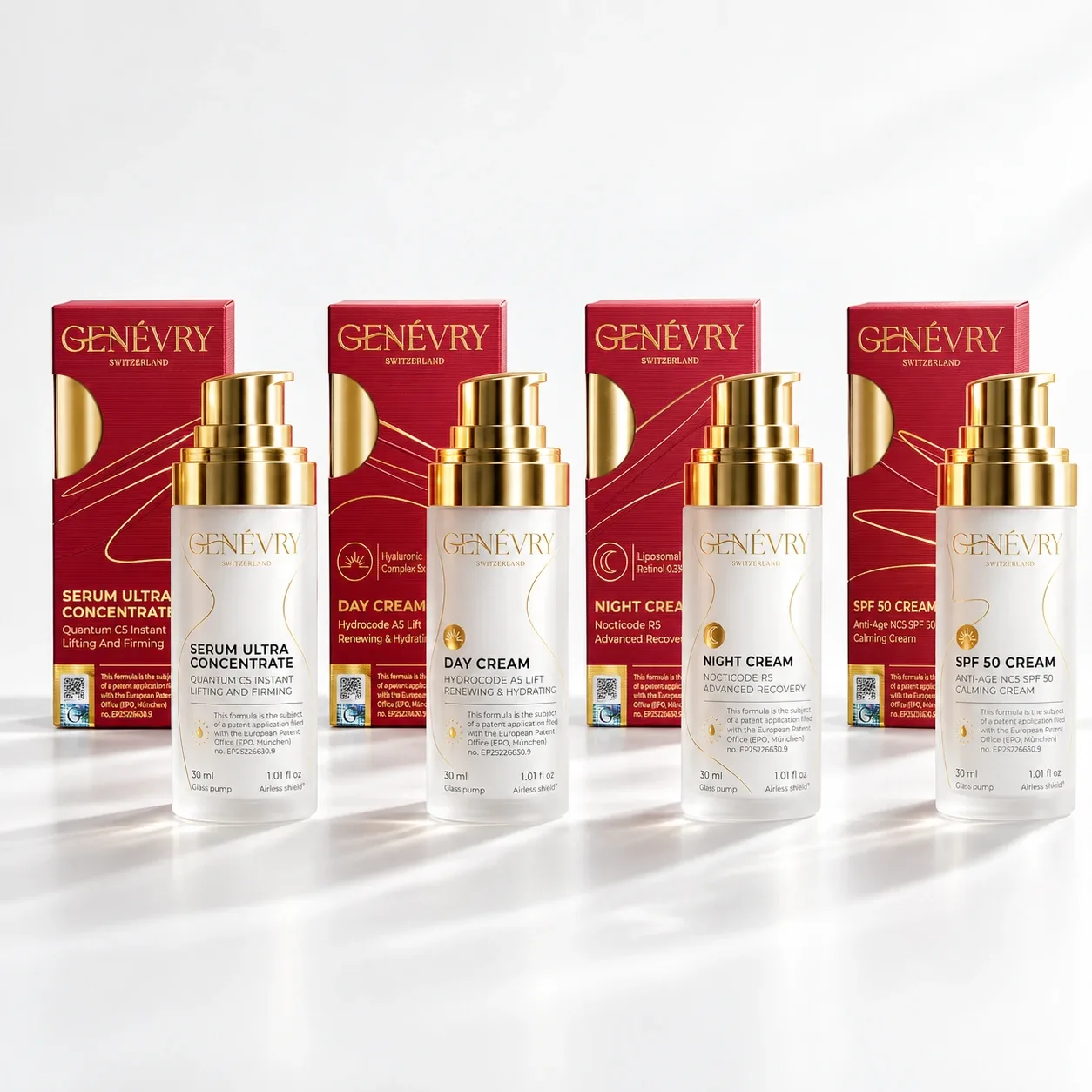
If the test puts you in the normal, combination or dehydrated group, a sensible daytime step is the Hydrocode A5 Lift day cream — in GENÉVRY instrumental testing, mean skin hydration rose by 41% after four weeks of use (Corneometer CM 825, n=10). If your complexion reads dull rather than dry, a serum belongs underneath it: Quantum C5 combines the Copper Tripeptide-1 copper peptide with liposomal vitamin C and goes on as the first layer. When you would rather rebuild the whole routine than add another jar, The Skin Code Protocol brings four day-and-night steps together in one collection. The order of those layers follows the same logic morning and evening, which we set out in our guide to layering skincare.
With oily and combination skin, sequence often matters more than the number of products: a light hydrating layer over the whole face, a richer cream only on the cheeks and temples, sunscreen last. Dry skin works the other way round — the heavier layer earns its place at night, when the skin has no makeup, wind or face mask to deal with.
What can skew the result
The home test is only reliable when your skin is not in an exceptional state. Things that shift the reading: hot water and a strongly foaming gel, exfoliating in the past two days, a fresh tan, dry air from central heating, where you are in your cycle, and the change of season — the same face can read combination in July and dry in January. That is why it is worth repeating the test twice a year, at the turn of the seasons. The winter end of that swing is covered in our article on winter skincare and the skin barrier.
If you use prescription retinoids or other prescribed medication, or you are pregnant or breastfeeding, discuss your routine with your doctor — a home observation does not replace a consultation. Persistent redness, stinging, inflamed spots or a sudden change in how your skin looks are reasons to see a dermatologist before you change products.
Frequently asked questions
Can your skin type change?
Yes. Sebum production falls with age, so skin that was oily at twenty is often combination after forty. Hormonal shifts and the seasons move the picture too. Repeating the test in spring and autumn is usually enough.
Does oily skin need a moisturiser?
It does — in a different texture. Skipping hydration does not reduce sebum, and a dried-out barrier reacts with irritation more often. A light emulsion or a gel-cream usually suits better than a heavy balm.
How do I tell dry skin from dehydrated skin?
Dry skin is rough and matte whatever the season. Dehydrated skin can shine and feel tight at the same time, and shows fine lines when you pinch the cheek gently. The first needs lipids, the second needs humectants and calmer cleansing.
Is one moisturiser enough all year?
For normal skin, usually yes. Dry and combination skin tends to do better with a change of texture between seasons: lighter in summer, richer through the months of frost and indoor heating.
Does the test have to be done without makeup?
Yes, and without sunscreen. Every layer changes what the blotting sheet picks up. If you cannot give it a whole morning, do it on a day off — a rushed two-hour version with traces of foundation tells you nothing reliable.
Identifying your skin type is not a diagnosis for life, it is a starting point. It answers two practical questions: how rich your moisturiser should be, and how cautiously you should introduce active ingredients. Observation fills in the rest — the same observation you make by the window after a few hours with nothing on your face, twice a year, when the weather turns.
The formulas in this article
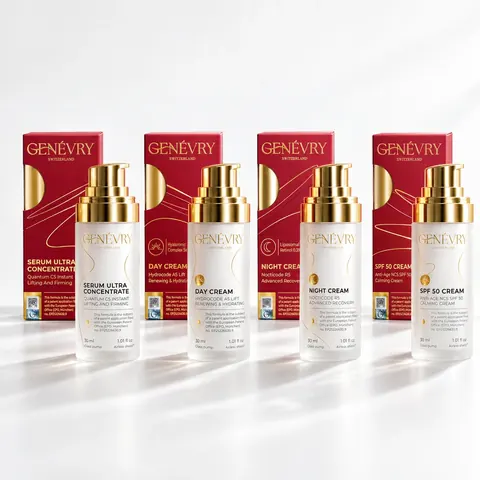 The Skin Code Protocol完整 24 小时护肤仪式 · 4 × 30 ml¥899Discover the formula →
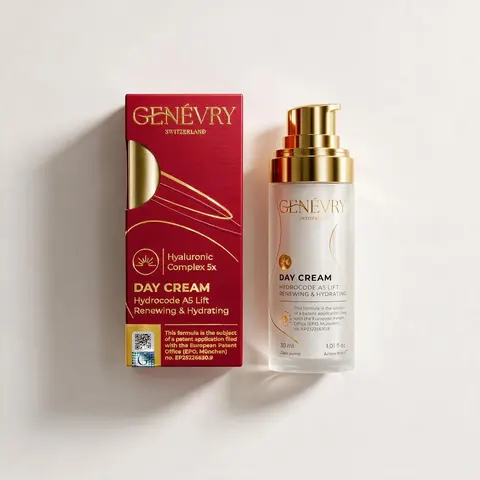 Hydrocode A5 Lift焕新日霜¥279Discover the formula →
Cosmetic product. Individual results may vary.
 English / EUR
 English (US) / USD
 English (UK) / GBP
 Deutsch / EUR
 Deutsch (Schweiz) / CHF
 Français / EUR
 Italiano / EUR
 Español / EUR
 Nederlands / EUR
 Polski / PLN
 日本語 / JPY
 한국어 / KRW
 中文 / CNY
 العربية / AED
 English (Australia) / AUD
 English (Canada) / CAD
 Svenska / SEK
 Dansk / DKK
 Norsk / NOK
 Suomi / EUR
 Português / EUR
 Türkçe / TRY
 Čeština / CZK
 Magyar / HUF
 Română / RON
 Ελληνικά / EUR
 Slovenčina / EUR
 Hrvatski / EUR
 Slovenščina / EUR
 Lietuvių / EUR
 Latviešu / EUR
 Eesti / EUR
 Български / EUR
 Українська / EUR