Facial massage for firmness: the evening ritual, and what to expect
Five minutes with a stone improve how skin looks straight away. Everything measurable and longer-lasting is written by the formula applied afterwards.
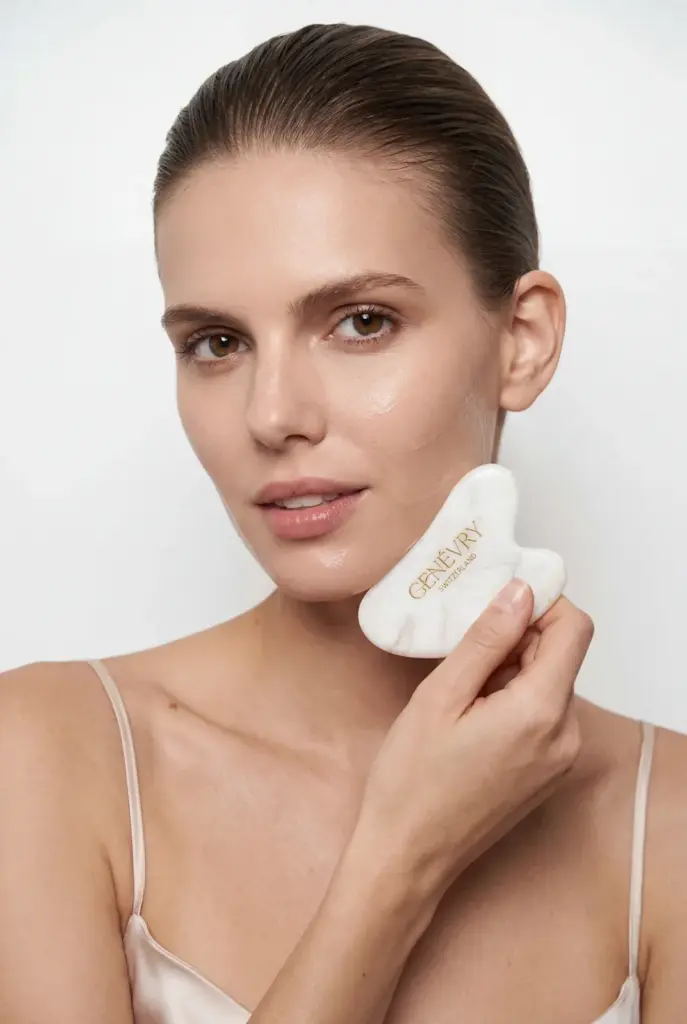
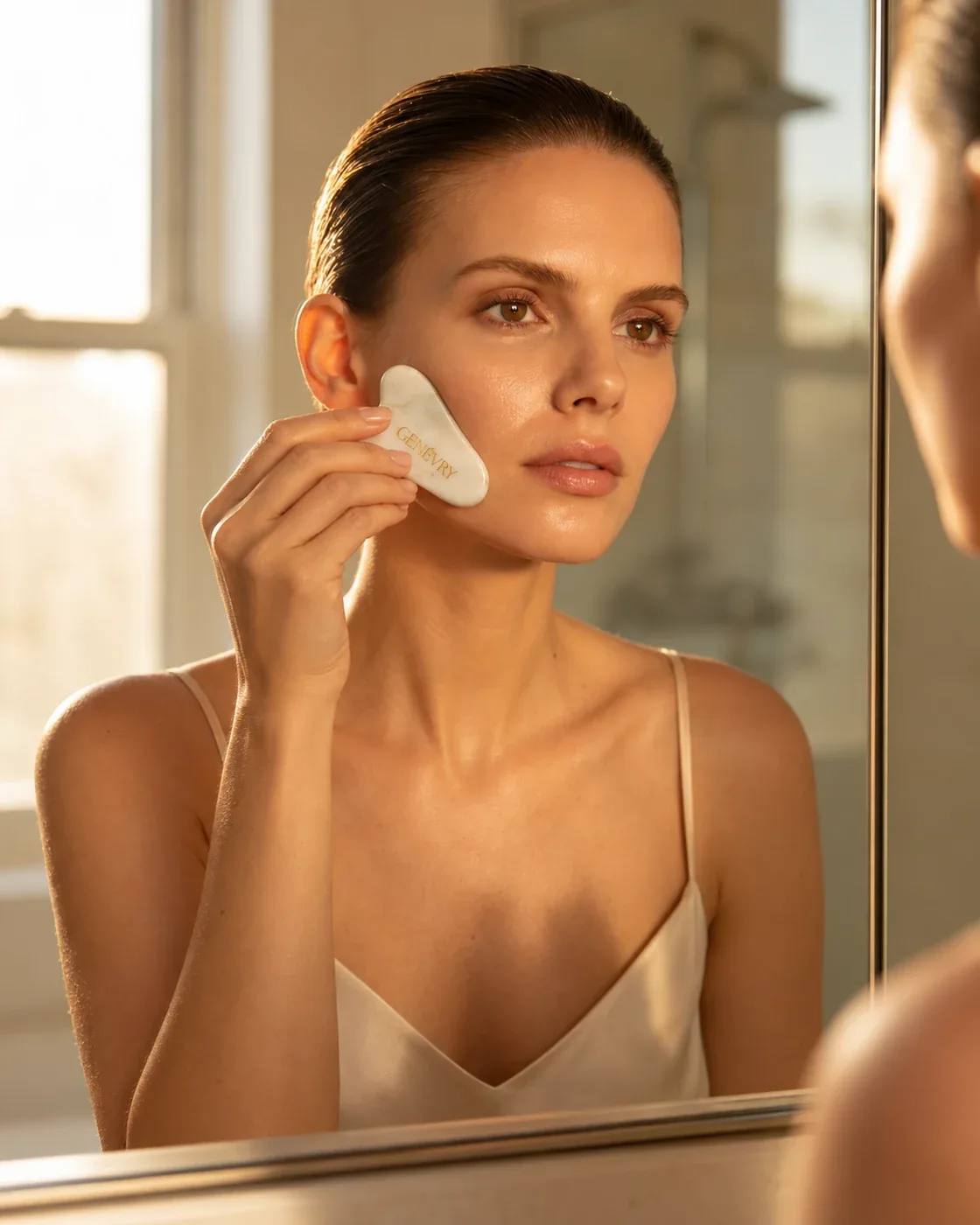
A facial massage for firmness sounds like a promise with no price tag: five minutes, a smooth stone or just your hands, no needles. It helps to separate two things that marketing copy usually blurs into one — what you see in the mirror ten minutes after a massage, and what happens to the mechanics of your skin over the following weeks. The first belongs to the massage. The second belongs to the formula you apply afterwards, and to repetition.
What follows: what an evening massage actually changes, a sequence that fits into five minutes, what was measured instrumentally in the night-cream study, and the evenings when the stone should stay in the drawer.
What a facial massage for firmness does at once — and what it will not do
Several things happen immediately after a massage, and all of them are short-lived. Blood flow in the skin increases, so the complexion looks warmer and less grey. Fluid that has pooled around the eyes and along the jawline — overnight, or through a day at a desk — moves on, and the contours read more clearly. Muscles you hold without noticing let go: the jaw clenchers, the small muscle between the brows after hours at a screen.
This set of effects lasts hours rather than weeks, which is exactly why massage photographs so well in before-and-after images taken the same evening. There is a second benefit no photograph records: a massage forces a slower pace at the end of the day and turns applying cream into five minutes of your own.
What it will not do: shorten a muscle, move subcutaneous tissue for good, rebuild a fibre network in five minutes, or replace what is done in a clinic. Under EU Regulation 655/2013 on cosmetic claims, we describe what can be defended: skin looks more rested, the contour appears more defined, the product spreads evenly. That is not a small list — it is simply a different one from “permanently firmer”.
Skin firmness: what changes with age, and what can be measured
Firmness is, in practice, the resistance skin offers when it is deformed and the speed at which it returns to shape. Three things govern it: the dense network of collagen fibres, the stretchable elastin fibres, and the amount of water bound in the upper layers. After thirty, collagen declines, elastin loses its spring, and the barrier holds water less well — and that last one is the only member of the trio that skincare influences quickly and visibly.
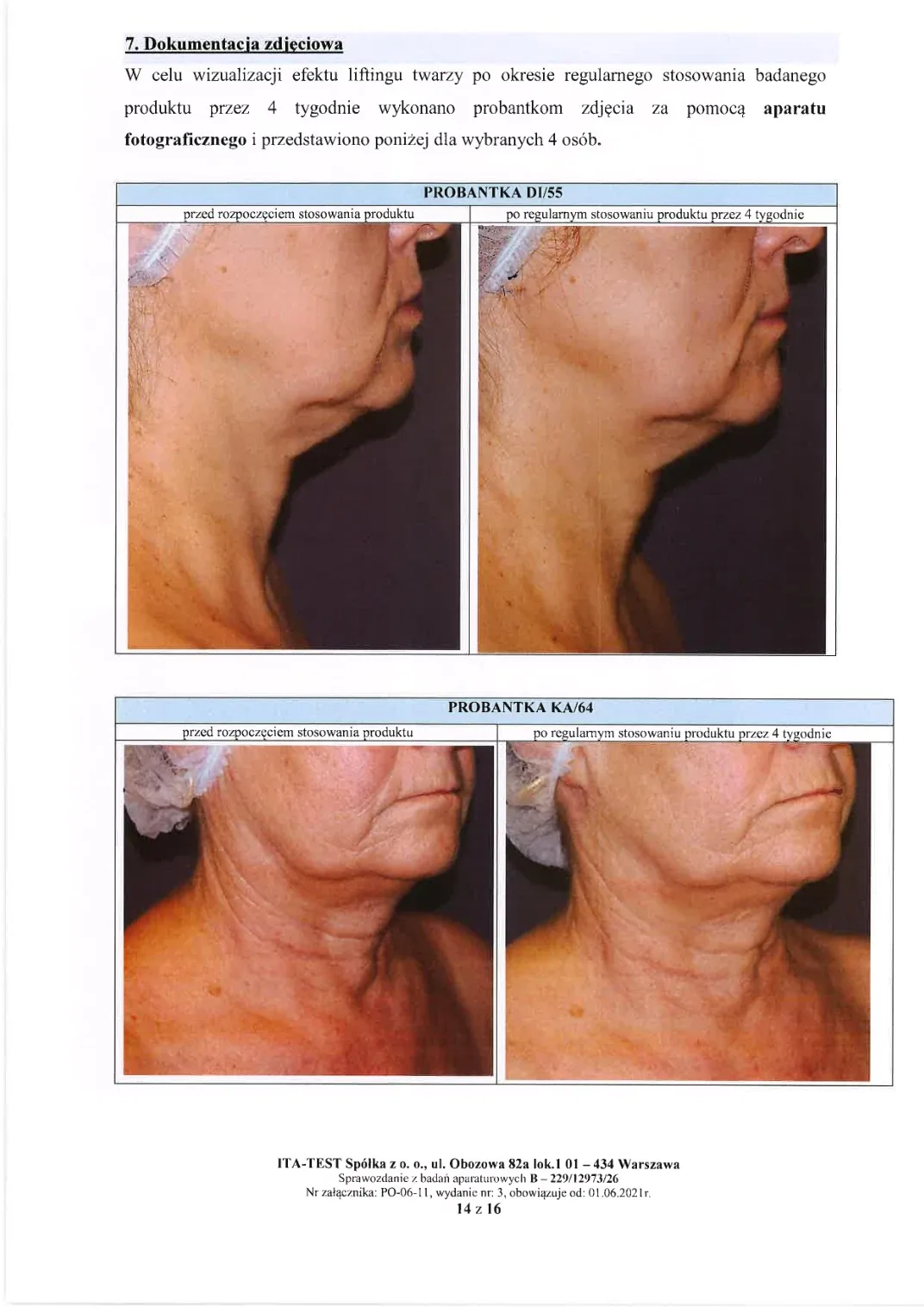
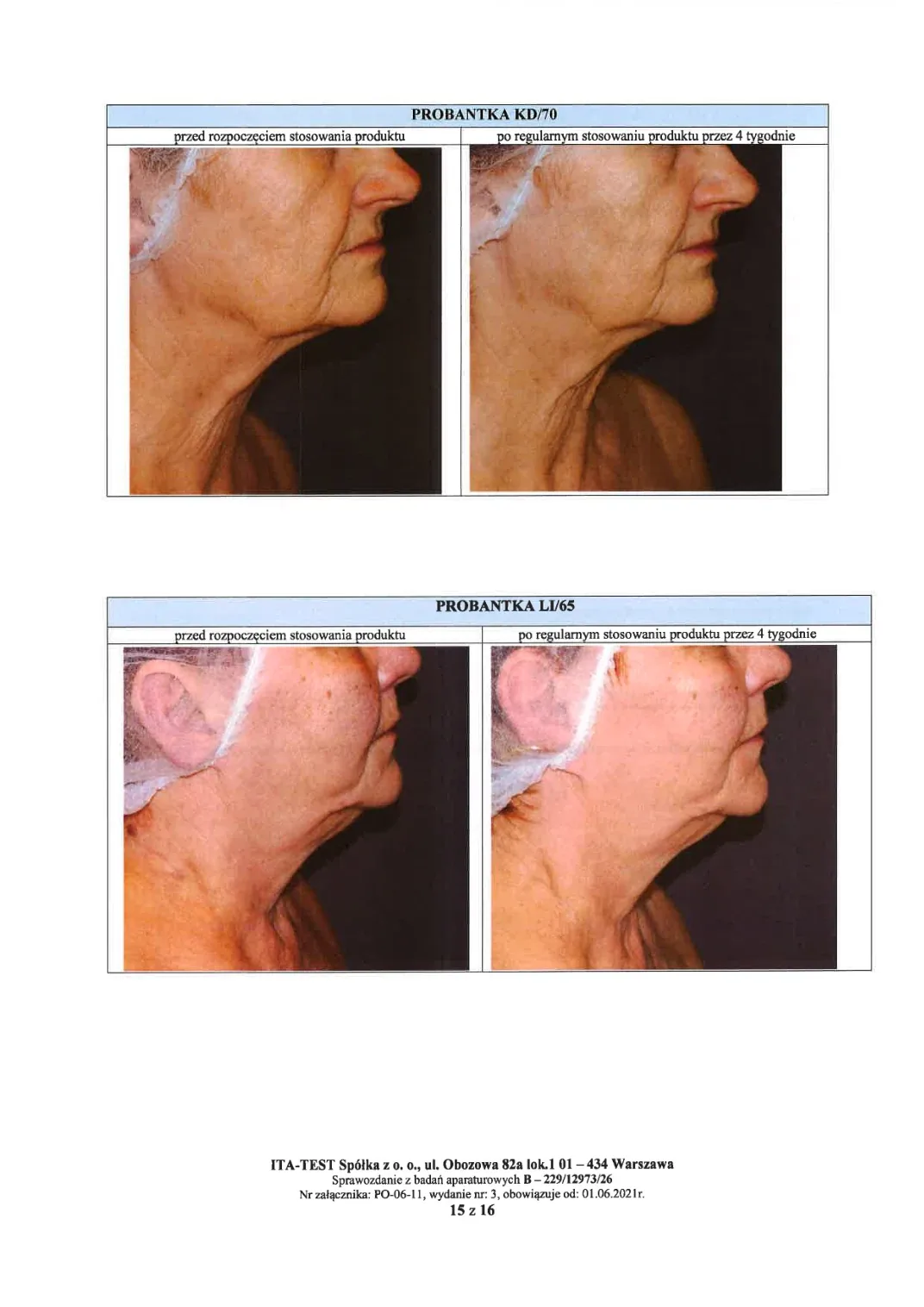
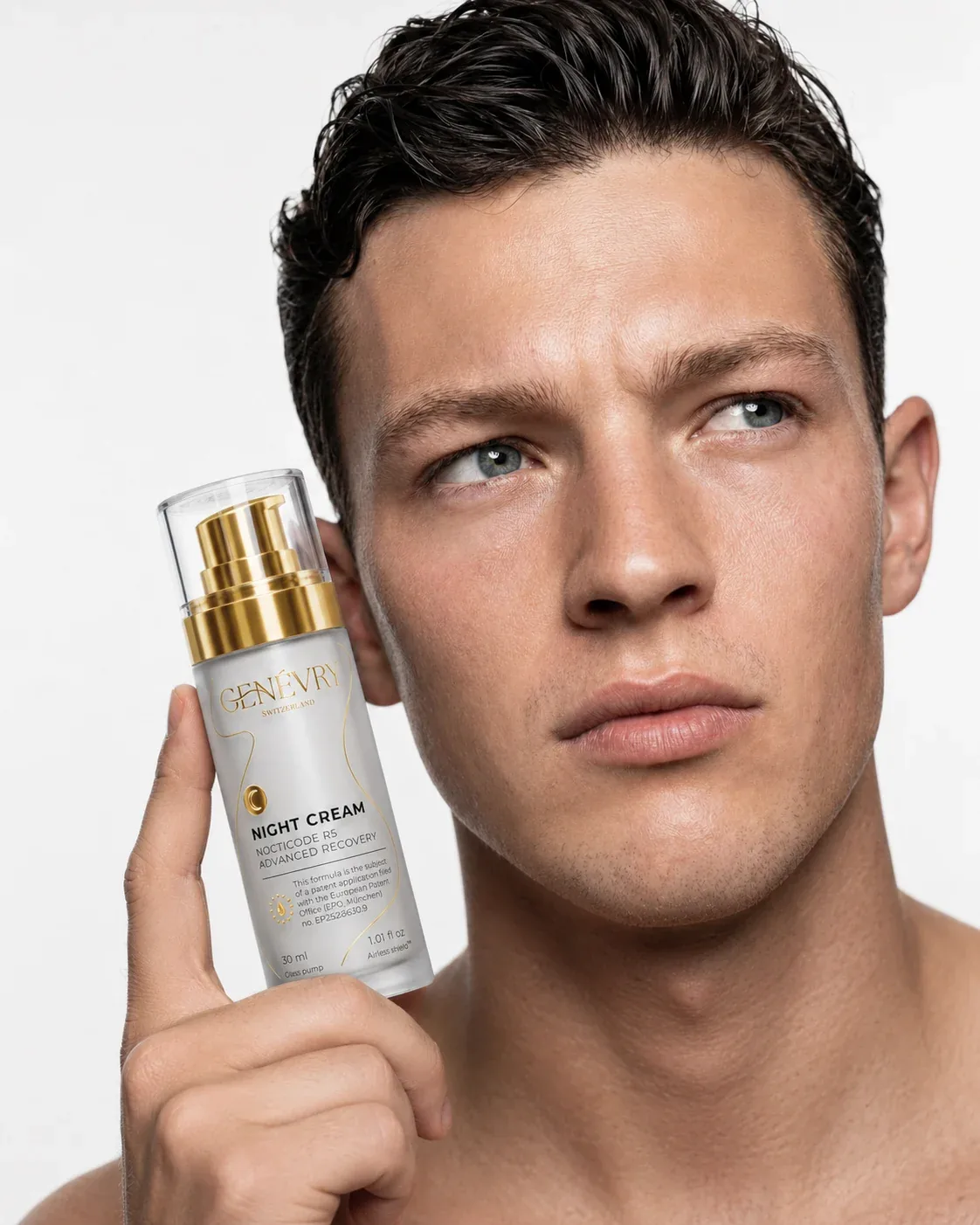
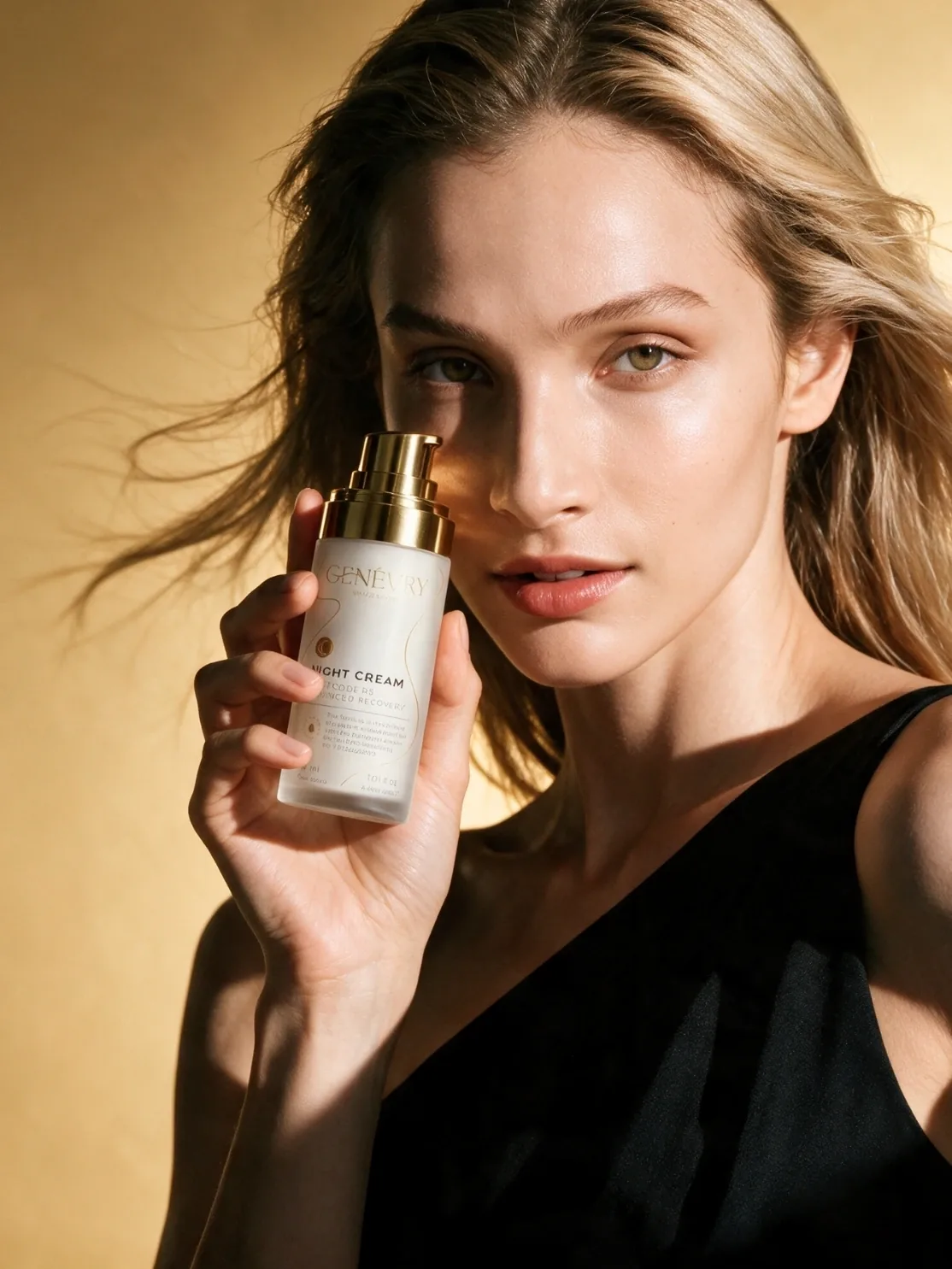
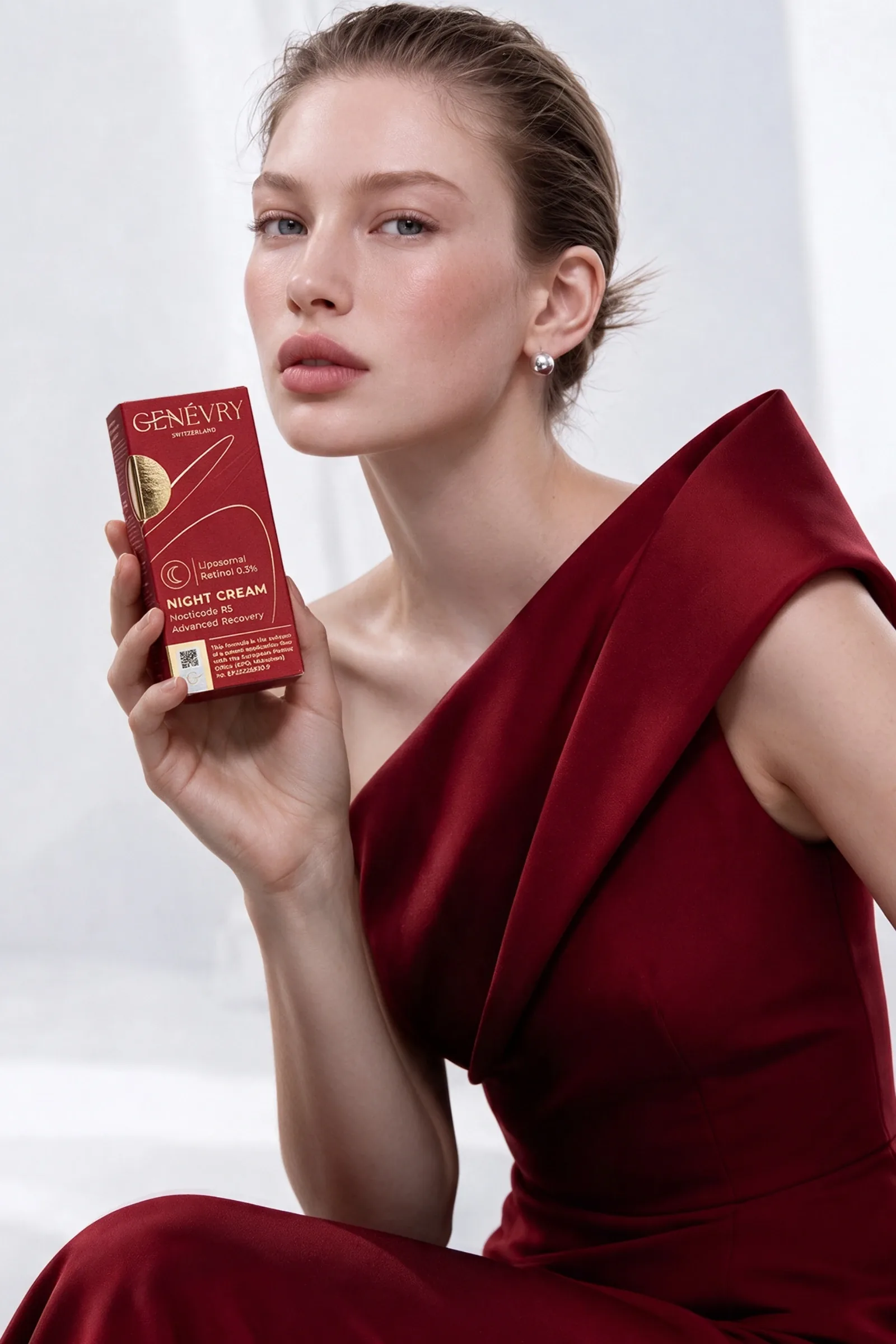
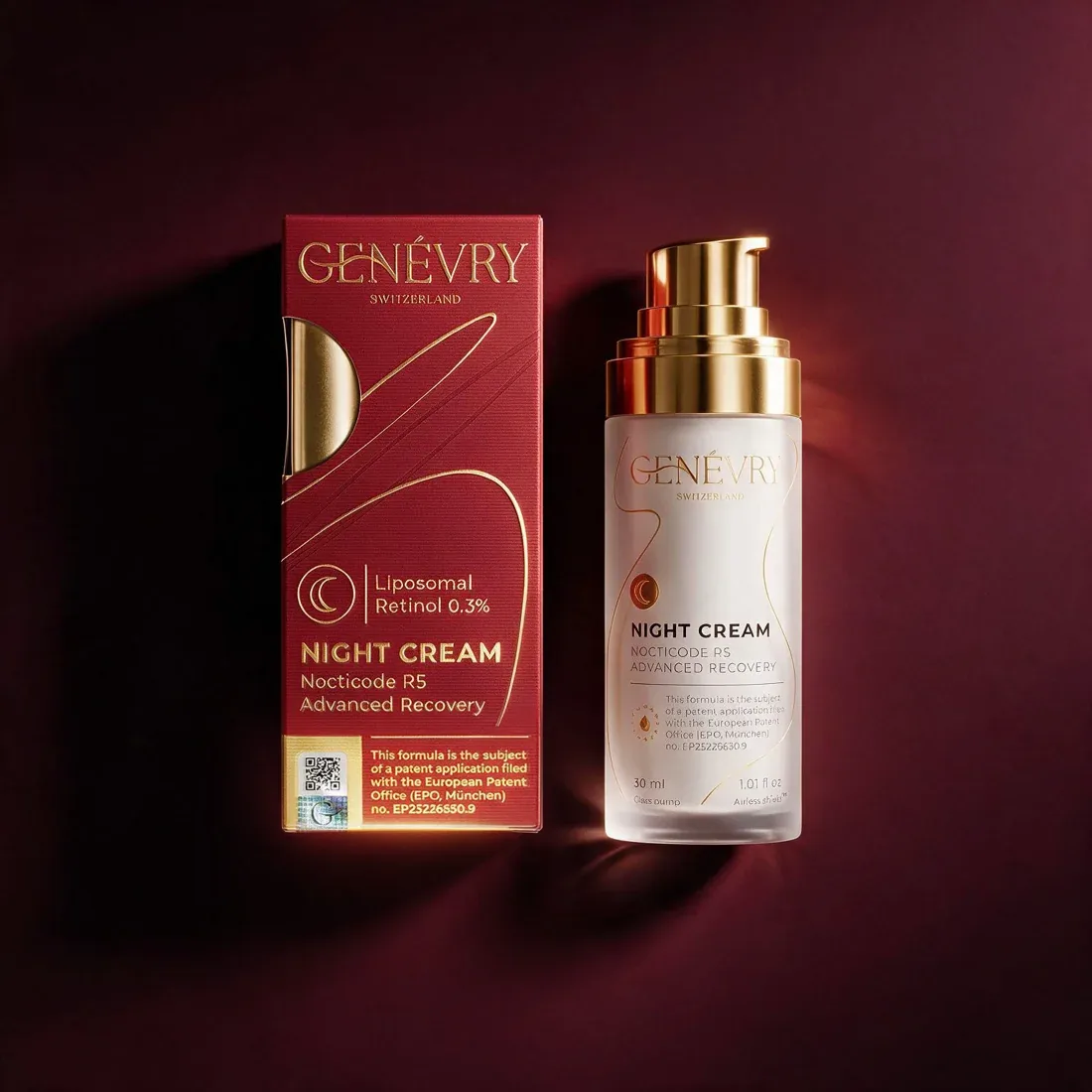
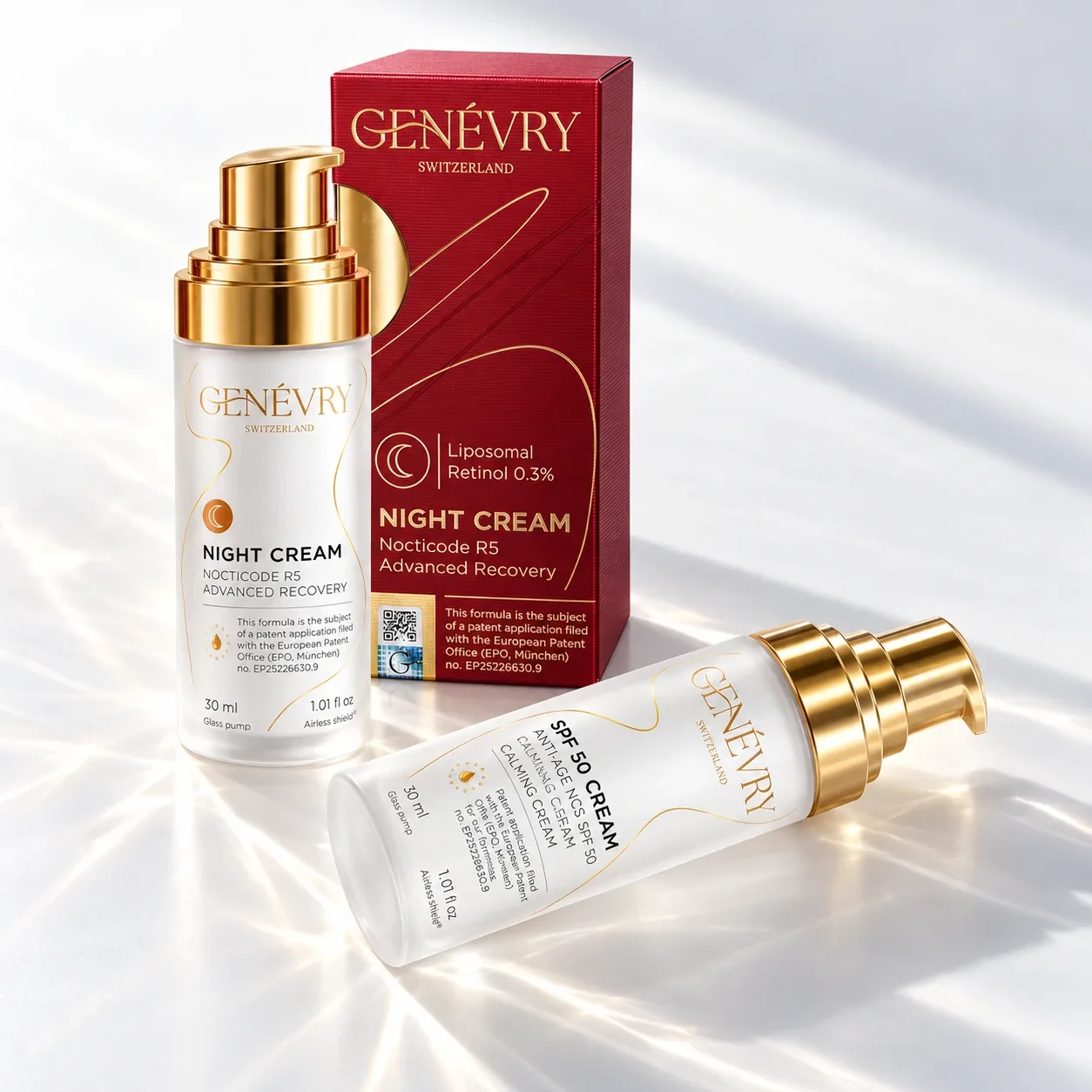
The parameter itself is measured with instruments: a probe draws a patch of skin in with a defined force and records how far it gives and how it returns. The Nocticode R5 night cream with liposomal retinol 0.3% went through exactly this kind of testing. In the instrumental study (4 weeks, n=10) firmness improved by 5–23% across the participants, with a group average of 14%. Mean elasticity rose by 11% and mean plasticity by 9%. Mean wrinkle length fell from 2.08 to 1.88 mm, a 10% reduction recorded in 9 of 10 participants (silicone replicas, VISIOLINE VL650), and mean skin hydration rose by 38% (Corneometer CM 825).
One caveat changes how those numbers should be read: the formula was measured, not the massage. Participants used a cream, not a massage protocol, so there is no basis for crediting the stone with those results. Massage is what it is — a way of distributing a product evenly and a moment that keeps the ritual from falling out of the calendar.
The evening ritual in five steps
The whole sequence takes six or seven minutes, of which the massage itself is three to five. Order matters more than duration: the stone always follows the slip layer, and the night cream always follows the stone.
| Step | What you do | Time | Watch for |
|---|---|---|---|
| 01 | Remove make-up and cleanse; pat dry, but not bone dry | 2 min | Massaging uncleansed skin simply spreads sebum and make-up |
| 02 | Slip layer: serum or facial oil, applied more generously than usual | 30 s | On dry skin the stone drags the skin instead of gliding over it |
| 03 | Massage: neck, jawline, cheeks, eye area, forehead | 3–5 min | Always from the centre of the face outwards, then down the neck |
| 04 | Night cream pressed in with the fingertips, without stretching the skin | 1 min | Introduce retinol gradually, following the product label |
| 05 | What is left on your hands goes to neck, décolleté and the backs of the hands | 30 s | These three areas are the first to drop out of any routine |
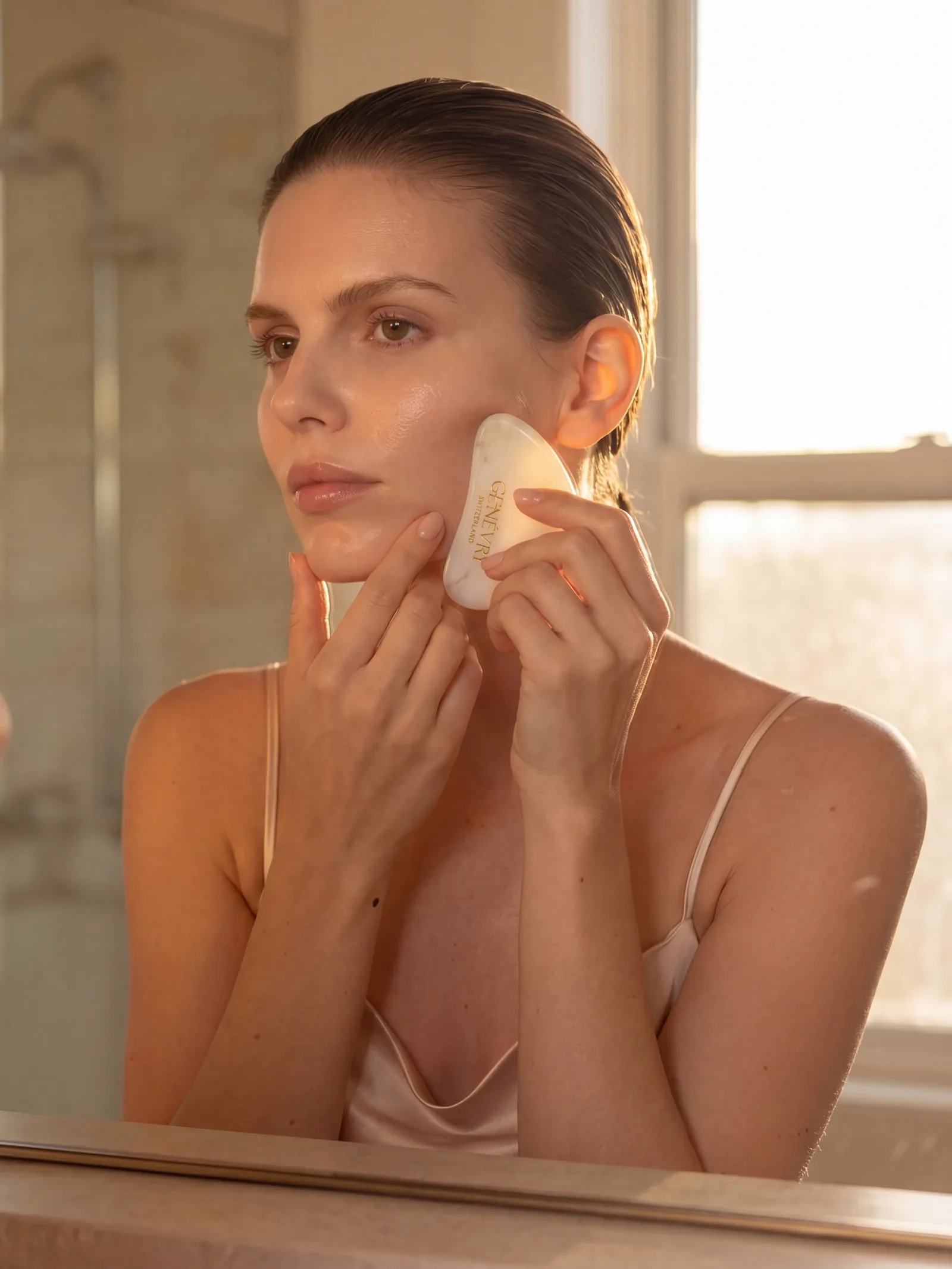
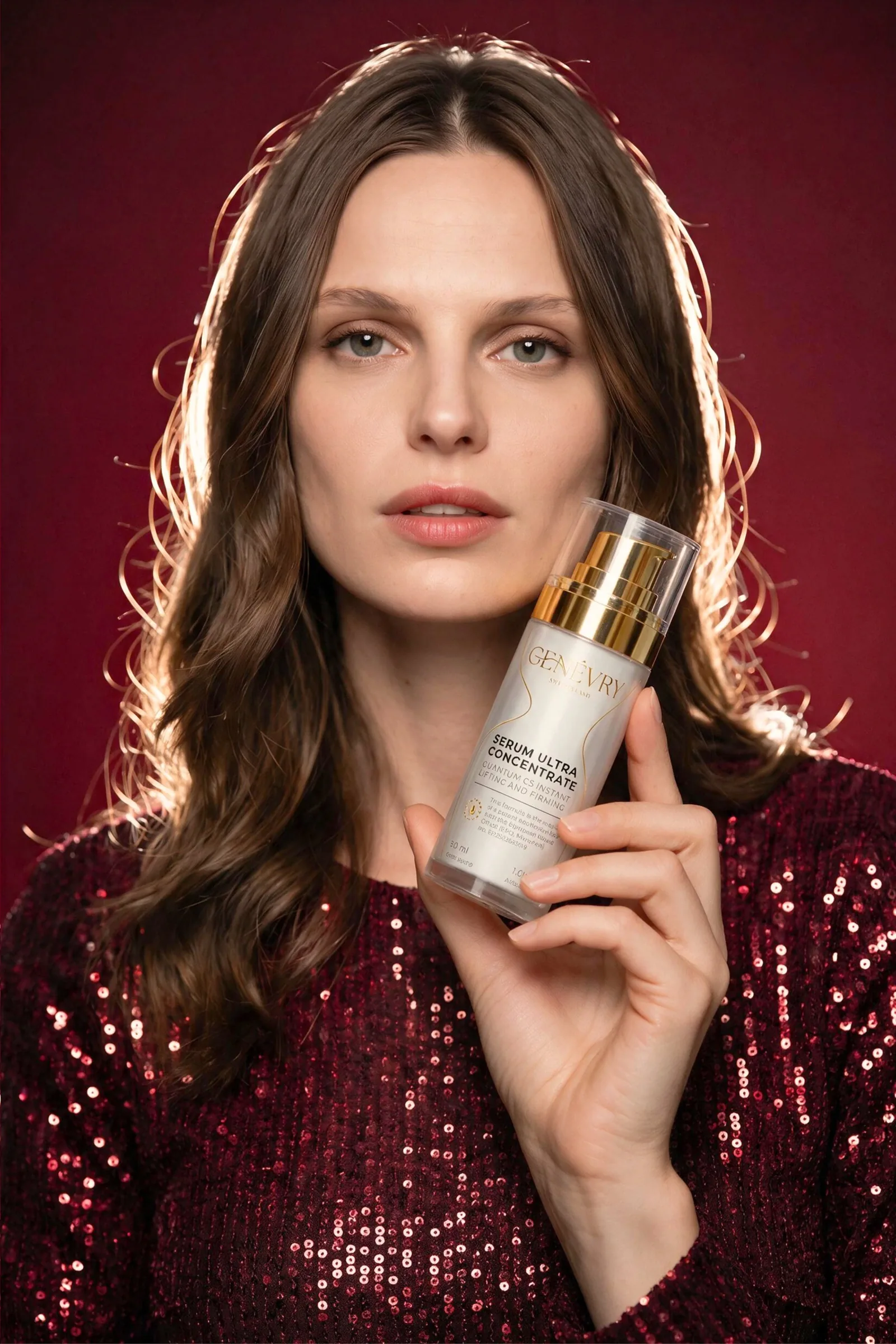
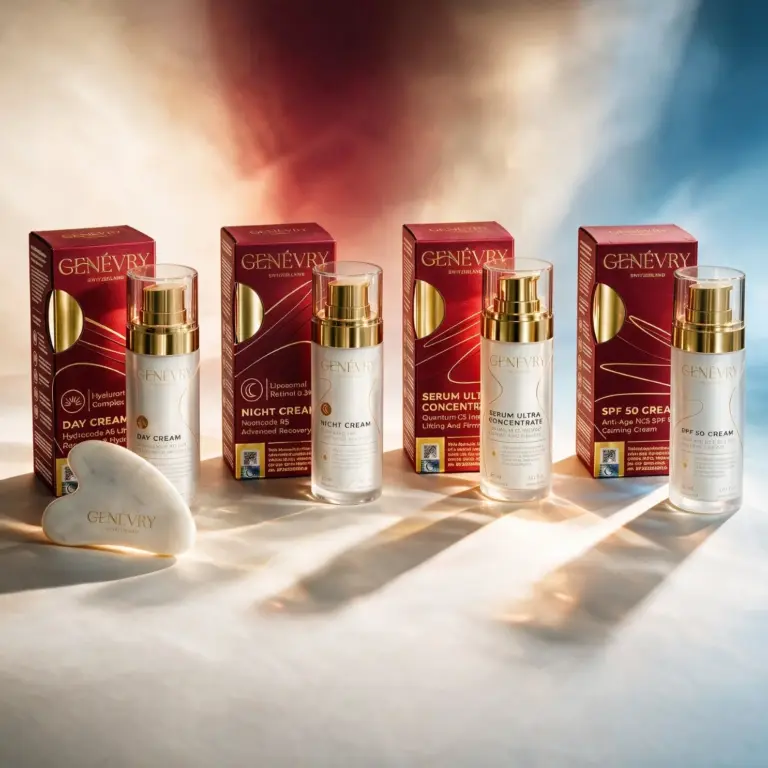
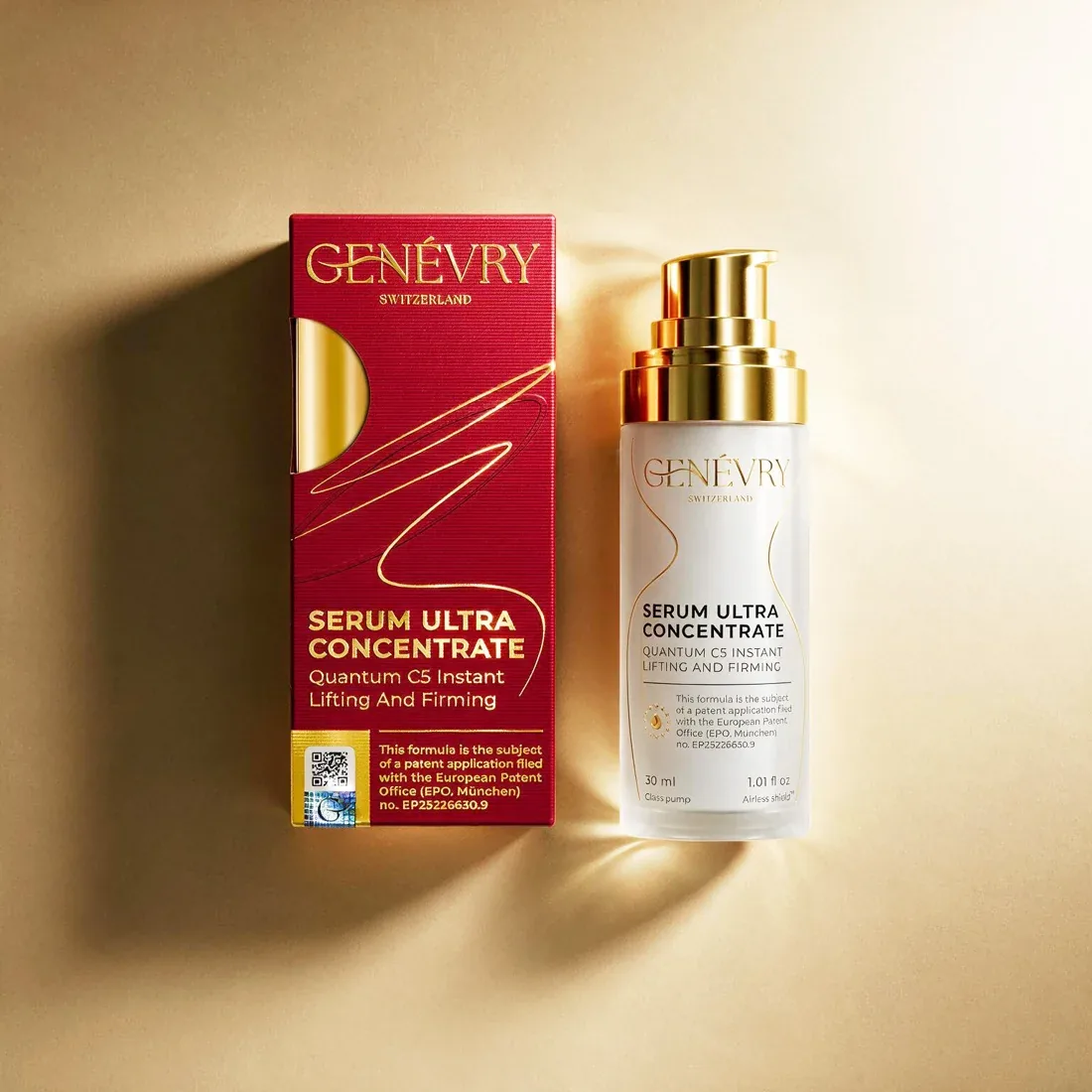
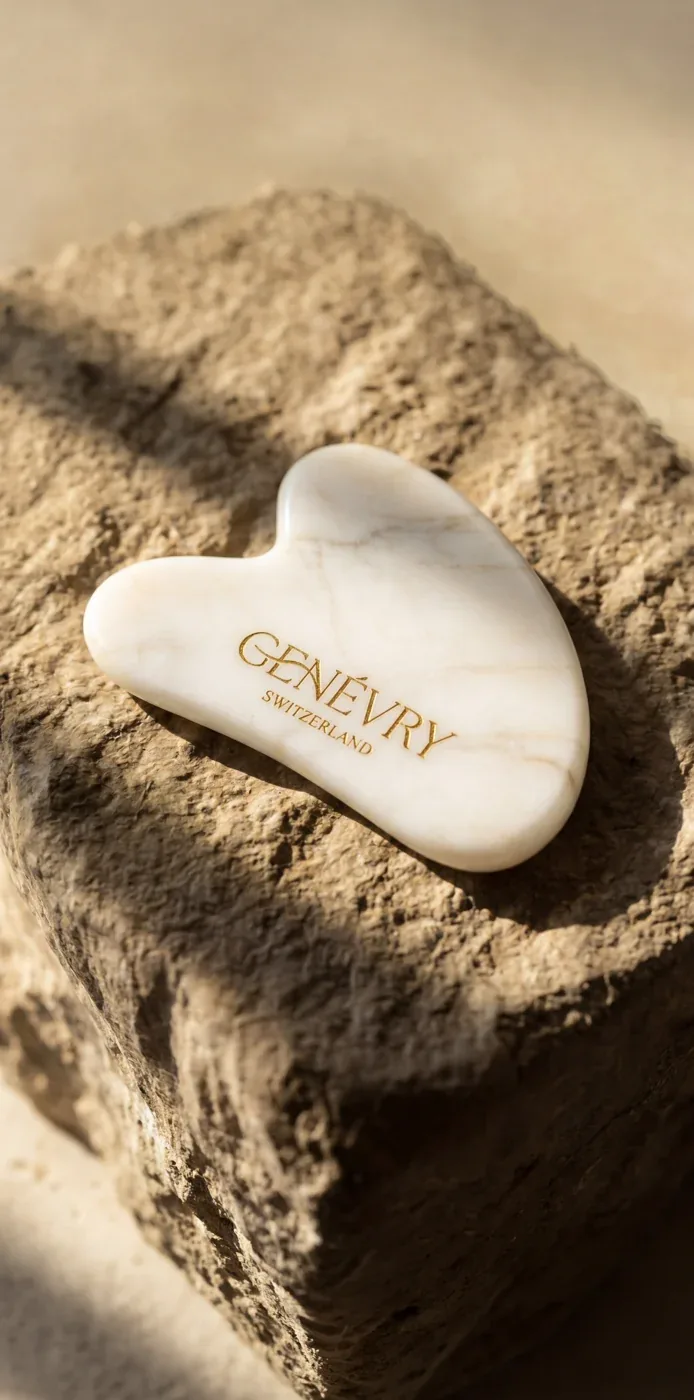
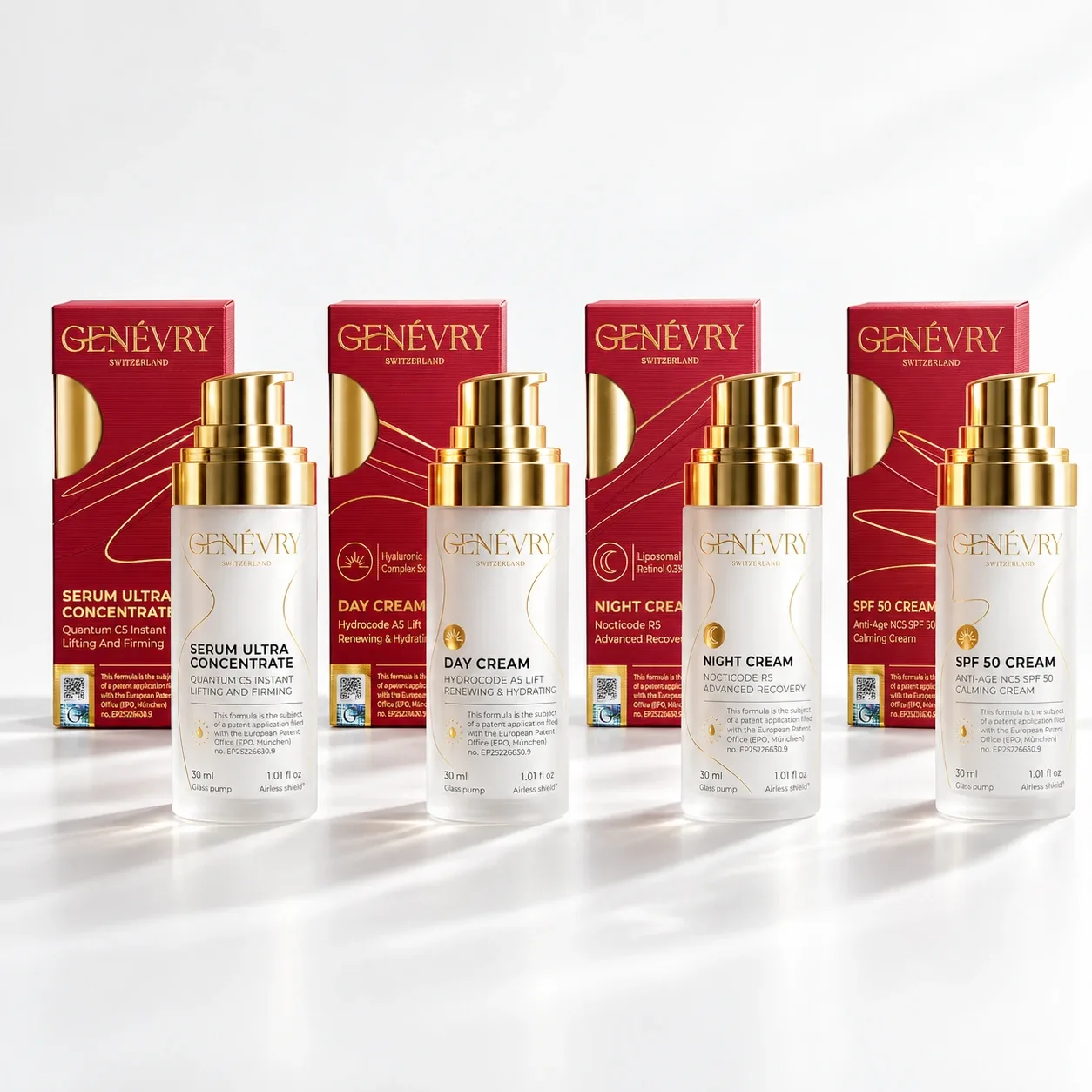
The slip layer can be a serum, a facial oil or a little cream spread wider than usual. In the GENÉVRY ritual that role belongs to Quantum C5 with copper peptide GHK-Cu and liposomal vitamin C, and the tool is the Sculpting Gua Sha stone. Step four is a cream with liposomal retinol, which means: start with two or three evenings a week, avoid it in pregnancy and while breastfeeding, and wear SPF every morning. If retinol has left your skin stinging or flaking, skip the massage that evening.
Pressure, direction, duration — the three parameters that decide
Pressure. Enough for the skin to travel with the stone rather than under it. The forearm makes a good test: if three passes leave a distinct red band, you are pressing too hard. The face is worked with less force than most people assume — harder is not better, it is only a more irritated barrier.
Direction. From the centre of the face outwards, then down the neck, following the way the lymphatic vessels run. Hence the rule that the massage begins at the neck: you clear the route first, then send each section of the face towards it. Repeat each line three to five times, always in one direction, with no sawing back and forth.
Duration and frequency. Three to five minutes, four or five times a week. Twenty minutes a day accelerates nothing and raises the risk of irritation and broken capillaries. Wash the stone with warm soapy water after every use and dry it; a cool stone feels better around the eyes, but that is comfort, not efficacy.
When to skip the massage
Some evenings call for cream alone. Active inflammatory breakouts and pustular acne — massage carries their contents across the face. Skin irritated by retinol, acids or a treatment — wait until it settles. Recent aesthetic procedures, fillers, botulinum toxin — when you return to massage is decided by your doctor, not by a guide. A tendency to broken capillaries, rosacea, atopic dermatitis, psoriasis, swollen lymph nodes, fever — talk to a dermatologist before the stone joins your routine. In pregnancy, ask your doctor about the massage itself, and set the retinol aside regardless of the answer.
Facial massage is not a medical procedure and does not replace a consultation. If you take medication that affects the skin or are under dermatological care, the ritual is worth raising at your next appointment.
Frequently asked questions
Can a facial massage replace a cream?
No. Massage works on circulation, muscle tension and the spread of the product; the active ingredients come from the formula. Without a slip layer the stone also pulls at the skin, so massage without a product is a worse idea than a product without massage.
How soon is a difference visible?
The warming effect and a less puffy eye area appear at once and last a few hours. The changes measured by instruments in the night-cream study were recorded after four weeks of regular use. Two different horizons, and worth keeping apart.
Can massage stretch the skin?
With sensible pressure and a slip layer, no. Stretching is encouraged by other habits: rubbing dry skin hard, tugging at the eye area when removing make-up, and sessions that run too long. Those are the three worth dropping first.
Morning or evening?
Mornings suit puffy eyelids better; evenings suit a tight jaw and work as a signal that the day is over. If you pick one moment, pick the evening: you are applying cream anyway, so the ritual costs no extra step.
Stone, roller or hands?
Hands are enough and always available. A stone offers coolness, an even edge and better control of the angle; a roller is easier around the eyes. The tool is a matter of preference — technique and consistency count for more than what you hold.
An evening massage is five minutes that improve how skin looks straight away and give the rest of the ritual a shape. Everything measurable and longer-lasting is written by the formula applied afterwards — and by patience counted in weeks rather than evenings.
The formulas in this article
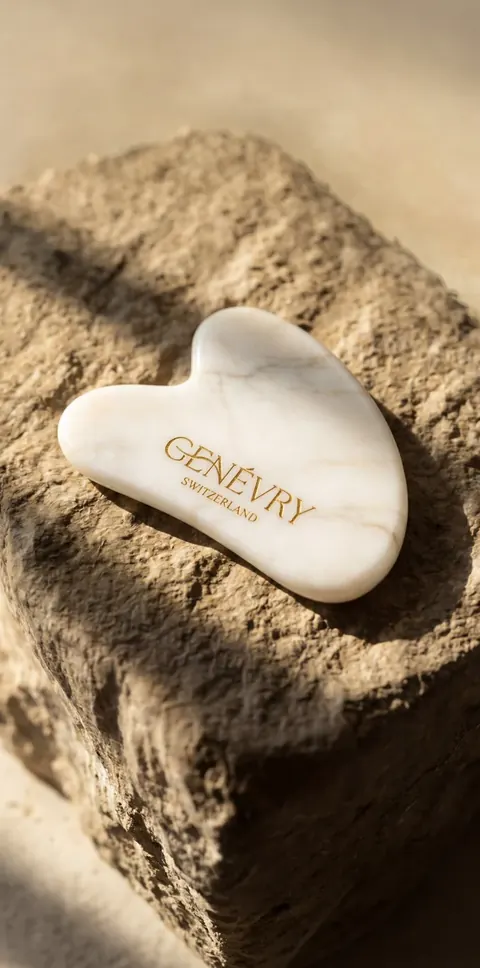 The Sculpting Gua ShaYüz masaj taşı1.190 ₺Discover the formula →
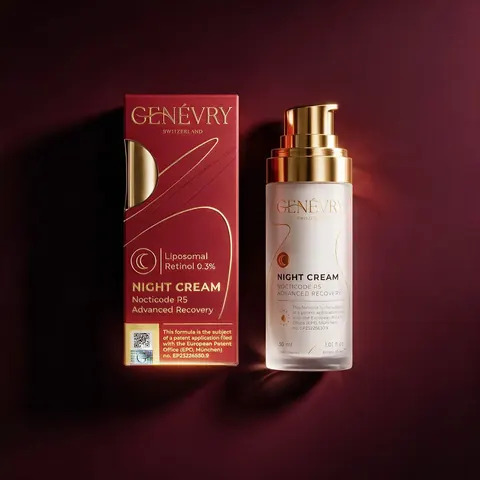 Nocticode R5İleri düzey gece kremi1.690 ₺Discover the formula →
Cosmetic product. Individual results may vary.
 English / EUR
 English (US) / USD
 English (UK) / GBP
 Deutsch / EUR
 Deutsch (Schweiz) / CHF
 Français / EUR
 Italiano / EUR
 Español / EUR
 Nederlands / EUR
 Polski / PLN
 日本語 / JPY
 한국어 / KRW
 中文 / CNY
 العربية / AED
 English (Australia) / AUD
 English (Canada) / CAD
 Svenska / SEK
 Dansk / DKK
 Norsk / NOK
 Suomi / EUR
 Português / EUR
 Türkçe / TRY
 Čeština / CZK
 Magyar / HUF
 Română / RON
 Ελληνικά / EUR
 Slovenčina / EUR
 Hrvatski / EUR
 Slovenščina / EUR
 Lietuvių / EUR
 Latviešu / EUR
 Eesti / EUR
 Български / EUR
 Українська / EUR