How to patch test skincare before it goes on your face
Three days of watching a coin-sized area, instead of a week spent calming an irritated face.

Knowing how to patch test skincare is the least glamorous skill in a beauty routine and the one that saves the most trouble. The usual story goes like this: a new cream arrives, it goes straight onto the whole face that evening, and by morning the cheeks are stinging and there is a flush around the nose. At that point it is impossible to say whether the culprit is the new cream, the cold snap outside, or the acid serum that has been in rotation for a week. A small trial on a patch of skin takes two minutes a day for three days and settles the question before it turns into a fortnight of repair work.
How to patch test skincare — and what the test actually is
At home, a patch test means applying a small amount of a product to a limited, protected area of skin and watching it for a couple of days. It is not the same procedure a dermatologist performs. In a clinic, standardised substances are taped to the back in small chambers and read against a fixed scale at 48 and 72 hours; that version is described under patch test and it is worth knowing it exists, because recurring reactions are a case for the clinic rather than for guesswork.
The home version answers a narrower question: will this particular product, in this particular formula, cause a reaction on my skin over the next few days. That is enough to avoid the most common scenario, where a new product is spread across the entire face and irritates far more skin than it needed to.
Where to test, and how long to wait
Choose the site according to how closely you want to imitate facial conditions. The skin of the forearm is thicker and less reactive than the cheek, so a test there reads more kindly than reality. Behind the ear and along the jawline are more honest.
| Site | Best for | What to keep in mind |
|---|---|---|
| Inner forearm or inner elbow | First trial of any new product, including acids and retinol | Easy to cover with a sleeve, but less sensitive than facial skin |
| Behind the ear, near the hairline | Creams, masks, oils, fragranced products | Thin skin that behaves much like the face; unlikely to rub off |
| Jawline, close to the ear | A second trial once the first one passed | A realistic read on facial conditions; visible, so plan it before a quiet day |
| Side of the neck | Moisturisers and soothing formulas | Delicate skin, but exposed to friction from collars and scarves |
Forty-eight hours is the minimum; three days is the sensible standard. Irritation tends to show up quickly, within hours. Allergic contact reactions are delayed and usually appear between 24 and 72 hours after contact, which is why a single evening of testing proves nothing.
Step by step: three days that save a difficult week
The sequence is the same whether you are testing a day cream, a serum or a retinol formula.
- Cleanse and dry the chosen area. The skin should be clean, not scrubbed raw or softened by hot water.
- Apply a pea-sized amount to roughly two square centimetres — about the footprint of a coin.
- Leave it on. Do not rinse; the product should sit on the skin exactly as it would on your face. Repeat morning and evening.
- Check the site for three days, always in daylight. A photo on day one makes the comparison far easier than memory.
- If nothing happens, move the trial to the jawline for another two days. Only then does the product go on the whole face.
If stinging, itching or visible redness appears at any point, rinse with lukewarm water and set the product aside. There is no benefit in pushing through a reaction in the hope that the skin will get used to it.
Reading the response
Not every sensation is a warning. A brief tingle after an acid or retinol product, one that fades within minutes and leaves nothing behind, is within the normal range. What matters are signs that build or persist for hours: defined redness with a clear border, swelling, itching, small bumps, blisters or flaking confined to the test area.
It helps to separate two mechanisms. Irritation depends on concentration and contact time; it will happen to most people if the dose is high enough, and it settles once the product is stopped. Allergic contact dermatitis is specific to one person and one ingredient, appears with a delay, and returns on every subsequent exposure, even to a tiny amount. The first usually means too strong, too often. The second means not this ingredient.
Write down what you are testing. With five products in rotation, memory is unreliable, and a product name with a date takes one line in a notebook.
One new product at a time
A trial is only worth as much as the discipline around it. One new product, everything else unchanged, for at least a week. Introduce two new things at once and a reaction tells you nothing about which of them caused it.
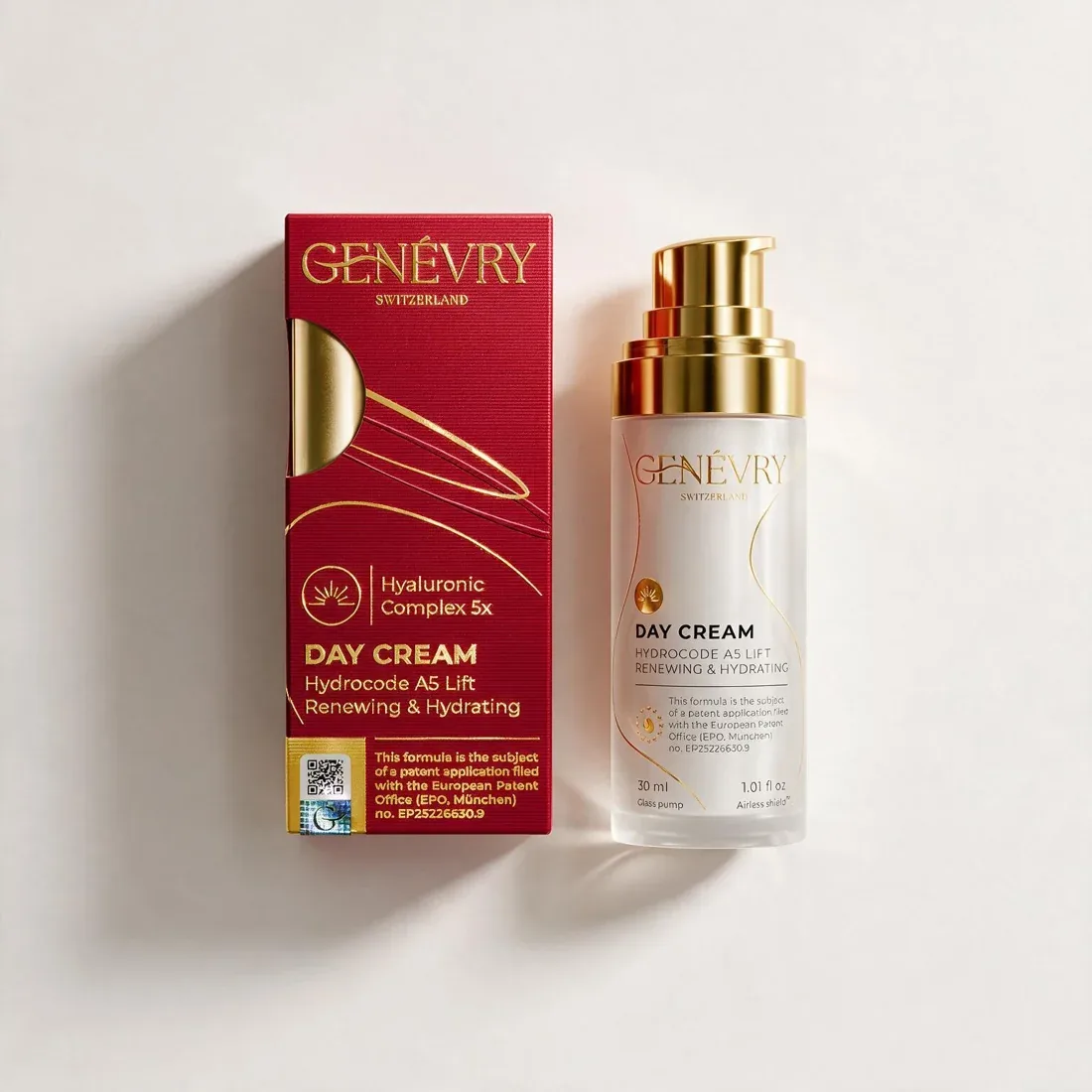
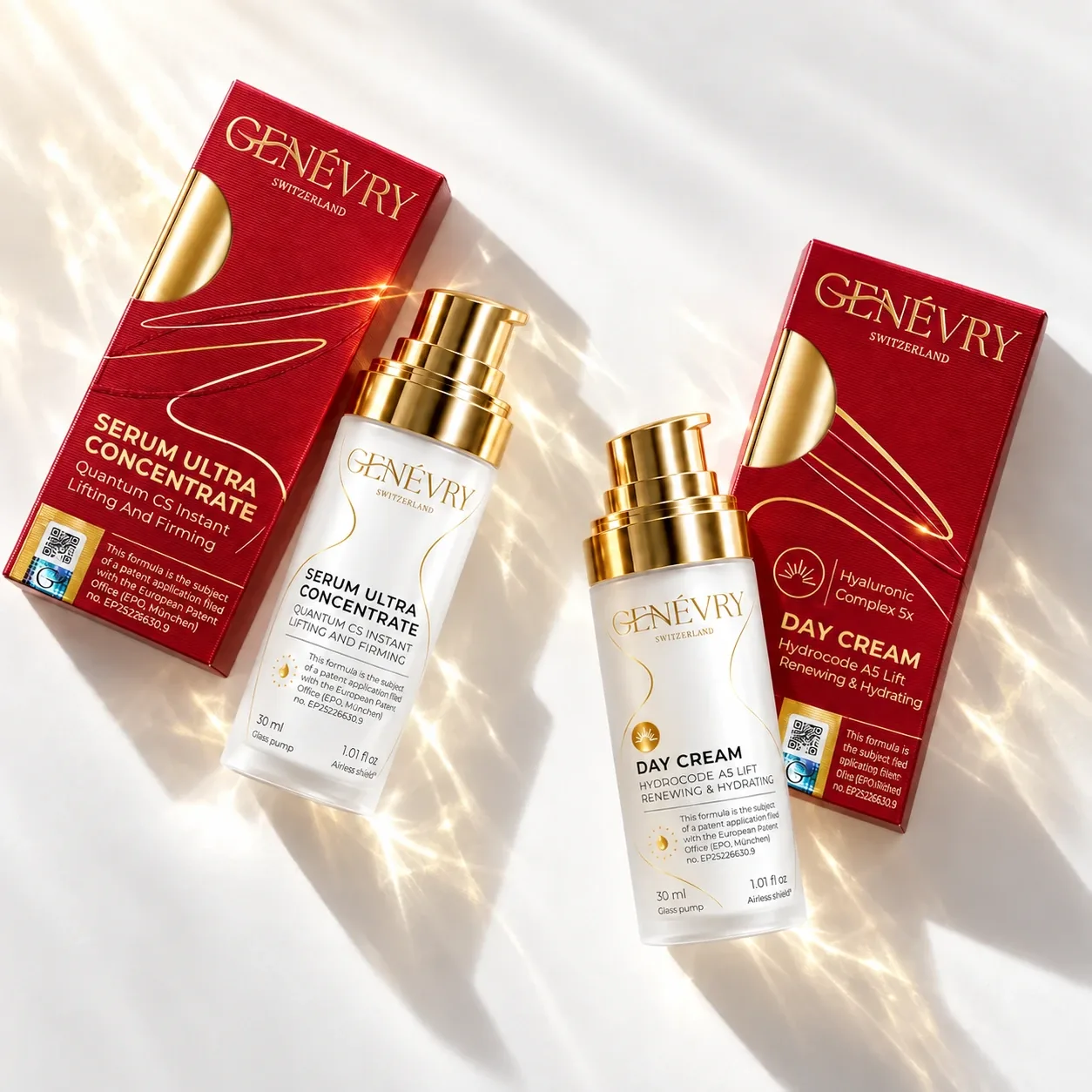
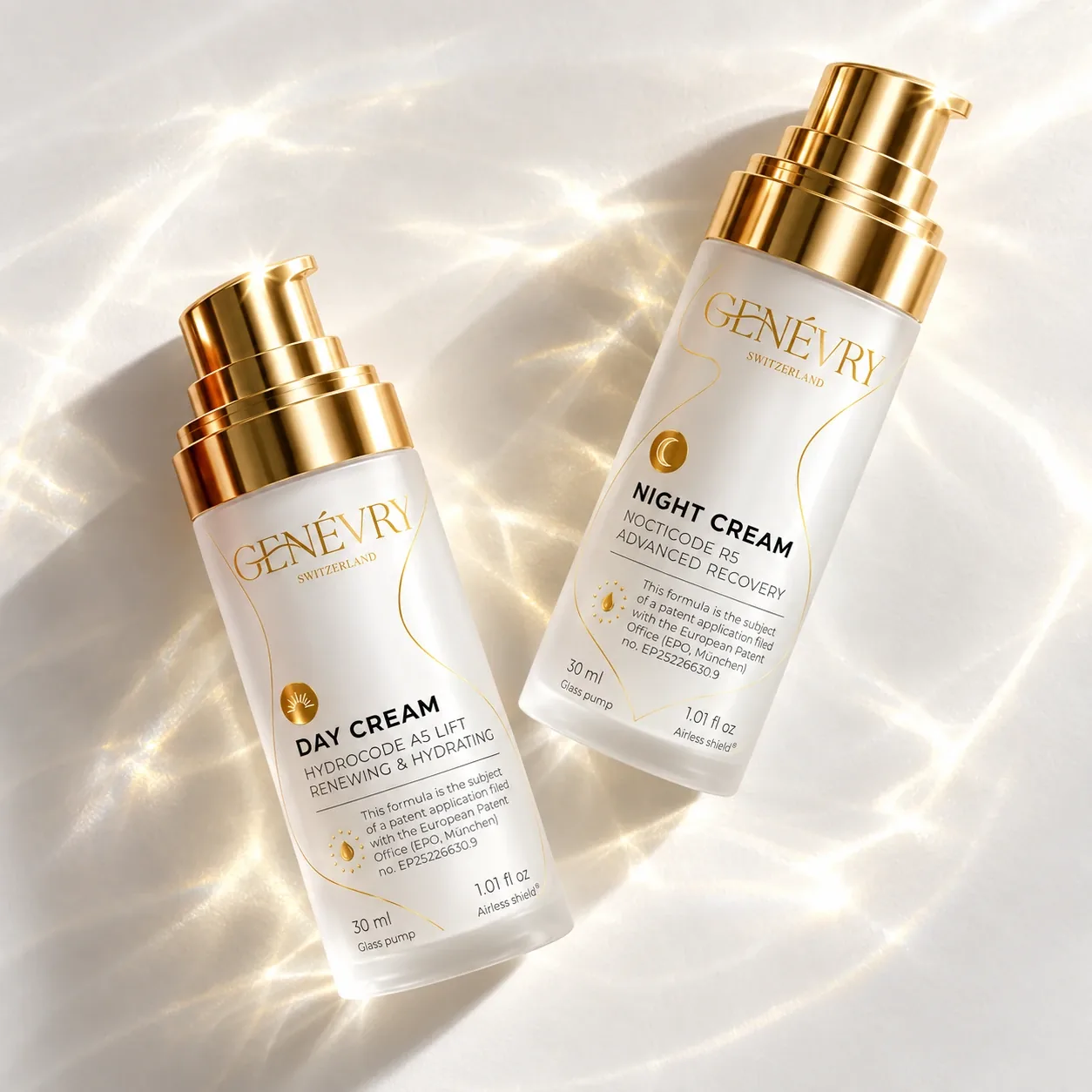
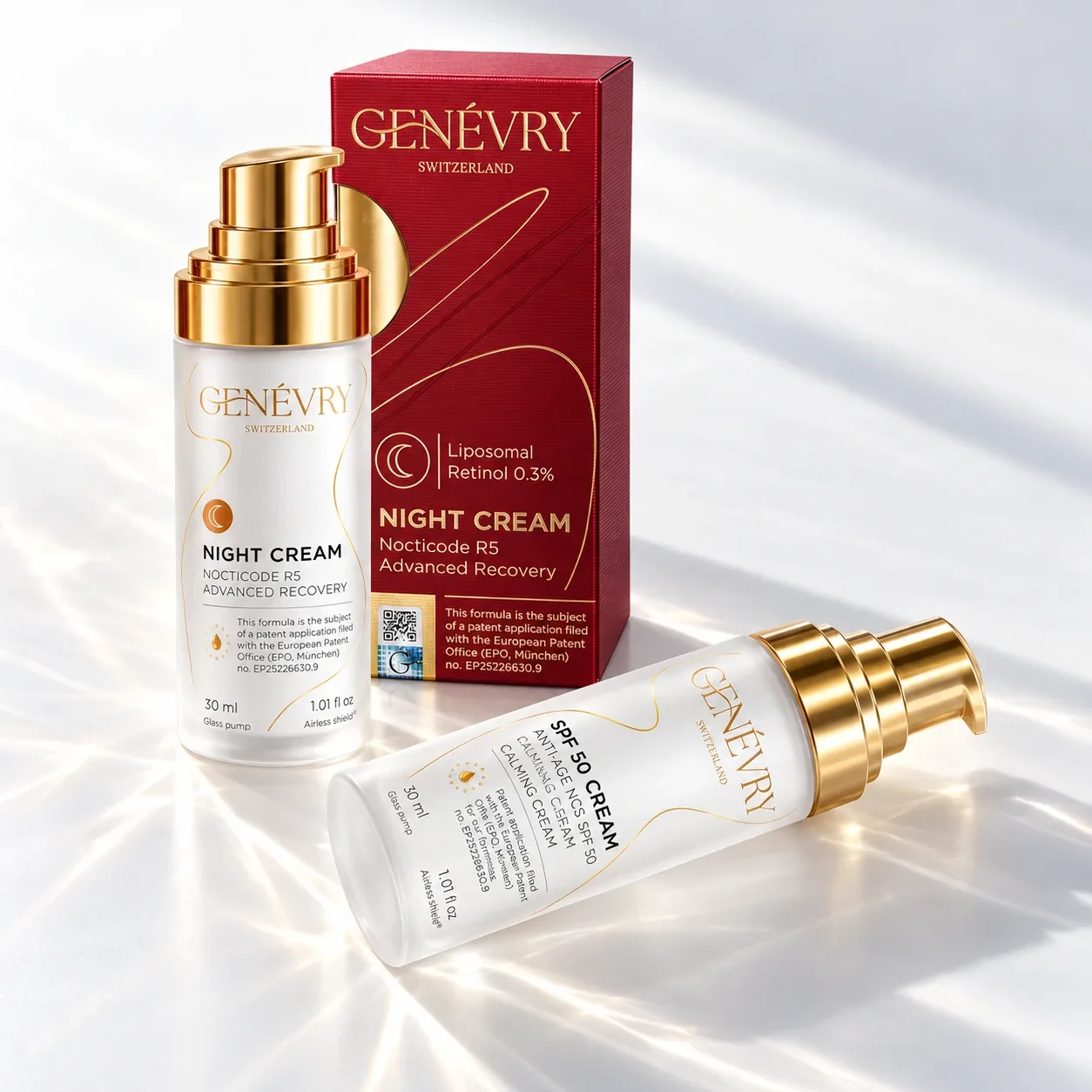
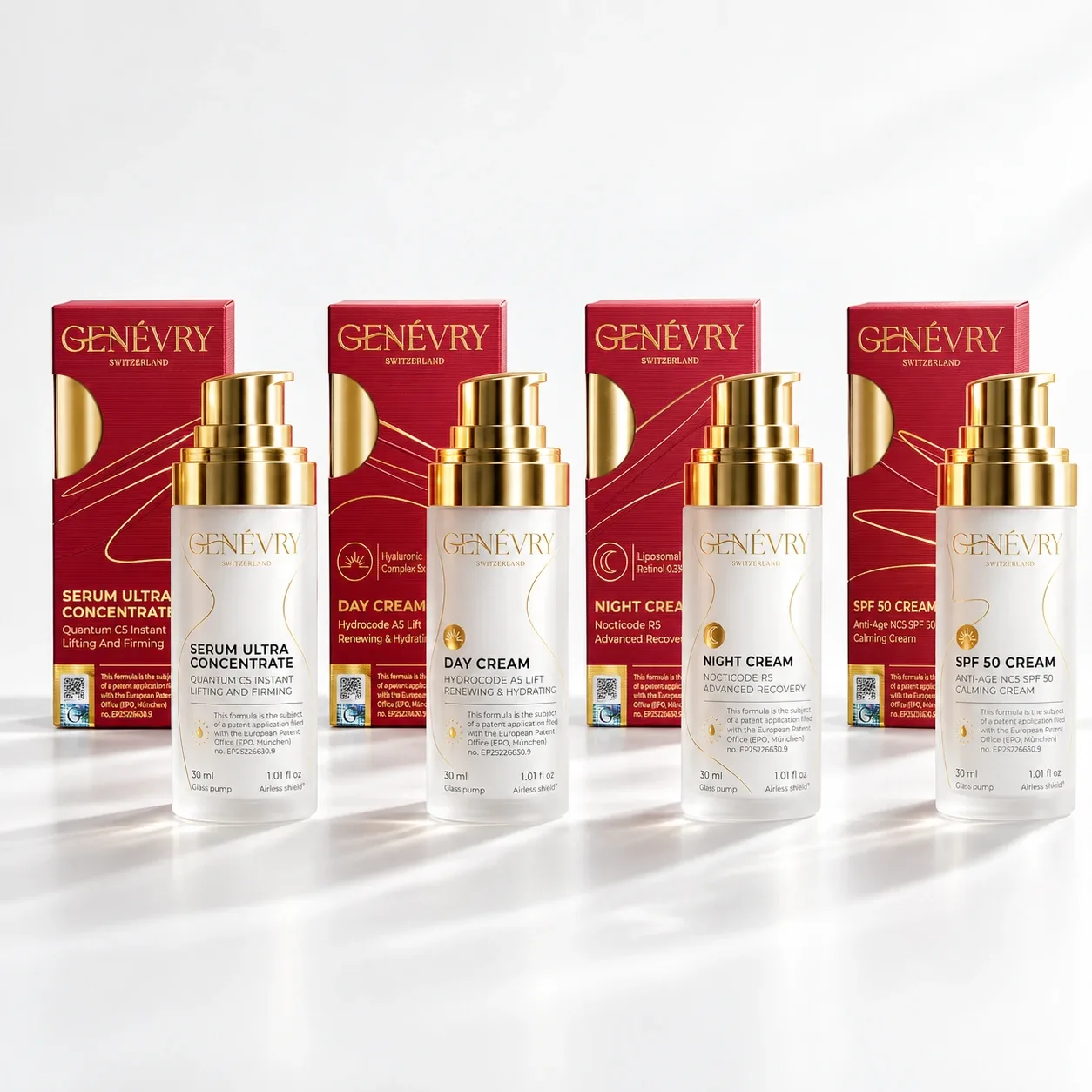
With gentle products, the test is largely a formality — Hydrocode A5 Lift from GENÉVRY goes on cleansed skin in the morning and, after a few quiet days, simply stays in the routine. Active formulas deserve more patience. Nocticode R5 with liposomal retinol is best started two or three evenings a week on dry skin, moving to more frequent use only after several calm weeks. Retinol is set aside during pregnancy and breastfeeding, and a sunscreen in the morning is not optional alongside it. If you are building a routine from scratch, the day and night duo has the advantage of two steps from one line, introduced in a known order: day cream first, night cream a week later.
When a home test is not enough
The method has limits. It will not catch a reaction that develops over weeks, it does not replace diagnosis, and it cannot name the ingredient responsible. If reactions keep recurring across different products, if changes persist after you stop using something, or if there is swelling of the face or eyelids, that is a matter for a doctor or dermatologist rather than another trial on the forearm. The same applies during pregnancy, with skin conditions, and alongside topical medication: have the ingredient list of a new product reviewed by your doctor.
Frequently asked questions
How many days should a patch test take?
Two days at a minimum, three ideally, applying the product twice daily. With retinol and acids it is worth extending the observation to five days, because cumulative reactions surface later than immediate ones.
Does every product need testing?
Not every one — but every leave-on product (serum, cream, oil, mask) and anything containing an active or a fragrance that is new to you. Rinse-off products have a much shorter contact time and carry less risk.
Does stinging automatically mean an allergy?
No. A short sting without redness is usually a response to a low-pH formula or to skin that is already dry and compromised. A reaction is when the sensation comes with a visible change that lasts for hours or keeps growing.
Can a home test replace allergy testing?
No. Clinical patch testing uses standardised concentrations and can identify a specific allergen. A home trial answers one question about one finished product, here and now.
Where should I test if my face is very sensitive?
Start on the inner forearm, then move behind the ear. Take the product to the face only after two uneventful trials, beginning with every other evening on a small area.
Three days is a short wait against the week it takes to calm irritated skin. Testing before first use is what separates a routine that is built deliberately from one assembled by trial and error — and it is the only step in skincare that costs nothing at all.
The formulas in this article
 Hydrocode A5 LiftObnovujúci denný krém€34.90Discover the formula →
 Nocticode R5Pokročilý nočný krém€34.90Discover the formula →
Cosmetic product. Individual results may vary.



 English / EUR
 English (US) / USD
 English (UK) / GBP
 Deutsch / EUR
 Deutsch (Schweiz) / CHF
 Français / EUR
 Italiano / EUR
 Español / EUR
 Nederlands / EUR
 Polski / PLN
 日本語 / JPY
 한국어 / KRW
 中文 / CNY
 العربية / AED
 English (Australia) / AUD
 English (Canada) / CAD
 Svenska / SEK
 Dansk / DKK
 Norsk / NOK
 Suomi / EUR
 Português / EUR
 Türkçe / TRY
 Čeština / CZK
 Magyar / HUF
 Română / RON
 Ελληνικά / EUR
 Slovenčina / EUR
 Hrvatski / EUR
 Slovenščina / EUR
 Lietuvių / EUR
 Latviešu / EUR
 Eesti / EUR
 Български / EUR
 Українська / EUR