Uneven skin tone: the role of SPF and vitamin C
Patchy colour rarely comes from a single cause, but it almost always shares one trigger: light. What that means for the order of your routine.
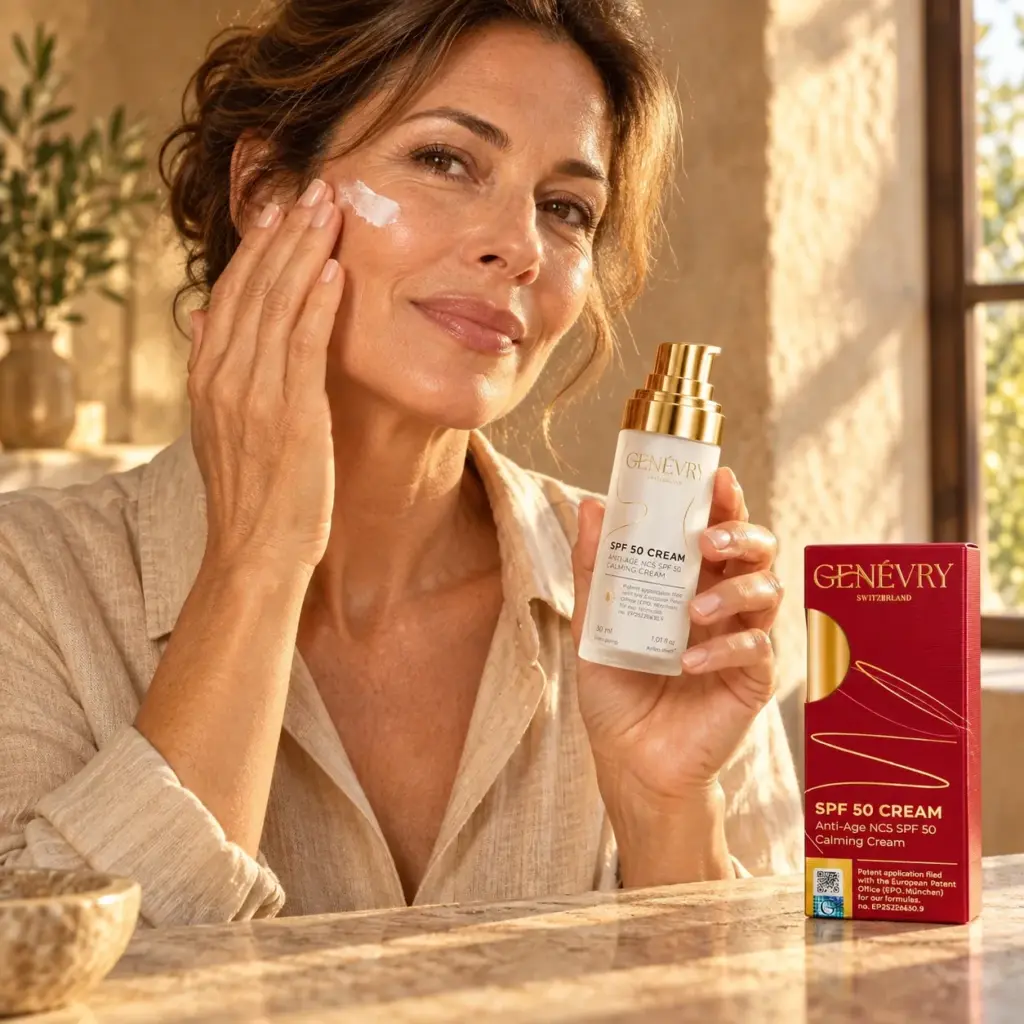
Uneven skin tone tends to show up before fine lines do, and it is harder to hide. A shadow across one cheekbone, a faint patch above the upper lip, the ghost of a spot that healed months ago — each one minor on its own, together enough to make a complexion read as tired even after a full night’s sleep. The biology behind it is well understood. What usually goes wrong is the order of operations: most home routines start in the middle, with a brightening ingredient, rather than with the thing that sets the whole process off.
Where patchy colour comes from
At the base of the epidermis sit melanocytes, the cells that produce melanin. Melanin is a filter in its own right: it absorbs part of the ultraviolet reaching the skin and shields the genetic material of the cells beneath. When the skin registers a threat — UV, inflammation, a hormonal shift — production speeds up and the pigment is passed into neighbouring epidermal cells.
The problem is not that there is too much melanin. It is that the distribution is uneven. Instead of a uniform, slightly deeper colour you get clusters: areas noticeably darker than the skin around them. Those deposits persist for months, because the epidermis renews slowly and the melanocytes in that spot stay primed. A few bright days in spring are enough to bring a faded patch back to its old intensity.
Three things that look alike
In everyday conversation it all becomes „dark spots”, but the underlying cause differs, and the cause determines what is reasonable to expect.
| Type | How it looks | What usually precedes it |
|---|---|---|
| Solar lentigines (sun spots) | Sharply defined, light to mid brown; forehead, cheekbones, backs of the hands | Years of cumulative sun exposure |
| Post-inflammatory pigmentation | Irregular, sitting exactly where a blemish, scratch or burn was | Acne, irritation, an overly aggressive treatment |
| Melasma | Diffuse, symmetrical maps across cheeks, forehead and upper lip | Pregnancy, hormonal contraception, family predisposition |
Melasma needs a dermatologist and a long horizon; a home routine supports it rather than solves it. Post-inflammatory marks usually fade on their own, but on a scale of months rather than weeks. All three share one accelerant, and it is light — which is why the sequence below runs the way it does.
Uneven skin tone and SPF: why protection comes first
Without daily protection every other step is working uphill. An antioxidant applied at eight in the morning and an unshaded walk at one in the afternoon pull in opposite directions, and one of them is considerably faster. In the context of tone, sunscreen is not a finishing touch on a routine — it is the floor the rest of it stands on.
It helps to separate the two wavelengths. UVB swings sharply with the season and is responsible for the flush after a day at the coast. UVA stays far more constant year-round, passes through cloud and through glass — car windscreens and office windows included — and it is the one that does most to shape how tone looks after a decade. High-energy visible light adds to the picture, and deeper skin tones can be particularly reactive to it. The practical conclusion is unglamorous: the same sunscreen habit in November as in July.
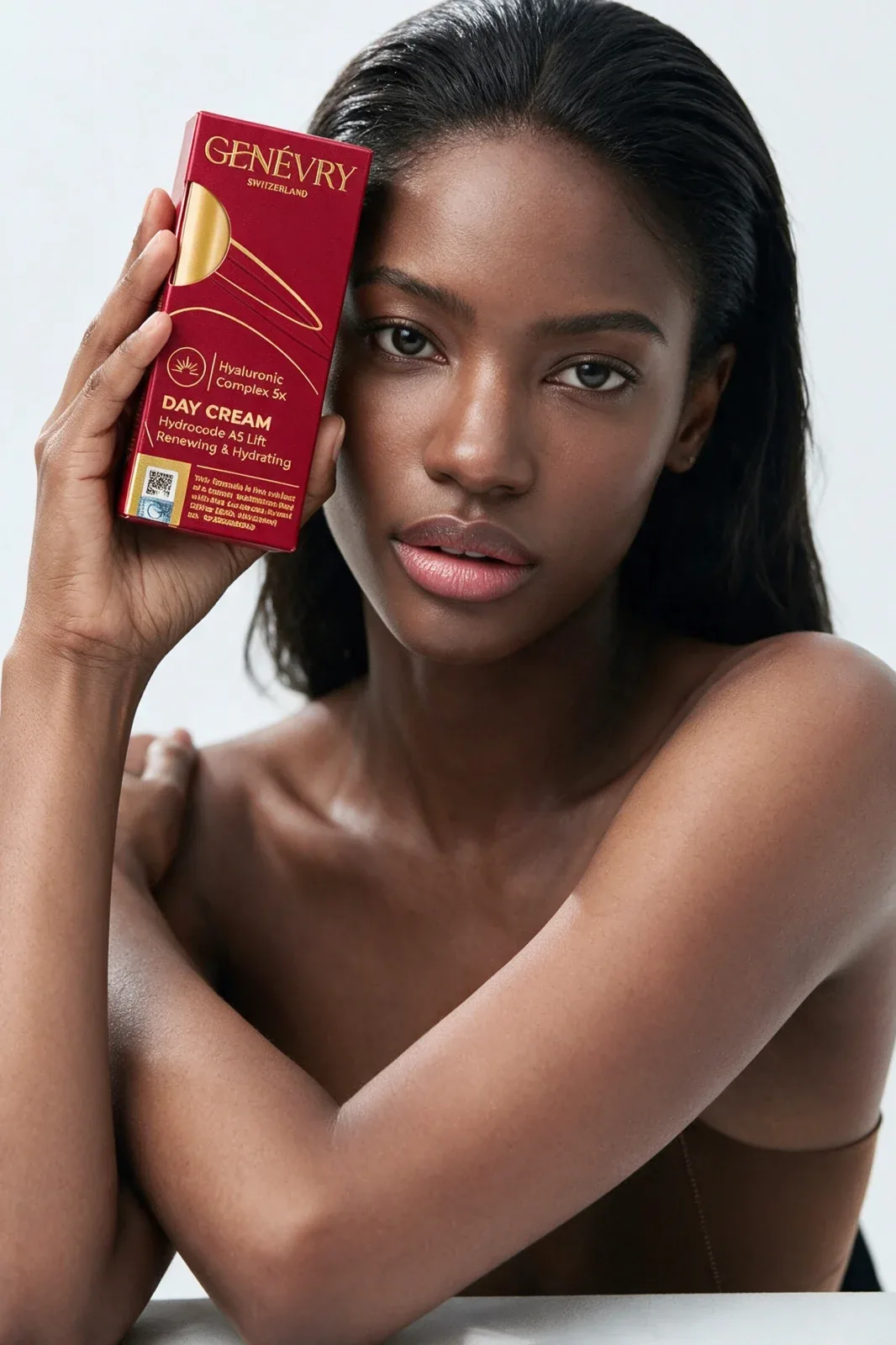
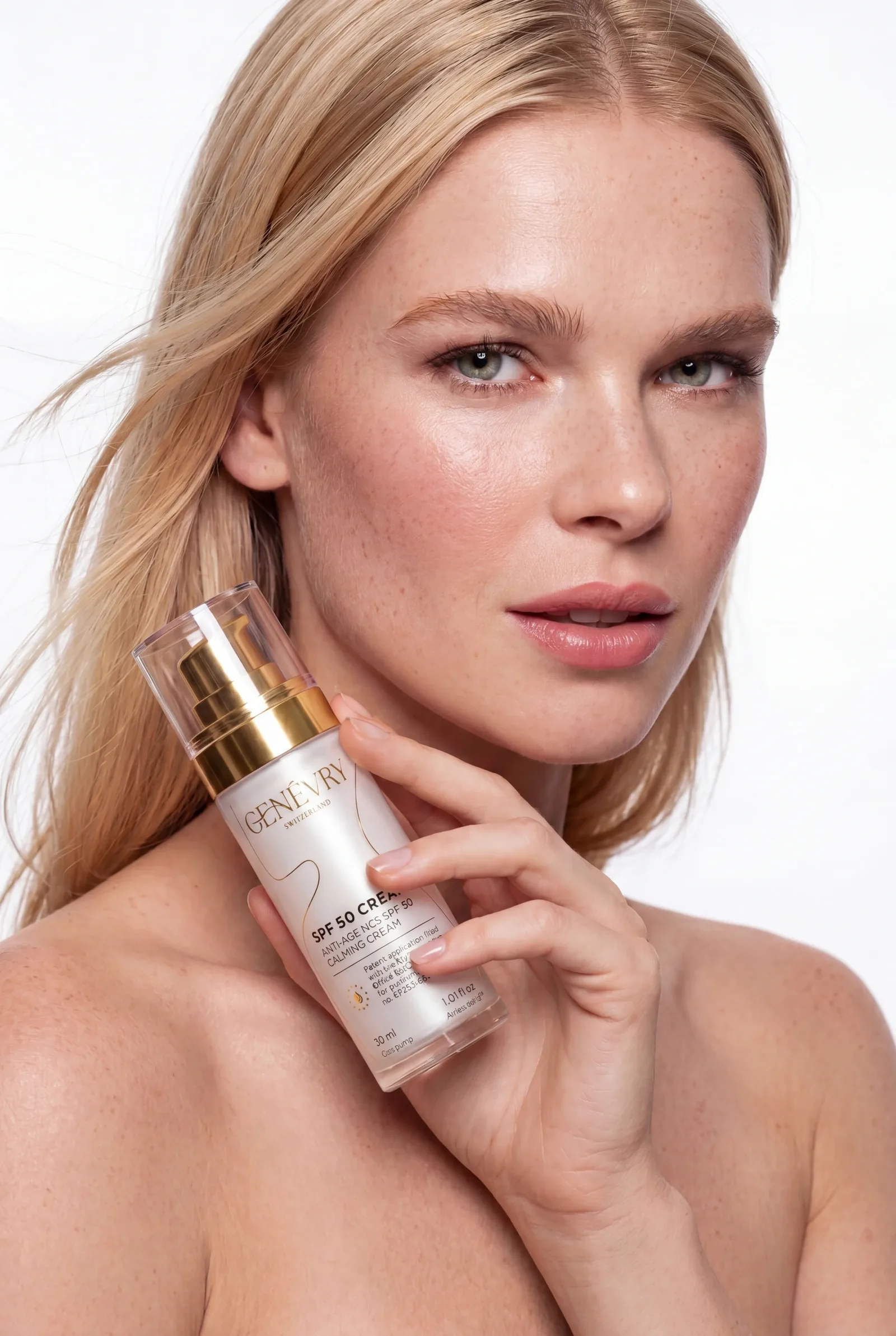
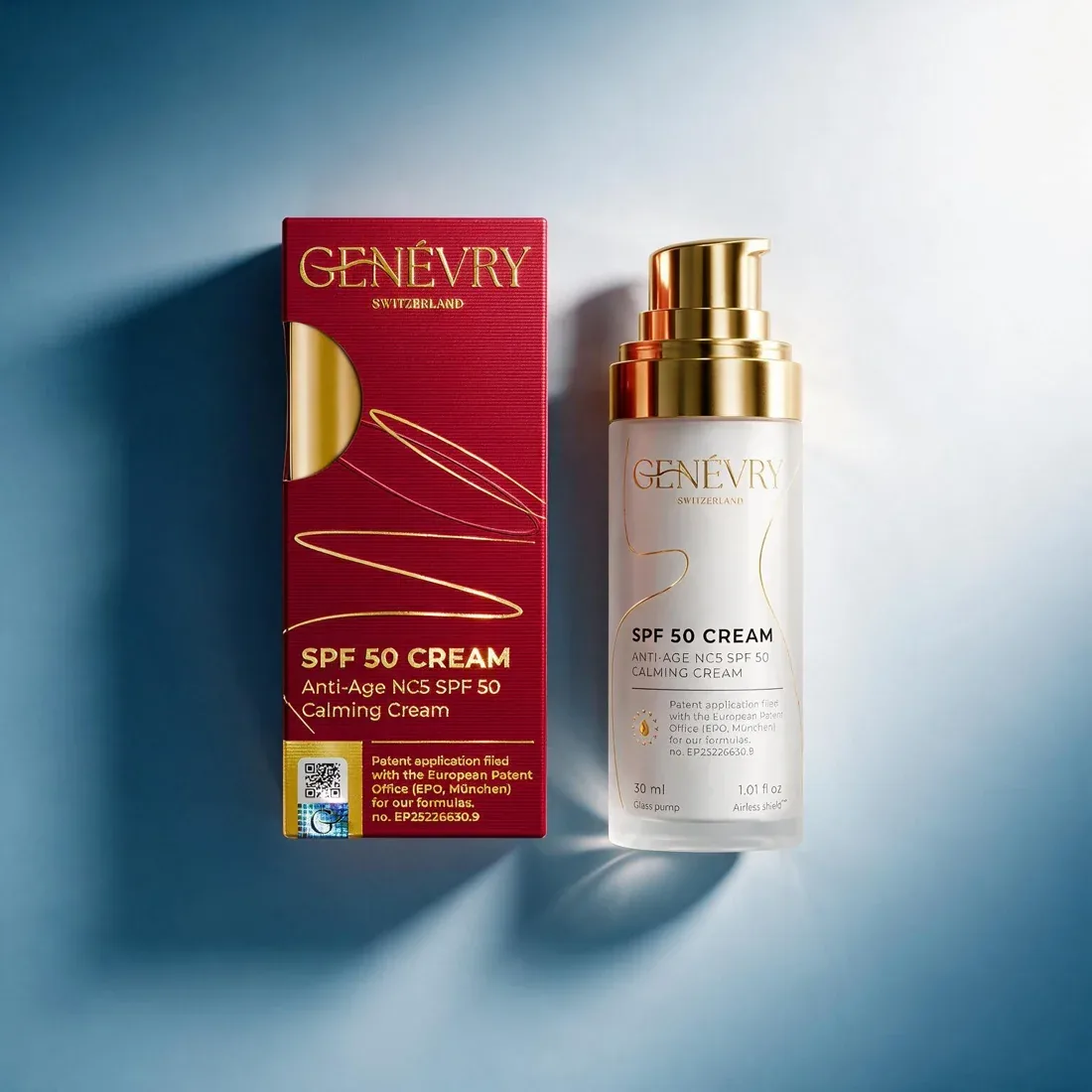
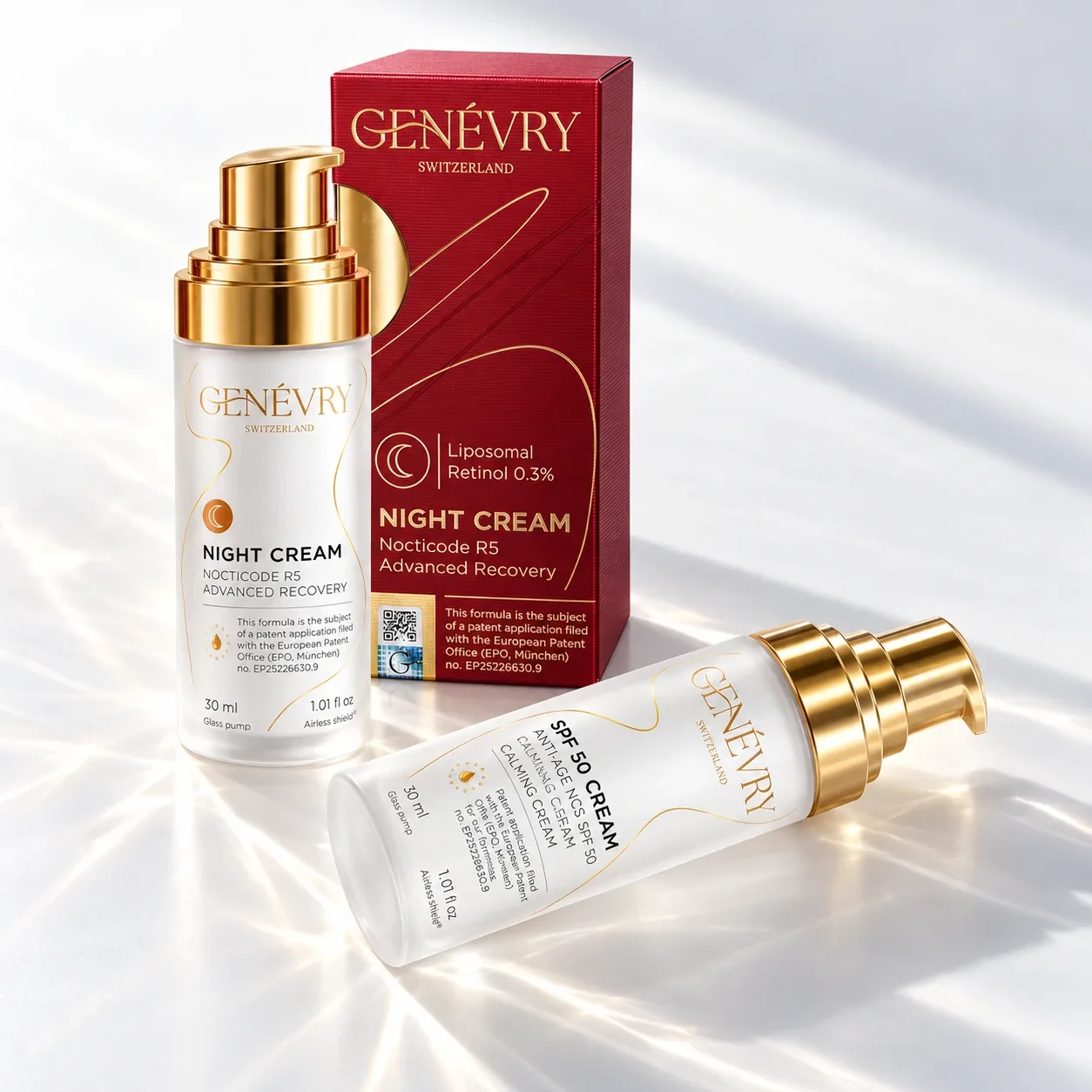
Anti-Age NC5 SPF 50 is the closing step of the GENÉVRY morning — an SPF 50 cream applied after serum and day cream. The formula is covered by patent application EP25226630.9 (patent pending).
Quantity matters more than most people assume. A declared SPF value comes from testing at 2 mg per square centimetre of skin. For a face alone that is roughly a quarter of a teaspoon; the easier measure is two fingers — two strips of product squeezed along the length of the index and middle finger. A thinner layer delivers a fraction of the stated figure, and protection does not scale in a straight line. With longer exposure the layer is renewed roughly every two hours, and after swimming or towelling the face dry.
What vitamin C adds, and what it will not do
Vitamin C is the antioxidant half of this pairing. It does not erase existing marks. It works on how the skin copes with oxidative stress through the day, and on how the surface reflects light — the luminosity that accounts for much of the visual impression of evenness. That is why it belongs in the morning, before moisturiser and sunscreen.
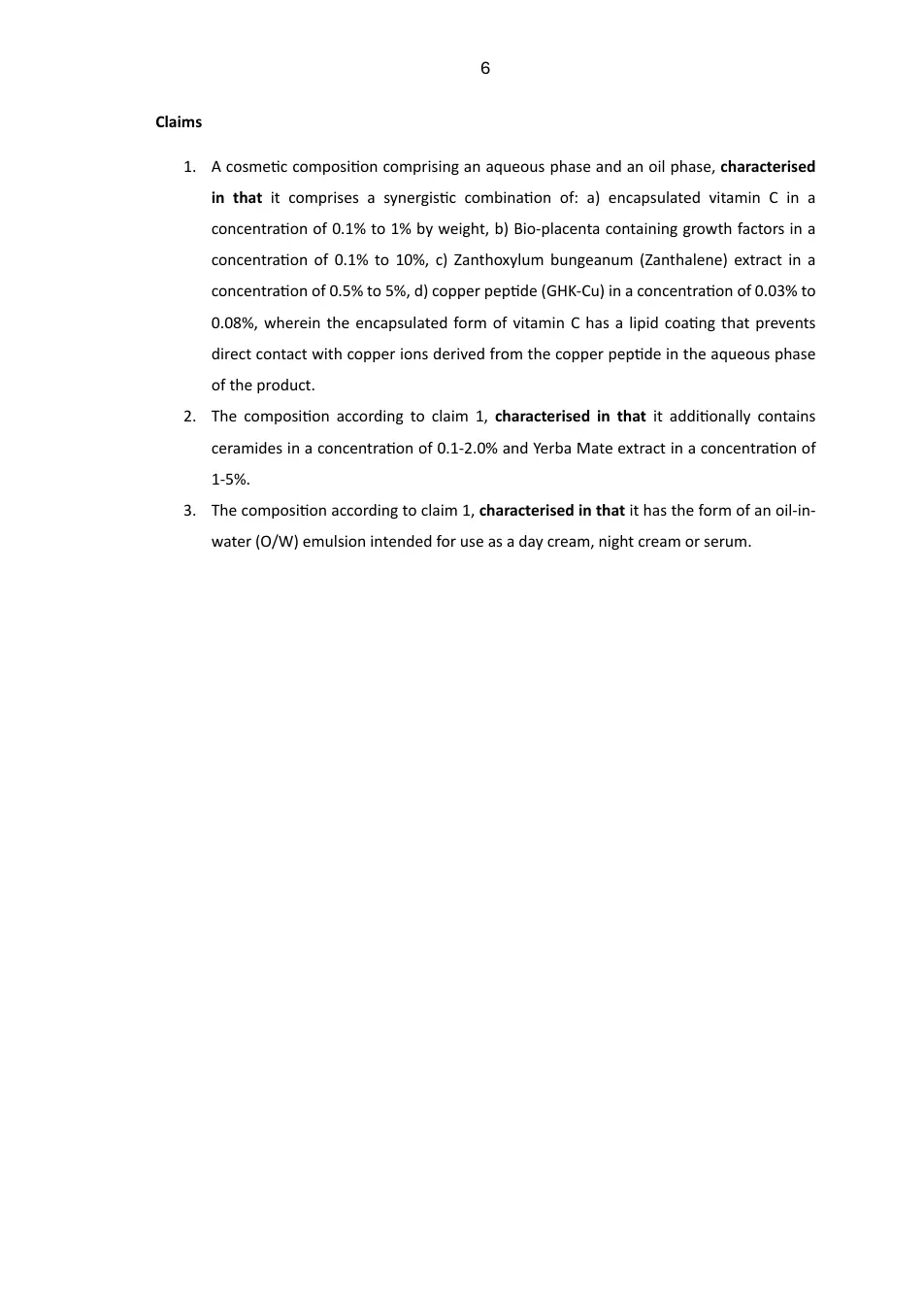
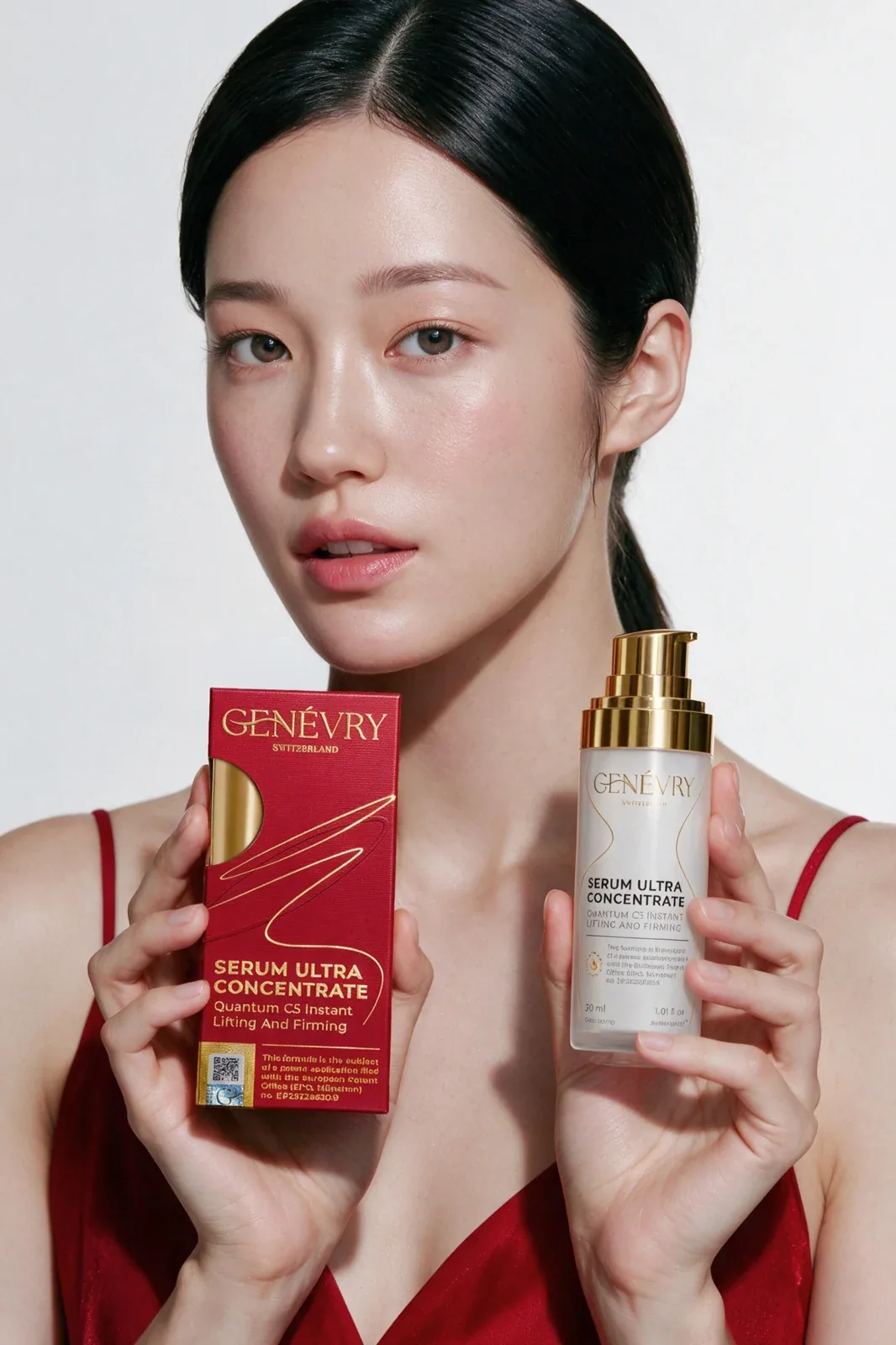
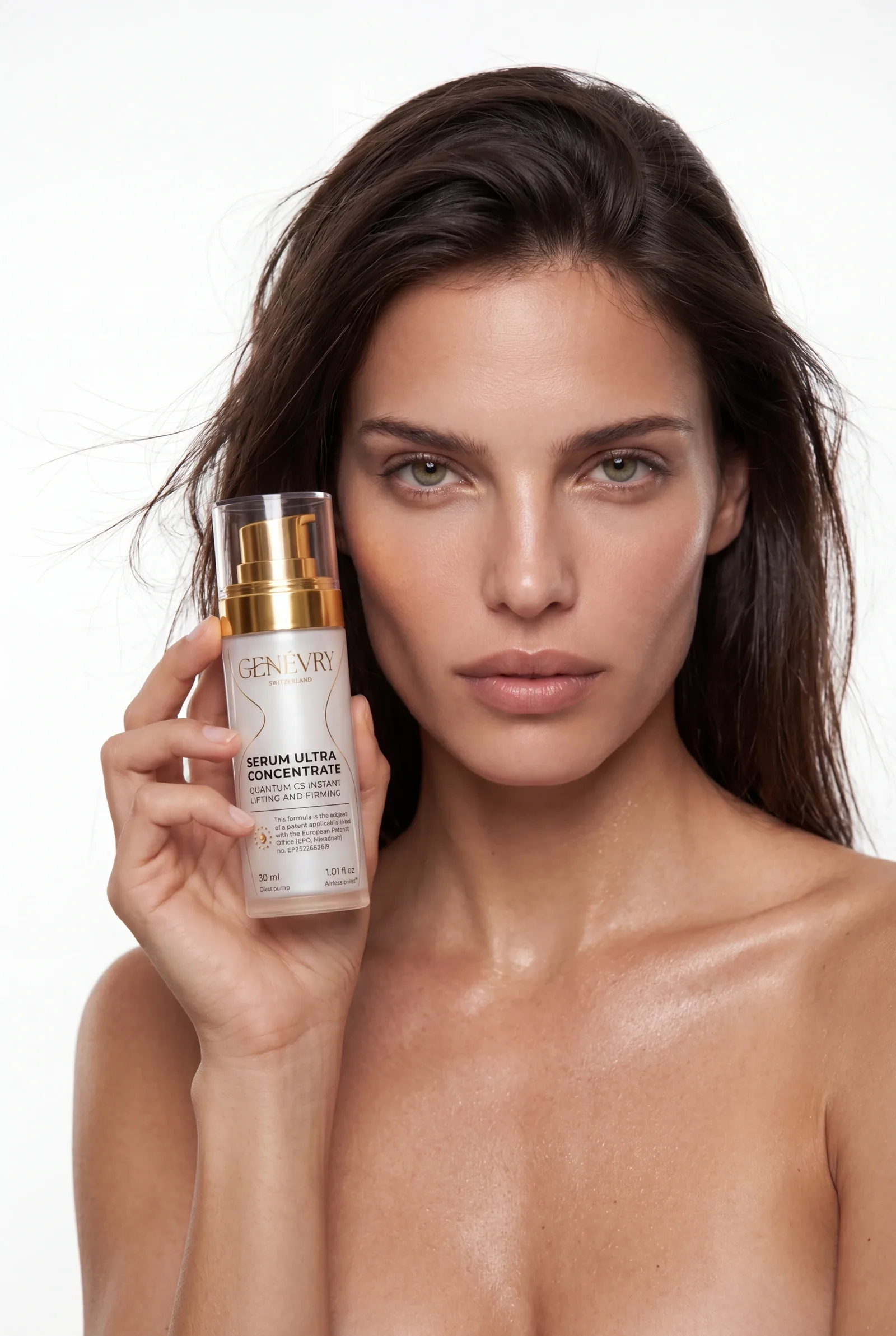
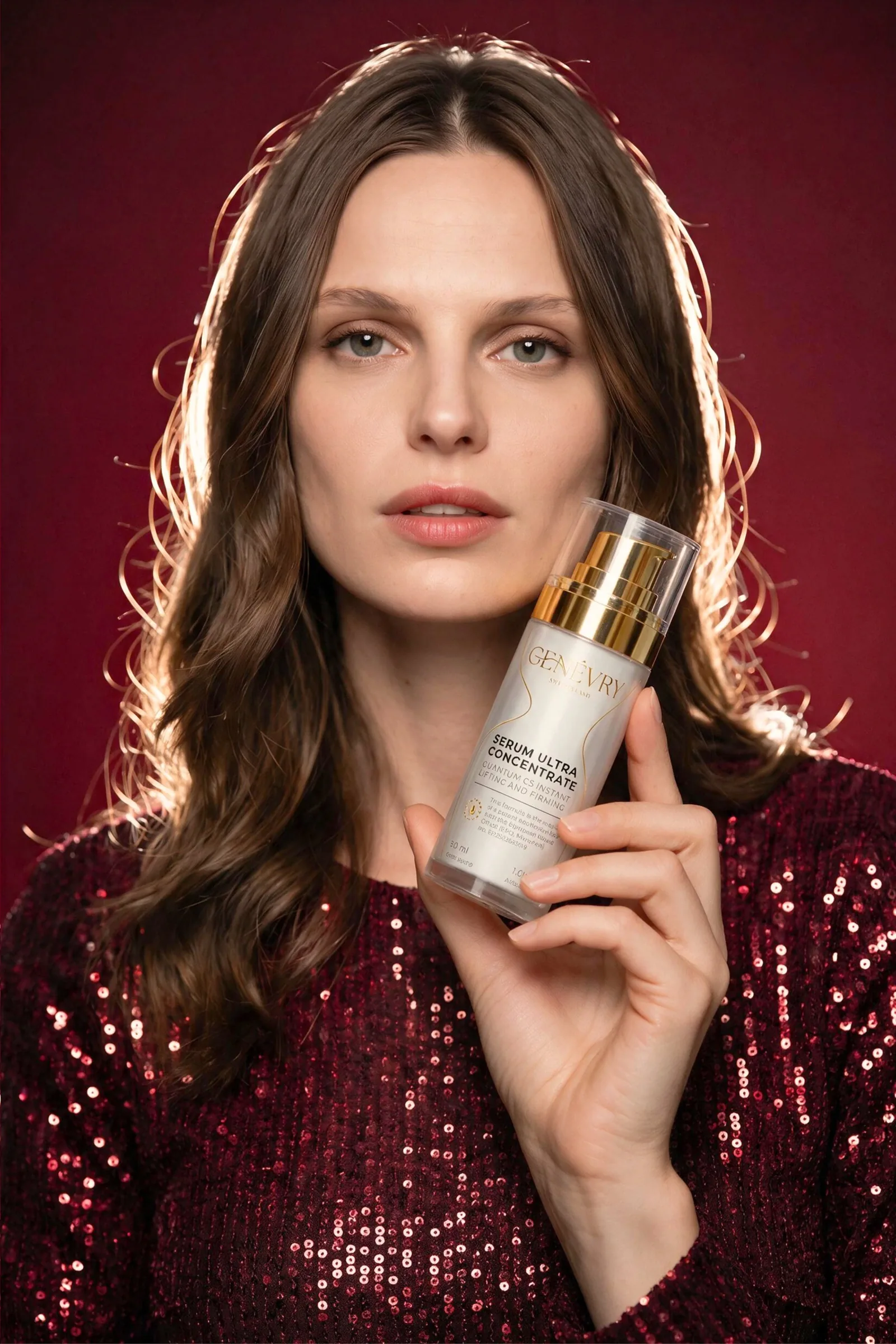
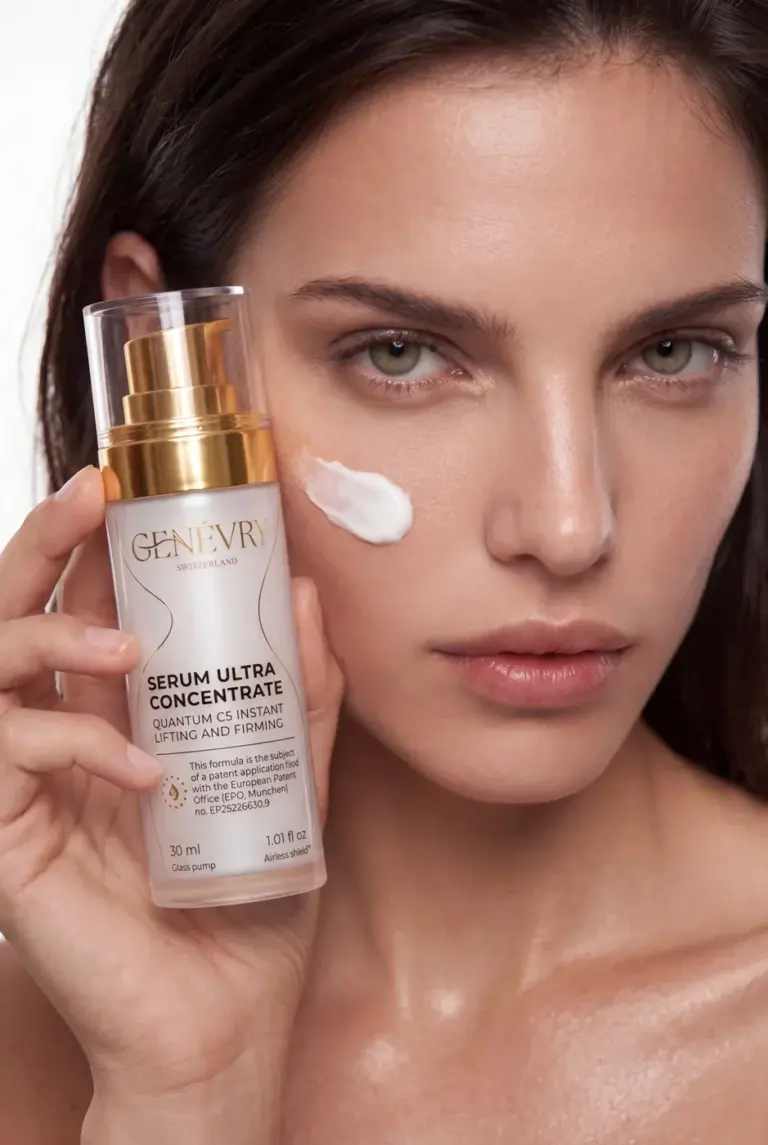
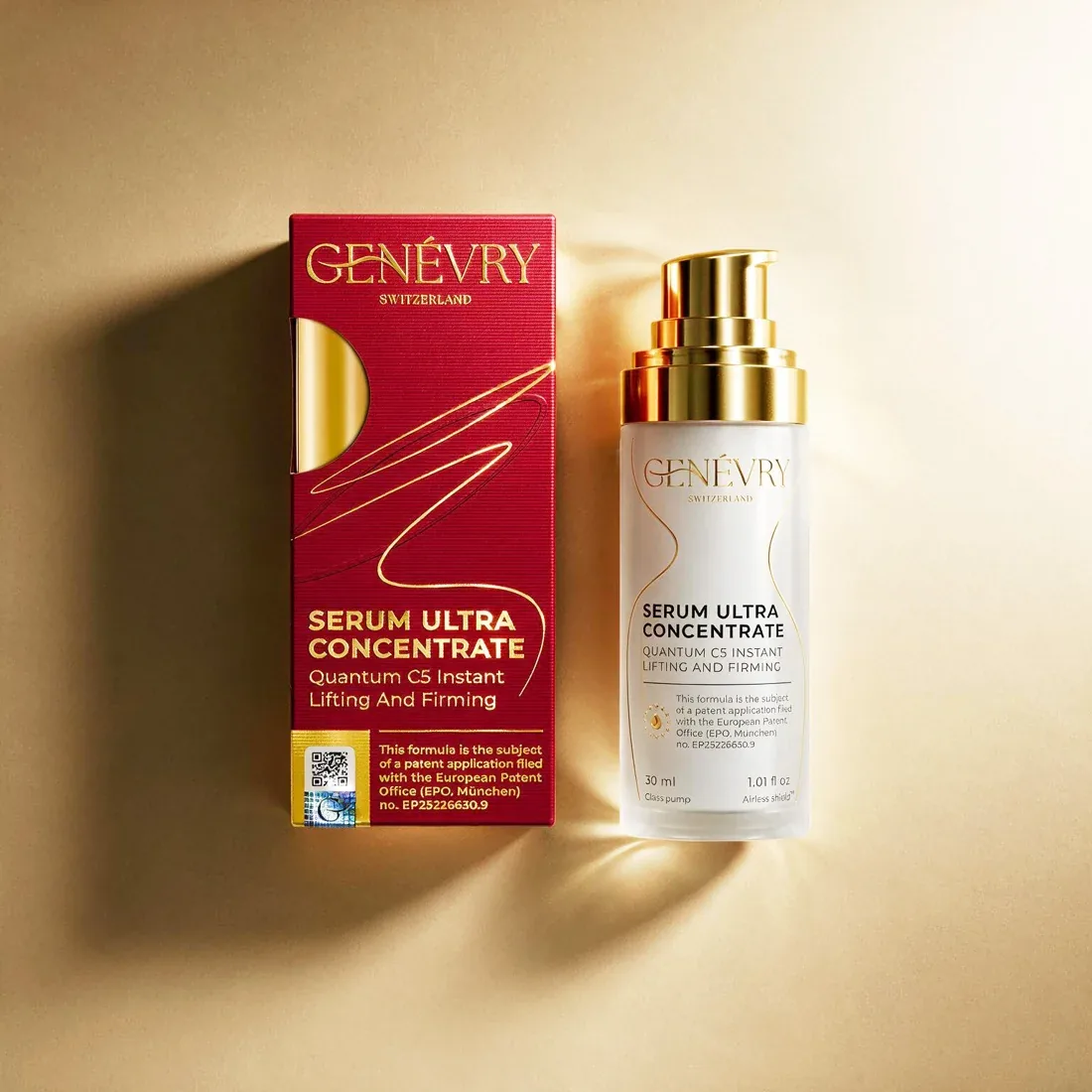
Pure L-ascorbic acid has one inconvenient habit: it oxidises quickly. Hence stabilised forms and encapsulated ones. In the Quantum C5 serum the vitamin C is liposomal — held inside a lipid shell intended to protect it from oxidation and release it gradually. It sits alongside the copper peptide GHK-Cu, an ingredient associated with skin comfort and condition.
One practical note: if a vitamin C serum has turned deep amber or brown, it has lost its freshness. Keep it away from light and heat rather than on a sunny bathroom shelf.
What the measurements showed
The figures below come from studies run on GENÉVRY formulas in small groups (n=10). They are instrumental and survey data, not promises, and they are quoted with their context, because without it a number means very little.
| Result | What was measured | Context |
|---|---|---|
| −7% | Mean melanin in pigmentation spots (Anti-Age NC5) | 3 weeks · instrumental · n=10. This does not mean 7% fewer pigmentation spots |
| +2% | Mean skin lightness parameter (Anti-Age NC5) | 3 weeks · instrumental · n=10 |
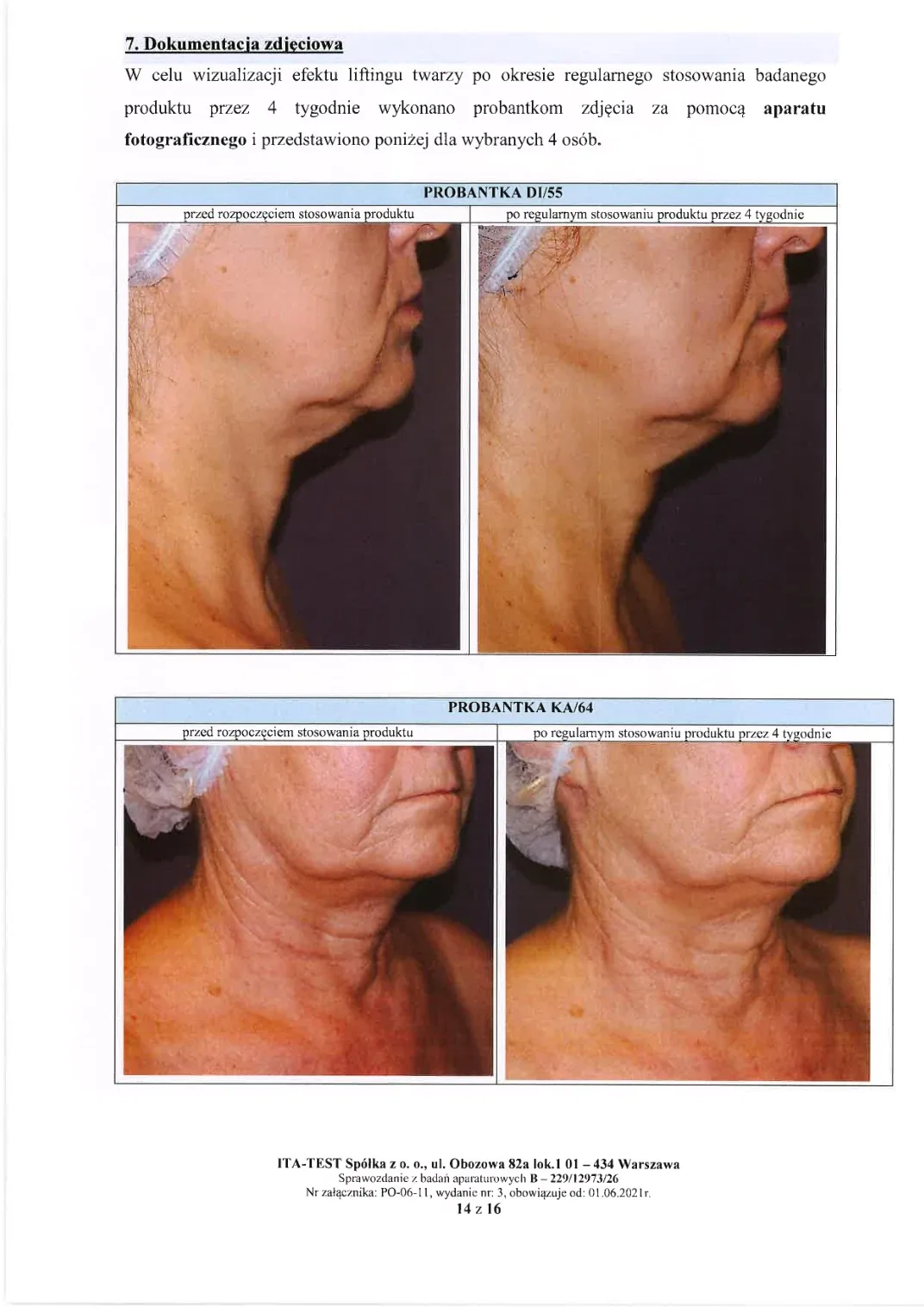
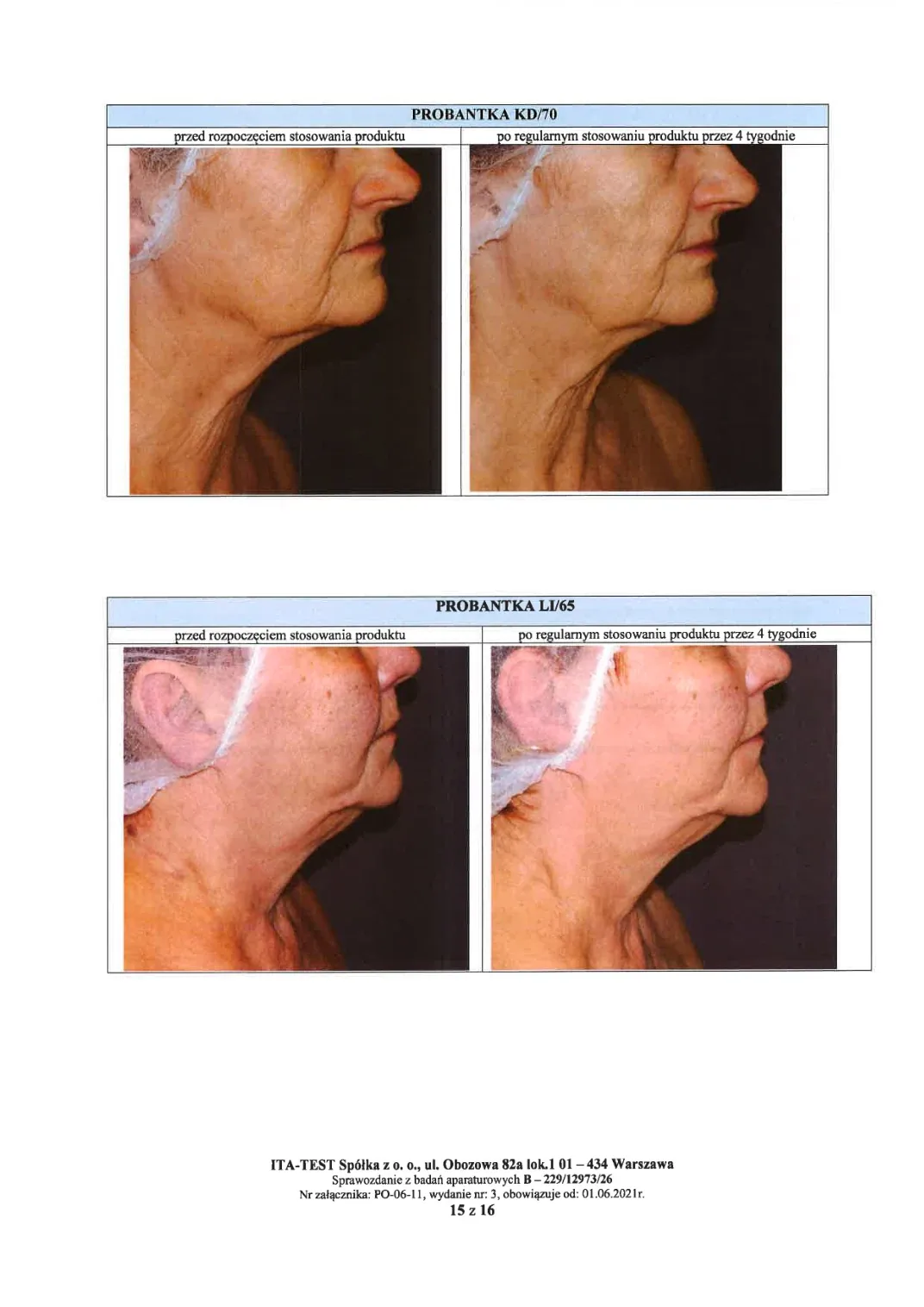
| +21% | Mean skin smoothing (Anti-Age NC5) | 3 weeks · instrumental · n=10 |
| 100% | Rated radiance and vitality “very good” (Quantum C5) | 4 weeks · self-assessment · n=10 |
| +33% | Mean skin hydration (Quantum C5) | 4 weeks · instrumental · n=10, Corneometer CM 825 |
Scale is worth dwelling on. Seven per cent less measured melanin inside a spot is a change an instrument registers; it is not necessarily a change the person across the table registers. Care in this area is slow and cumulative, which is exactly why consistency outperforms the strength of any single step.
A twelve-week plan
Twelve weeks is the minimum before anything can honestly be judged — roughly what the epidermis needs for several complete turnover cycles.
| When | Step | Note |
|---|---|---|
| Morning | Gentle cleanse | No scrubbing; mechanical irritation feeds post-inflammatory marks |
| Morning | Vitamin C serum on dry skin | A few drops, spread evenly, allow a moment to settle |
| Morning | Moisturiser | Oily skin included — a dehydrated surface reads greyer |
| Morning | SPF 50 as the final layer | Two fingers for face and neck; renew with longer exposure |
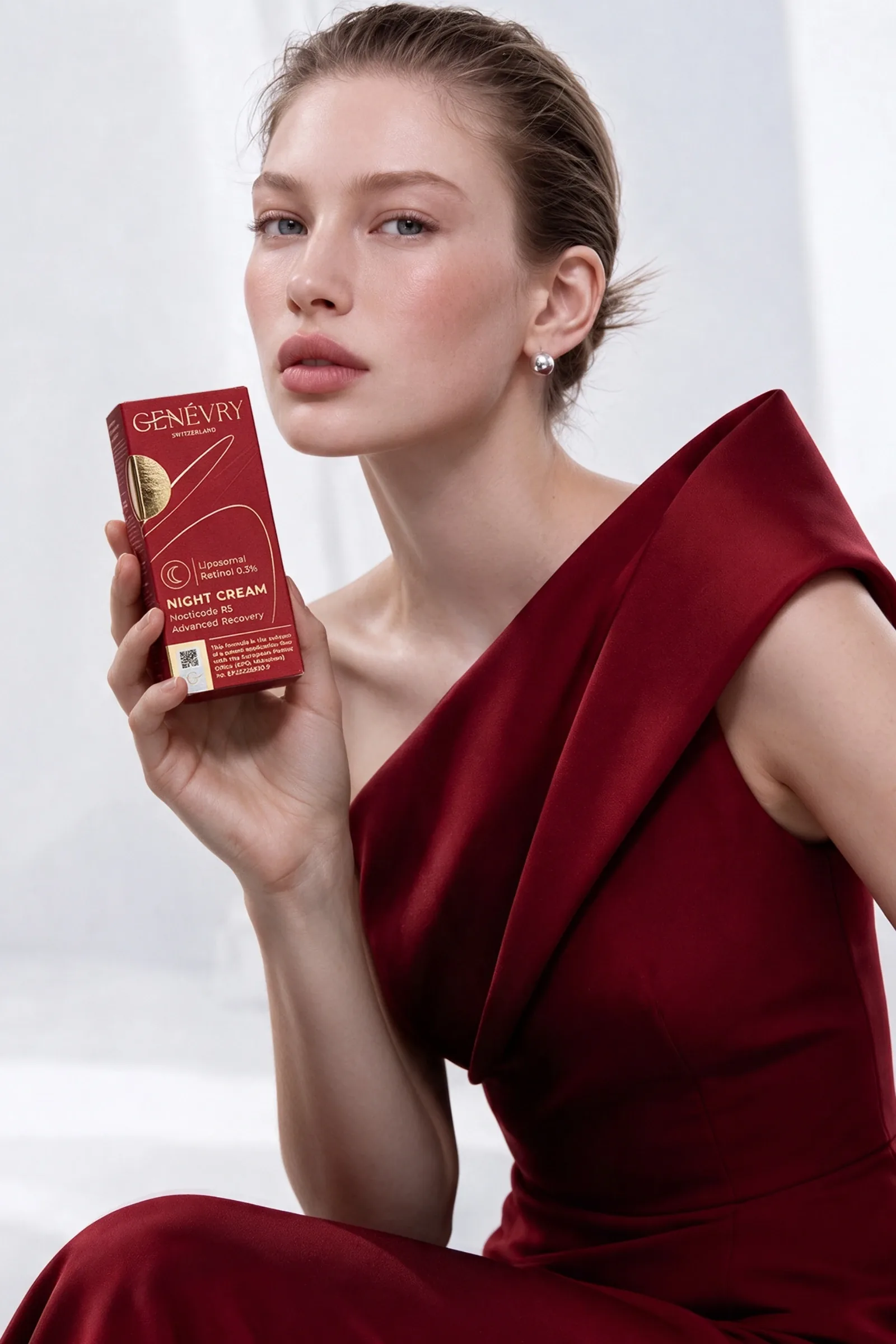
| Evening | Cleanse and recovery care | Introduce a retinoid gradually, and never during pregnancy |
| Daily | Do not pick, squeeze or scratch | Every inflamed spot leaves a mark that outlasts it by months |
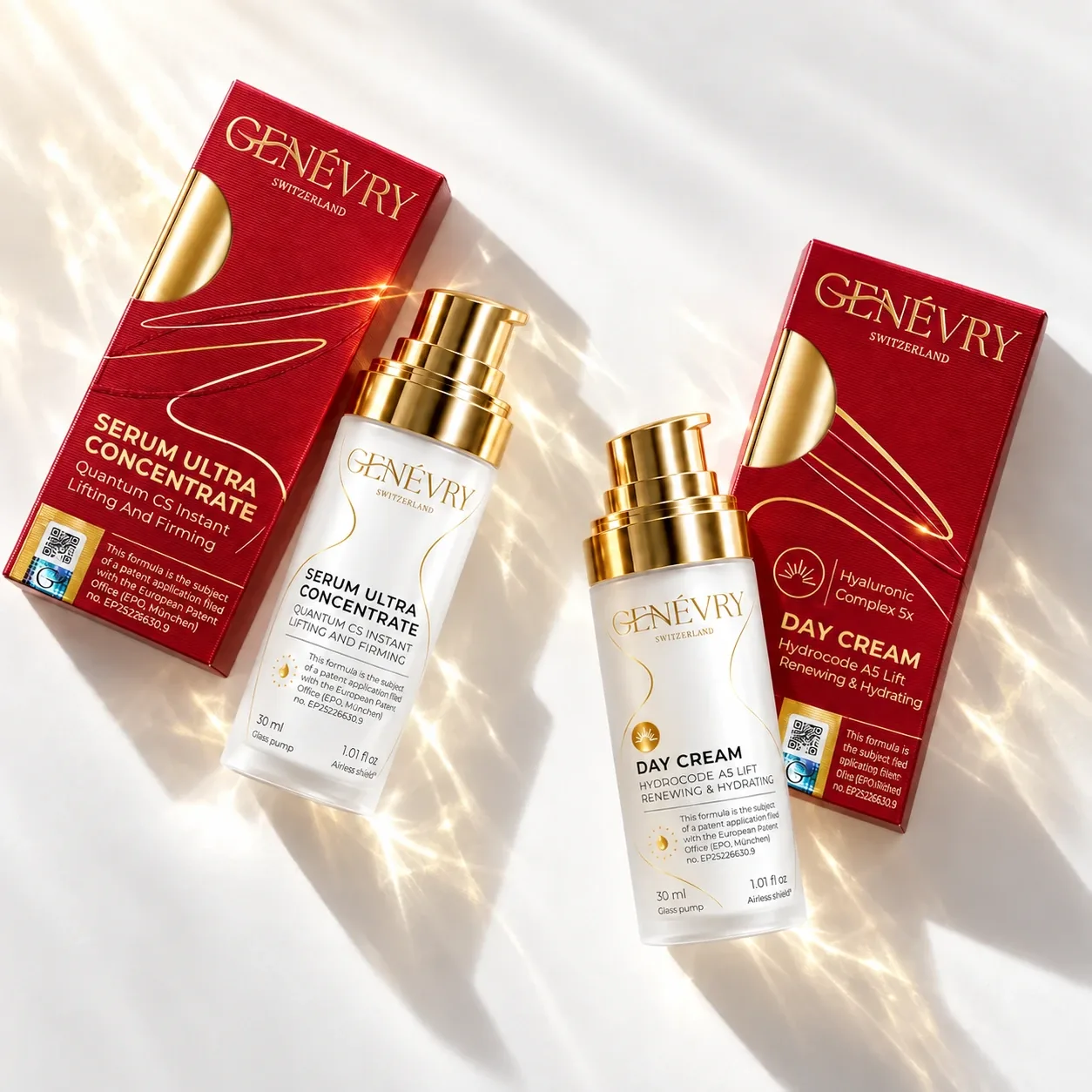
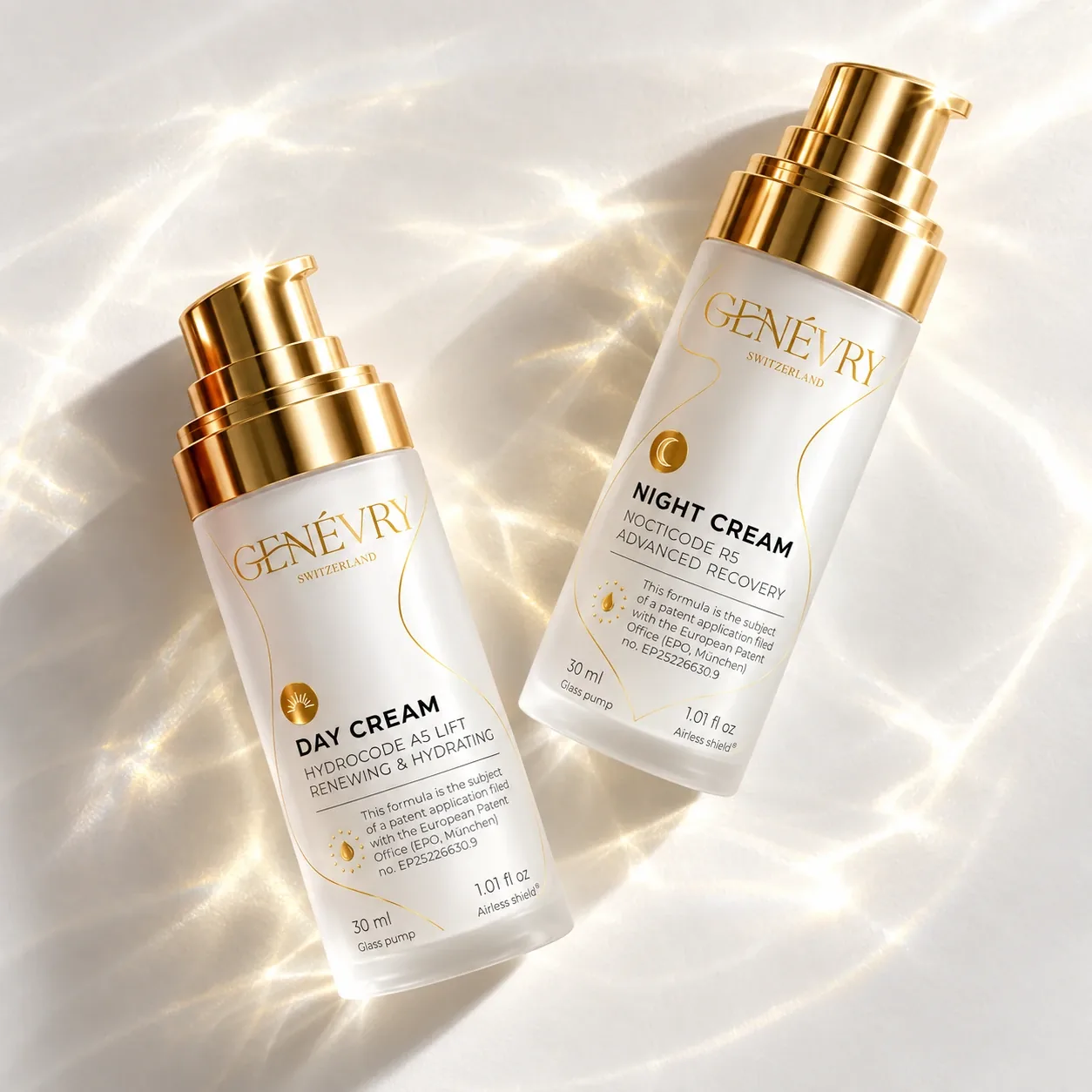
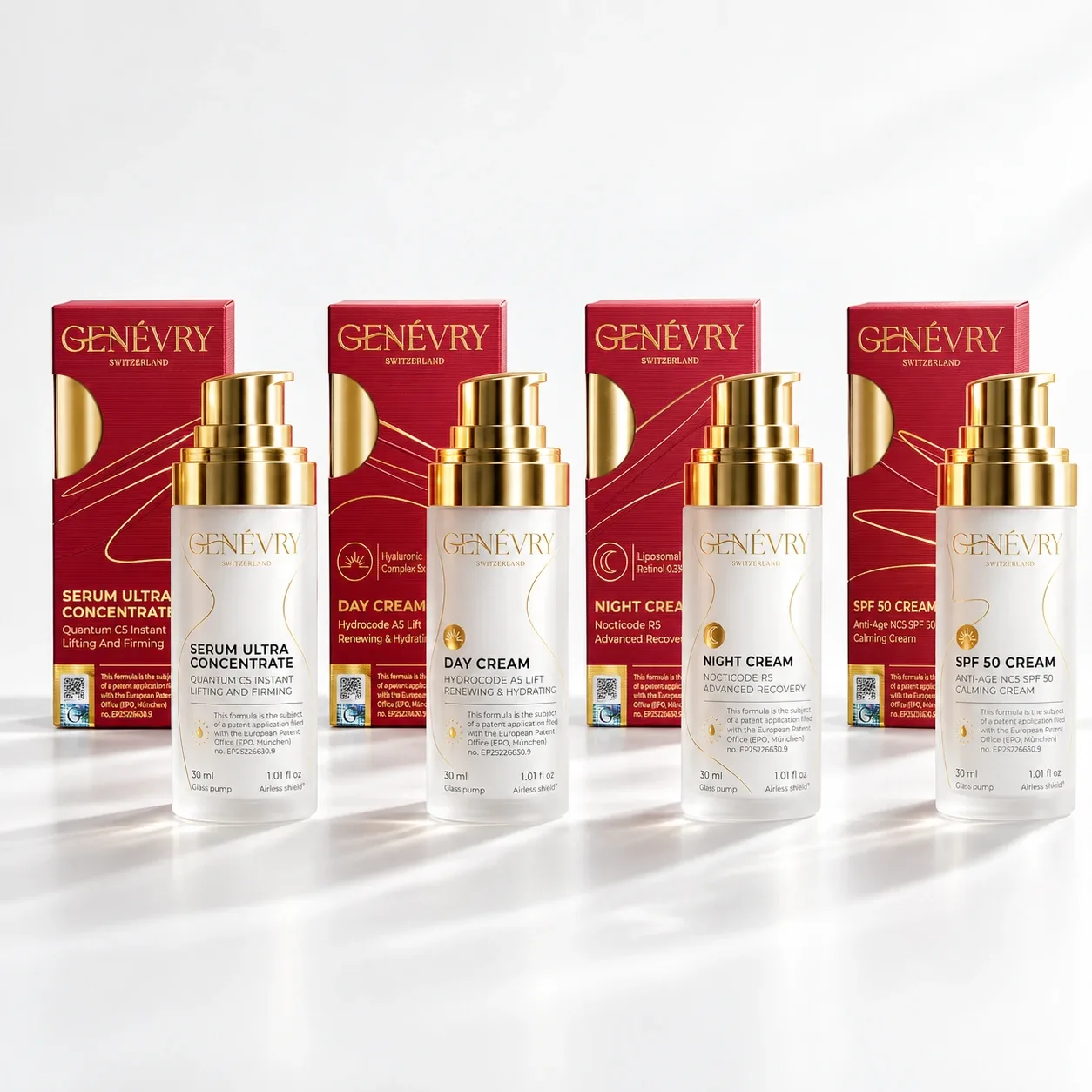
If you would rather have the four steps arrive together, serum, day cream, SPF 50 and night care are collected in The Skin Code Protocol.
When to see a dermatologist
Home care has limits worth knowing. A lesion that grows quickly, changes shape or colour, or bleeds is not a skincare question — it is an appointment, without delay. Melasma, pigmentation that appeared during pregnancy and extensive post-procedure changes also warrant a consultation; a dermatologist has tools no cosmetic product can match. If you are pregnant, breastfeeding or taking medication, run your routine past a doctor first.
Frequently asked questions
Can skincare remove dark spots altogether?
Not in the sense of removal. Cosmetics work on how skin looks: evenness of tone, luminosity, surface smoothness. Permanently clearing pigmented lesions belongs to procedures performed by a specialist.
How long before there is a visible difference?
The instrumental measurements quoted above were taken at three and four weeks. For a change you notice in the mirror, two to three months of consistent use with daily sunscreen is the realistic horizon.
Is sunscreen necessary in winter and on cloudy days?
Yes. UVA holds at a broadly similar level all year and passes through cloud and glass. Where tone is concerned, UVA is the part that matters most.
Can vitamin C and retinol be used together?
Yes, separated in time: vitamin C in the morning, a retinoid in the evening. On sensitive skin, introduce them one at a time rather than both at once and watch how the skin responds over the first few weeks.
Does makeup with SPF count?
Rarely. Foundation with a declared SPF is applied far more thinly than the amount used in testing, so the real protection is proportionally lower. Treat it as a top-up to your sunscreen layer, not a replacement for it.
Evening out tone is not a week’s work. Sunscreen every morning, an antioxidant in front of it, a gentle hand at cleansing, and patience measured in months — that is the whole method. Unexciting, and the only version of it that matches how skin actually behaves.
The formulas in this article
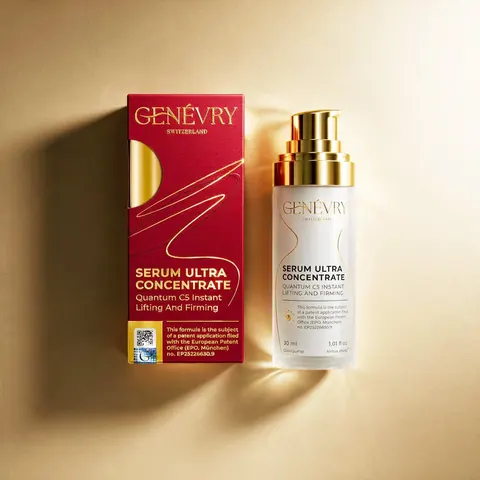 Quantum C5Ser ultraconcentrat159,90 leiDiscover the formula →
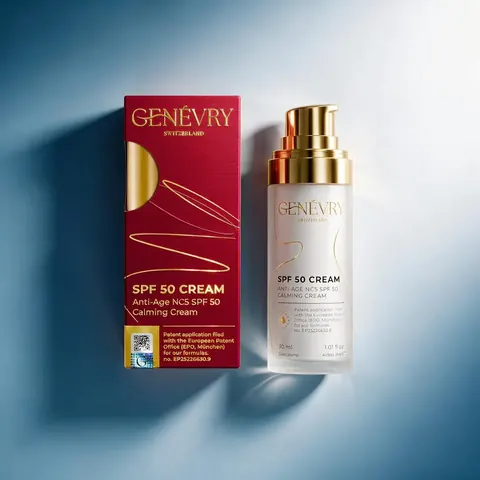 Anti-Age NC5Cremă calmantă SPF 50159,90 leiDiscover the formula →
Cosmetic product. Individual results may vary.

 English / EUR
 English (US) / USD
 English (UK) / GBP
 Deutsch / EUR
 Deutsch (Schweiz) / CHF
 Français / EUR
 Italiano / EUR
 Español / EUR
 Nederlands / EUR
 Polski / PLN
 日本語 / JPY
 한국어 / KRW
 中文 / CNY
 العربية / AED
 English (Australia) / AUD
 English (Canada) / CAD
 Svenska / SEK
 Dansk / DKK
 Norsk / NOK
 Suomi / EUR
 Português / EUR
 Türkçe / TRY
 Čeština / CZK
 Magyar / HUF
 Română / RON
 Ελληνικά / EUR
 Slovenčina / EUR
 Hrvatski / EUR
 Slovenščina / EUR
 Lietuvių / EUR
 Latviešu / EUR
 Eesti / EUR
 Български / EUR
 Українська / EUR