Dull skin: how to bring radiance back to a tired complexion
Radiance is a surface property, not something that rises from within. What takes the light out of skin, and how to bring it back.
Dull skin rarely arrives overnight. Foundation starts sitting oddly, then one morning the face in the mirror looks tired after a full night’s sleep. Nothing is wrong and no single product is to blame — what has changed is optical. The surface has stopped reflecting light evenly, and we read that absence as fatigue.
Where radiance actually comes from
Radiance is a surface property, not something that rises from within. A smooth, well-hydrated stratum corneum behaves like a softly matte mirror: a good share of the light striking it bounces off at a similar angle, and the eye registers that as brightness across the cheekbones. Roughen that surface and the light scatters in every direction instead, taking the effect with it.
Several things roughen it at once. Corneocytes — the flattened cells of the outermost layer — shrink and lift at the edges when water is in short supply. Their shedding also slows with age, so they linger and build an uneven film. Two further factors sit below the surface: slower microcirculation, which drains the pink undertone, and uneven melanin distribution, which makes a face read as patchy even when the individual marks are small.
What takes the glow away
There is usually more than one cause running at the same time, which is why swapping a moisturiser so rarely settles it.
| Cause | What you see | What helps |
|---|---|---|
| Dehydrated stratum corneum | Flat finish, fine lines more visible, makeup clinging to dry patches | Humectants with something sealing on top, daily |
| Build-up of shed cells | A greyish veil, roughness under the fingertips | Gentle exfoliation once or twice a week |
| Short nights, alcohol, cigarette smoke | Sallow tone, shadows under the eyes | Sleep, fluids, cutting back |
| UV and urban pollution | Uneven tone, pigmentation marks, a tired look | SPF 50 every morning, antioxidant first thing |
| Uneven melanin distribution | Patchy transitions, a muddy cast | Consistent photoprotection and patience |
One cause sits outside skincare entirely. If sallowness persists despite a sensible routine and enough sleep, and arrives alongside persistent tiredness, hair shedding or breathlessness on mild exertion, that is a conversation for a doctor rather than a facialist. Anaemia and thyroid disorders can both change facial colour, and no cream substitutes for having them checked.
Why winter makes it worse
Cold air outdoors and dry heated air indoors are two separate loads on the skin barrier. Low humidity speeds up water loss, and a hot shower after a cold walk strips lipids on top of that. The result shows up within a week or two: skin that reflected light in September looks tired by January. The fix is less about a different set of products than a different texture — a richer top layer, and a shorter, cooler shower.
Dull skin: how to bring radiance back
Order matters here more than the number of products. The routine below takes about five minutes morning and evening.
- Cleanse gently, twice a day. That tight, squeaky feeling afterwards is not cleanliness, it is a compromised barrier. Lukewarm water, a wash without harsh detergents, and patting rather than rubbing dry.
- Antioxidant serum in the morning, on slightly damp skin. Vitamin C works here as defence against oxidative stress and as support for an even tone. Damp skin lets the formula spread thinner and more evenly.
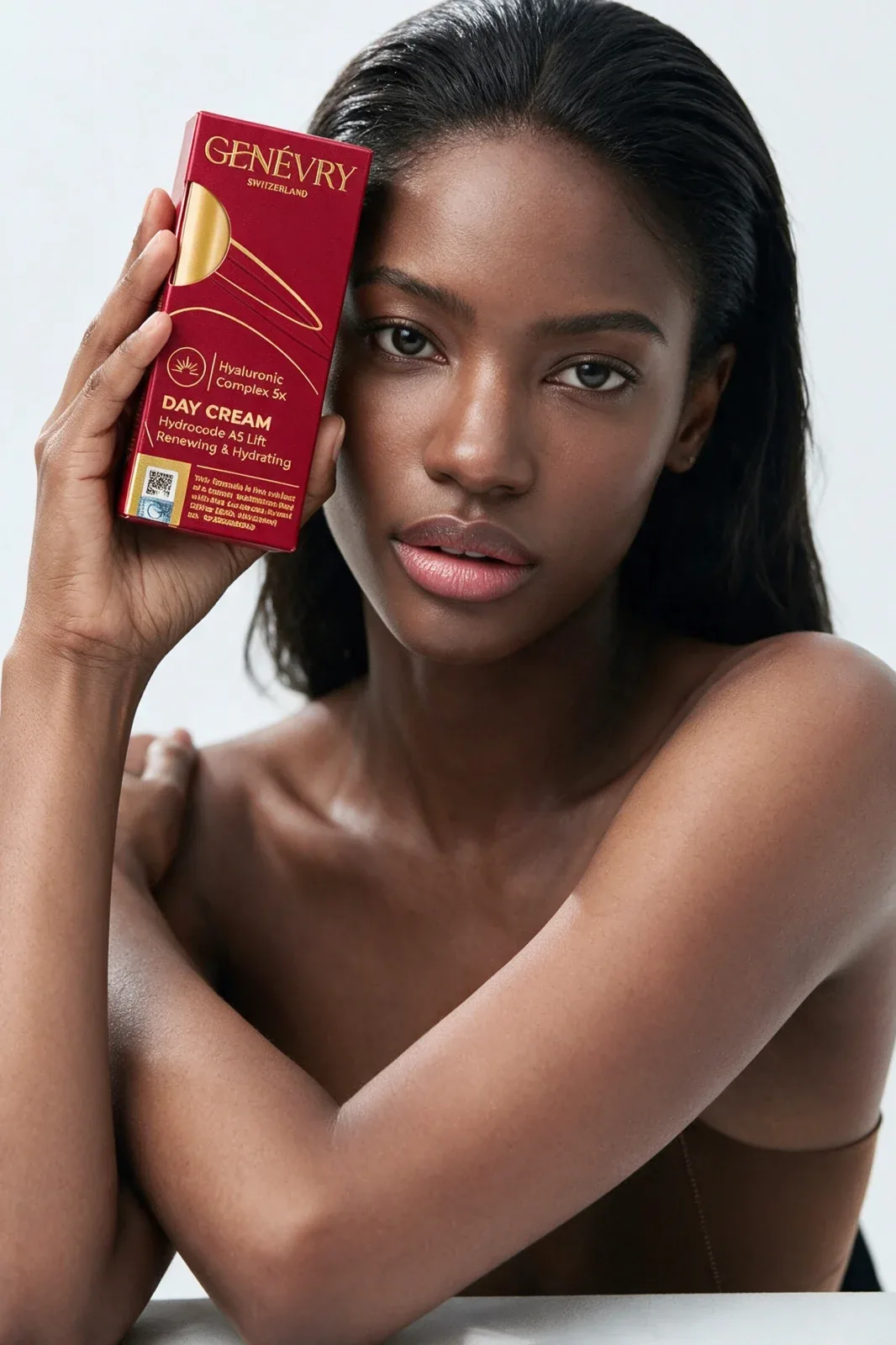
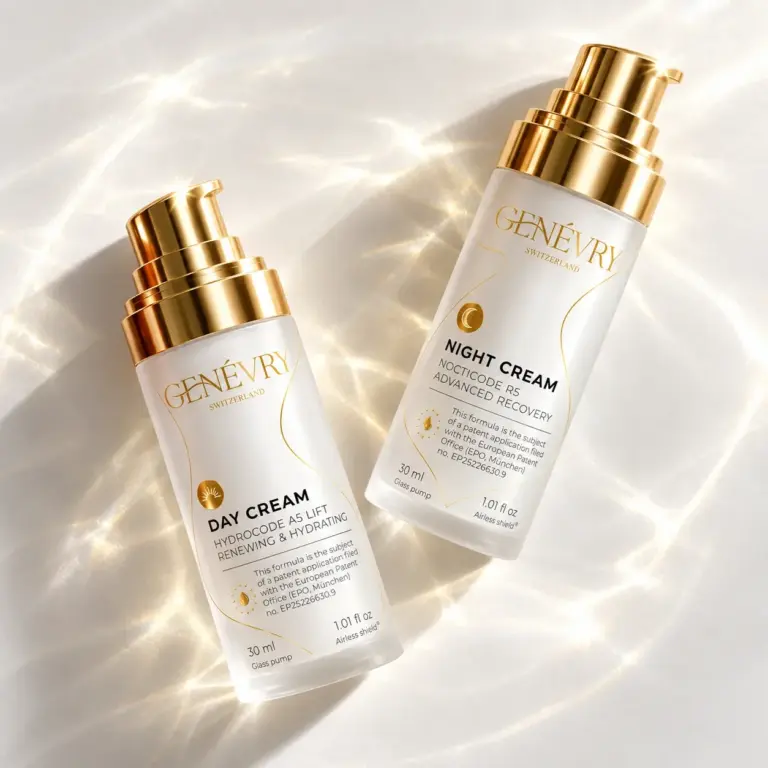
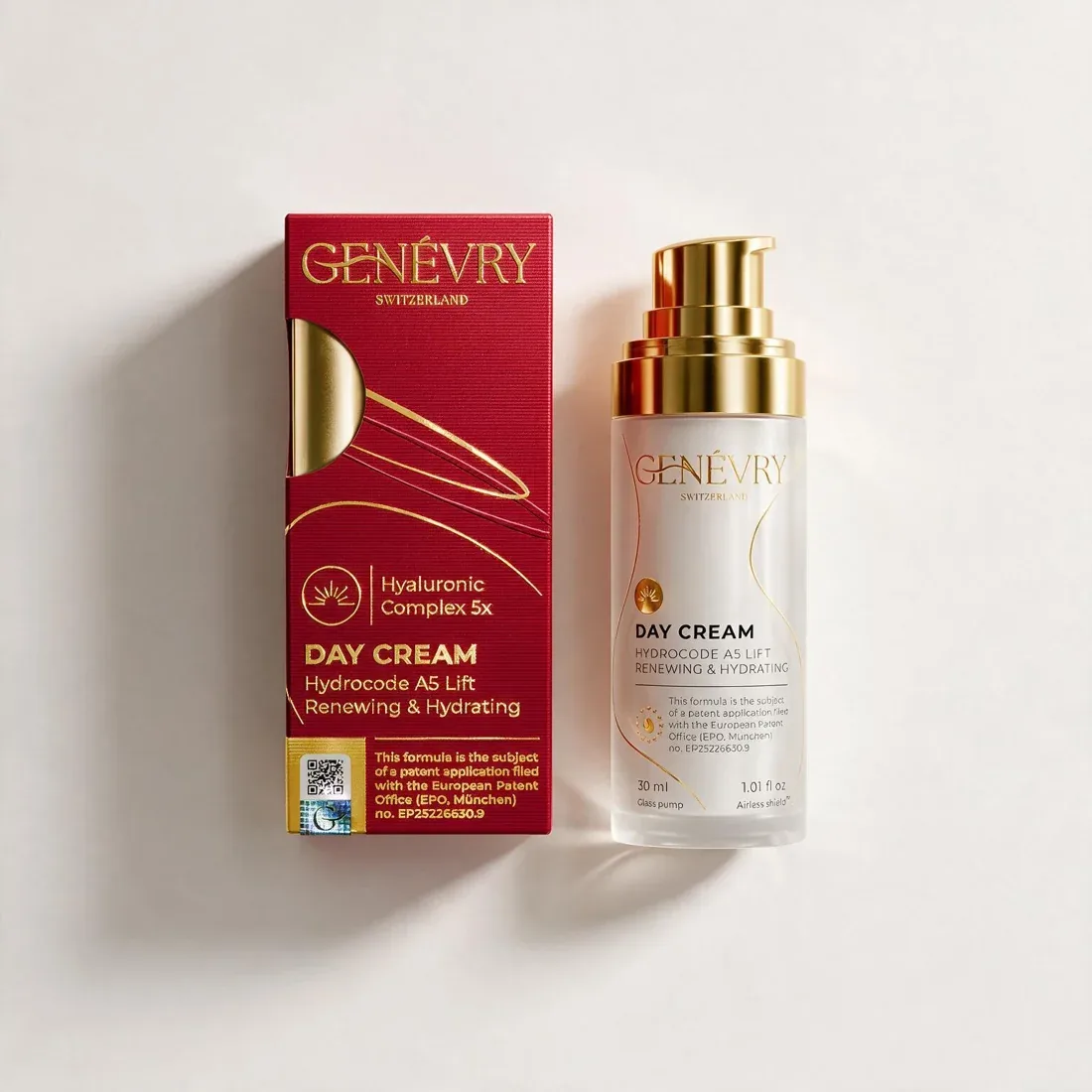
- Day cream as the sealing layer. Humectants with nothing over them hand their water back to the room. This is the layer that keeps the surface smooth for the next few hours.
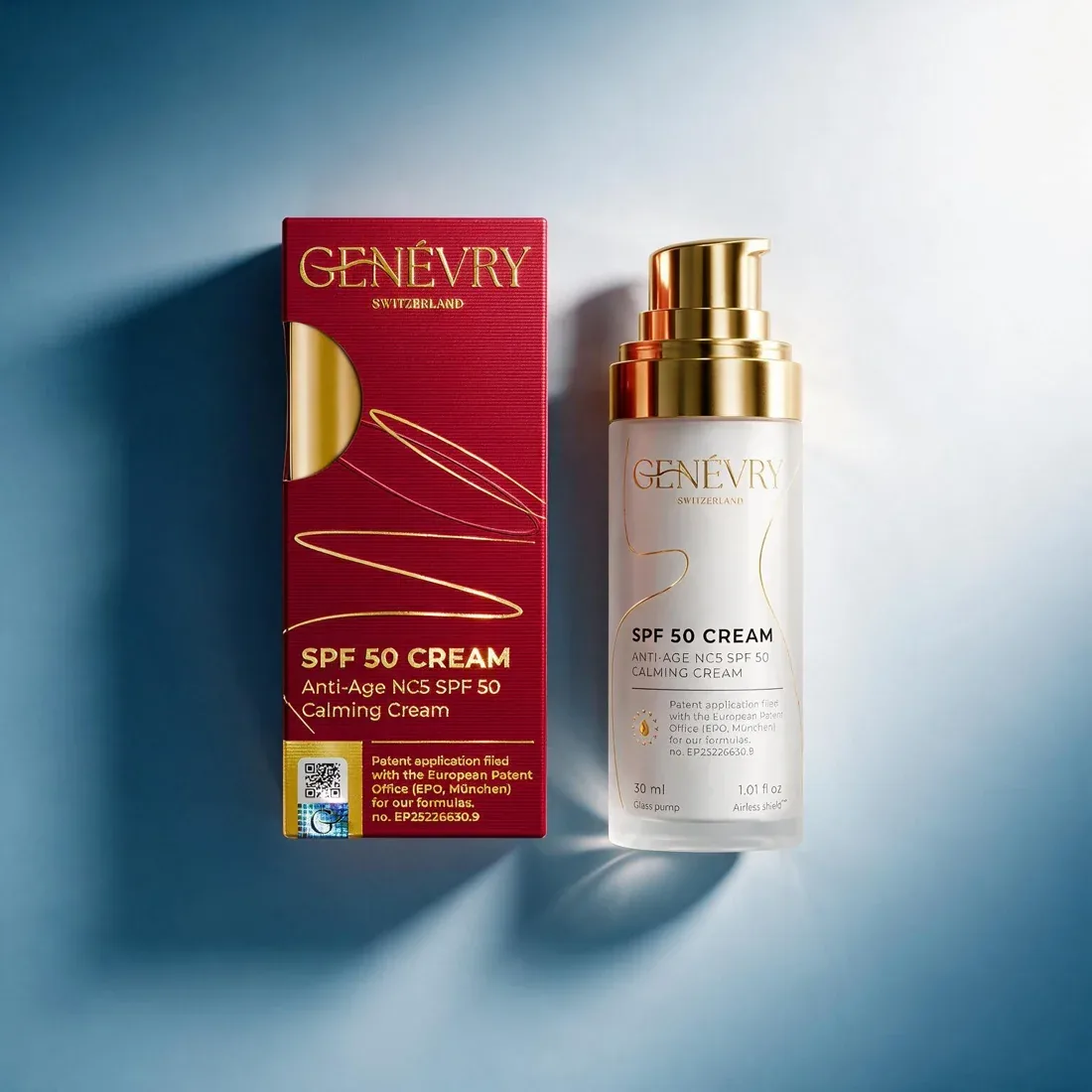
- SPF 50 as the last step of the morning. Of everything on this list, it has the largest effect on tone evenness over a span of months. Quantity counts: roughly half a teaspoon for face and neck.
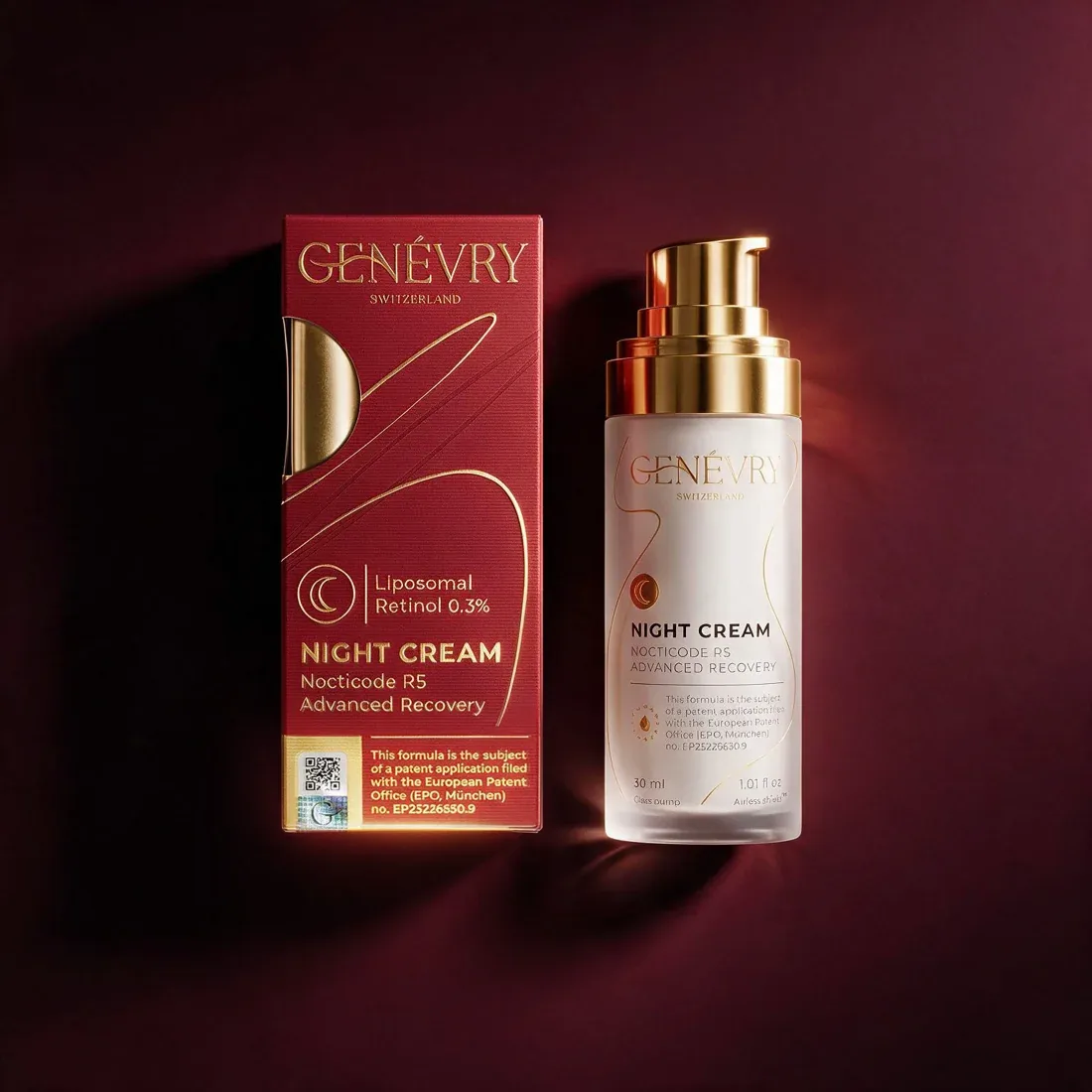
- A retinoid in the evening, introduced slowly. Start with two evenings a week and build up only once your skin takes it calmly. Retinoids are not used during pregnancy or breastfeeding.
- Exfoliate in moderation. Once or twice a week is plenty. Daily acids or scrubs produce the opposite of what you want: irritated skin looks duller still.
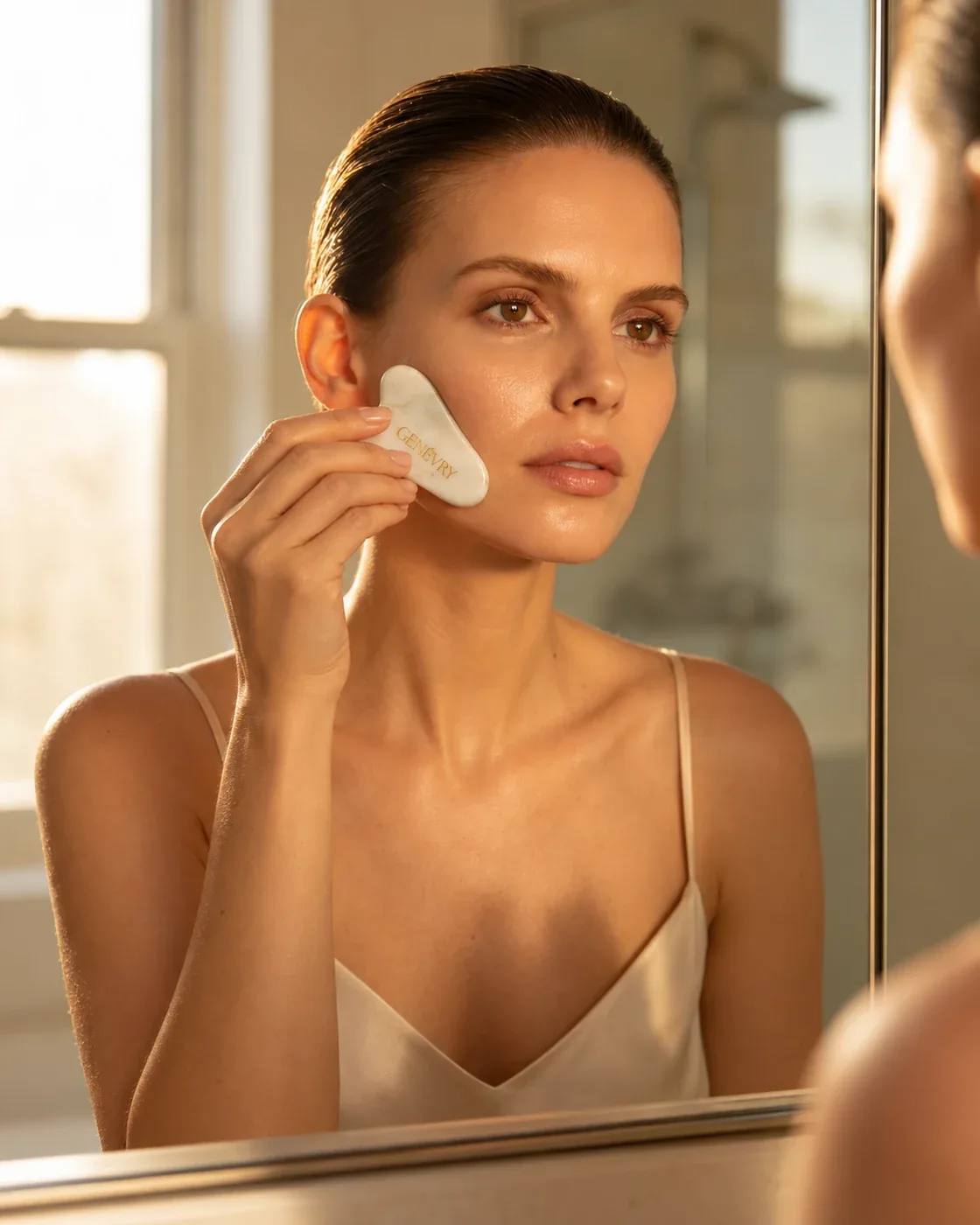
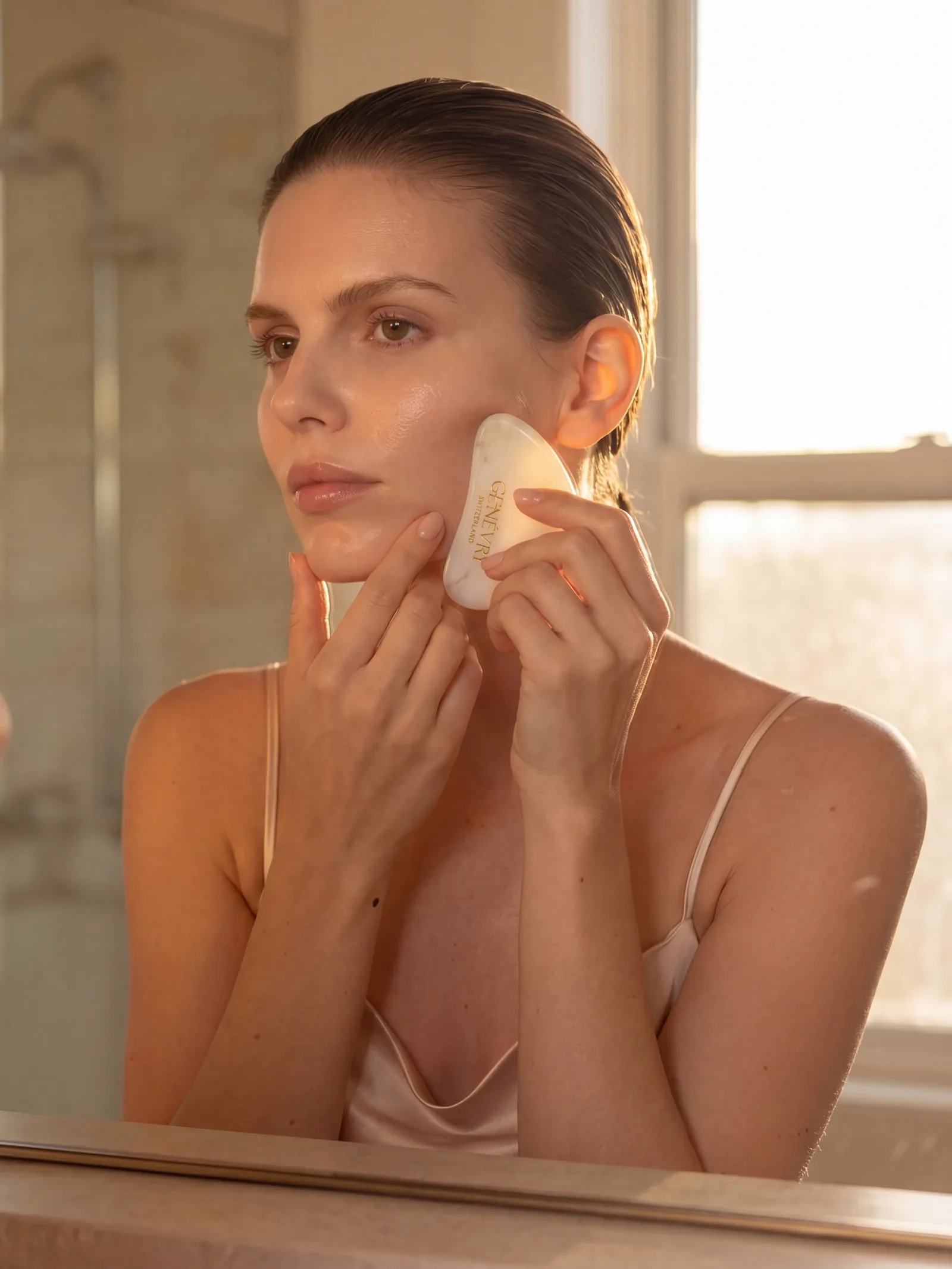
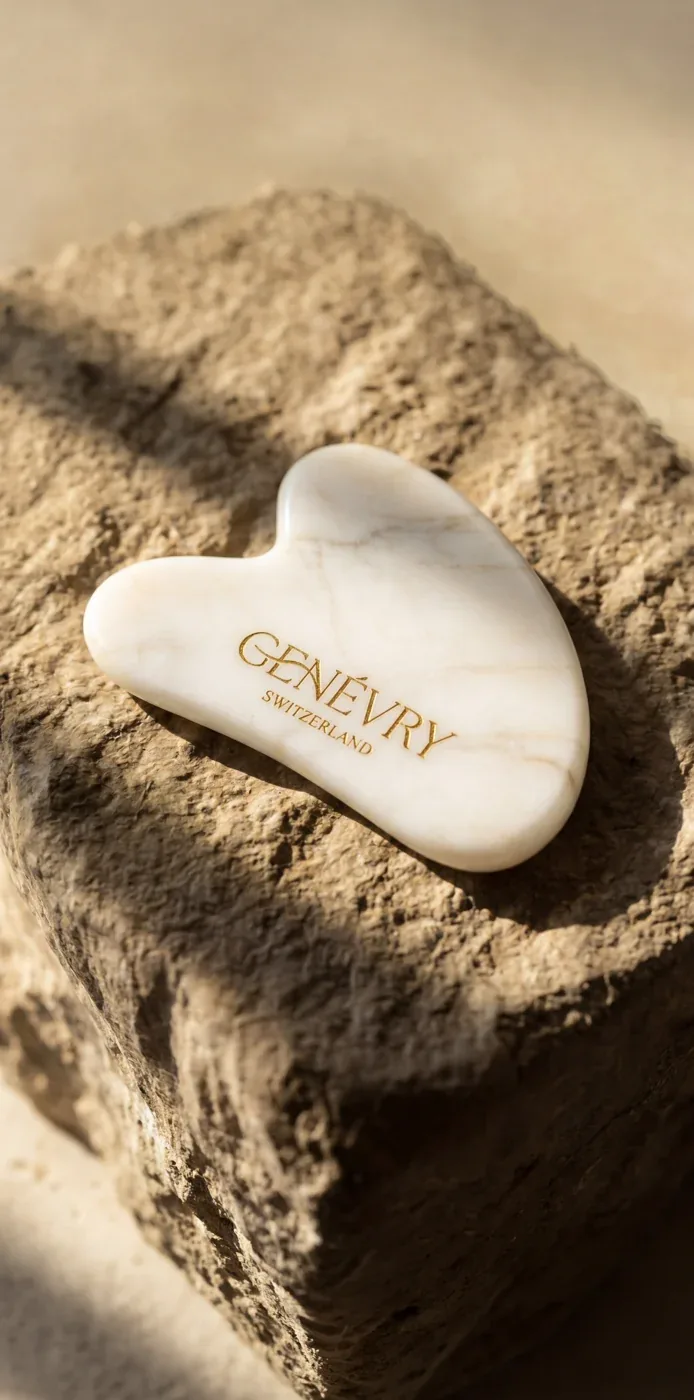
Facial massage, or a few minutes with a gua sha stone, replaces none of the above, but it closes the evening well and spreads a cream more evenly than fingertips alone.
What to expect, and when
The first change is the quickest and the least dramatic: a hydrated surface starts reflecting light better within days. Instrumentally measured smoothing is a three-to-four-week proposition. Tone evenness is slowest of all — that one runs on months of consistent photoprotection, not weeks. A photograph in the same light every four weeks tells you more about progress than checking the mirror daily.
Radiance in the GENÉVRY ritual
Two steps in the GENÉVRY collection work directly on how skin reflects light: one opens the morning, the other closes it.
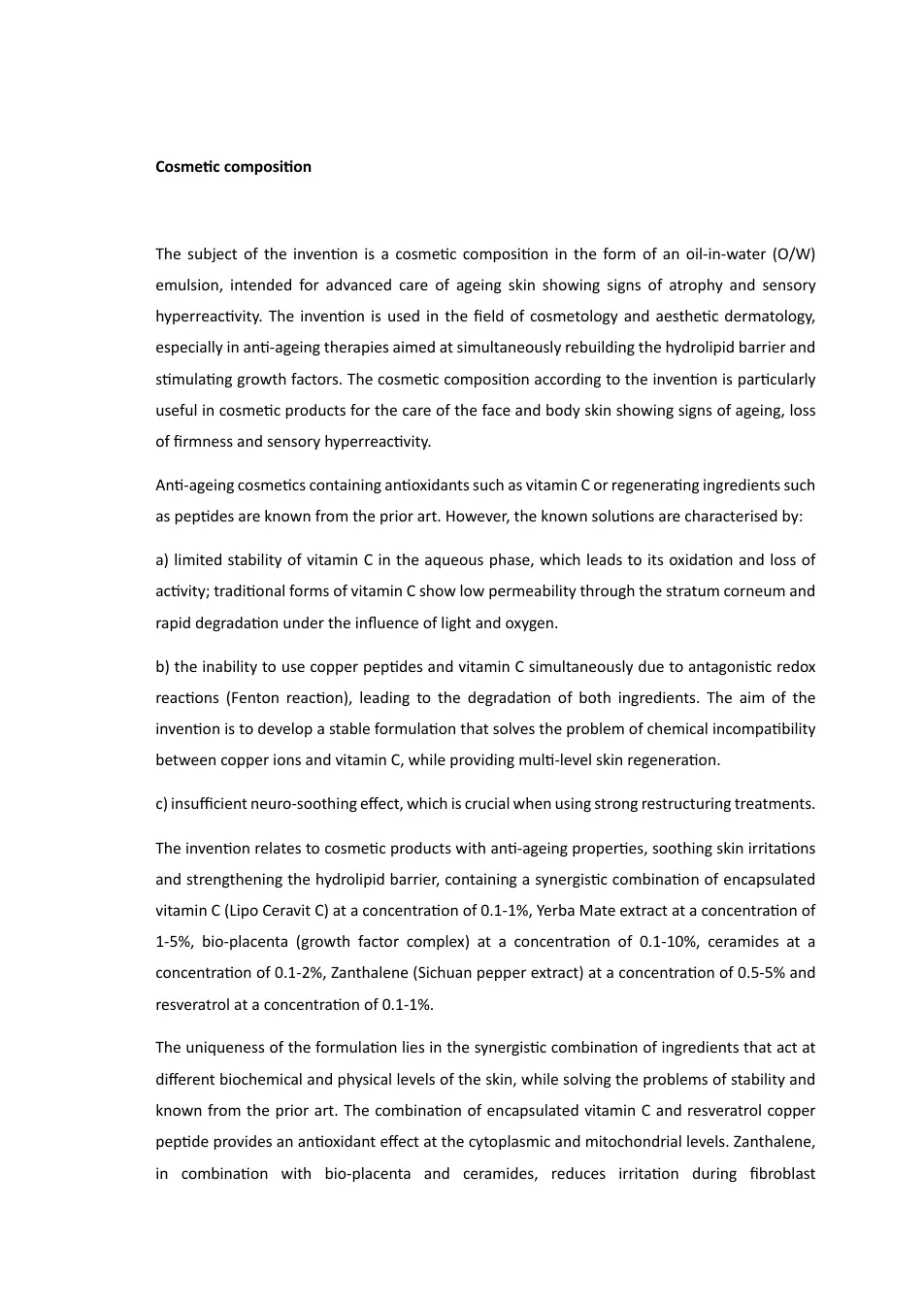
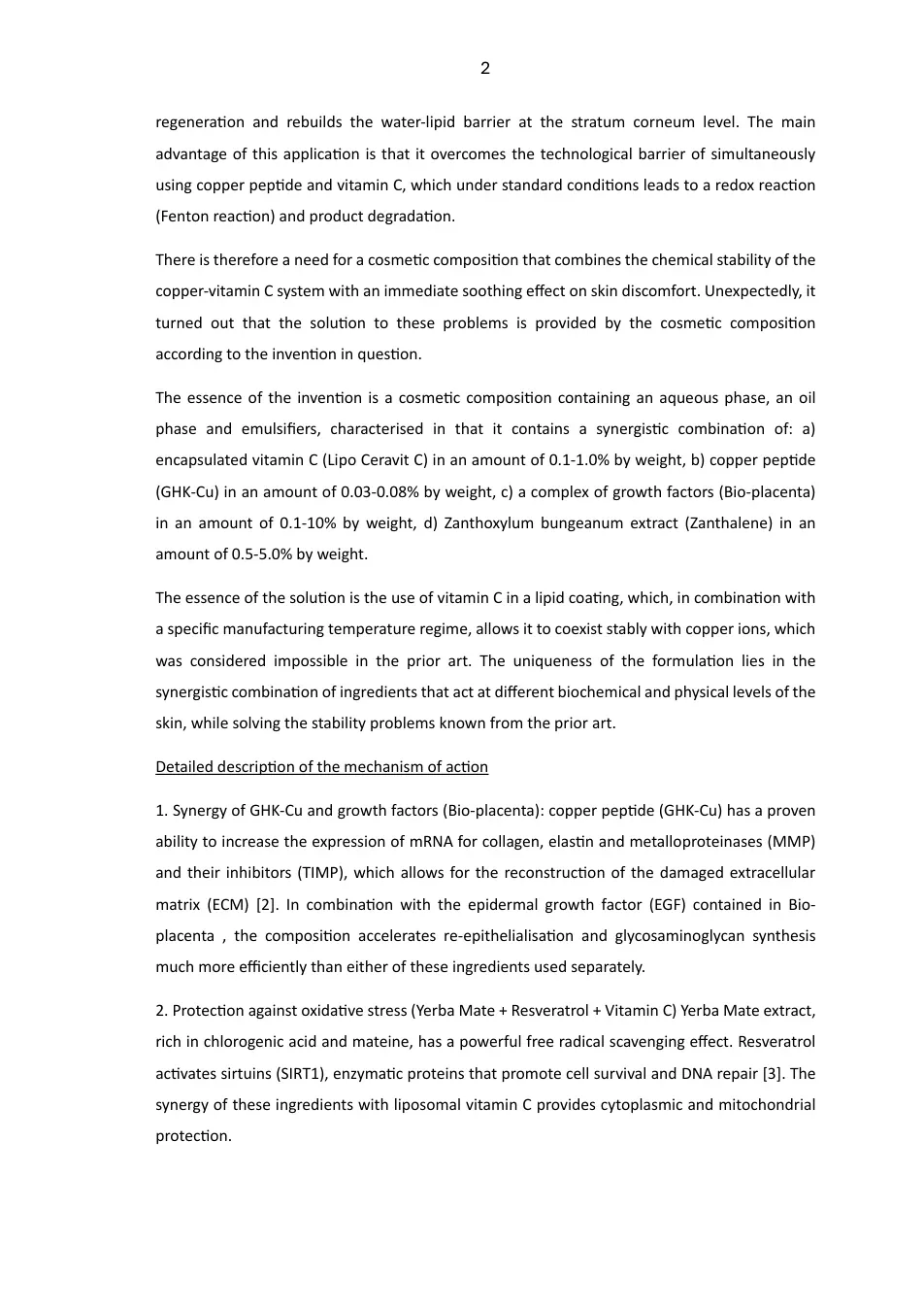
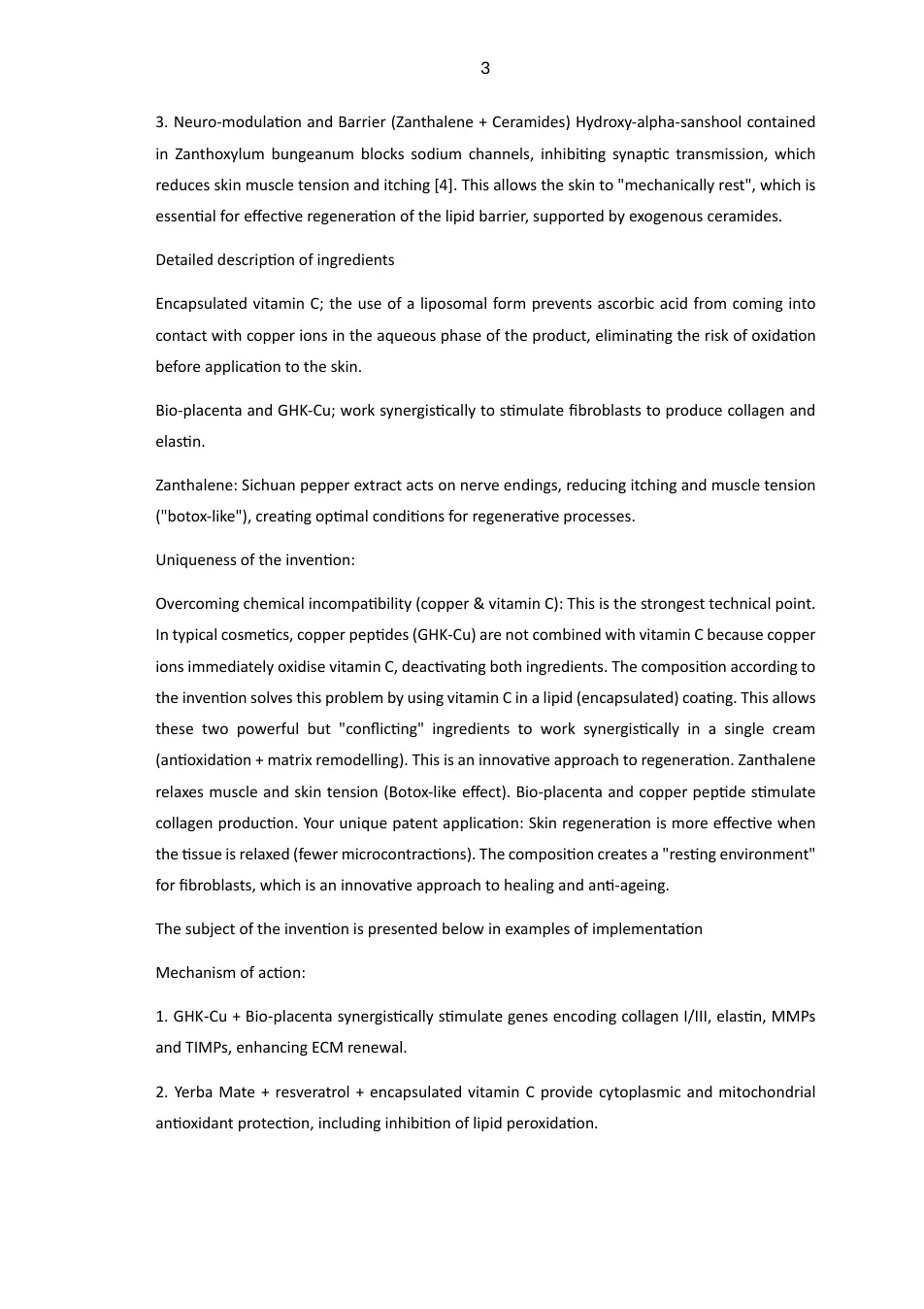
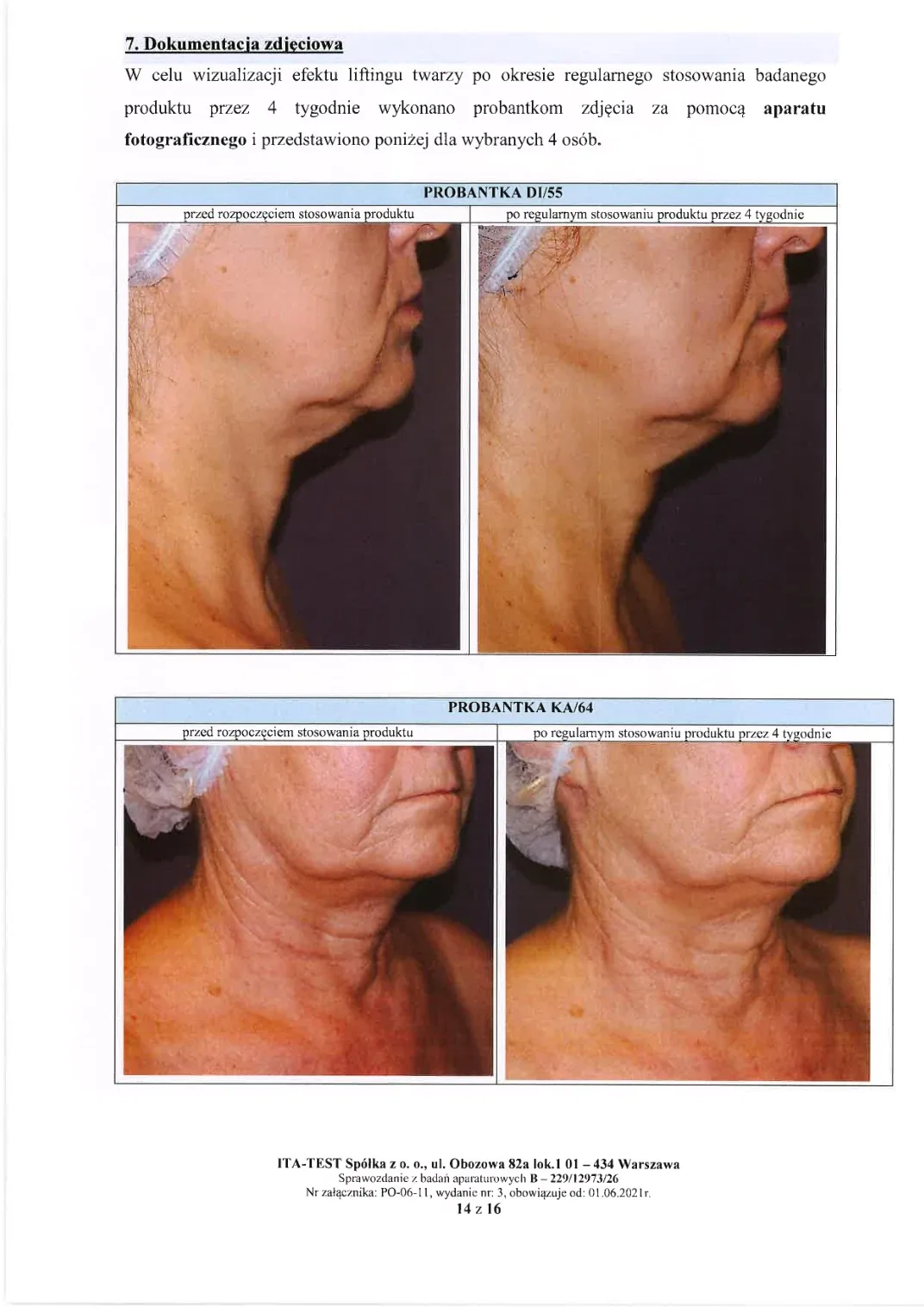
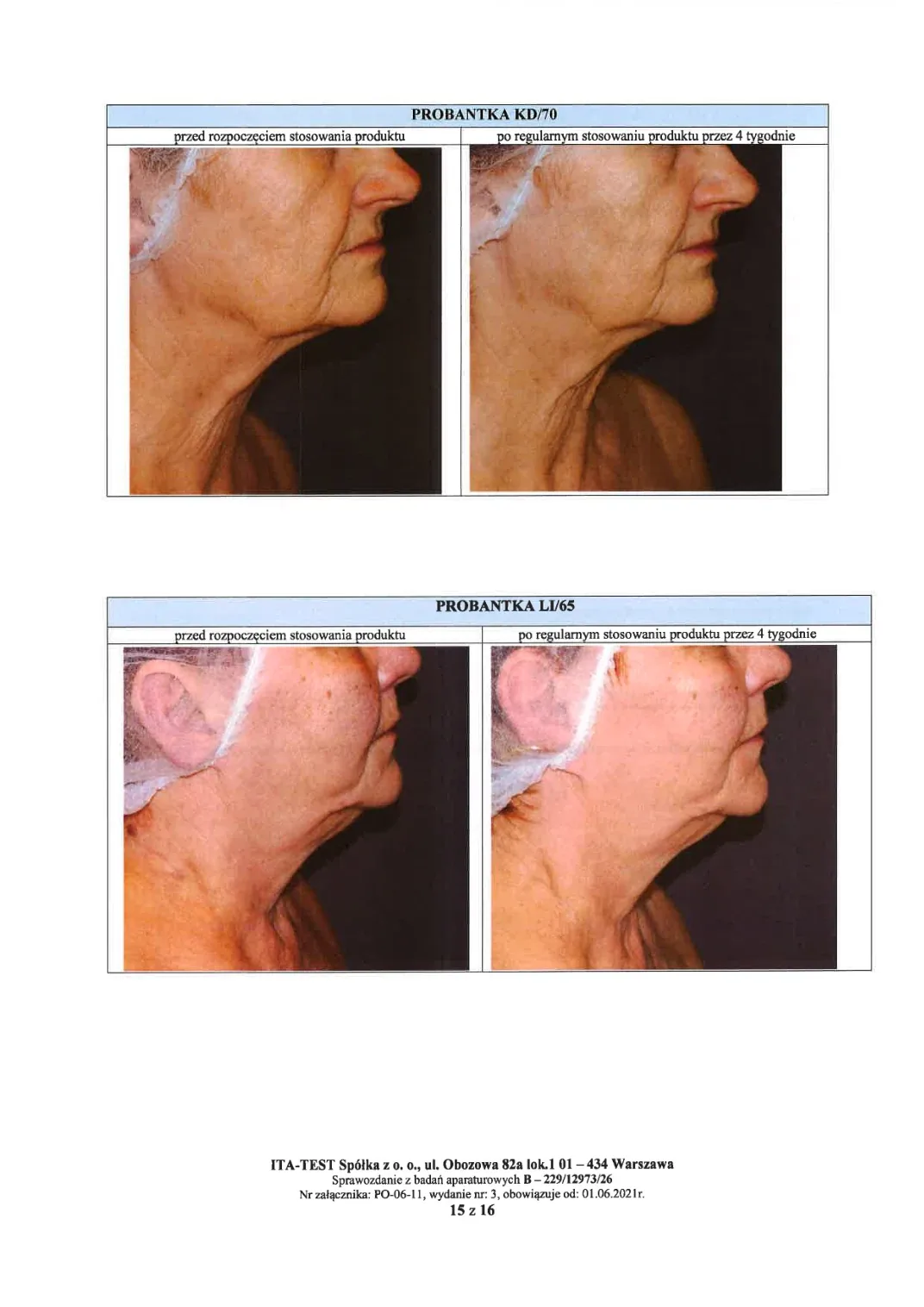
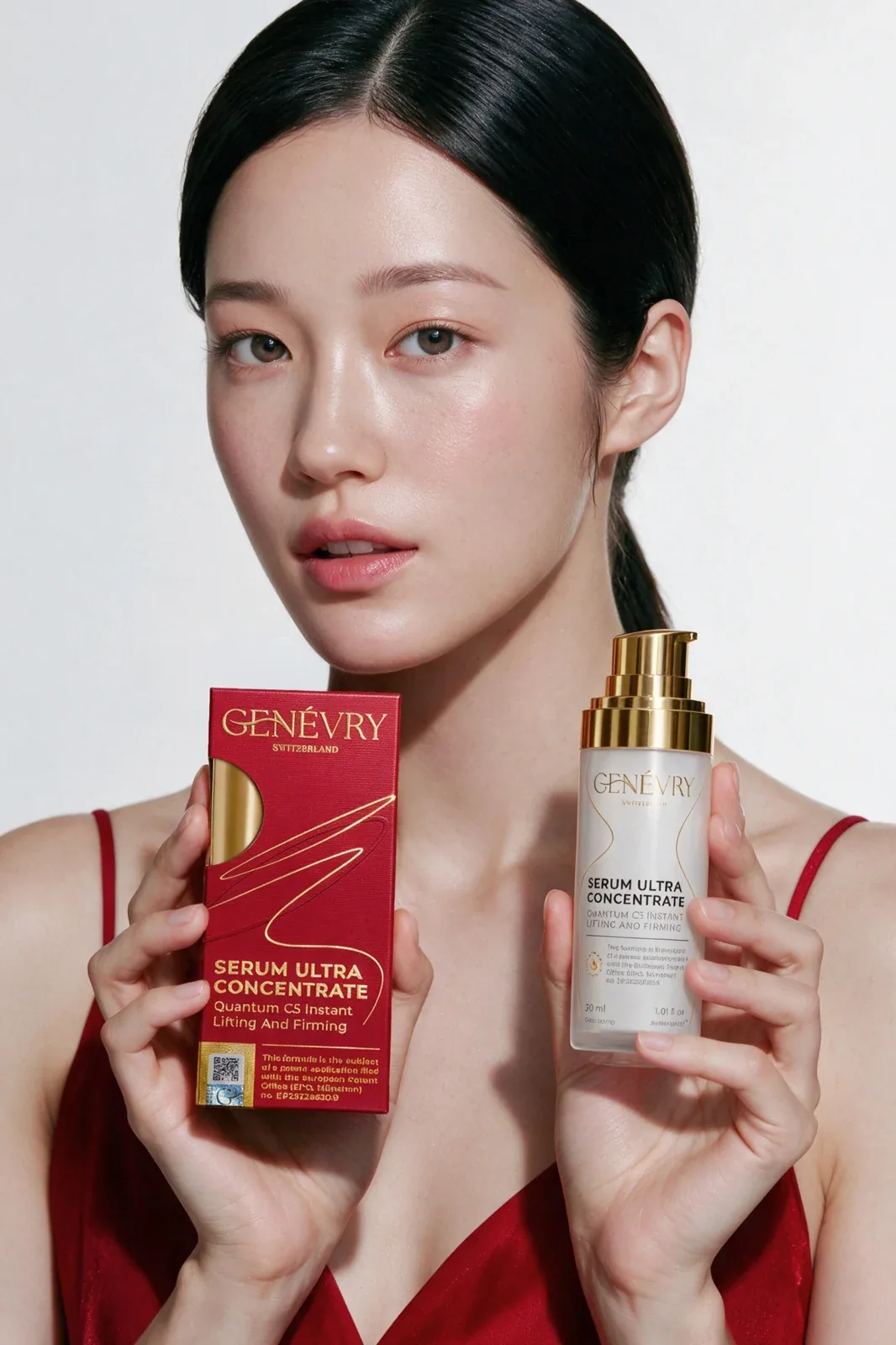
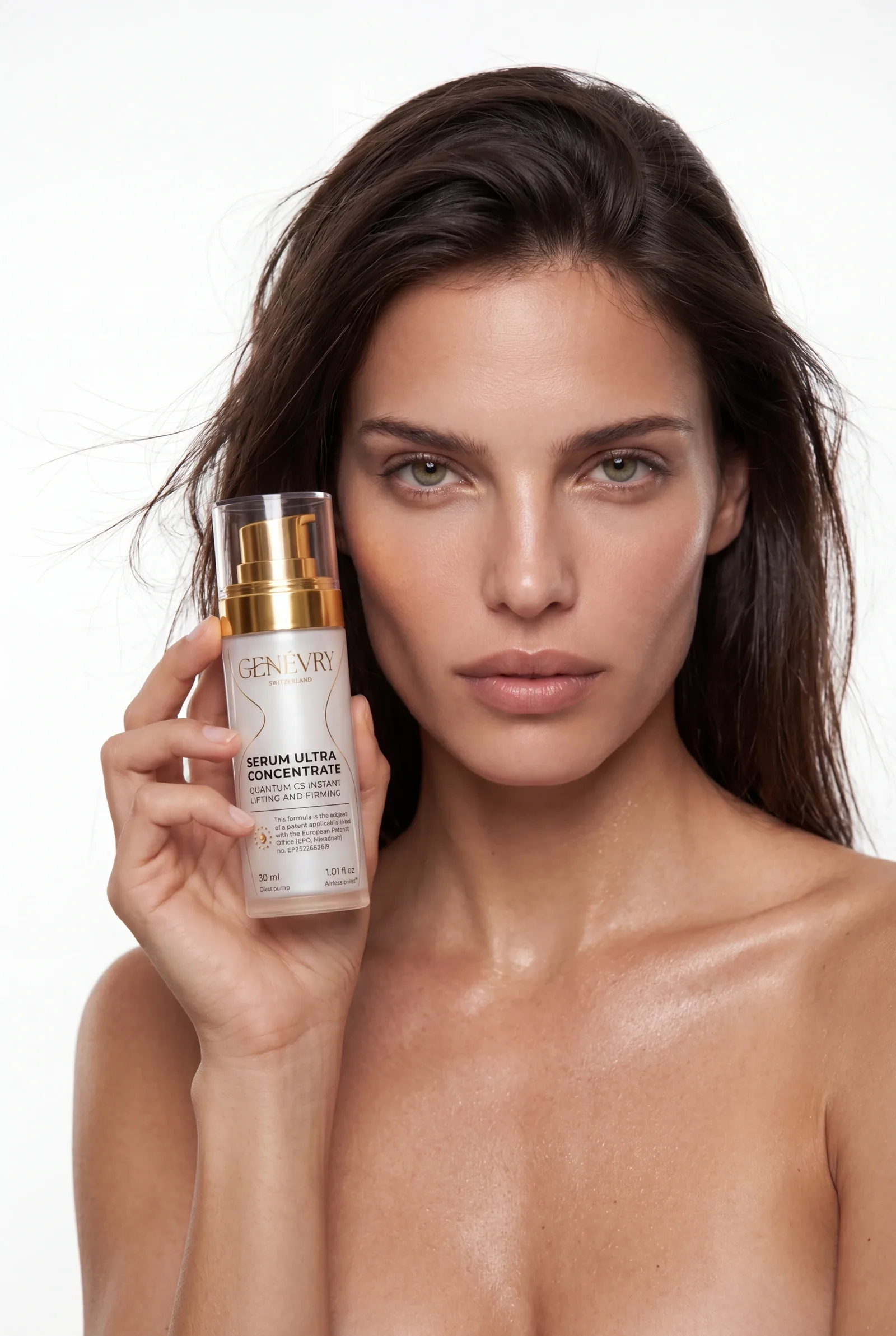
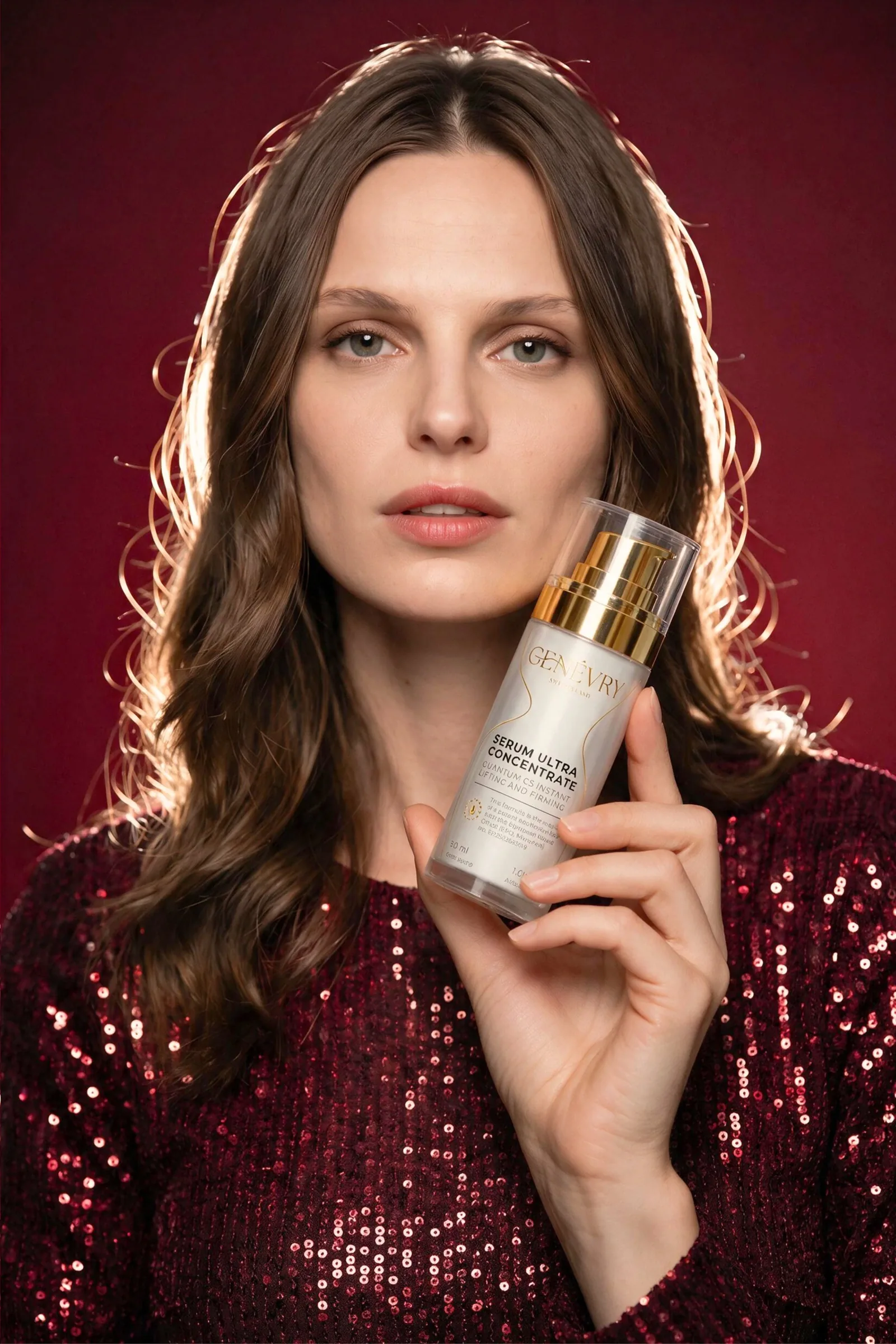
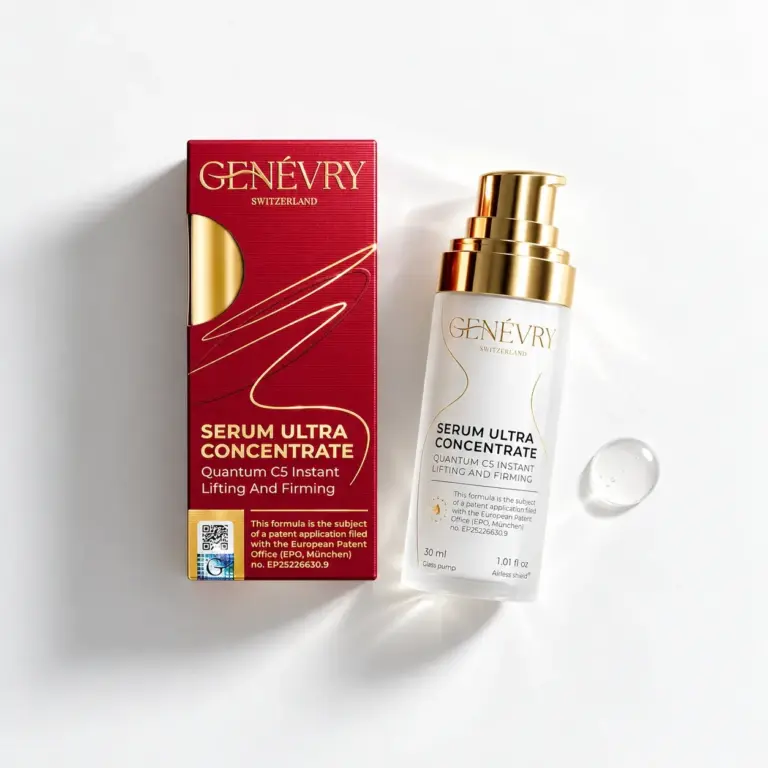
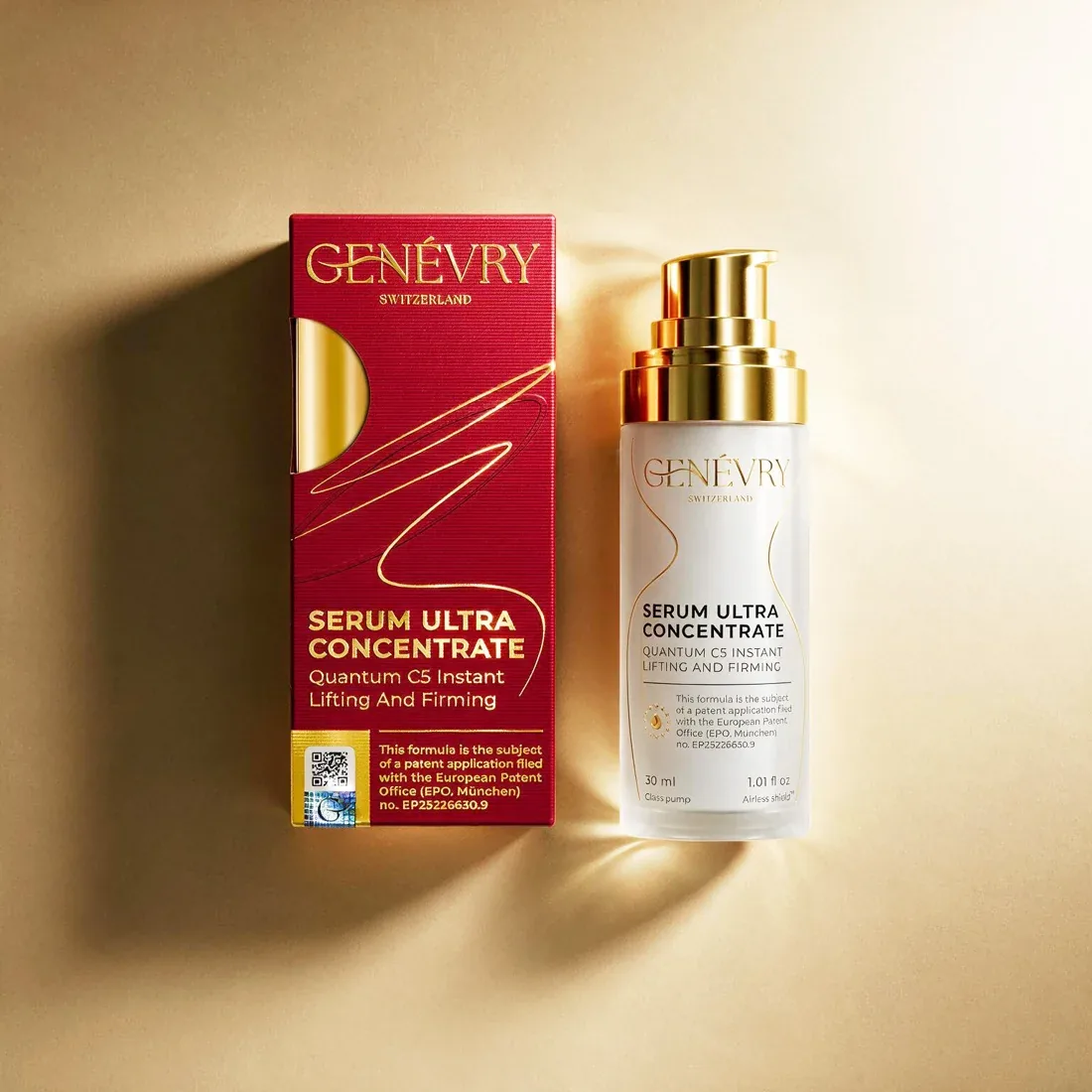
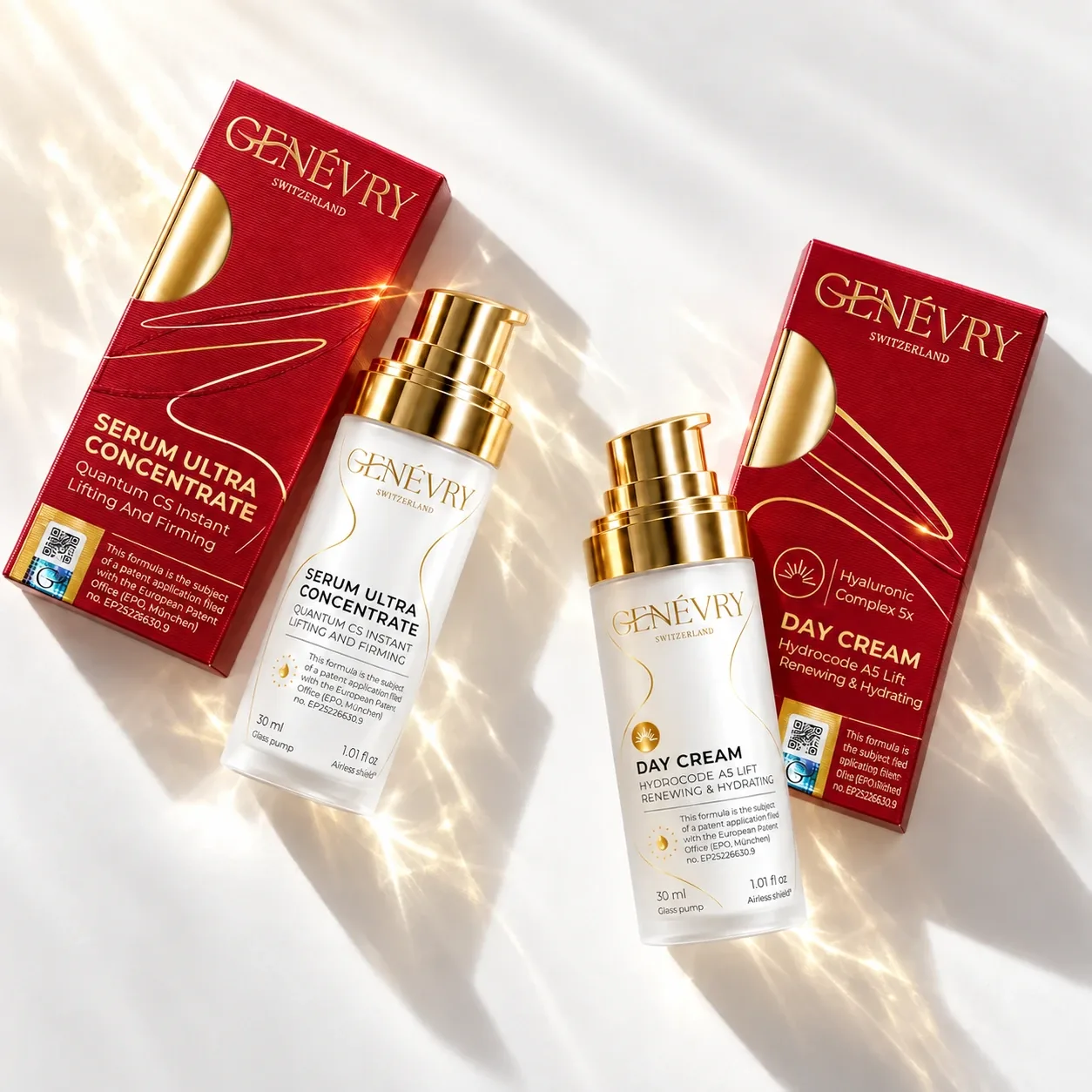
Quantum C5 serum pairs the copper peptide GHK-Cu with liposomal vitamin C. Encapsulation solves a specific formulation problem here — copper ions accelerate the oxidation of vitamin C, so in an open formula the two would undermine each other. The solution is the subject of patent application EP25226630.9 filed with the European Patent Office (patent pending); this is an application, not a granted patent. On the molecule itself: vitamin C on Wikipedia. In a four-week instrumental study (n=10), mean skin hydration rose 33% from baseline (Corneometer CM 825), with an increase recorded in all ten participants. The SEsm smoothing parameter improved by 5–26%, with a reported group average of +12% (Visioscan VC 98). In a four-week self-assessment survey (n=10), all ten respondents rated radiance and vitality “very good”.
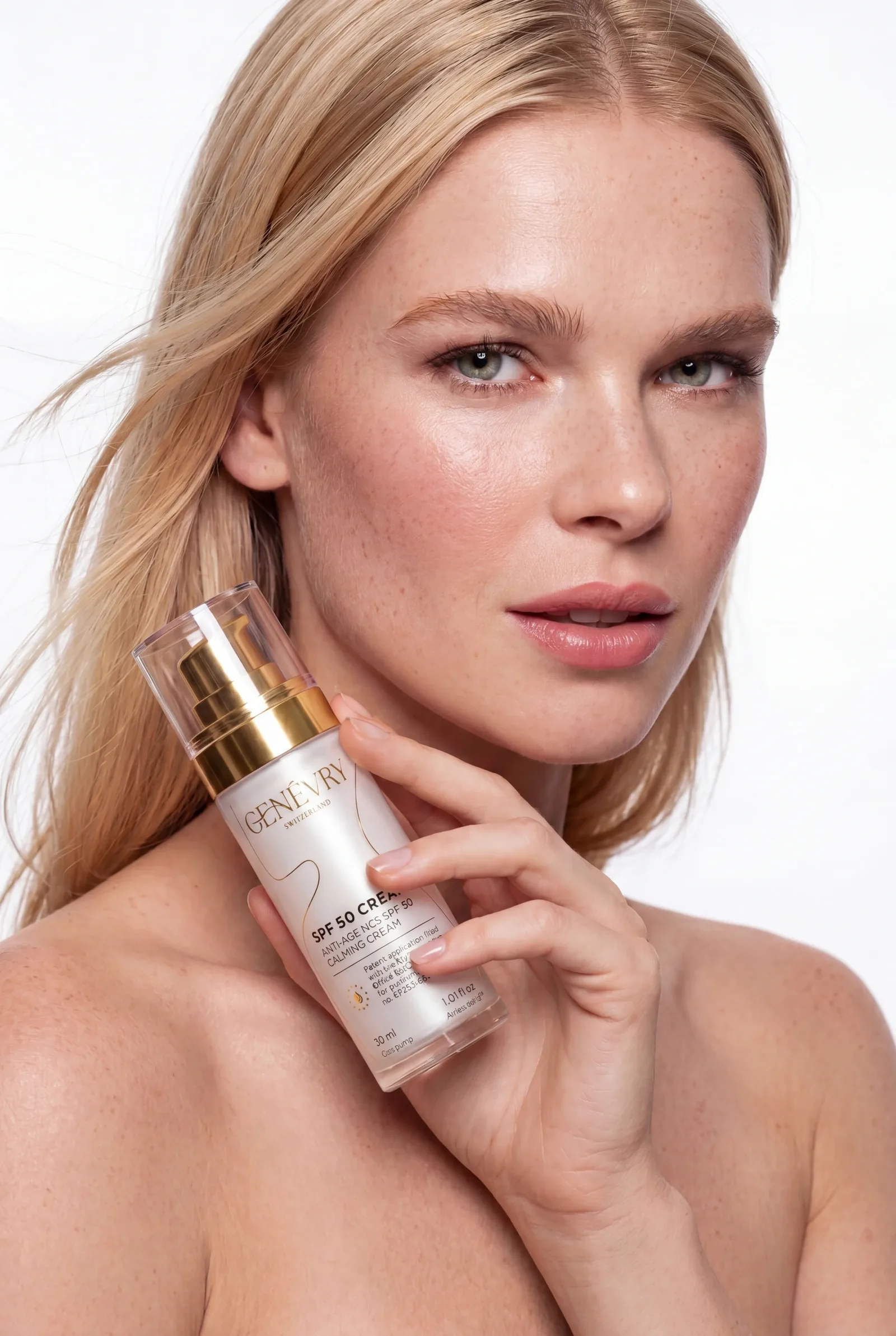
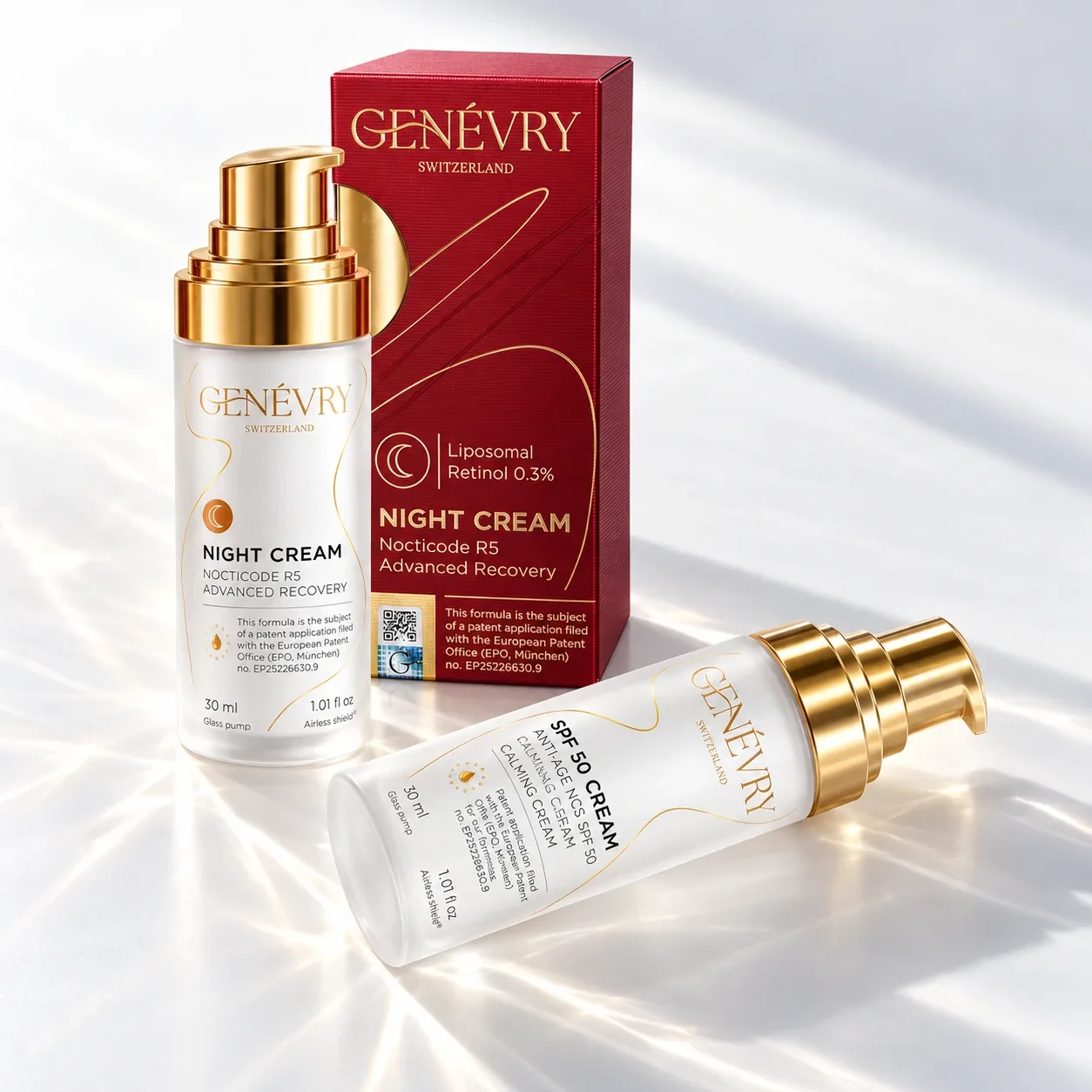
Anti-Age NC5 SPF 50 finishes the morning. In a three-week instrumental study (n=10), mean melanin within pigmentation spots fell by 7% — which does not mean seven per cent fewer spots; what was measured is pigment inside existing marks. The mean skin lightness parameter shifted by +2%, and mean facial hydration rose 23% (Corneometer CM 825). These figures describe the whole formula used regularly, not a single application.
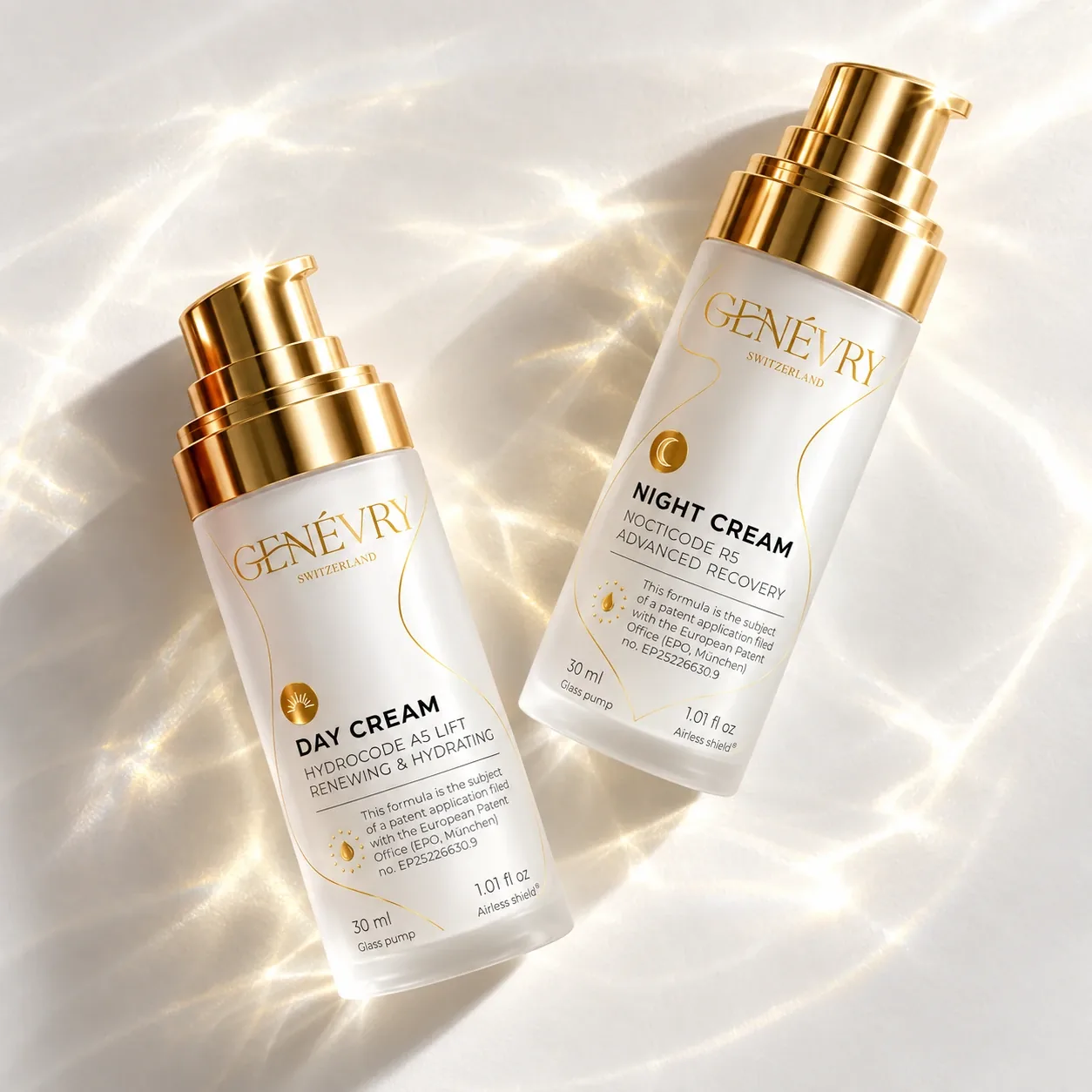
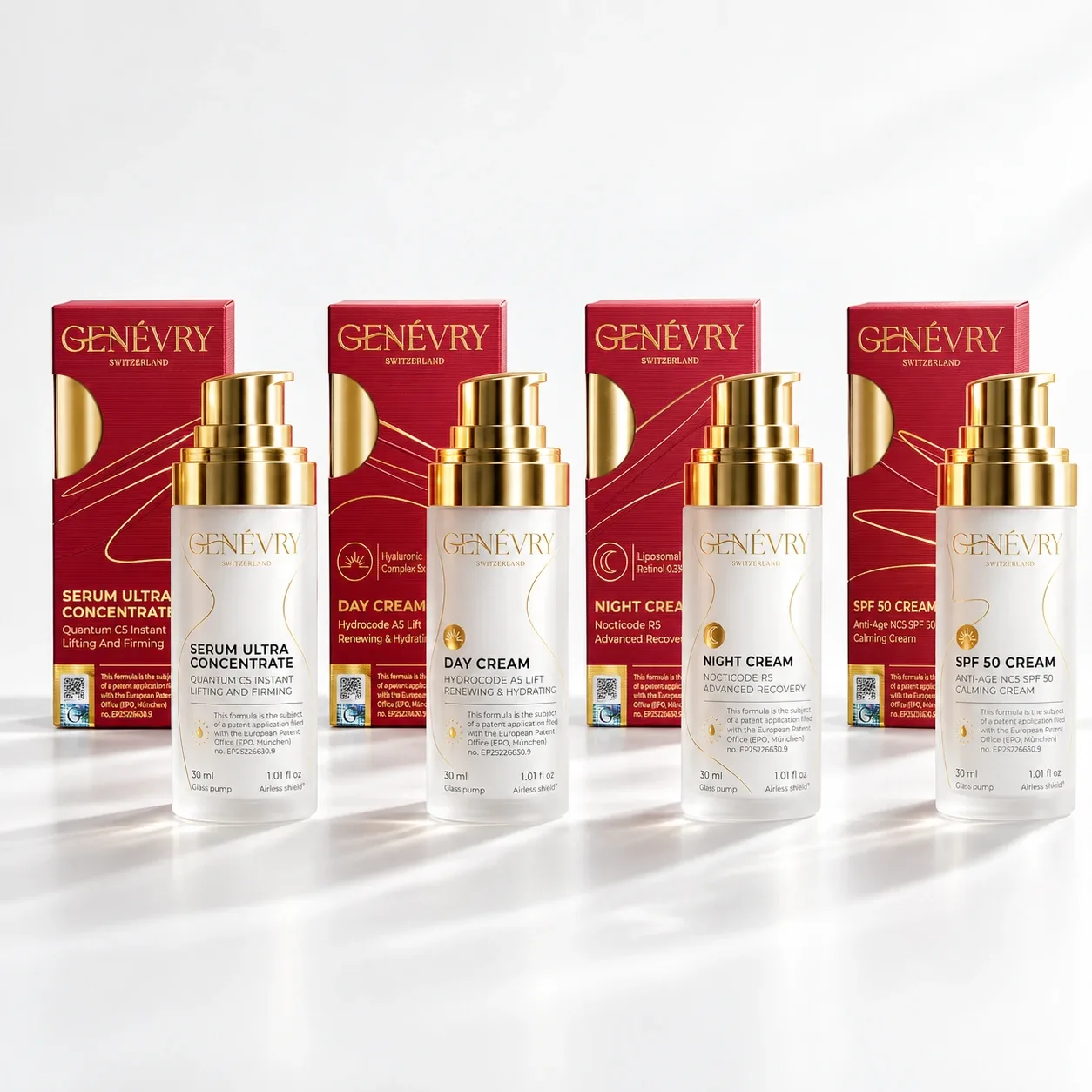
If both ends of the day are meant to work together, The Skin Code Protocol is the straightforward starting point, with the serum and the SPF alongside the day and night creams. During pregnancy, with a skin condition, or on medication that affects the skin, discuss any change of routine with a doctor or dermatologist first.
Dull skin: common questions
Can radiance come back within a week?
Partly. Surface hydration changes within days, and with it the way skin handles light — that part is visible quickly. Even tone and smoothing need weeks of consistency, because they depend on the epidermal renewal cycle.
Will exfoliating daily brighten skin faster?
No, it usually does the reverse. Over-exfoliation compromises the barrier, skin loses more water and ends up looking duller, often with redness alongside. Once or twice a week is a sensible ceiling for most people.
Does vitamin C fade pigmentation?
A vitamin C product helps support an even tone and defends against oxidative stress, but it does not remove pigmentation marks. Without daily sunscreen much of that work is cancelled out — photoprotection is what keeps existing marks from deepening.
Doesn’t sunscreen leave skin looking flat?
Older filters left a white cast and a matte finish, which is where the idea comes from. Current SPF 50 formulas can finish luminously. Measured over months, daily protection does more for tone than any illuminating product.
When does a dull complexion warrant a doctor?
When it persists despite good sleep and sensible care, and comes with lasting fatigue, brittle hair and nails, feeling cold, or breathlessness. A full blood count and thyroid panel with your GP are the reasonable next step.
In closing
Radiance is not a trait you either have or lack. It is the sum of surface condition, hydration and how much UV the skin has absorbed over the years. The first two improve in a matter of weeks; the third rests on a decision made every morning. The rest, as ever in skincare, is repetition.
The formulas in this article
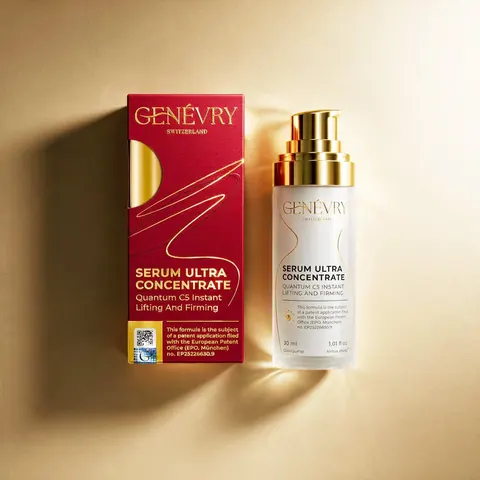 Quantum C5Ultrakoncentrēts serums€31.90Discover the formula →
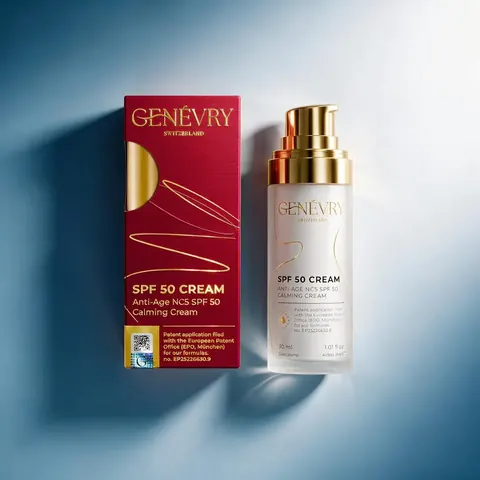 Anti-Age NC5Nomierinošs krēms ar SPF 50€31.90Discover the formula →
Cosmetic product. Individual results may vary.
 English / EUR
 English (US) / USD
 English (UK) / GBP
 Deutsch / EUR
 Deutsch (Schweiz) / CHF
 Français / EUR
 Italiano / EUR
 Español / EUR
 Nederlands / EUR
 Polski / PLN
 日本語 / JPY
 한국어 / KRW
 中文 / CNY
 العربية / AED
 English (Australia) / AUD
 English (Canada) / CAD
 Svenska / SEK
 Dansk / DKK
 Norsk / NOK
 Suomi / EUR
 Português / EUR
 Türkçe / TRY
 Čeština / CZK
 Magyar / HUF
 Română / RON
 Ελληνικά / EUR
 Slovenčina / EUR
 Hrvatski / EUR
 Slovenščina / EUR
 Lietuvių / EUR
 Latviešu / EUR
 Eesti / EUR
 Български / EUR
 Українська / EUR