The evening anti-aging routine and what skin does at night
Skin works to a different brief after dark. Four steps, five minutes and one layer that stays put until morning.
An evening anti-aging routine has one job: stay out of the way of what skin already does after dark, and deliver what cannot sensibly be delivered in the morning. By bedtime there is no daylight, no city dust and no makeup left to shield against. What remains is time for structural work — and room for ingredients that would be a liability at nine in the morning.
What follows: what happens to skin overnight and how much of it matters, four evening steps with quantities and timings, the measured results for the GENÉVRY Nocticode R5 night cream, and five mistakes that keep a good plan from delivering.
What skin does at night
Skin keeps its own circadian rhythm, much like body temperature. Cutaneous blood flow rises in the evening and surface temperature creeps up with it, while sebum production, which peaks around midday, falls away. That combination is why skin often feels warmer and more receptive at night, and tight or dull by morning.
Then there is water. Transepidermal water loss — the moisture that evaporates through the stratum corneum — runs highest overnight and in the early hours. Skin loses more water in bed than at a desk, with nothing obvious to blame. An occlusive evening layer, which is all a good night cream really is, becomes less a luxury than a straightforward way to limit that loss.
The third shift is the most interesting one for skincare. Keratinocyte division is more frequent at night, and the barrier becomes marginally more permeable. That cuts both ways: active ingredients have an easier time crossing it, and so does irritation if too much goes on, too often.
It is worth retiring the idea of golden hours between ten and two. The skin’s rhythm is tied to your own sleep and light exposure, not to a number on a clock. Someone who goes to bed at one has not missed a repair window; it has simply moved. Regularity matters more than the hour, as does going to bed with skin that is clean and covered.
The evening anti-aging routine in four steps
01. Makeup removal and cleansing
By evening the face carries sunscreen, often makeup, plus a day’s worth of particulates and sebum. Filters and foundations do not come off with water alone, which is the argument for double cleansing: an oil or balm first to dissolve the lipid layer, then a mild gel or foam on damp skin.
Lukewarm water, never hot. Thirty to forty seconds on the second pass is plenty. Pat the face dry rather than rubbing, and move on before the skin is completely dry.
02. Serum — not every evening
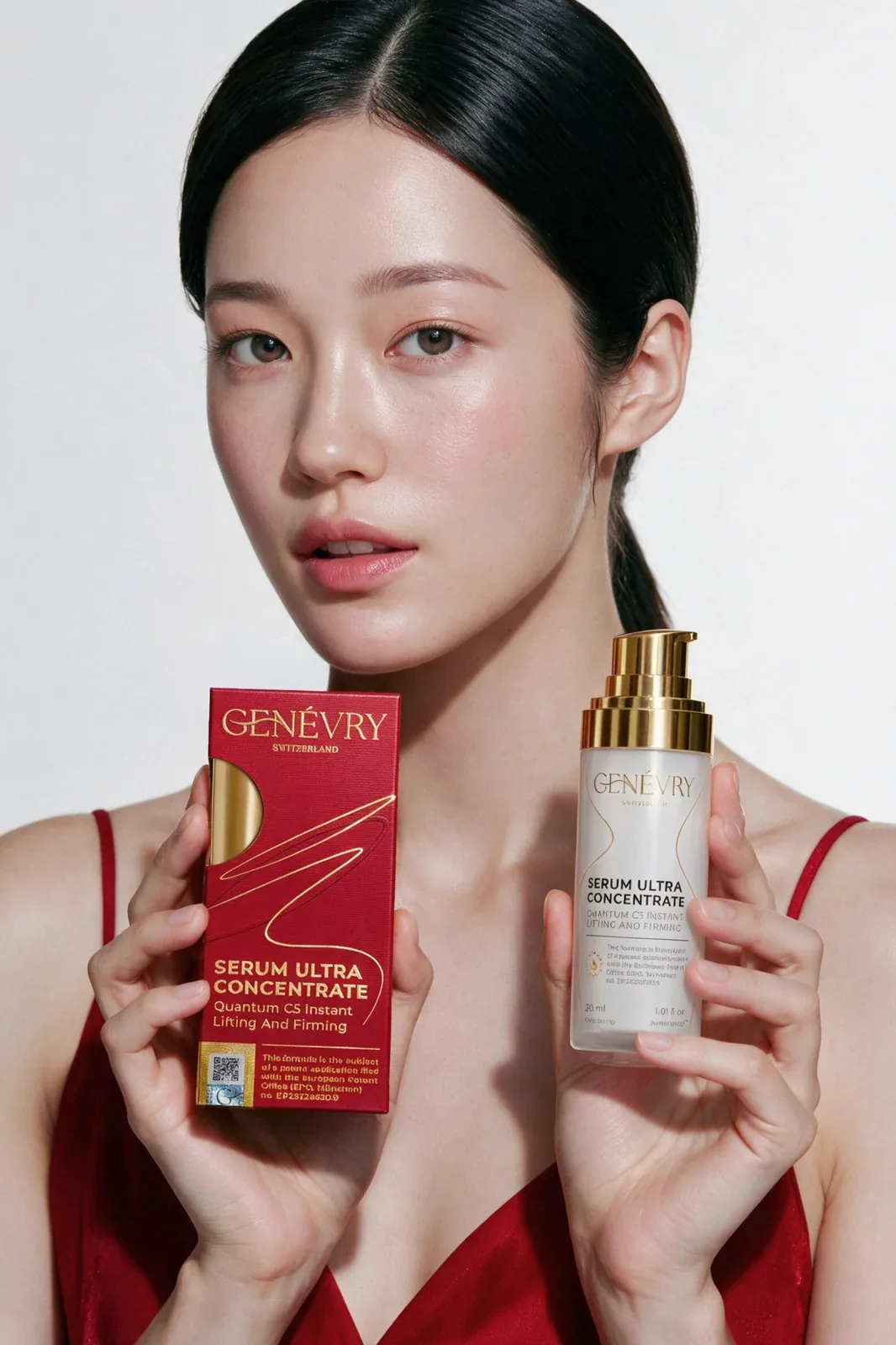
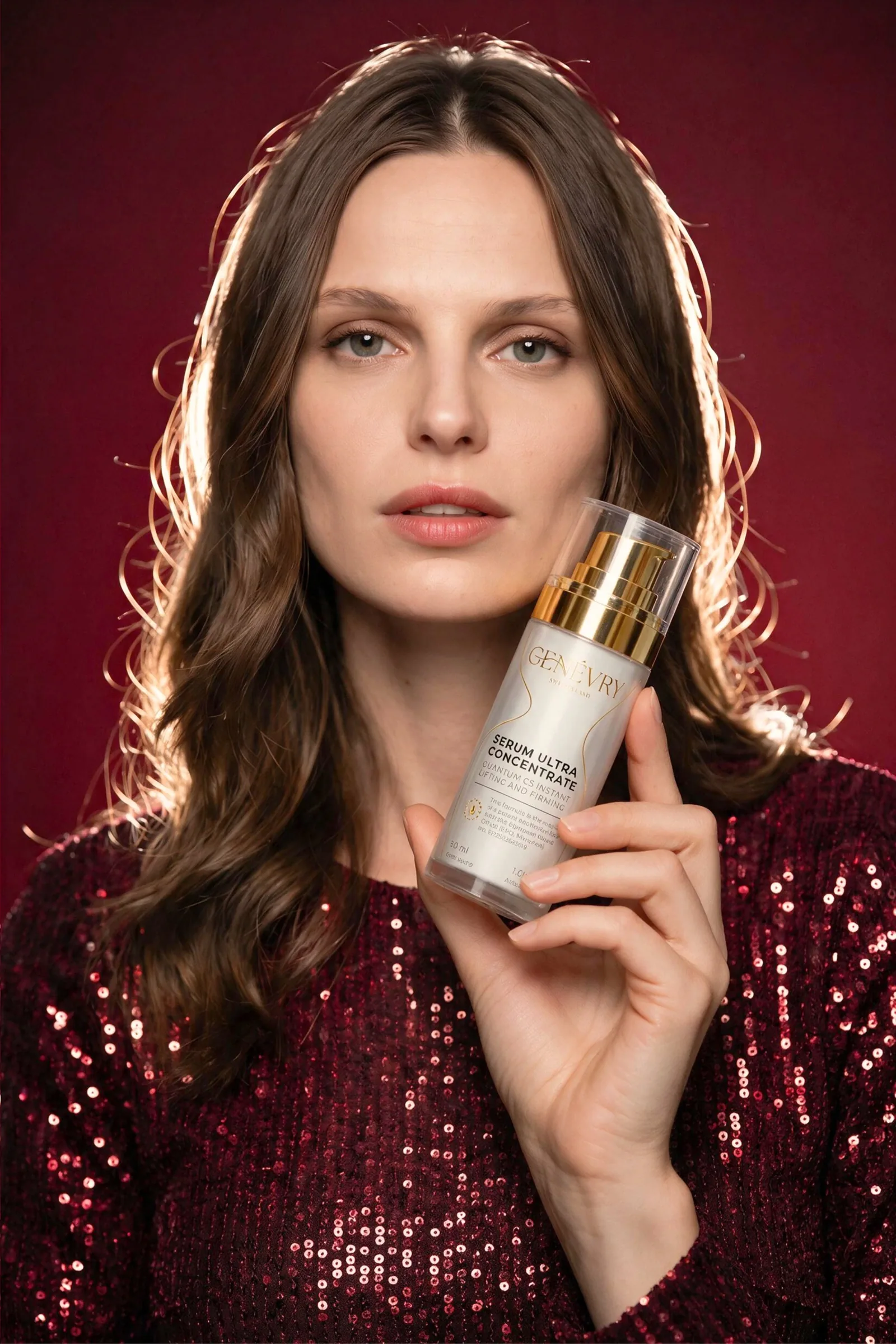
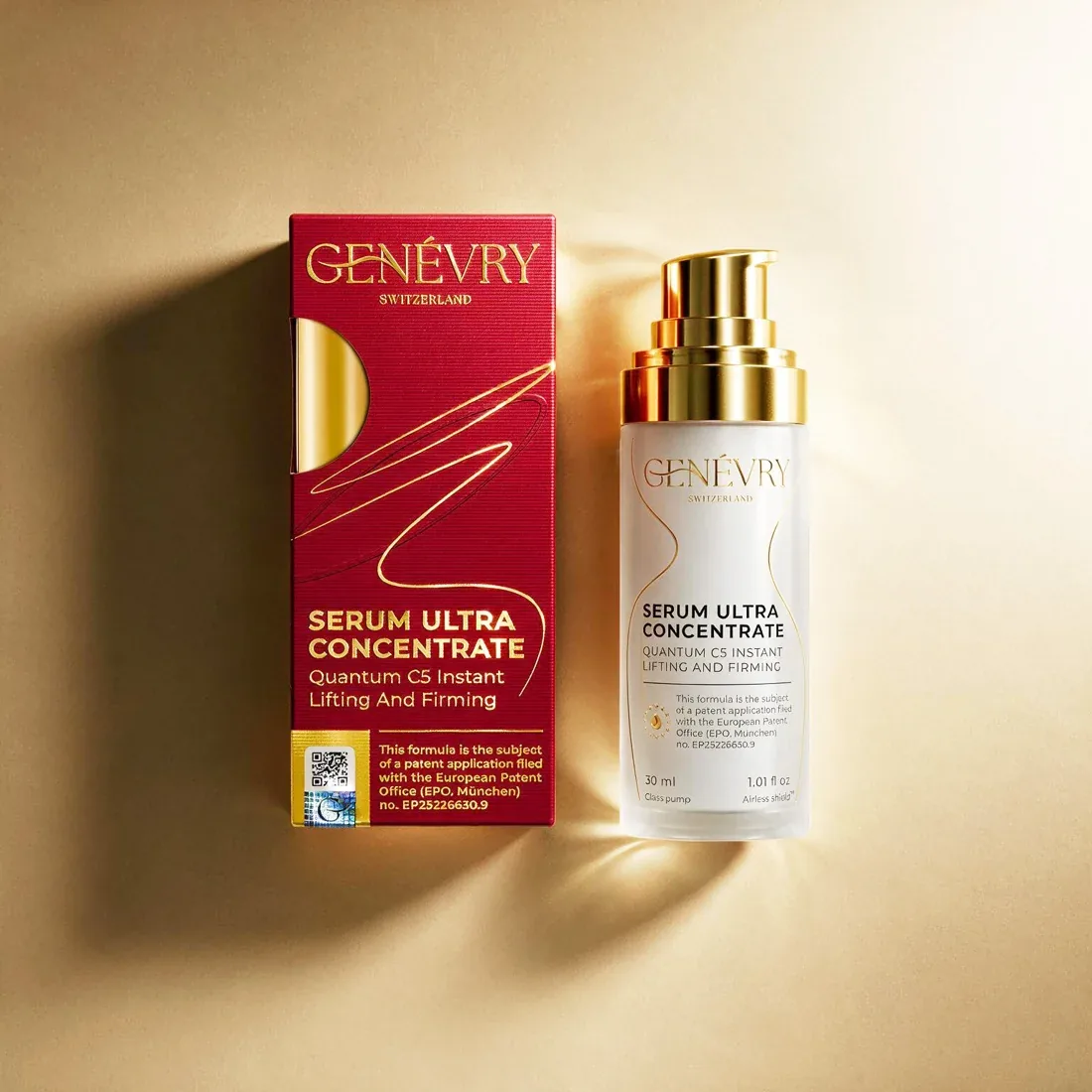
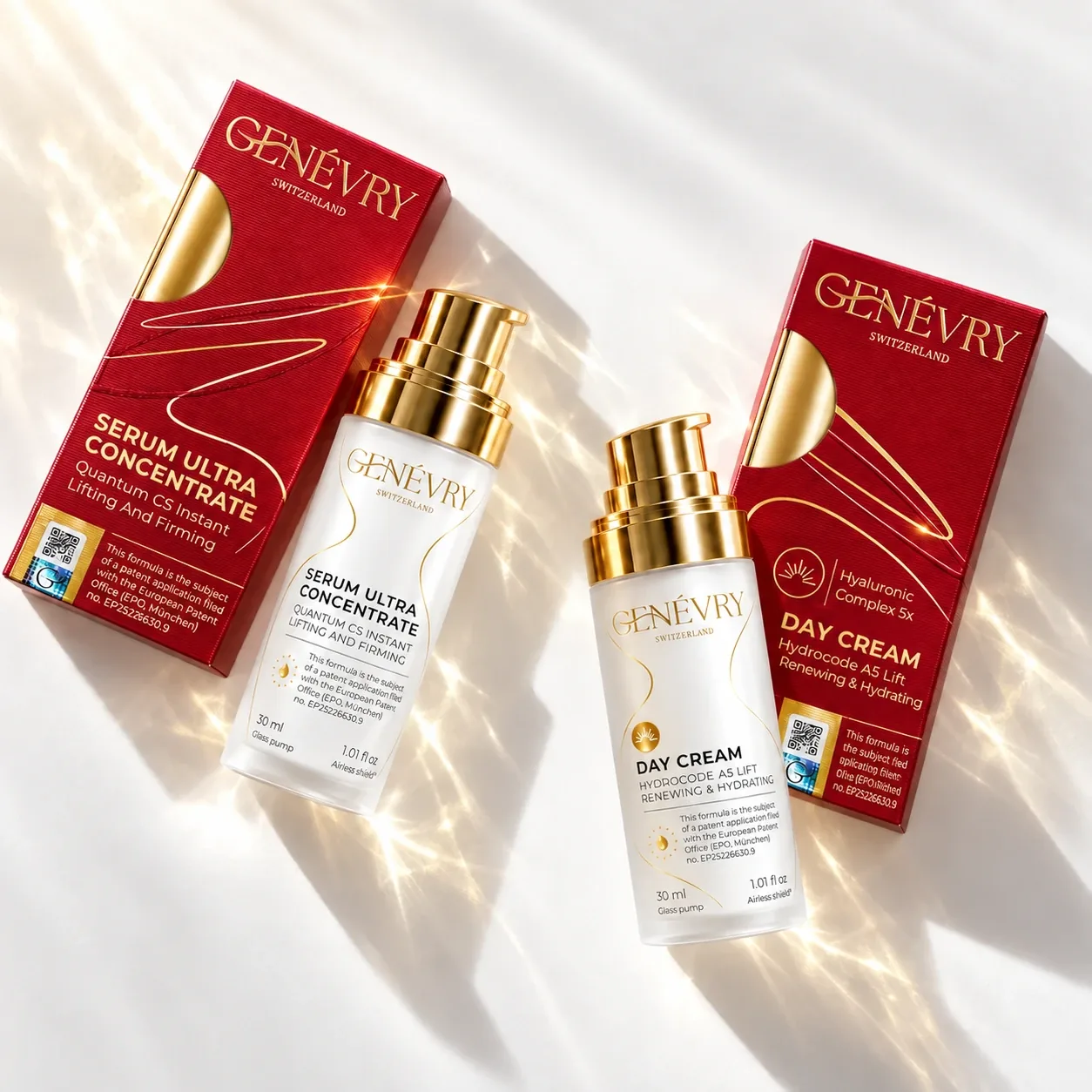
A serum is optional at night, particularly when the night cream contains retinol. On retinol-free evenings, or underneath the cream if your skin tolerates it well, Quantum C5 with copper peptide GHK-Cu and liposomal vitamin C works as a hydrating, smoothing step. One pump, pressed outwards from the centre of the face with the fingertips.
A simple rule while you are still building tolerance: on the evenings you apply retinol, skip the other actives. Fewer layers means fewer variables when skin starts giving feedback.
03. Night cream
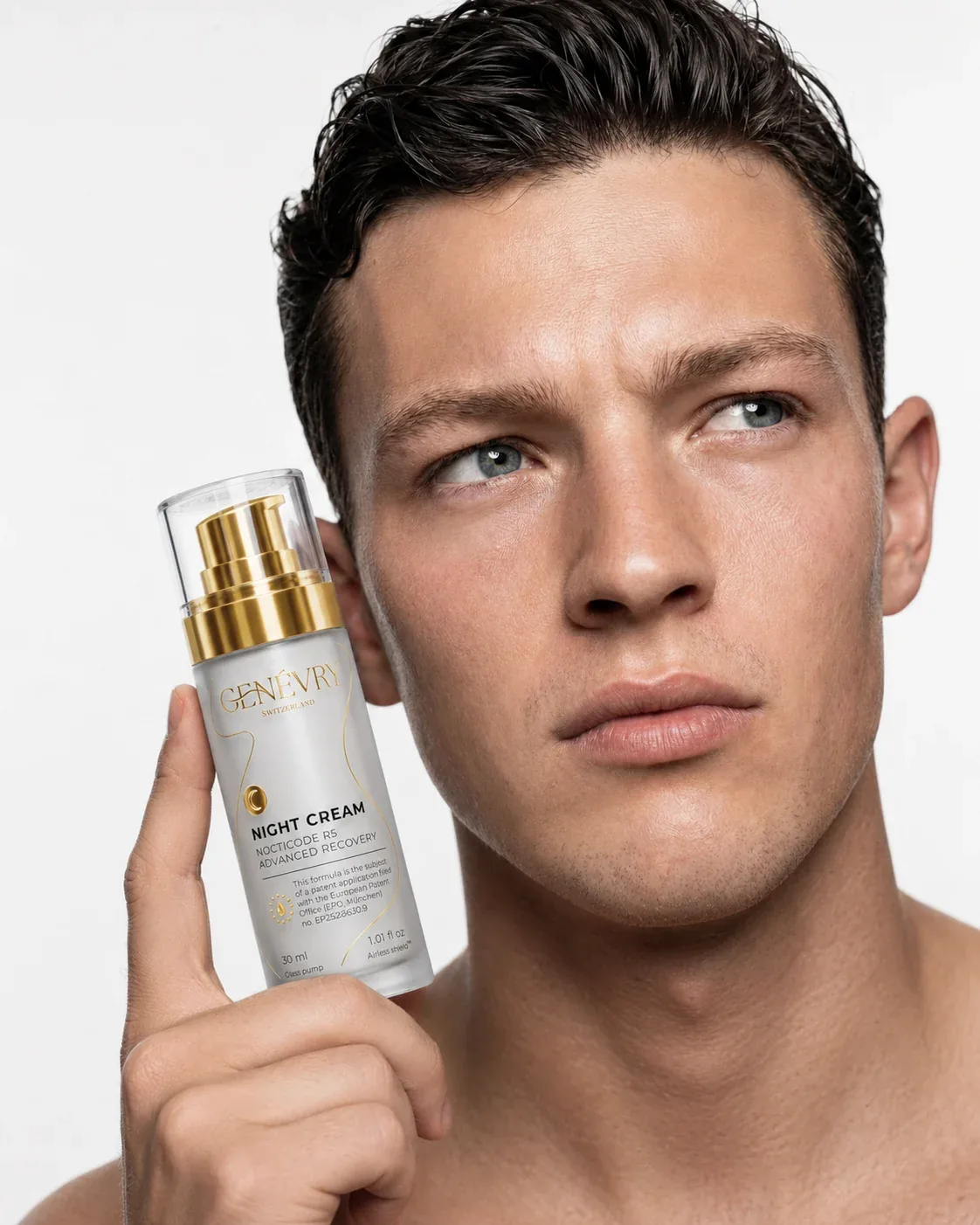
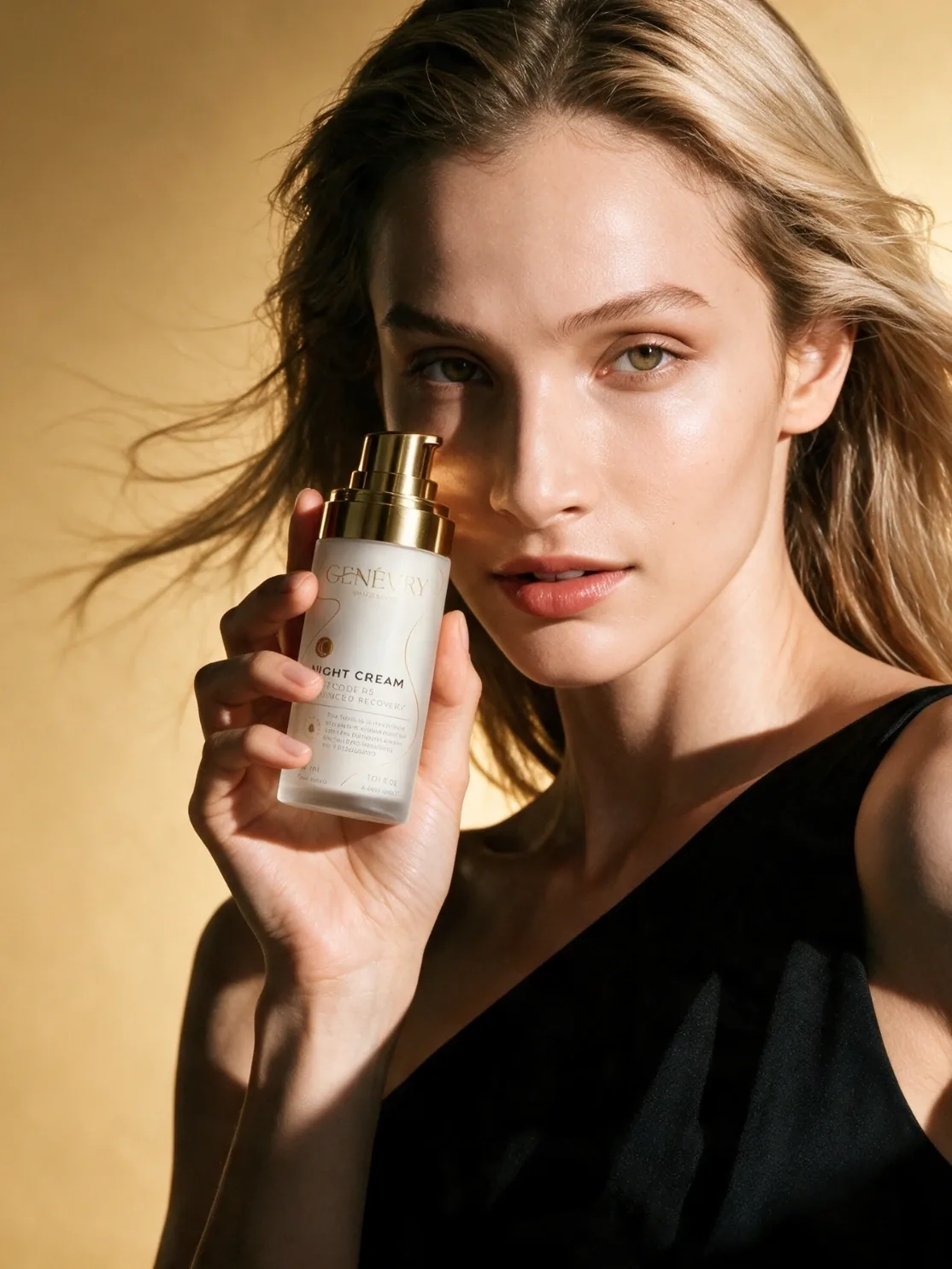
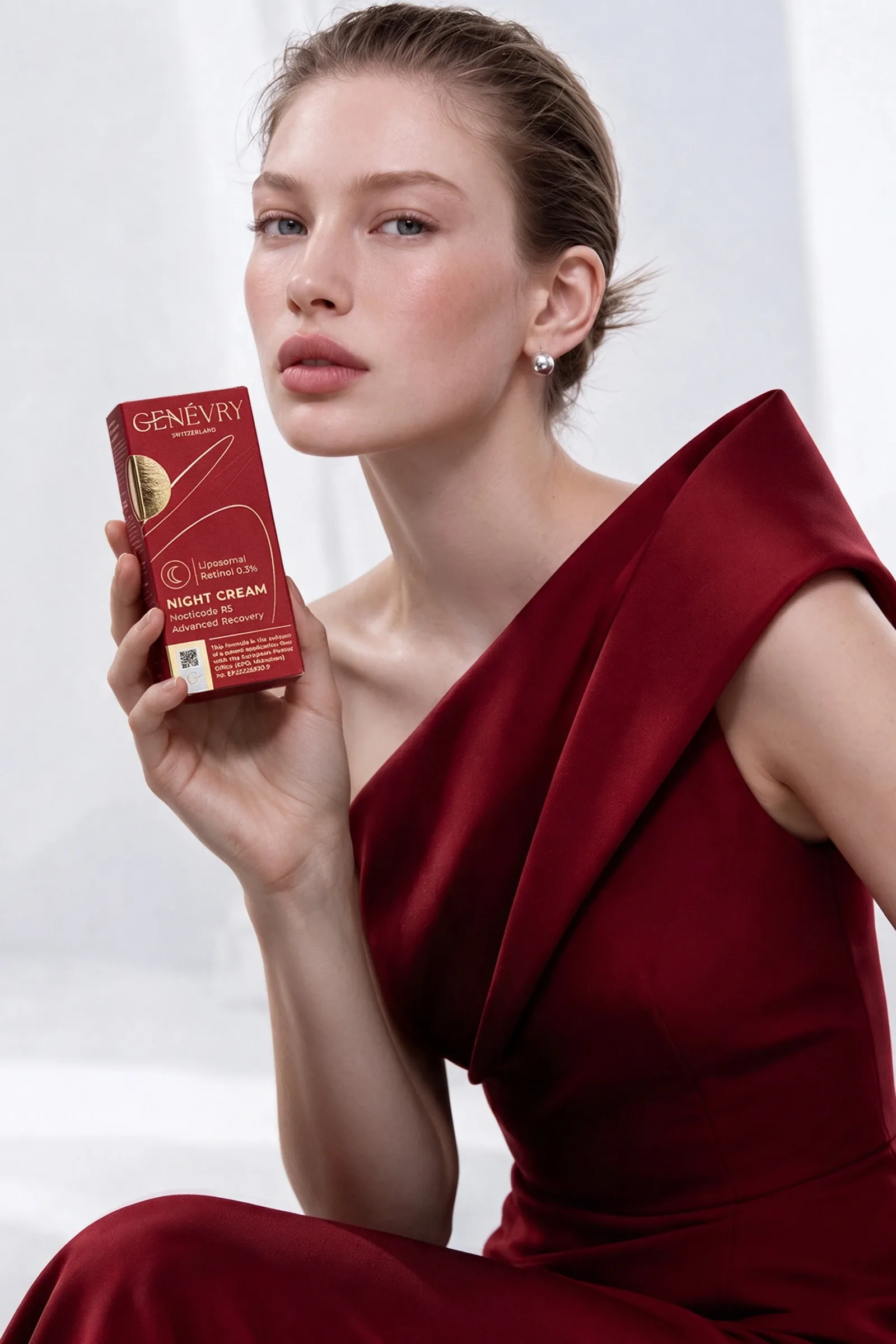
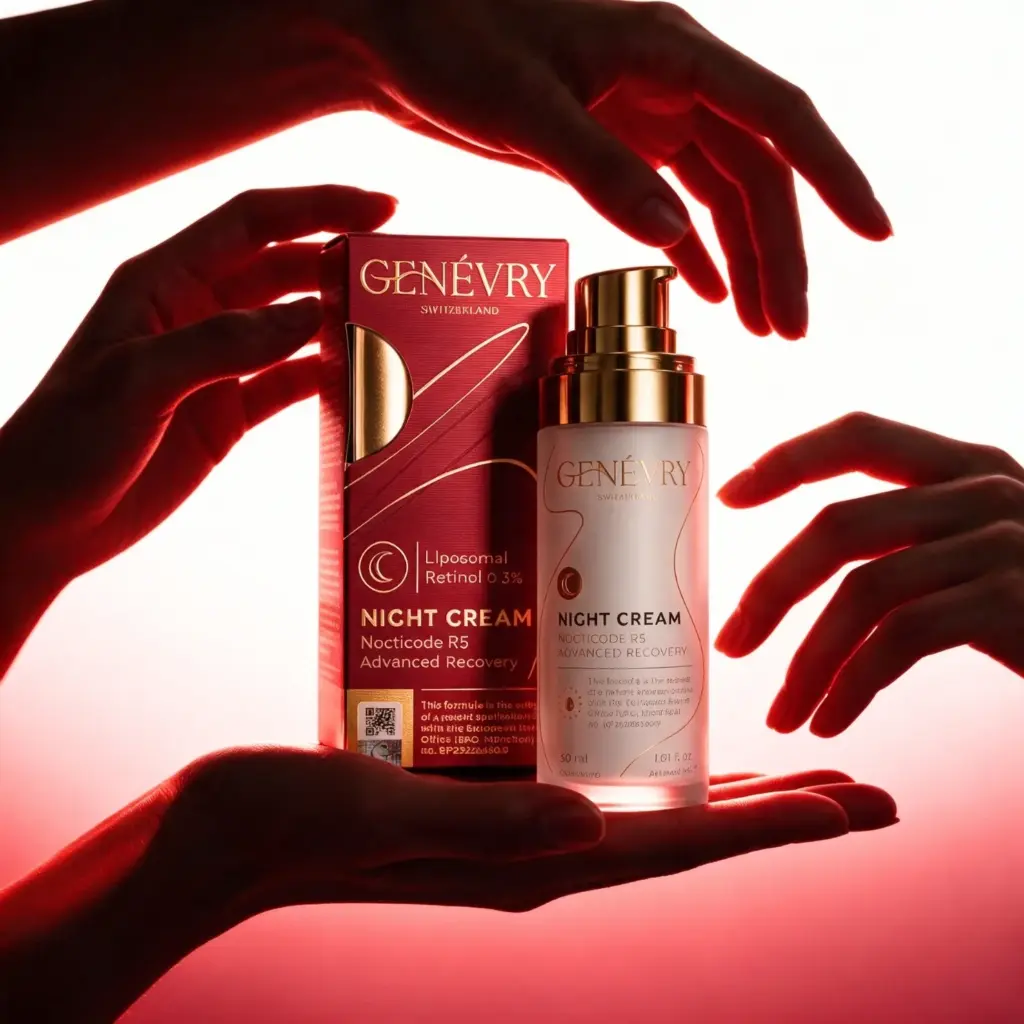
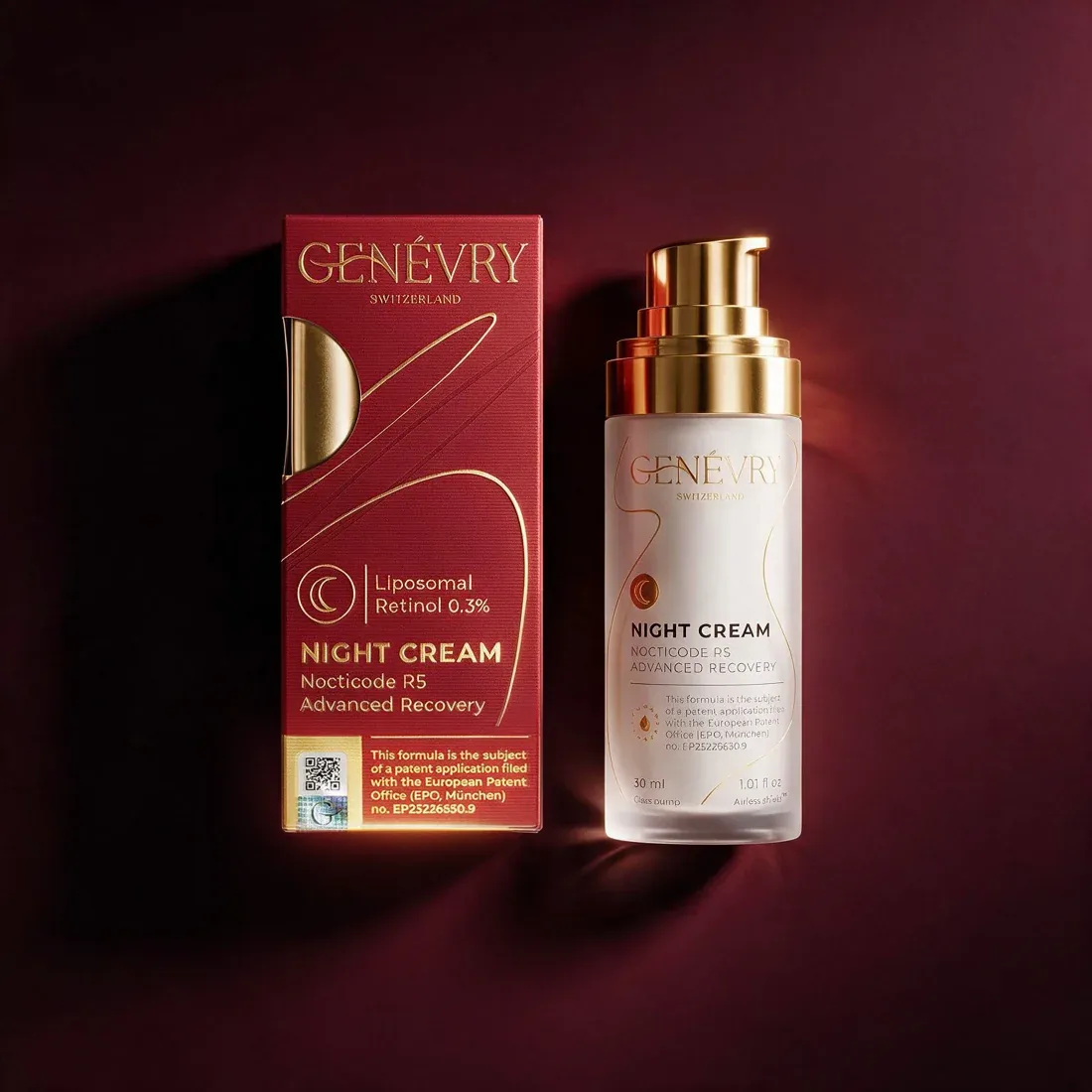
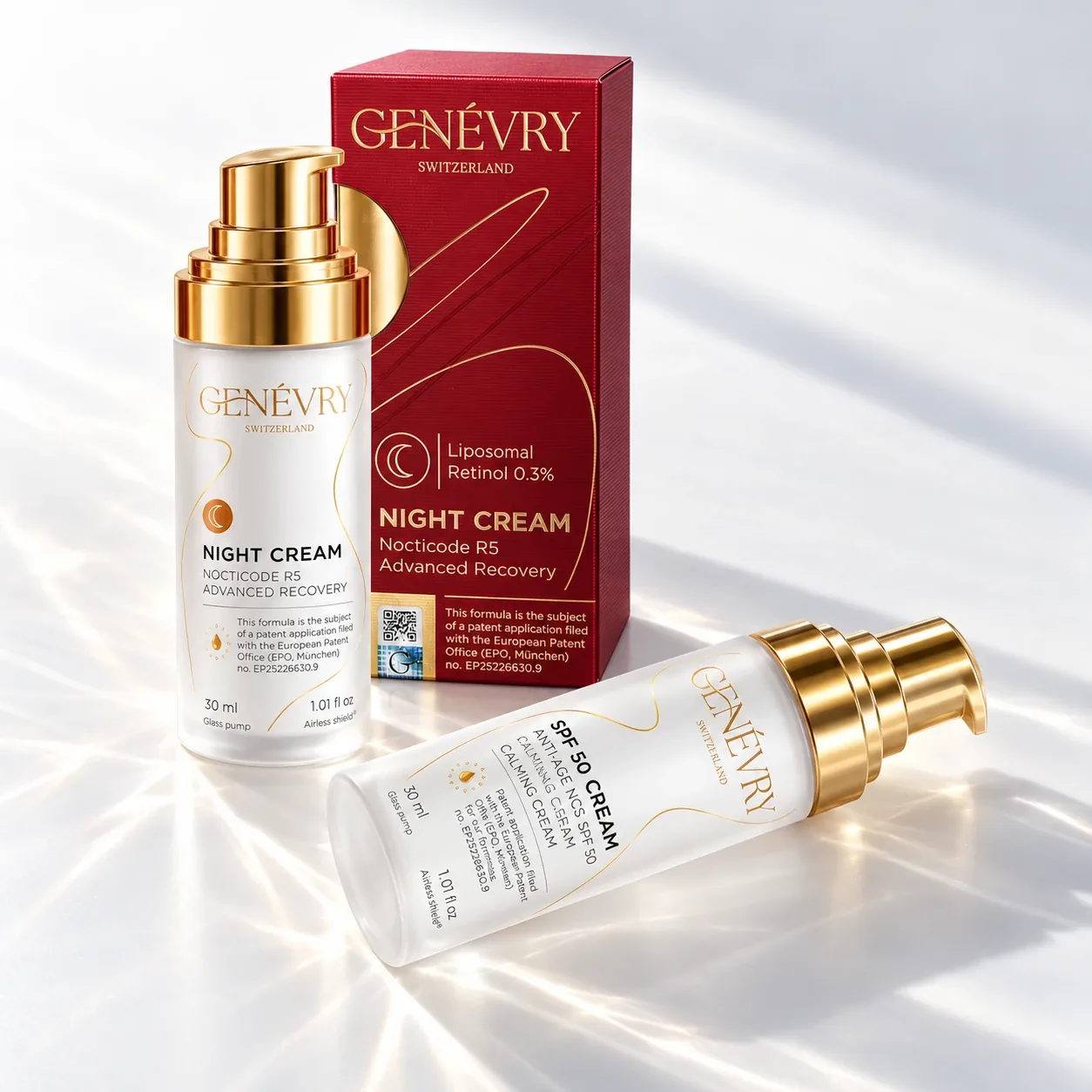
Nocticode R5 is the step the rest of the evening is built around. It carries liposomal retinol at 0.3% — the ingredient held inside a lipid carrier that releases it gradually. In practice that means a gentler start than unencapsulated retinol at a comparable strength.
A pea-sized amount for the face, a second one for neck and décolleté. Press it in rather than rubbing, finishing on the neck with upward movements. If retinol is new to you, use it twice a week for the first fortnight and raise the frequency only once skin has gone a full week without redness or flaking.
04. Five minutes for neck, décolleté and hands
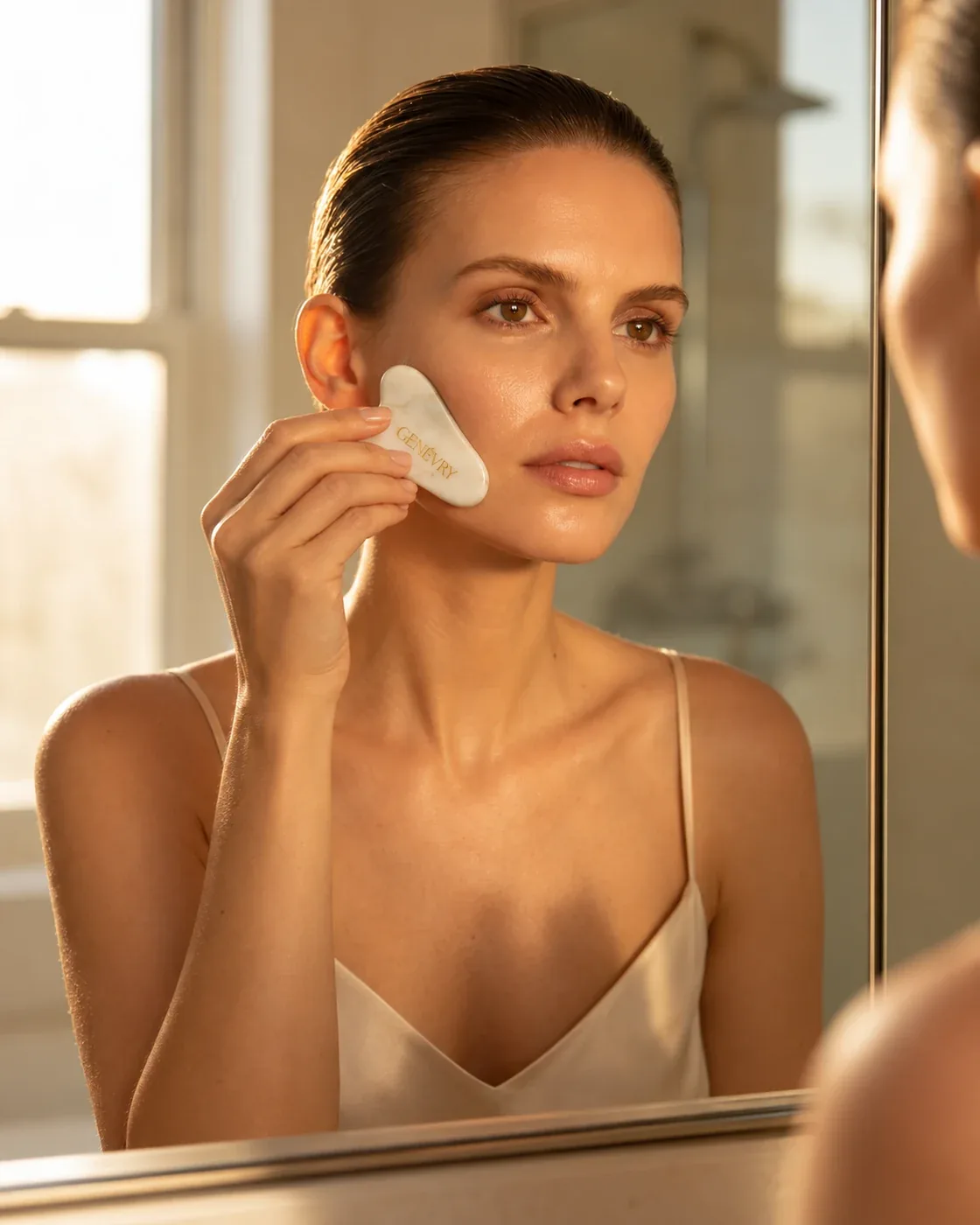
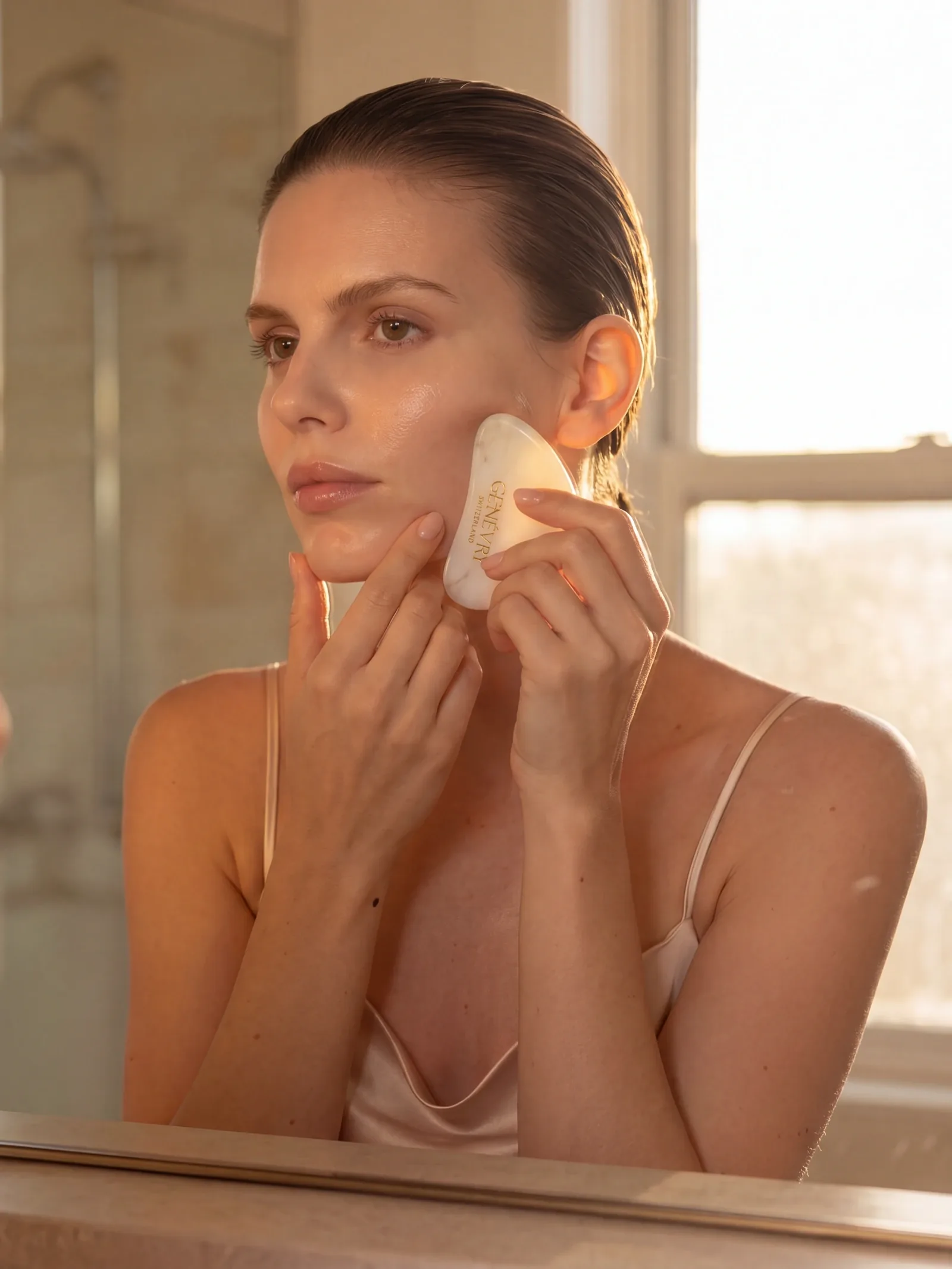
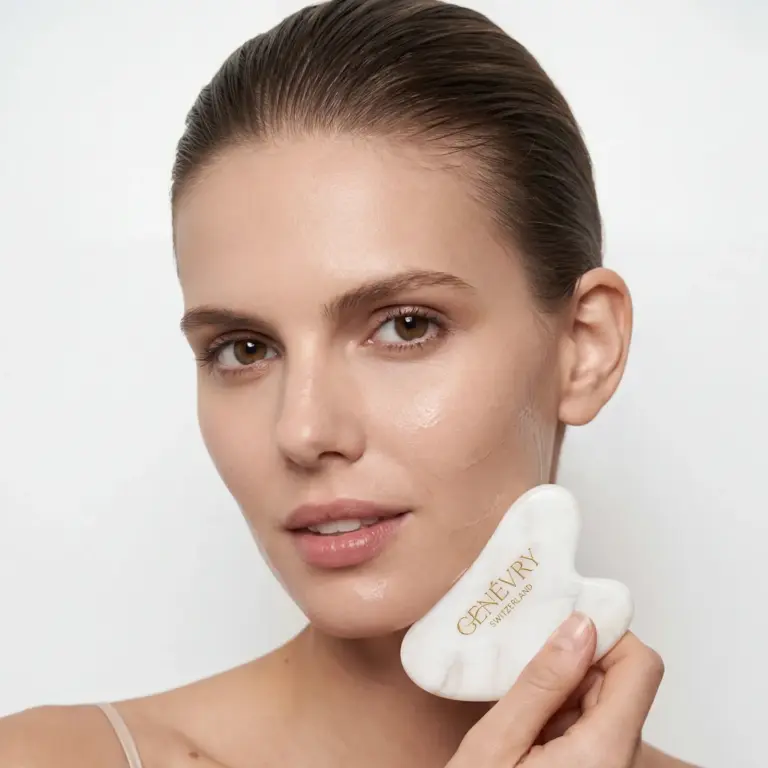
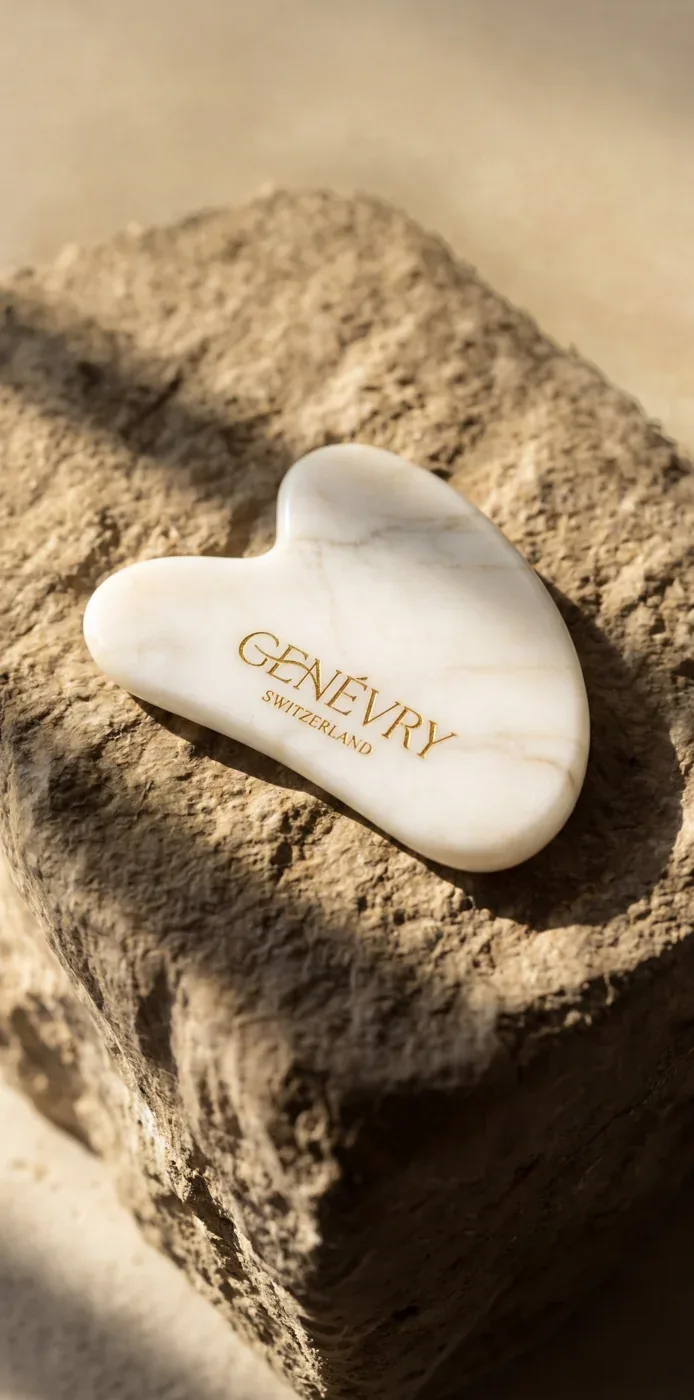
This is the step that drops out of the plan first and costs the least. Whatever cream is left on your fingers goes onto the neck and décolleté, where skin is thinner and shows time more readily. Once or twice a week, add a few minutes with a gua sha stone after the cream, while the face still has slip. A ritual for winding down, not a treatment.
How much product, how much time
| Step | Product | Amount | Note |
|---|---|---|---|
| 01 Makeup removal | Cleansing oil or balm | 2–3 pumps on dry skin | Essential if you wore SPF or makeup |
| 01b Cleanse | Mild gel or foam | Pea-sized amount | Lukewarm water, 30–40 seconds |
| 02 Serum | Quantum C5 | 1 pump | On retinol-free evenings, or if well tolerated |
| 03 Night cream | Nocticode R5 | Pea for the face, pea for the neck | Twice a week to begin with |
| 04 Neck and décolleté | Remaining cream, gua sha optional | Whatever is left on your fingers | Upward strokes, no dragging |
The whole evening fits inside five minutes, half of which goes on cleansing. When time is short, cut the serum rather than the night cream — that is the layer which stays on skin for the next twelve hours or more.
What the night cream study measured
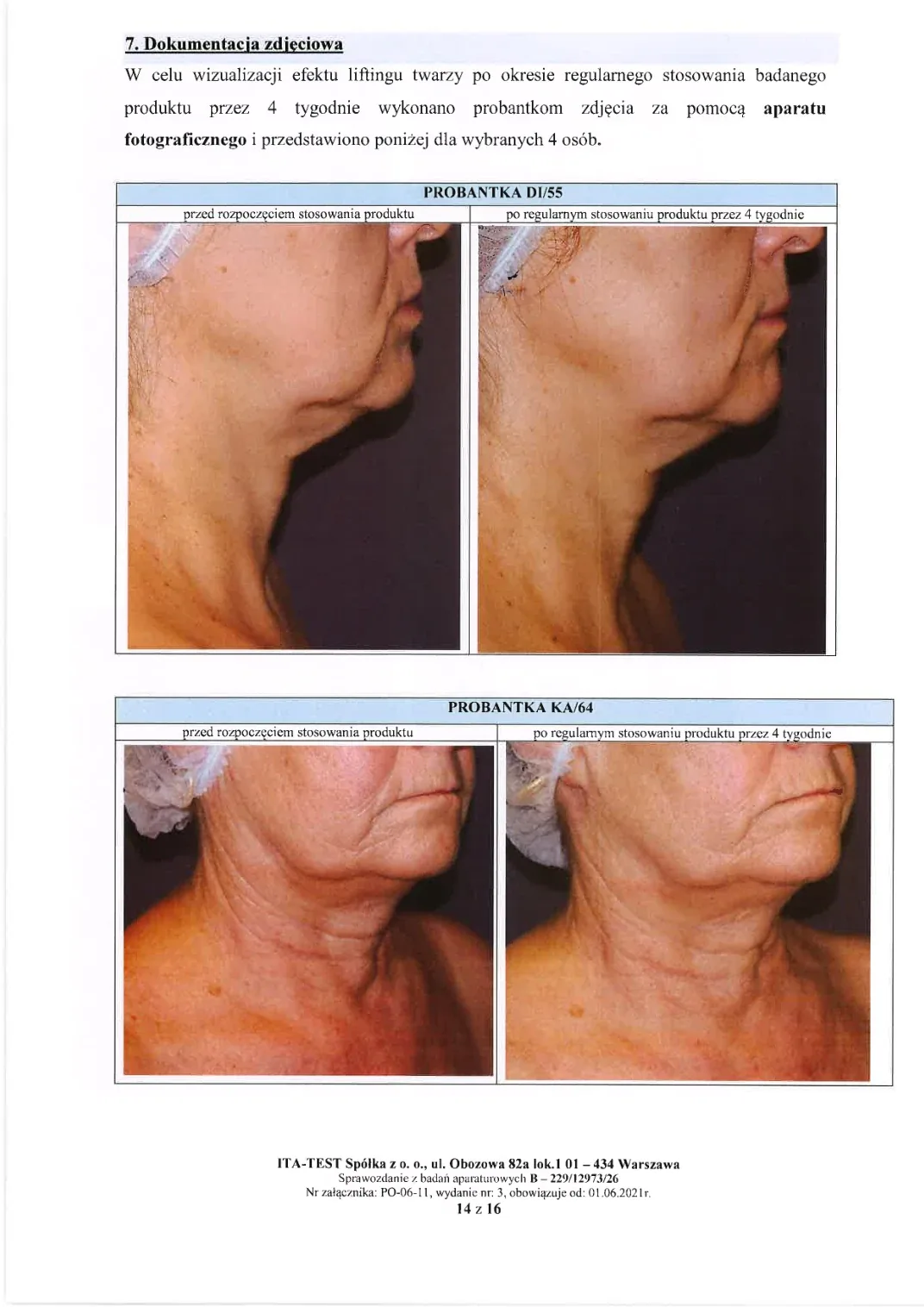
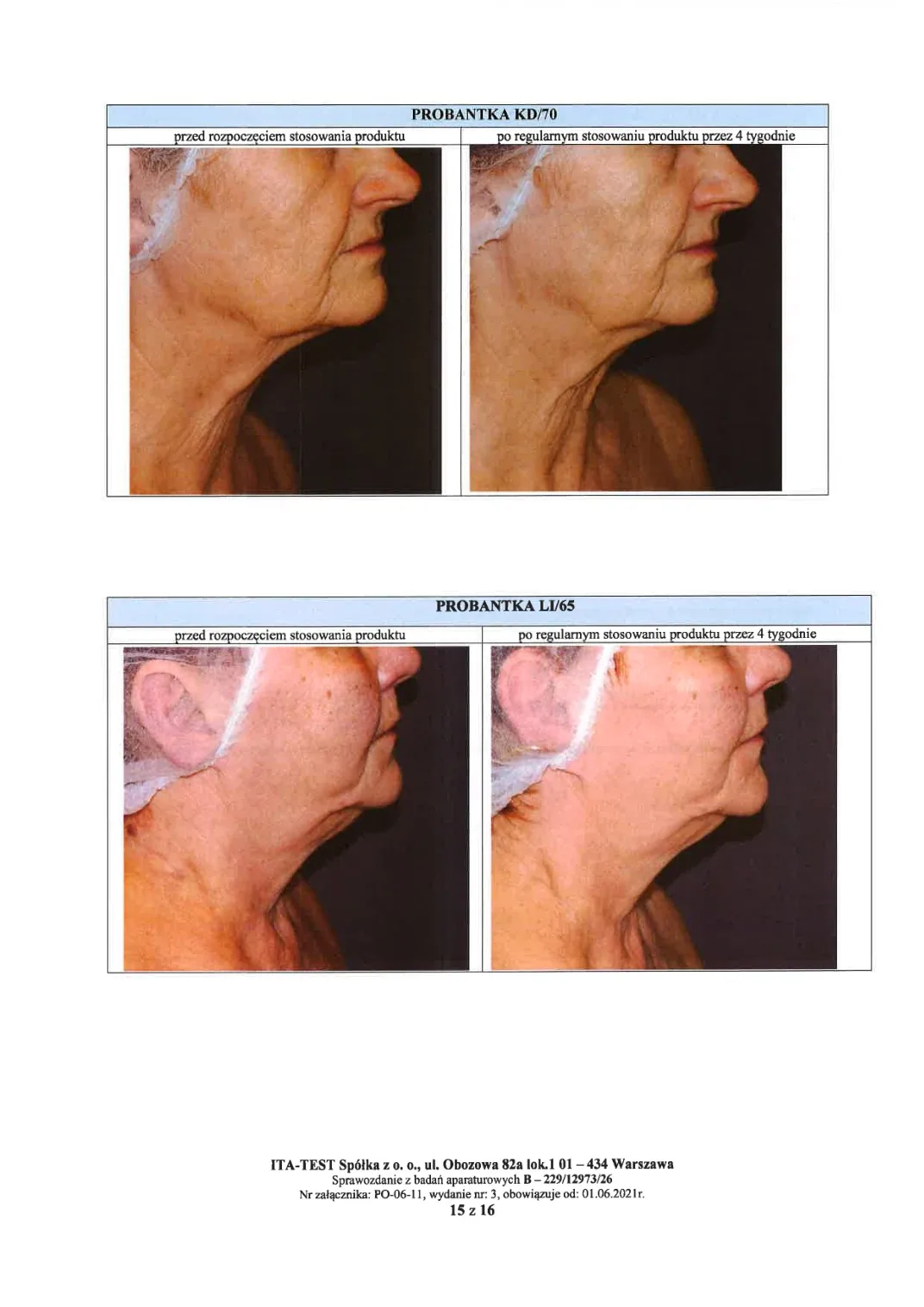
The Nocticode R5 formula went through instrumental testing on a group of ten participants over four weeks of regular use. This is not a clinical drug trial; it is a set of skin measurements in a small group, and the figures below should be read on those terms.
| Parameter | Result | Conditions |
|---|---|---|
| Mean skin hydration | +38% | 4 weeks, instrumental, n=10, Corneometer CM 825; hydration increased in all 10 participants |
| Mean wrinkle length | −10% | From 2.08 to 1.88 mm; a reduction was recorded in 9 of 10 participants. Silicone replicas, VISIOLINE VL650 |
| Mean wrinkle depth | −8% | Group-average reduction; recorded in 9 of 10 participants. VISIOLINE VL650 |
| Skin firmness | +23% (individual maximum) | Range 5–23%, group average +14%; 4 weeks, instrumental, n=10 |
| Skin smoothing | +19% (individual maximum) | Range 6–19%, group average +10%; improvement in 9 of 10 participants |
| Mean skin elasticity | +11% | Increase in 9 of 10 participants; 4 weeks, instrumental, n=10 |
Read these values exactly as written. „Mean wrinkle length −10%” means the measured parameter shifted by that much across the group over four weeks — not that wrinkles disappear. An individual maximum is one person’s best result, not a typical one.
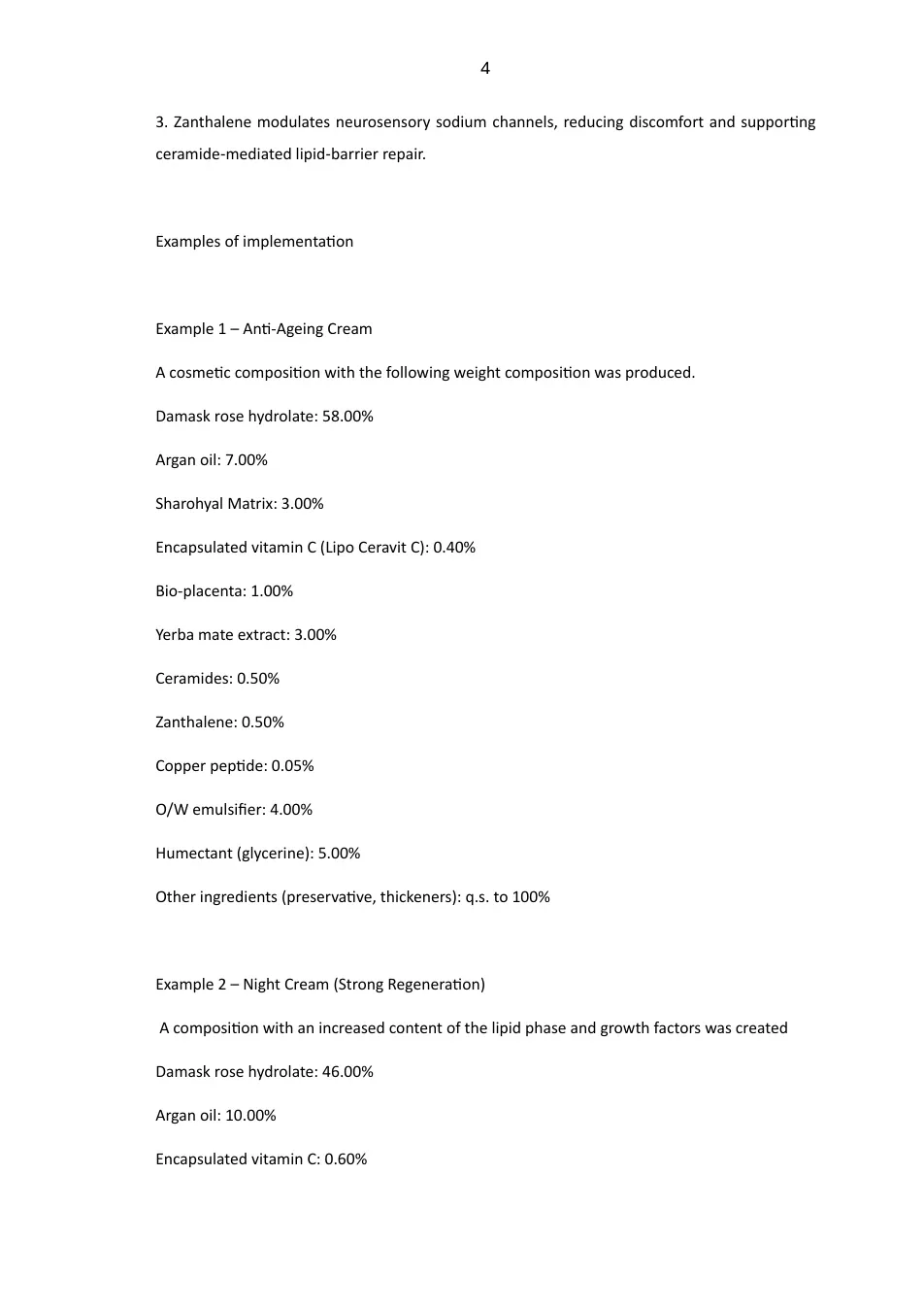
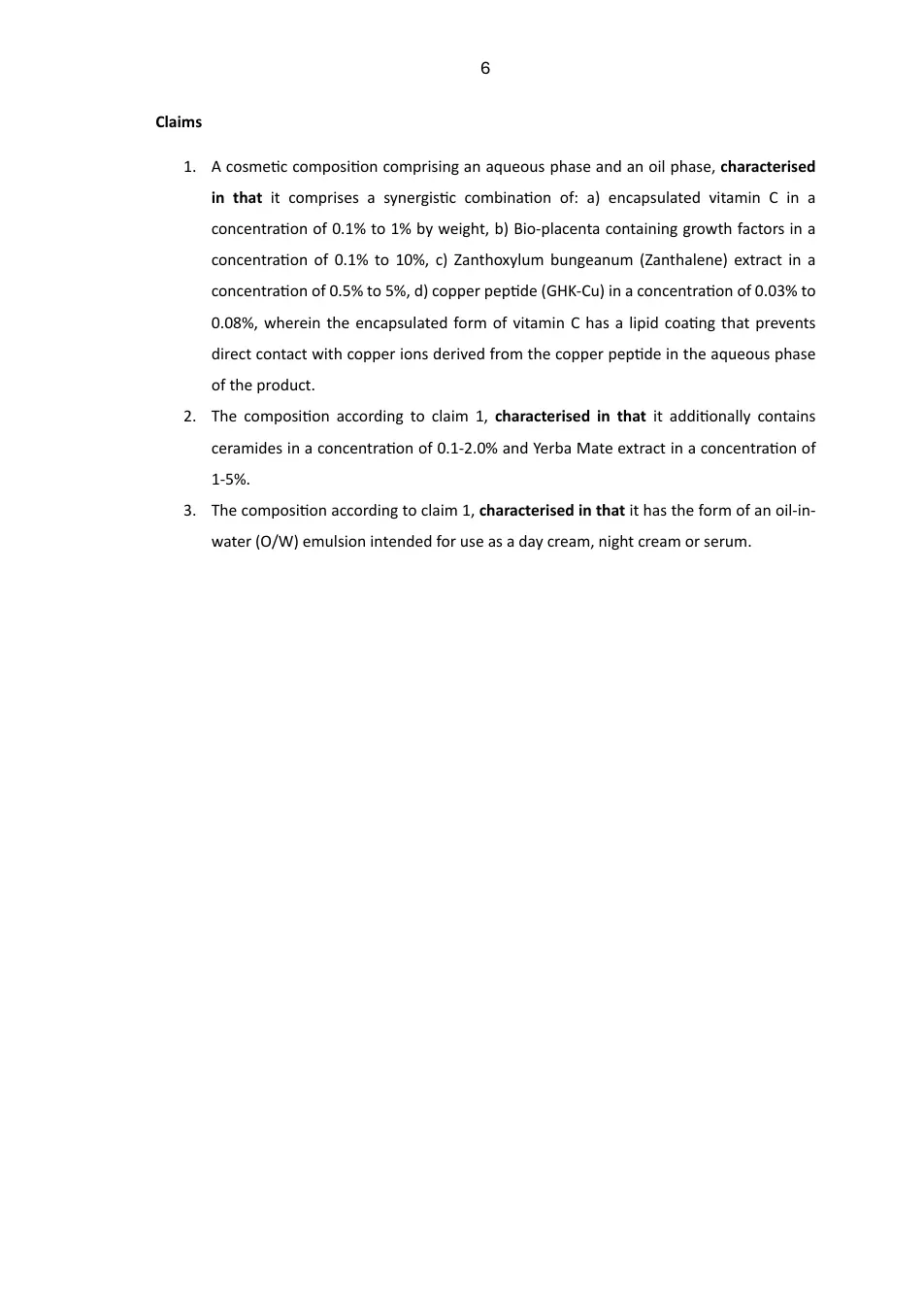
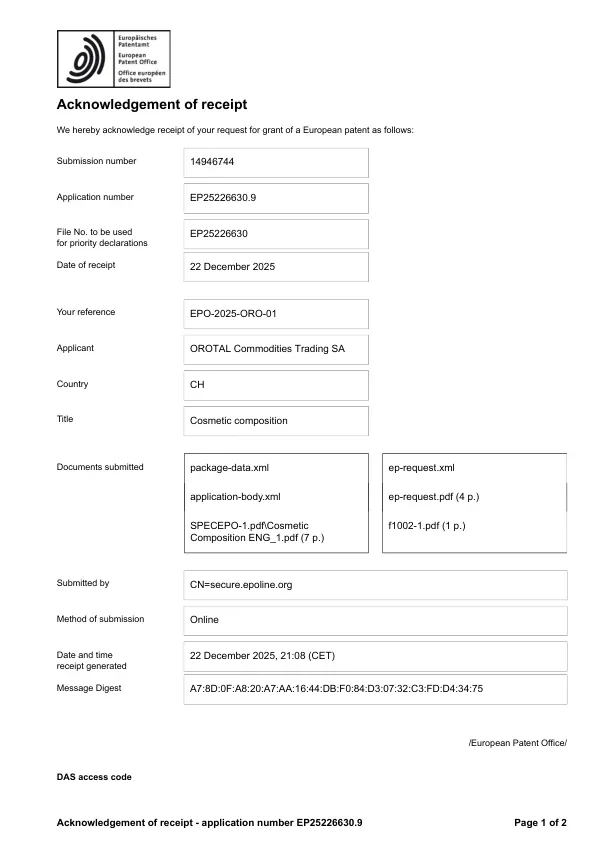
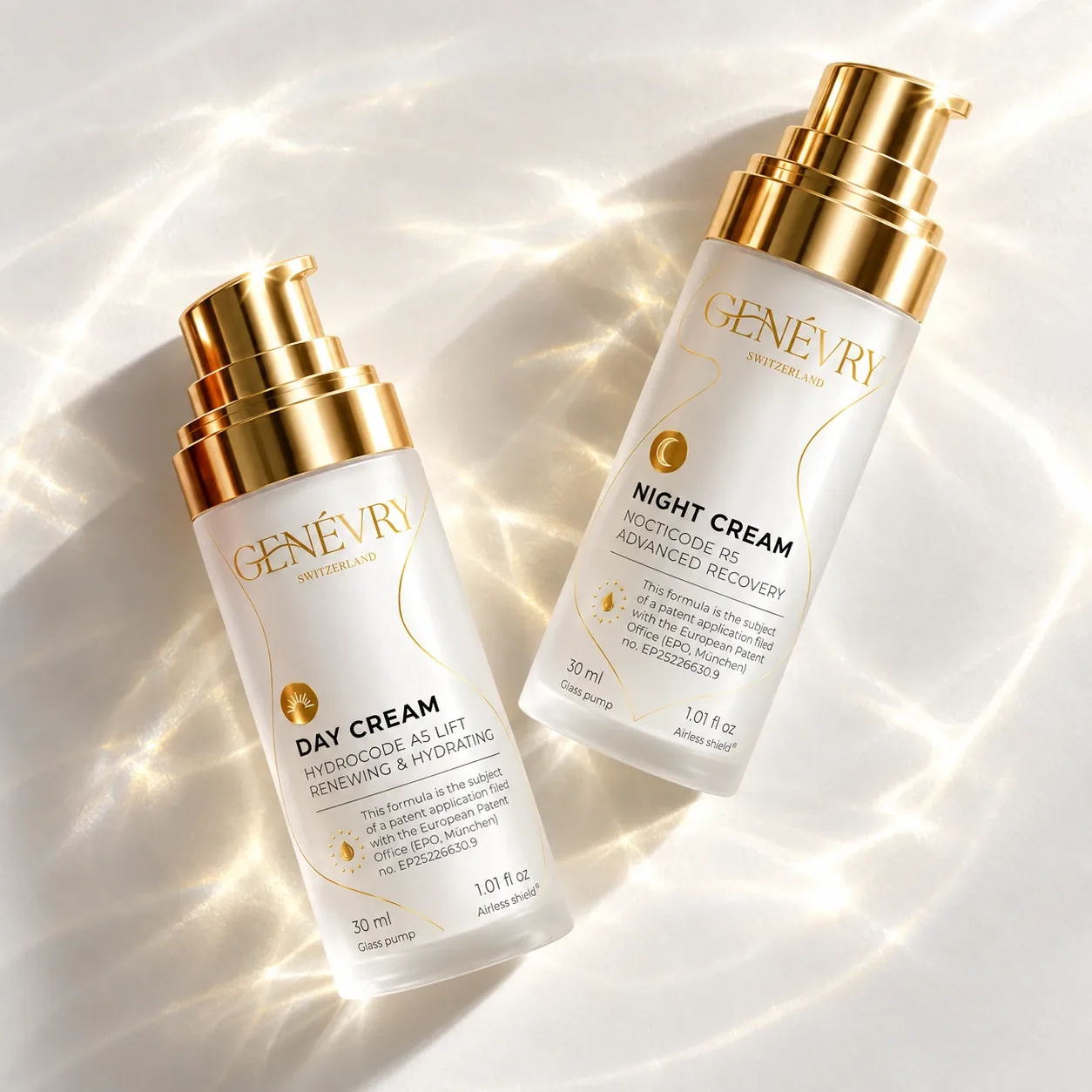
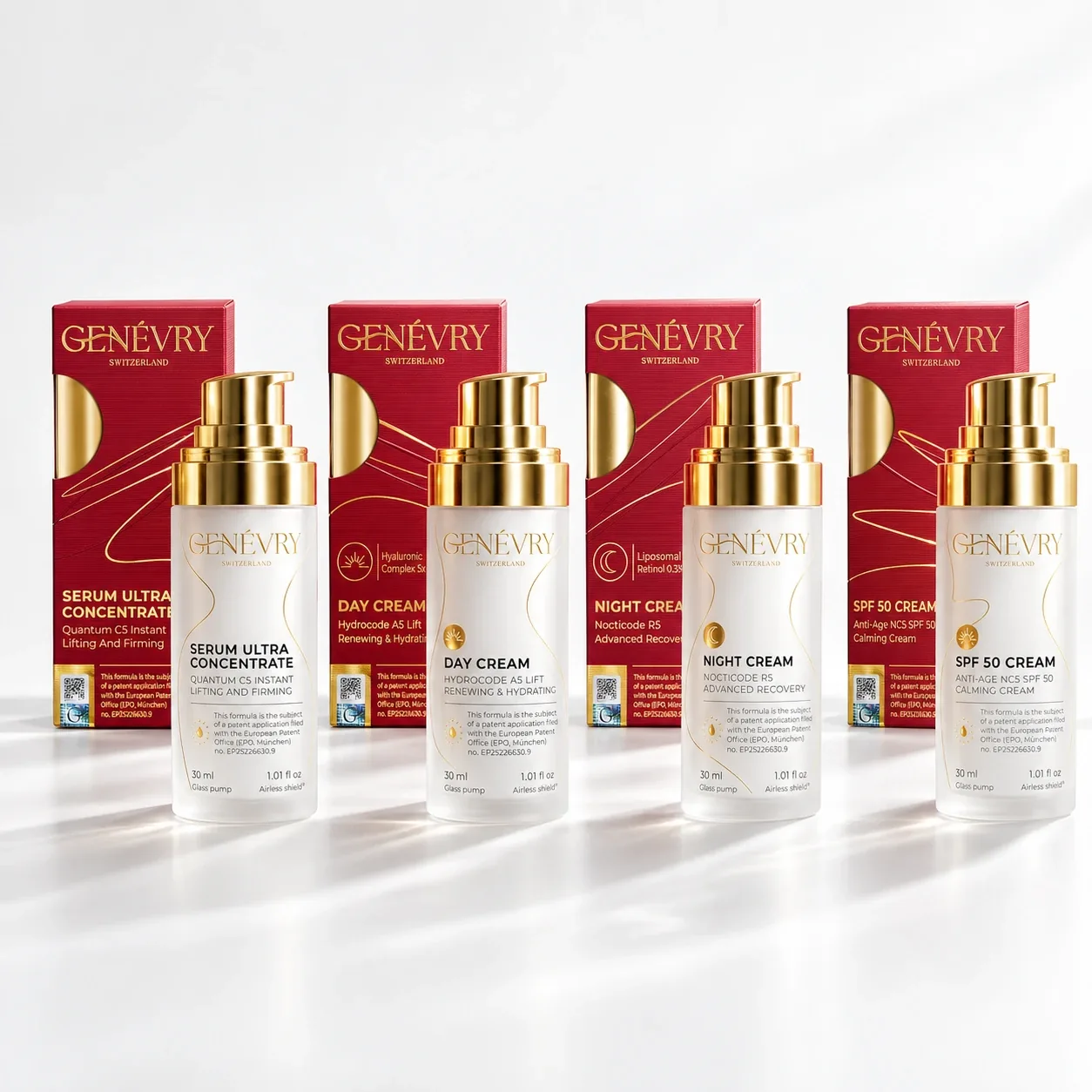
GENÉVRY formulas are the subject of patent application EP25226630.9 at the European Patent Office (patent pending) — an application, not a granted patent. The night cream is also available alongside the day cream as The Day & Night Duo.
Five mistakes, and when to ask a doctor
- Sleeping in sunscreen. A filter is designed as a top layer to be removed at night. Left on, it seals the skin at the point when it is most active.
- Retinol every evening from day one. The most common reason skin revolts in week two. Frequency is something you build.
- Acids and retinol on the same evening. Two actives at once means twice the variables and half the chance of knowing what helped.
- An over-engineered plan. A seven-layer evening rarely survives past the first week. Three steps done nightly beat seven done occasionally.
- No SPF the next morning. Retinol at night and sunscreen in the morning are one decision, not two separate ones.
Retinol is not used during pregnancy or breastfeeding. If you have a skin condition, take medication, have had a dermatological procedure or your skin is highly reactive, discuss your routine with a doctor or dermatologist.
Frequently asked questions
Are there really golden repair hours between 10pm and 2am?
That is a simplification. Skin rhythm follows your own sleep and light exposure rather than a fixed hour. A consistent bedtime and enough sleep matter far more than whether you turn in at ten or at midnight.
Does a night cream have to differ from a day cream?
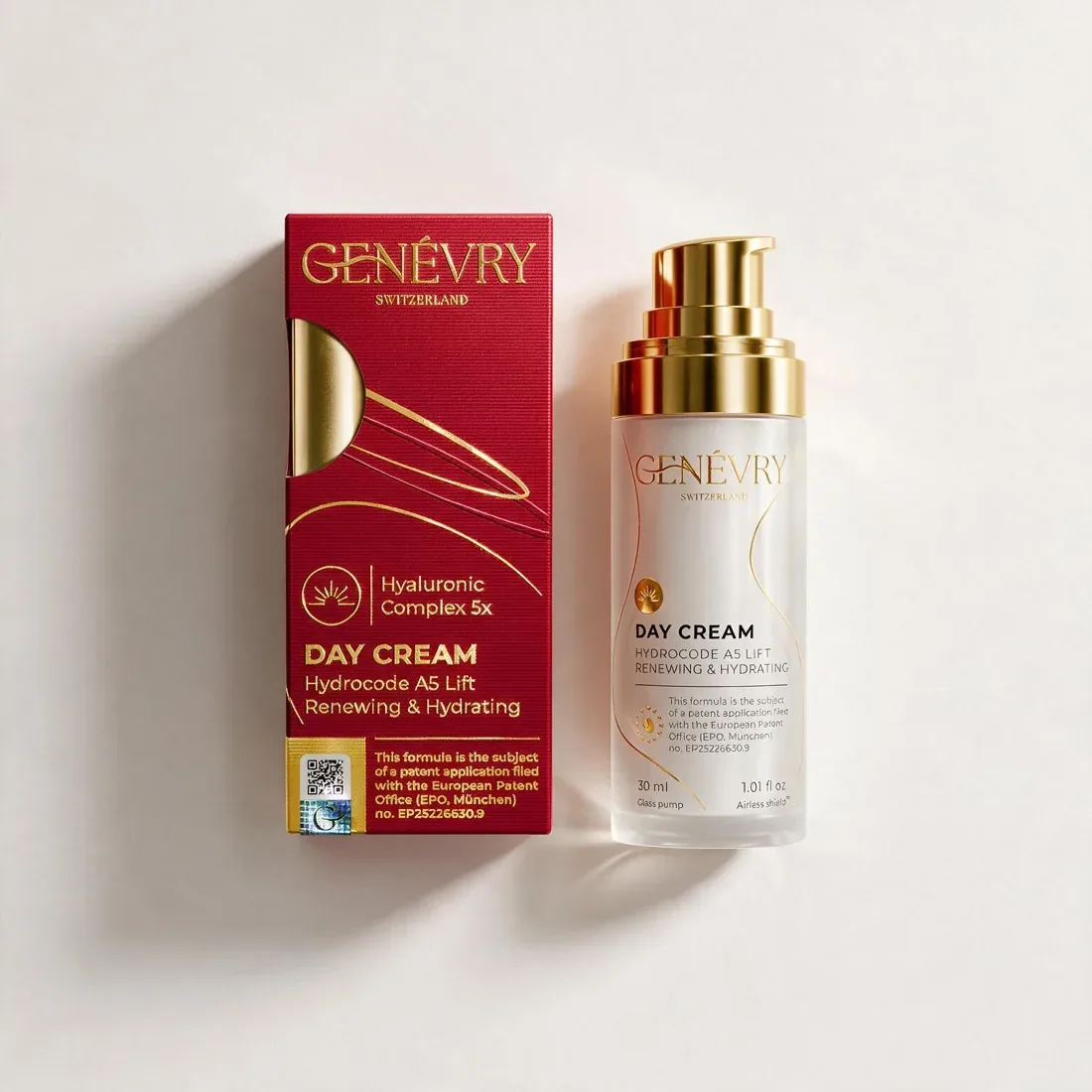
It does not have to, but usually it does, because the brief is different. A day cream prepares the surface for sunscreen and tends to be lighter; a night cream can be richer and carry ingredients that would raise light sensitivity by day. Retinol is the clearest example.
Should I use a serum if the cream already has retinol?
Not at the start. Once skin has settled into retinol, the serum can come back on retinol-free evenings, or underneath the cream if there is no stinging or redness.
What about the eye area?
Eyelid skin is thinner and more reactive. With a retinol product, keep a few millimetres’ margin from the lash line and avoid the inner corner. On sensitive skin, leave that area to products formulated for it.
How long before there is a difference?
Comfort and hydration usually in the first week. The instrumental parameters cited above were assessed after four weeks of regular use. How skin looks in the morning also depends on sleep, hydration and whether sunscreen went on the day before.
Evenings do not need an elaborate plan. Clean skin, one layer that stays put for twelve hours, and the same order every night — the rest happens while you sleep.
The formulas in this article
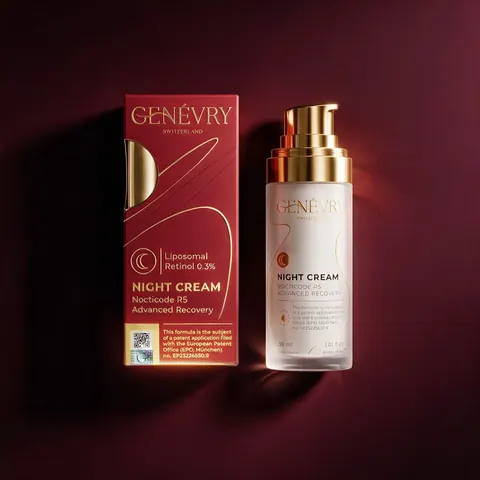 Nocticode R5Pažangus naktinis kremas€34.90Discover the formula →
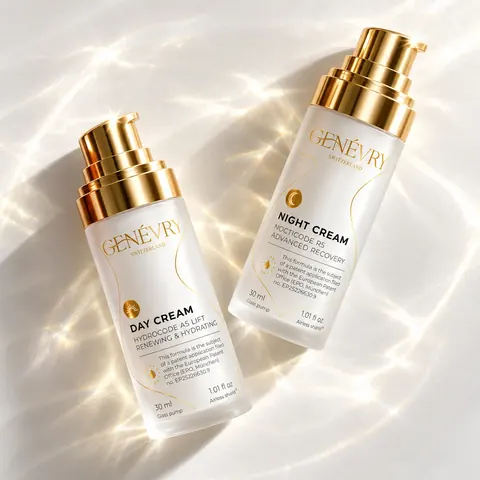 The Day & Night DuoDieninis kremas + naktinis kremas · 2 × 30 ml€64.90Discover the formula →
Cosmetic product. Individual results may vary.
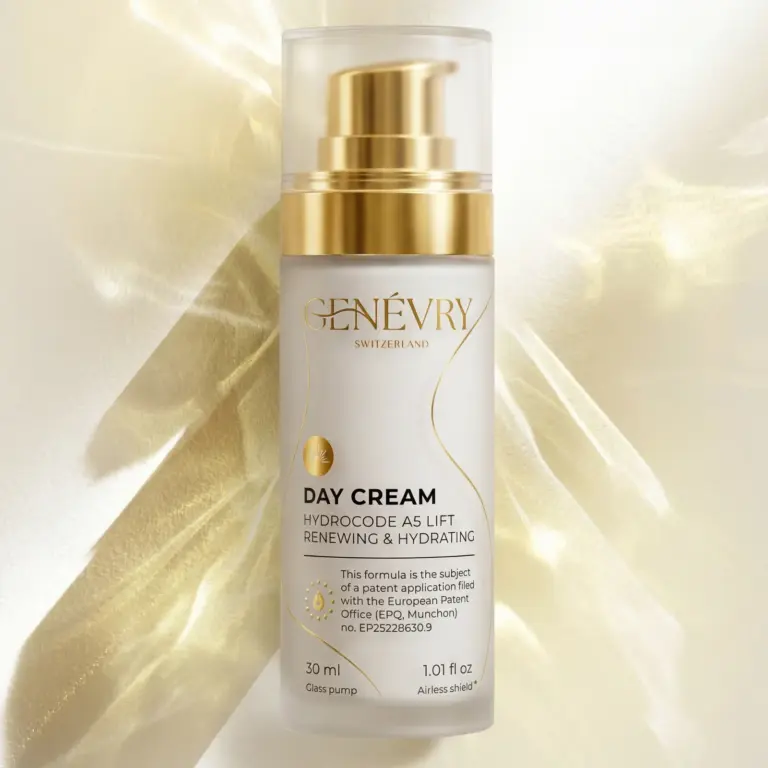
 English / EUR
 English (US) / USD
 English (UK) / GBP
 Deutsch / EUR
 Deutsch (Schweiz) / CHF
 Français / EUR
 Italiano / EUR
 Español / EUR
 Nederlands / EUR
 Polski / PLN
 日本語 / JPY
 한국어 / KRW
 中文 / CNY
 العربية / AED
 English (Australia) / AUD
 English (Canada) / CAD
 Svenska / SEK
 Dansk / DKK
 Norsk / NOK
 Suomi / EUR
 Português / EUR
 Türkçe / TRY
 Čeština / CZK
 Magyar / HUF
 Română / RON
 Ελληνικά / EUR
 Slovenčina / EUR
 Hrvatski / EUR
 Slovenščina / EUR
 Lietuvių / EUR
 Latviešu / EUR
 Eesti / EUR
 Български / EUR
 Українська / EUR