Squalane for skin: a light oil for every skin type?
Squalane is hydrogenated squalene, a lipid your own skin already makes. What that means when you pick an oil, and where it belongs in a routine.
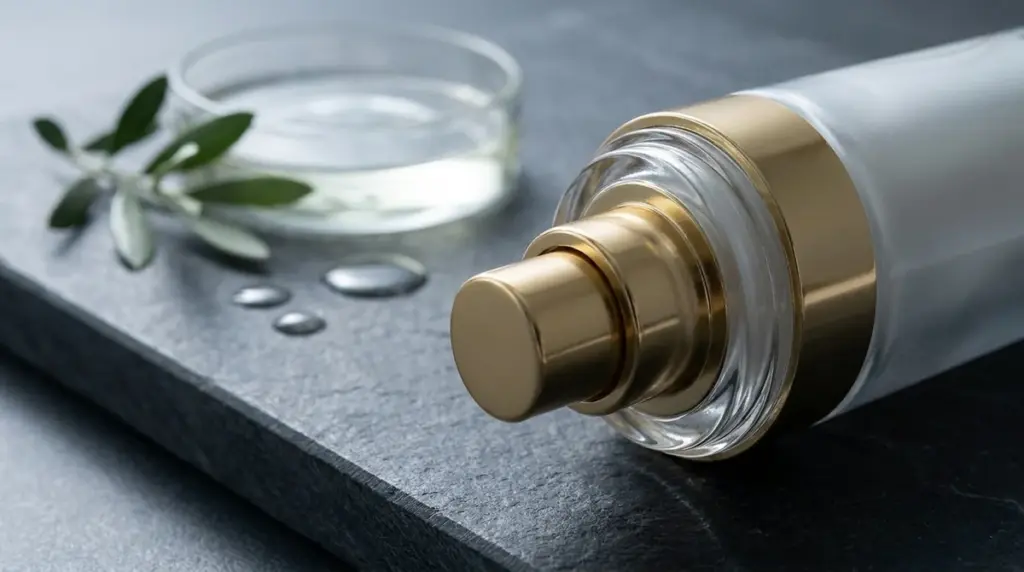
Squalane for skin is a saturated hydrocarbon, C30H62, and it is the hydrogenated version of squalene, a lipid your own sebaceous glands make, and one that accounts for roughly 12% of the sebum sitting on your face right now. On an ingredient list it appears as a single word: Squalane. No numbers, no letter codes, no variants.
One letter separates it from squalene, and that letter decides everything practical. Squalene carries six double bonds, so it reacts readily with oxygen and goes rancid. Squalane carries none, so it sits in a bottle for years without changing its smell. That is why cosmetics use the second form even though skin produces the first. Below: where it comes from, what it actually does, how to stack it, and where people most often get it wrong.
- INCI name: Squalane. Formula C30H62, molar mass about 423 g/mol. A colourless, virtually odourless liquid.
- Squalene makes up about 12% of human sebum by mass, alongside glycerides and fatty acids (about 57.5%) and wax esters (about 26%) — Picardo et al., Dermato-endocrinology 2009.
- Squalane is hydrogenated squalene. Full saturation means it is not subject to auto-oxidation, so it does not turn rancid in the jar or on the face.
- Where it comes from today: mostly olives (recovered from olive-oil processing residues) or sugarcane (sugars fermented by yeast into farnesene, then hydrogenated). Historically: deep-sea shark liver, roughly 3,000 fish per tonne.
- It is an emollient, not an active. It smooths, improves slip and slows water loss. It does not bind water the way glycerin or hyaluronic acid does.
- Typical levels: around 1–5% as a texture ingredient in a cream, up to 100% in the bottles sold as squalane oil.
- Tolerance: low acute toxicity, not a significant skin irritant or sensitiser, and its pore-clogging potential is rated low.
Squalane and squalene: one letter, two different molecules
Squalene is a triterpene, an intermediate in the cholesterol biosynthesis pathway. Every cell that builds cholesterol makes some, but humans are unusual in how much of it reaches the skin surface: sebaceous glands secrete it with sebum, and it is responsible for a good share of the shine you can blot off your nose by mid-afternoon. The name comes from the Latin squalus, meaning shark, because the first rich source described was shark liver oil.
The trouble with squalene is those six double bonds. Each one is a site where the molecule happily takes on oxygen, especially under UV light. The first product of that reaction is squalene monohydroperoxide. In an animal model (rabbit ear skin) it depleted cellular glutathione and showed comedogenic activity — Chiba et al., Journal of Biochemical and Molecular Toxicology 2001, PMID 11424225. That is a laboratory model rather than proof from human faces, but it is reason enough not to put unstable squalene into a cream expected to sit on a shelf for two years.
Hydrogenation solves it in a single step. Hydrogen is added across every double bond, the molecule becomes fully saturated, and oxygen loses its foothold. The result is squalane: a clear, oily liquid of very low viscosity that resists oxidation. Chemists sometimes call it perhydrosqualene. The Wikipedia entry on squalane covers the molecule and its history in more detail.
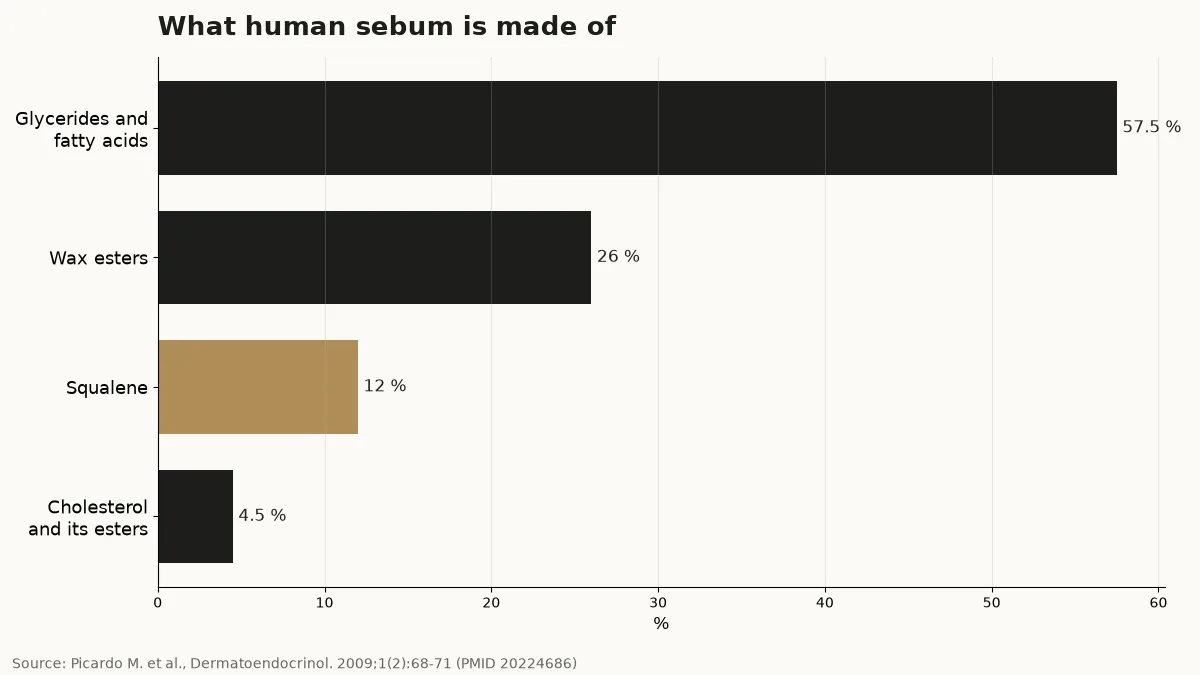
The chart explains why this ingredient behaves so quietly on the face. Squalane is not a foreign oil the skin has to learn to accept. It is a near-twin of a molecule skin already pushes to its own surface, with the single difference that it will not oxidise into a peroxide.
Where cosmetic squalane comes from
Squalene is widespread in nature. A review in Molecules (Huang, Lin and Fang 2009, PMID 19169201) lists olive oil, palm oil, wheat-germ oil, amaranth oil and rice bran oil among its sources, while noting that shark liver oil remains the richest of all. What matters to a formulator is which of those routes is repeatable and affordable at scale.
| Source | How the squalane is made | What it means in practice |
|---|---|---|
| Deep-sea shark liver | Squalene from liver oil, then hydrogenation | The historical route. Estimates put it at about 3,000 fish per tonne of squalane, which is why brands now advertise plant origin on the front of the pack |
| Olives | Squalene recovered from olive-oil processing residues, then hydrogenation | The most common source in European cosmetics. Neutral odour, supply tied to the olive harvest |
| Sugarcane | Sugars fermented by Saccharomyces cerevisiae into farnesene, dimerised to isosqualene, then hydrogenated | Batch-to-batch consistency that does not depend on weather or harvest |
| Amaranth, rice bran, wheat germ | Natural squalene sources described in the literature | Used less often, usually at smaller scale |
Which brings up something the ingredient list will never tell you: the INCI name says nothing about origin. “Squalane” on a label means exactly the same thing whether the molecule started in an olive, a sugarcane field or a shark. If origin matters to you — and for many shoppers it does — look for a claim on the carton or the product page: olive-derived, sugarcane-derived, 100% plant-based, a vegan certification. Market figures cited for 2014 put non-shark sources at around 40% of industry supply, so the question is not academic.
The second detail is purity. Retail squalane is often blended with cheaper oils. If a bottle says squalane oil but the ingredient list opens with Caprylic/Capric Triglyceride or Helianthus Annuus Seed Oil, you are mostly buying that carrier oil with squalane along for the ride. The same reading habit we set out in the guide to reading an INCI list applies without modification: the order on the list is the order by content.
What squalane for skin does, and what it does not
Squalane is an emollient. It fills the gaps between corneocytes in the stratum corneum, softens their edges and improves the way skin slides under your fingertips. You feel the result immediately, long before anything changes structurally: skin stops feeling rough and papery. It was introduced to cosmetics as an emollient in the 1950s and has done the same job ever since.
It also slows water loss from the epidermis, but gently. This is not petrolatum-grade occlusion that seals the surface. Squalane leaves a thin, breathable film, which is why it suits people who feel masked or congested after heavy creams. The price of that lightness is that on genuinely dry skin it will not hold hydration on its own. It needs a partner.
What squalane does not do: it does not bind water. It is not a humectant. Spread it on bone-dry skin and you have sealed the dryness in and achieved nothing else. Nor does it behave like an active: it has no effect on collagen synthesis, does not fade pigmentation and does not regulate oil production. In a formula it is there for texture, comfort and stability, not to change how skin works.
It plays one more quiet role, as a solvent and carrier. Oil-soluble ingredients — vitamin E, some retinol forms, oil-phase antioxidants — need an oil phase to dissolve into. Squalane suits that job precisely because it will not go rancid and spoil the smell of a product that has to survive two years in a bathroom cabinet.
How it actually feels
Two drops warmed between the palms cover a whole face. Squalane spreads without resistance, sinks in within a minute and leaves no shine of the kind a camera flash picks up. A quarter of an hour later skin feels matte but soft. If you can feel a greasy film, you used two drops too many: that is the standard mistake of week one.
What to pair squalane with, and where to be careful
Squalane does not clash chemically with any common skincare ingredient. It does not shift pH, oxidise vitamin C or deactivate retinol. The only thing worth thinking about is layer order: an oil applied too early can slow down whatever you put on next.
| Ingredient | Pair with squalane? | How to order it | Time of day |
|---|---|---|---|
| Retinol | Yes, one of the better pairings | Retinol first, squalane over it or mixed into the night cream. Takes the edge off the tight weeks | Evening |
| AHAs and BHAs | Yes | Wait until the acid stops tingling, then apply. Do not dilute the acid with it in your palm | Evening |
| Vitamin C | Yes | Serum first, squalane on top. Reversing that order slows the serum down | Morning |
| Niacinamide | Yes, no caveats | Any order, though niacinamide usually sits underneath as the water phase | Morning and evening |
| Hyaluronic acid | Yes, and it is the better move | Humectant onto damp skin, squalane straight after, because it holds in the water the humectant pulled in | Morning and evening |
| SPF | With care | Sunscreen always last and at a full dose. Never mix squalane into it in your hand | Morning |
| Petrolatum and heavy occlusives | Pointless side by side | Pick one. Together they build a heavy film with no extra benefit | Evening |
| Foundation and primer | Yes, sparingly | One or two drops, five minutes’ wait. Too much oil and make-up starts to pill | Morning |
The rule underneath that table is simple: squalane goes after water, never before it. Thinnest to thickest is not an aesthetic convention but a physical one, and we worked through it in the piece on skincare layering order, morning and evening.
Which skin types it suits
Dry and dehydrated skin. This is where squalane performs best, provided it is given water to hold. The sequence: a humectant toner or serum onto a still-damp face, squalane immediately after, cream on top. Squalane alone on dry skin is a wasted application.
Sensitive skin and skin after treatments. Short ingredient list, no fragrance, no colourants, low reactivity. Squalane is one of the safer choices here. With very reactive skin, still patch-test on the forearm or behind the ear for three days.
Oily and combination skin. It sounds counterintuitive, but a light oil often suits them better than a thick cream. Squalane adds no weight and its pore-clogging potential is rated low. One drop across the cheeks is enough; the T-zone can be skipped entirely.
Congestion-prone skin. Responses vary from person to person, and no oil is completely neutral for everyone. Start with three evenings a week and watch what happens. If you have a diagnosed skin condition, discuss your routine with a dermatologist rather than testing ingredients by trial and error.
Mature skin. Surface lipid production falls with age, so replacing some from the outside makes sense. Squalane does not substitute for actives, but it works well as a comfort layer over them, particularly in winter and in centrally heated rooms where the air is dry. We traced that mechanism in the article on winter skincare and protecting the skin barrier.
How to fit squalane into a GENÉVRY ritual
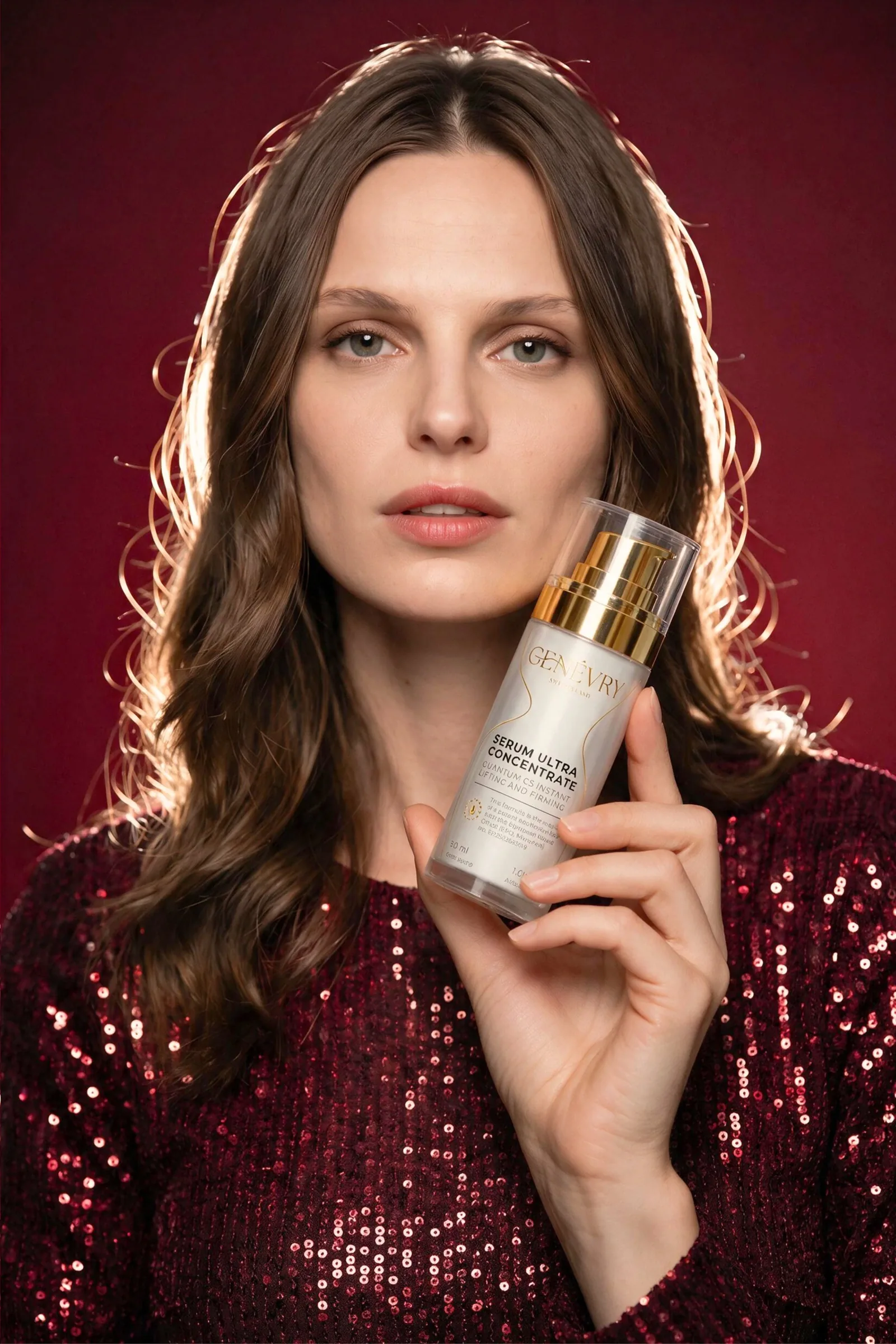
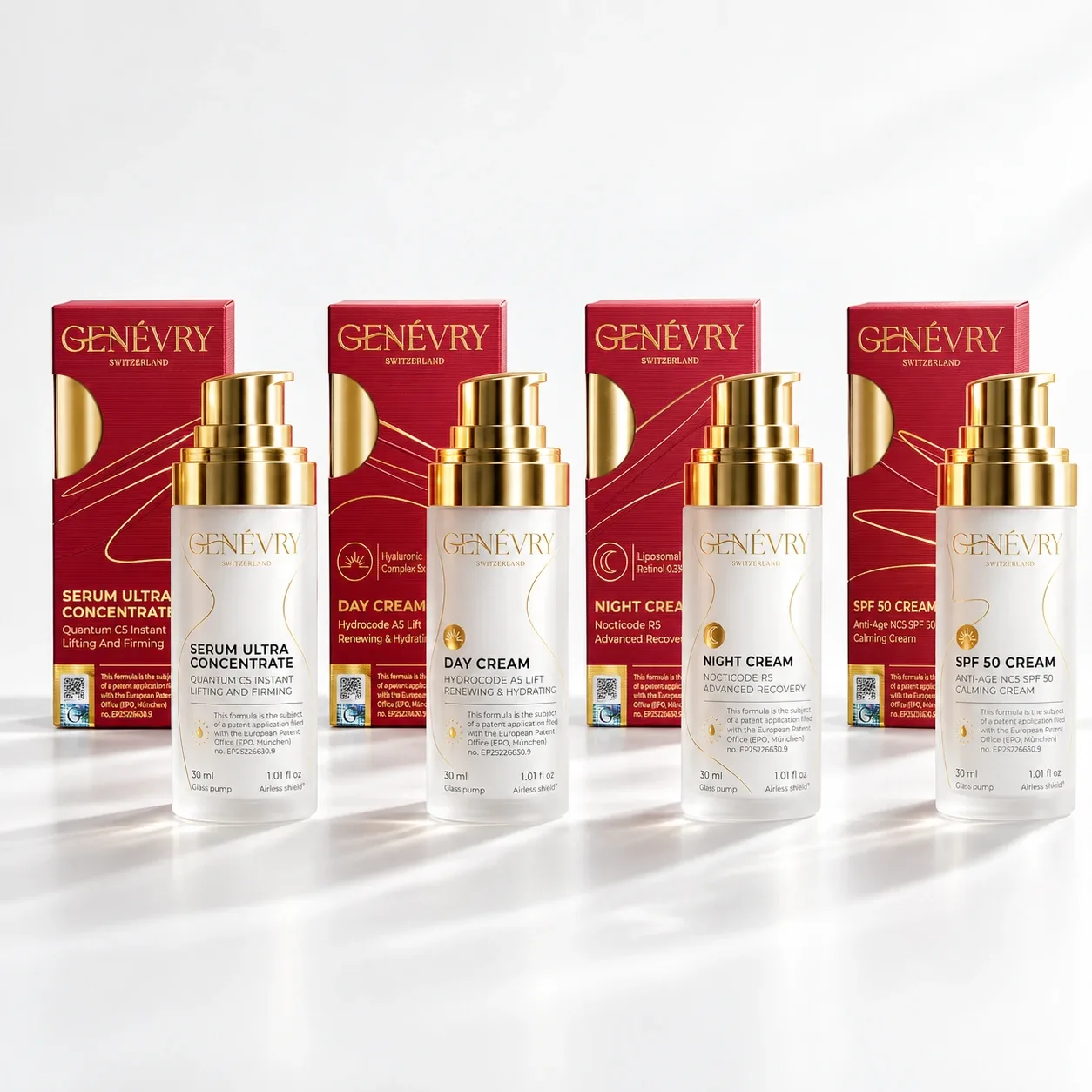
GENÉVRY formulas do not contain squalane. The collection is built around different molecules: the Copper Tripeptide-1 copper peptide and liposomal vitamin C in the serum, liposomal retinol at 0.3% in the night cream. If you own a separate squalane oil, treat it as an extra layer rather than a replacement for any step.
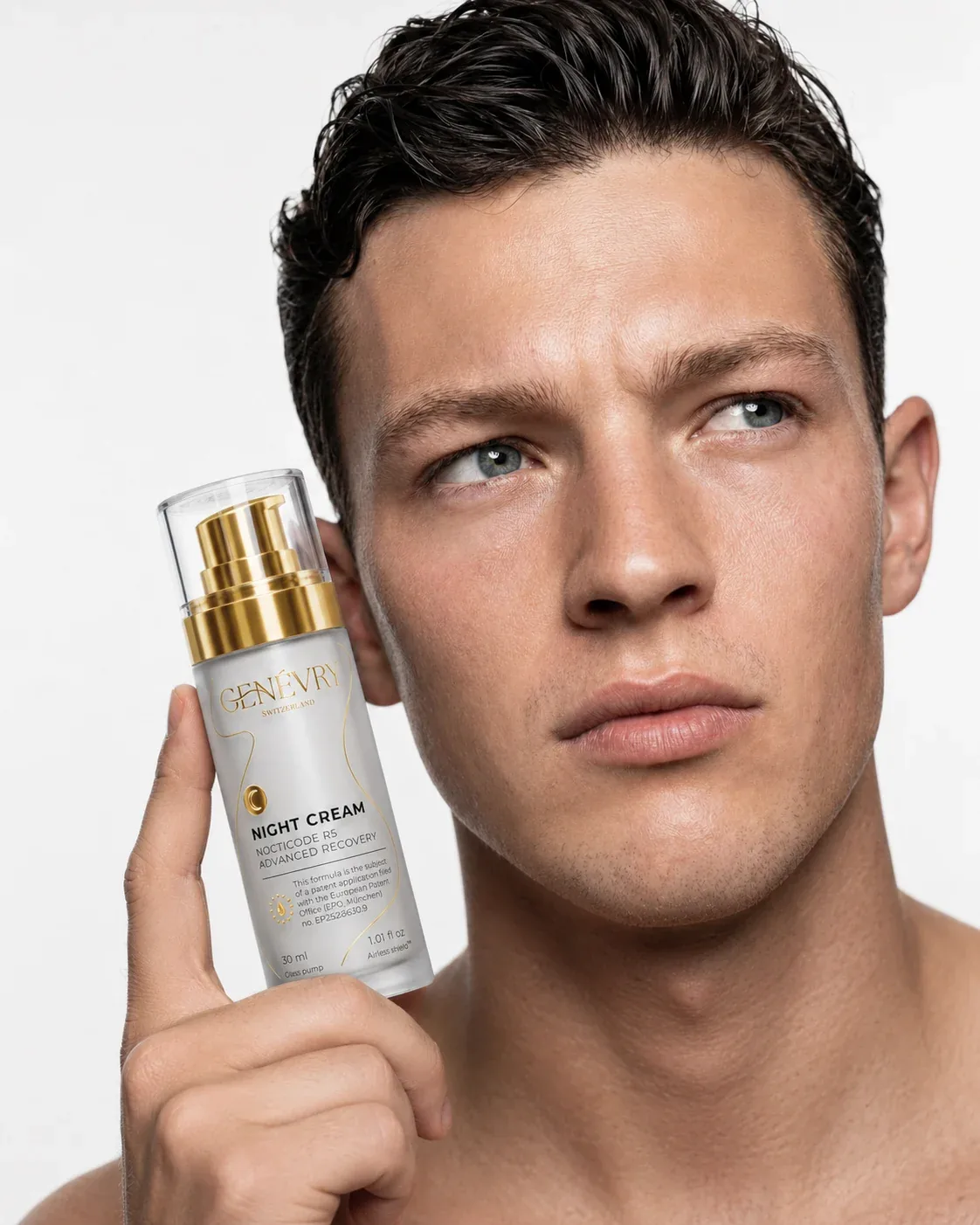
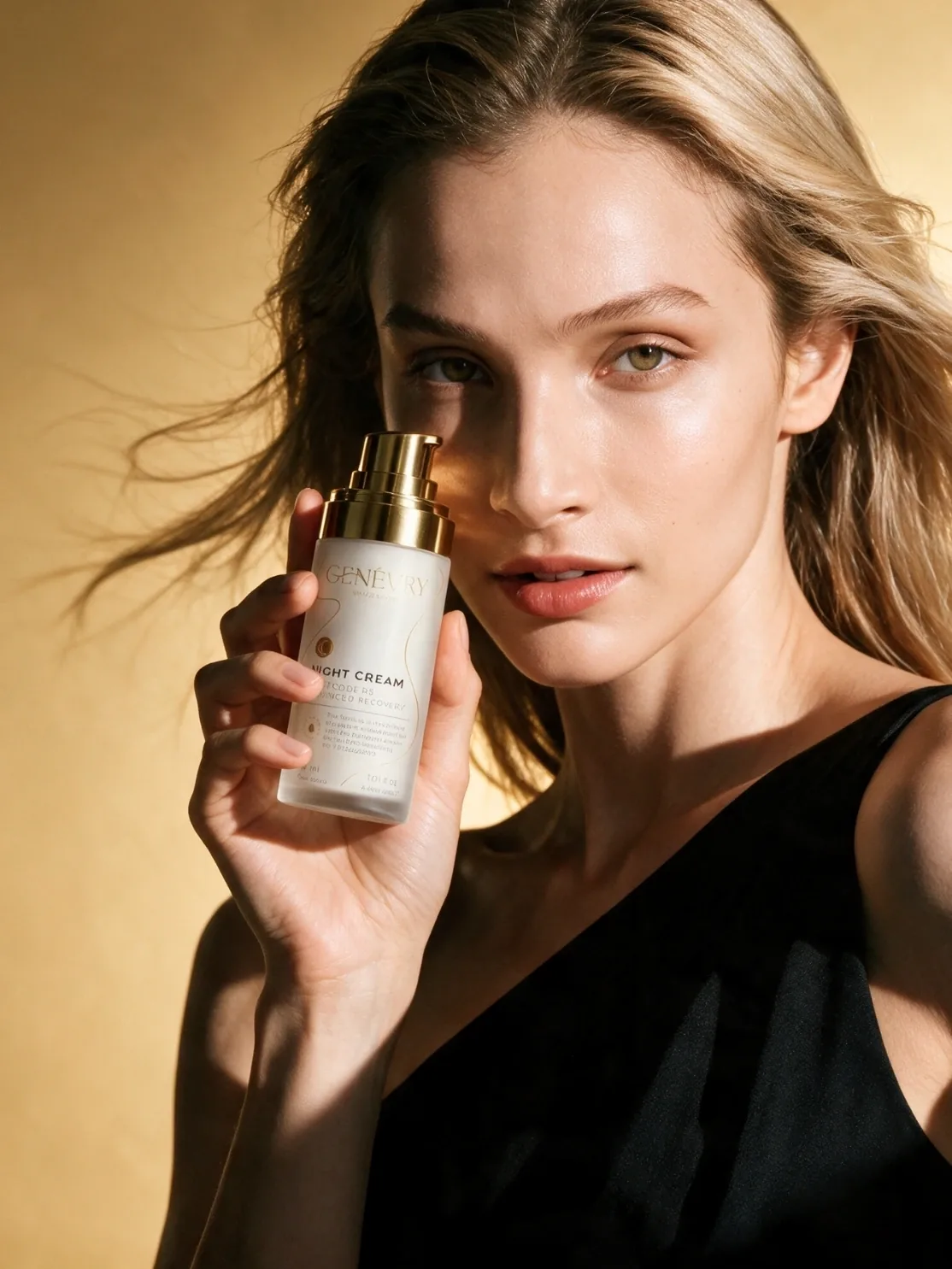
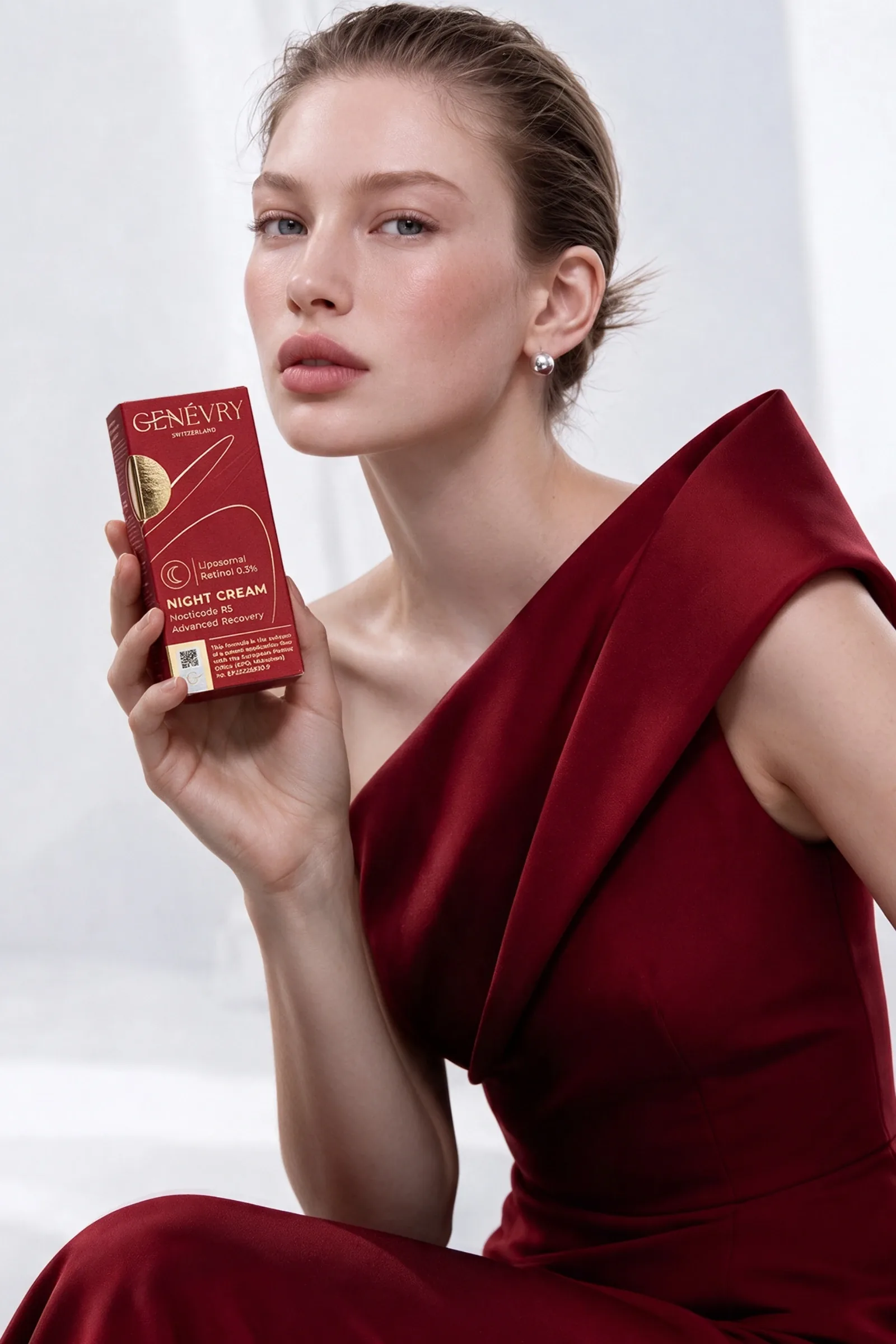
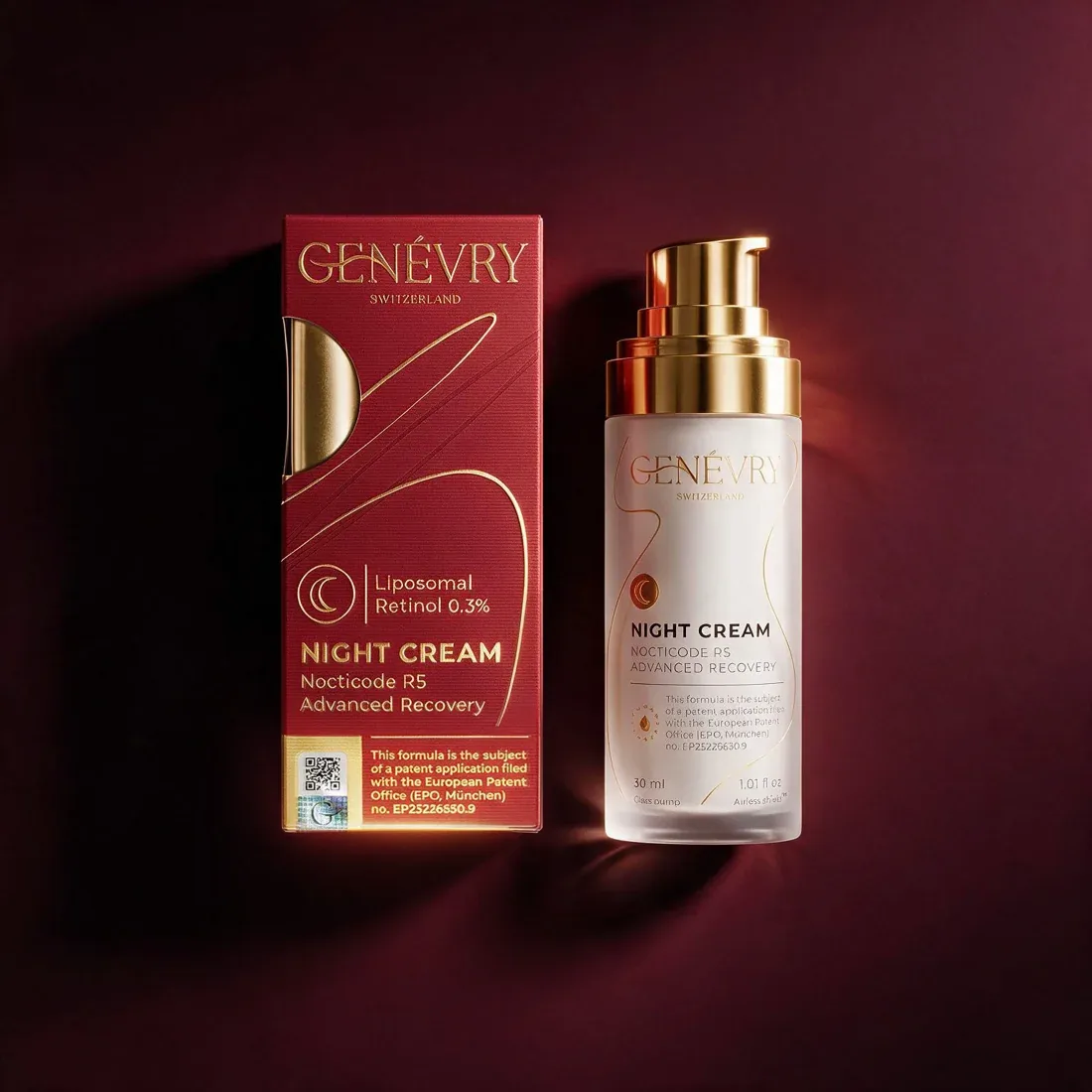
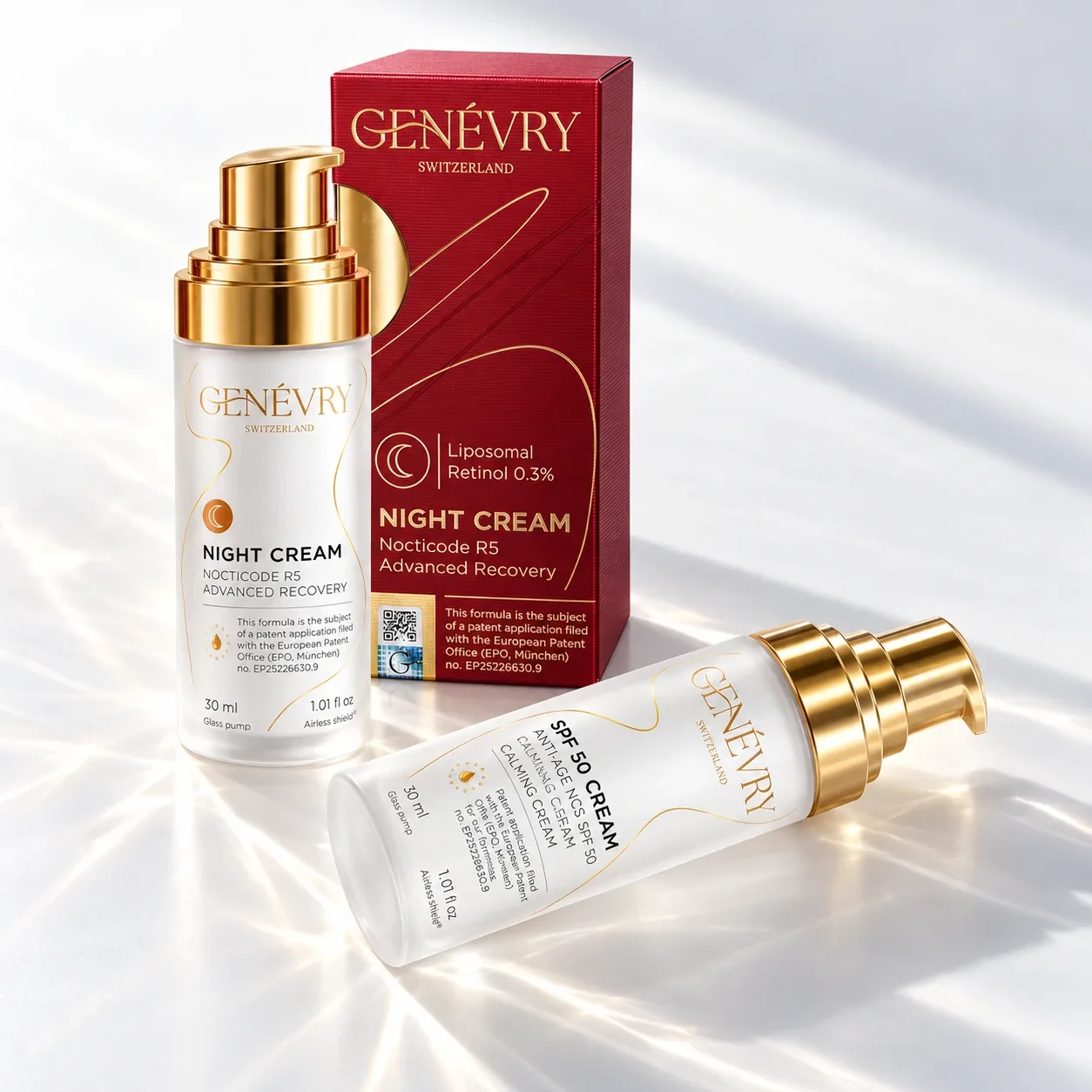
An evening sequence that holds together: cleanse, serum onto damp skin, night cream, then one or two drops of squalane on the areas that tighten most, usually the cheeks and the skin around the mouth. Nocticode R5 (genevry.com) is a Swiss night cream in a 30 ml bottle with 0.3% liposomal retinol. In instrumental testing of that formula, mean skin hydration rose by 38% after four weeks (Corneometer CM 825, n=10, with an increase in all ten participants), and mean wrinkle length fell from 2.08 to 1.88 mm, a 10% reduction (silicone replicas, VISIOLINE VL650, recorded in 9 of 10 participants). Retinol is introduced gradually, always with sunscreen the next morning, and is not used during pregnancy.
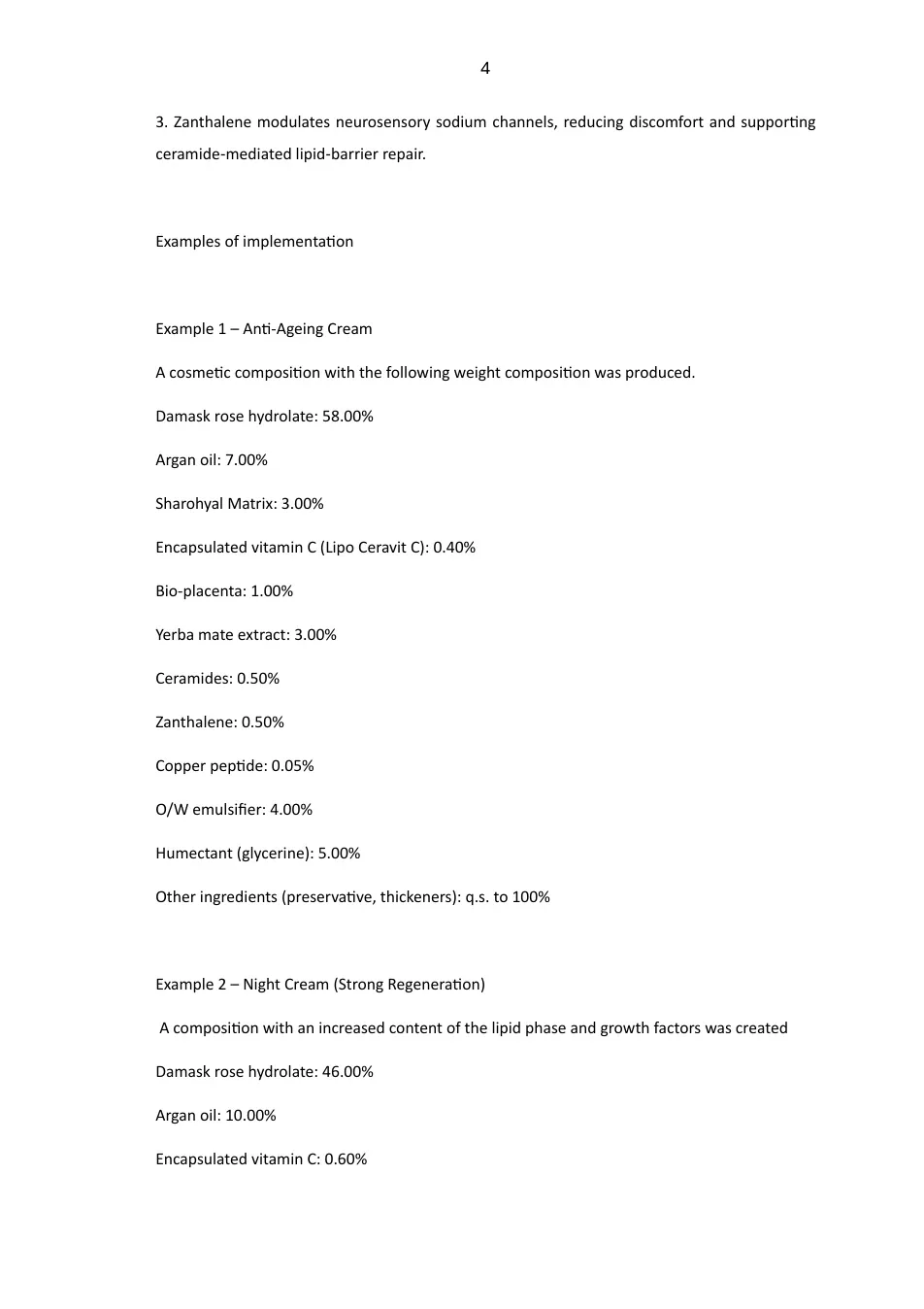
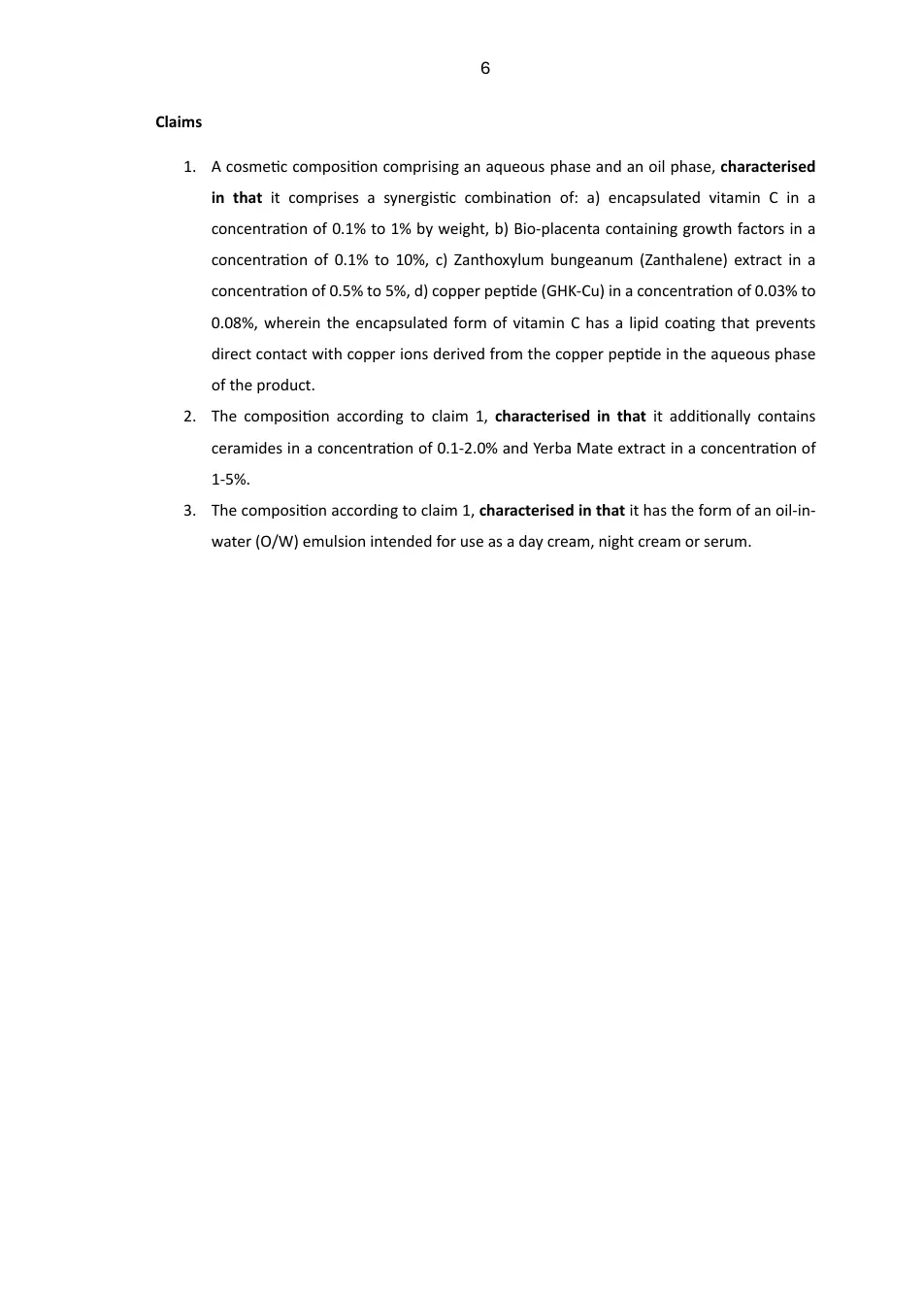
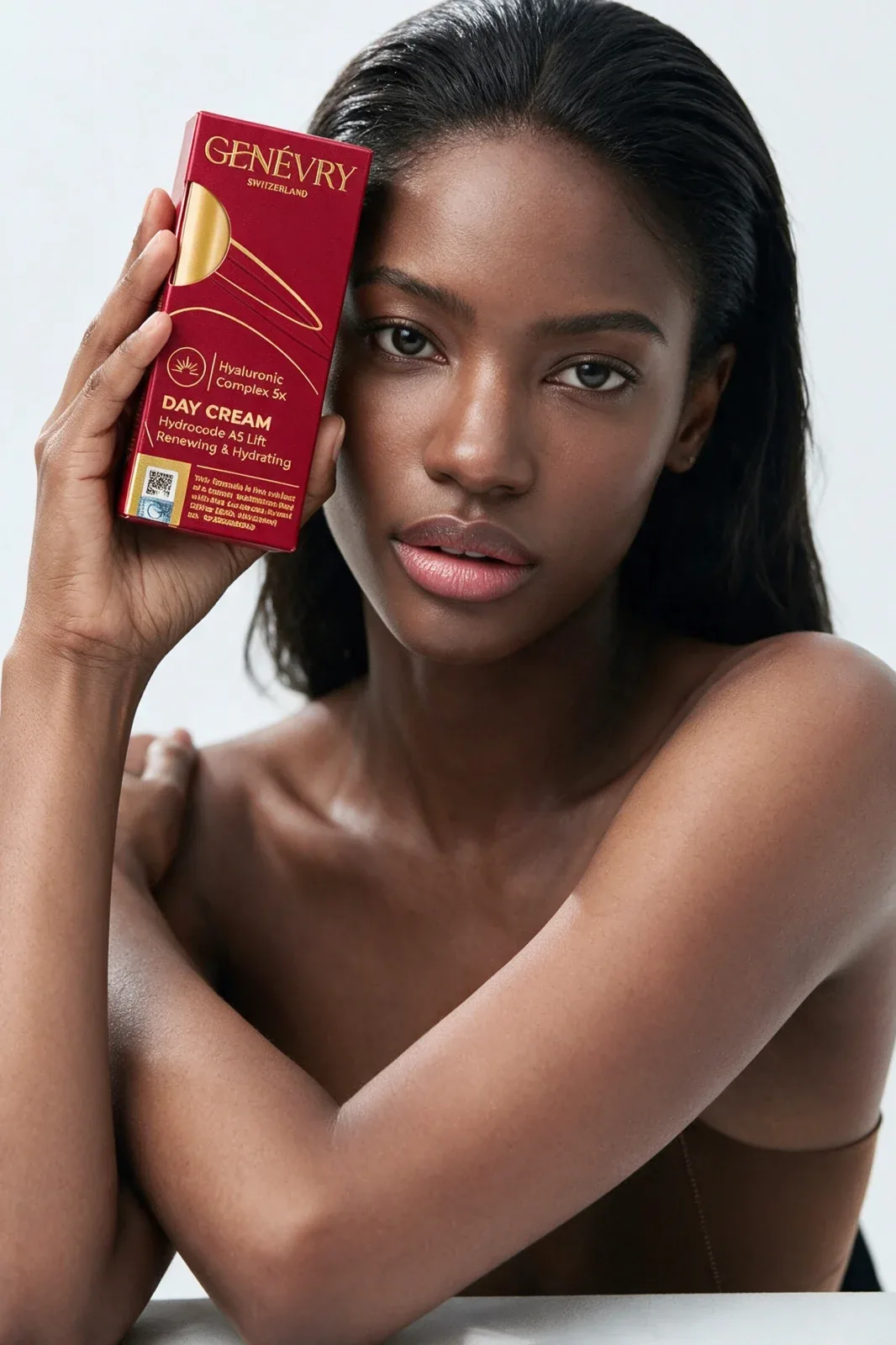
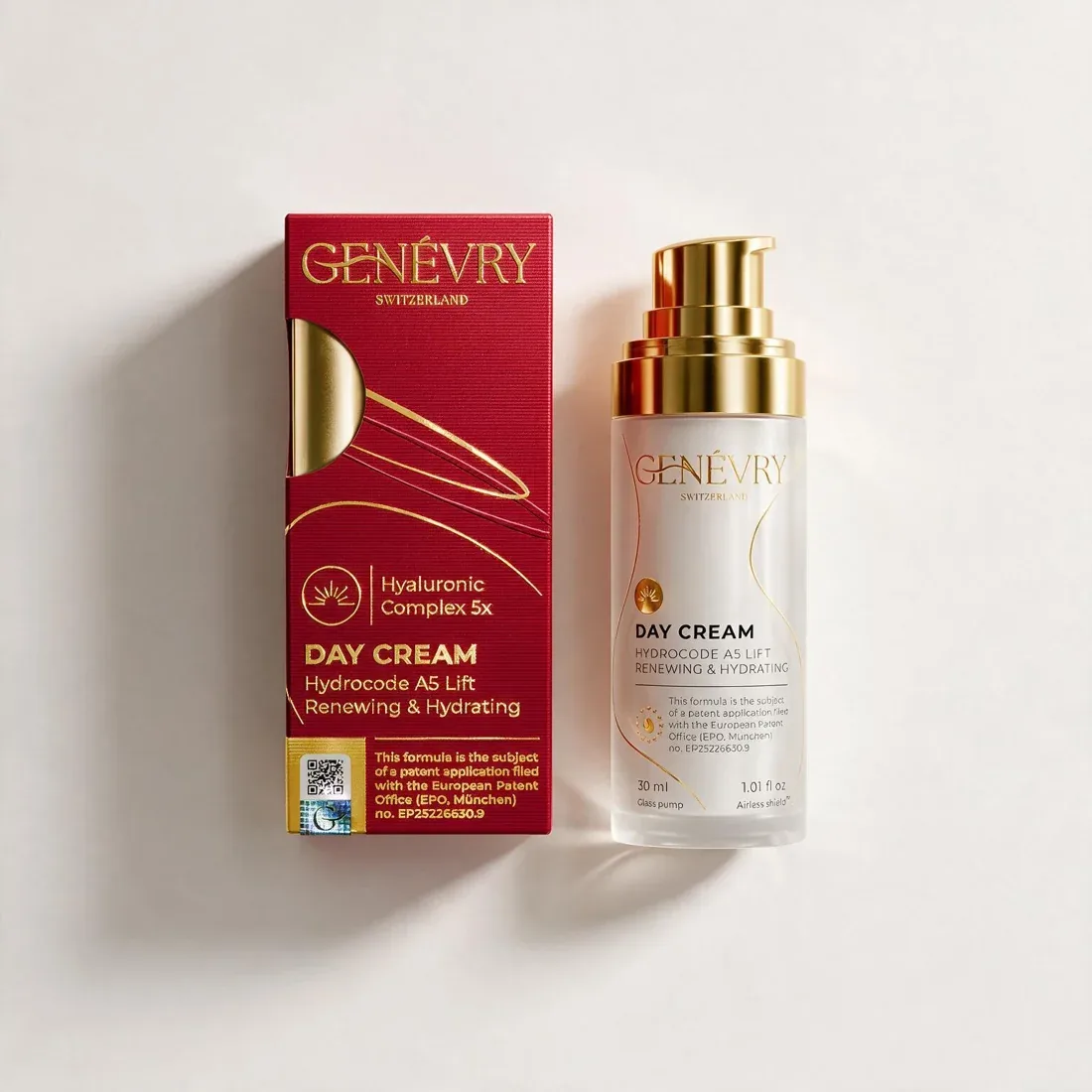
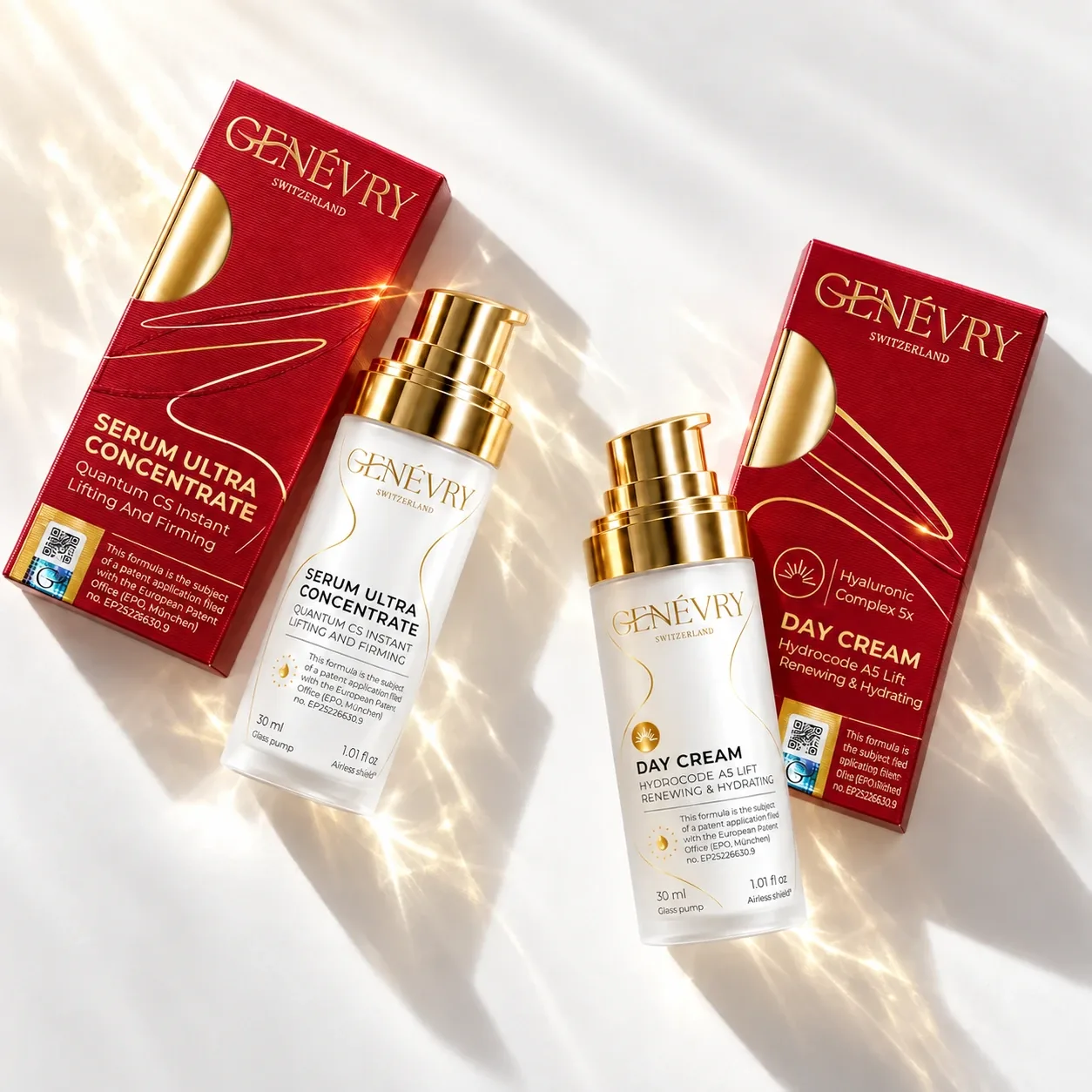
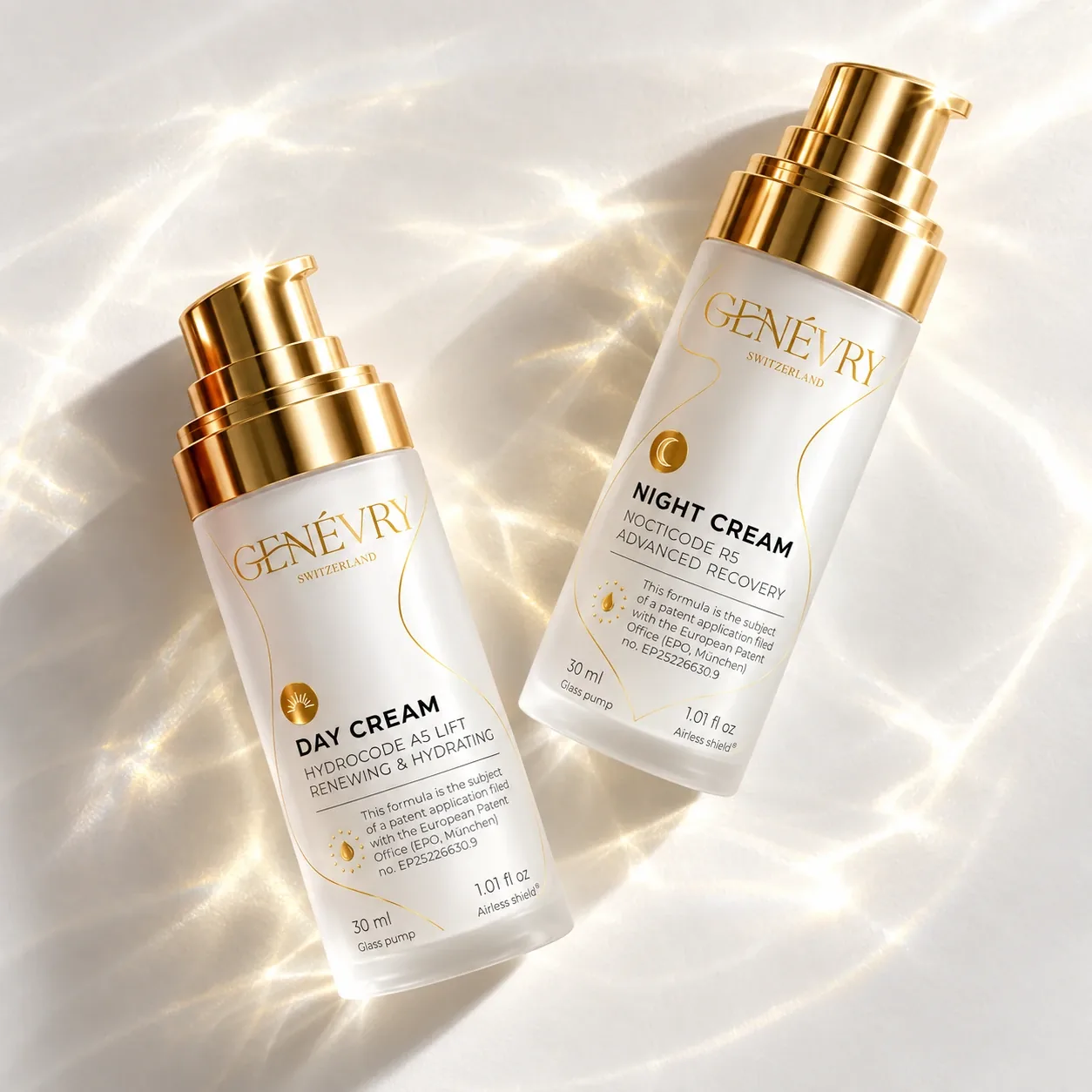
Mornings are simpler: serum, day cream, sunscreen. Hydrocode A5 Lift is a 30 ml day cream; in instrumental testing, mean skin hydration rose by 41% after four weeks of regular use (Corneometer CM 825, n=10, with hydration increasing in all ten participants). The formula is covered by patent application EP25226630.9 (patent pending). Add squalane in the morning only if your skin genuinely asks for it, and always under sunscreen, never over it. Both creams come together in The Day & Night Duo.
Five mistakes that keep coming up
Treating squalane as a moisturiser. It is an emollient. It hydrates indirectly, by slowing evaporation, and only when there is water underneath. Oil on dry skin locks in the dryness.
Using too much. Three or four drops on a face is surplus that stays on the surface and transfers to your pillowcase. Two drops are enough, and on combination skin often one.
Expecting active results. After a month of squalane, skin feels smoother and less tight. It will not look brighter and uneven tone will not shift. Those need other ingredients.
Confusing squalane with squalene on the label. If the list reads Squalene without the “a”, you are looking at the unsaturated form, which oxidises faster. That does not disqualify a product, but it shortens its real life after opening.
Buying a squalane oil that is not one. Check the first entry on the INCI list. If it is not Squalane, you are paying mainly for the base oil.
Frequently asked questions about squalane
Does squalane clog pores?
Squalane’s pore-clogging potential is rated low, and the substance itself has low acute toxicity and is not considered a significant irritant or sensitiser. That does not make it neutral for every face, and individual reactions happen. On congestion-prone skin, start with three evenings a week.
Can squalane be used around the eyes?
Yes, and it is one of its standard uses. The eye area has a thin stratum corneum and few sebaceous glands, so a light emollient suits it better than a rich cream. Tap it on with your ring finger along the orbital bone, not closer to the lash line.
Squalane or hyaluronic acid — which should I choose?
It is not an either-or, because the two do different jobs. Hyaluronic acid attracts and binds water; squalane keeps it there. They work best as a pair: humectant onto damp skin, emollient straight after. If you must pick one, start with hyaluronic acid for dehydrated skin, and with squalane if yours feels rough and tight.
Is squalane vegan?
It depends on the source, and the INCI name does not distinguish. Olive-derived and sugarcane-derived squalane are plant-based; shark-liver squalane is not. The only reliable answer comes from the manufacturer’s own claim or a vegan certification on the pack.
Is squalane suitable for acne-prone skin?
It is often well tolerated, being light and low on the comedogenic scale, but acne is a medical matter rather than a cosmetic one. If breakouts are significant or persist despite a careful routine, see a dermatologist, and a supportive routine then becomes part of a larger plan.
Can squalane be used during pregnancy?
Squalane itself is a chemically inert hydrocarbon with no systemic activity. Decisions about a whole routine during pregnancy — particularly one containing retinol or acids — belong with the doctor looking after you.
How many drops of squalane should I use?
Two for a whole face, one on combination skin. Warm them between your palms and press them onto the face rather than rubbing them in with fingertips: less product stays on your hands and the layer lands more evenly.
How soon will I notice a difference?
Smoothness under the fingertips and less tightness after cleansing show up within a few days. After that the change is modest, because squalane does not remodel skin, it finishes it. If nothing has improved in two weeks, the issue is probably not missing lipids but missing water, or cleansing that is too harsh.
Start with one check: pick up the cream you use at night and look for the word Squalane on its INCI list. If it is there, a separate oil will probably add nothing. If it is not, and your skin feels rough after washing, two drops over the cream is the cheapest test you can run this week. And if you want to add a second well-documented barrier ingredient, read the entry on ceramides, which work in the same layer from an entirely different angle.
The formulas in this article
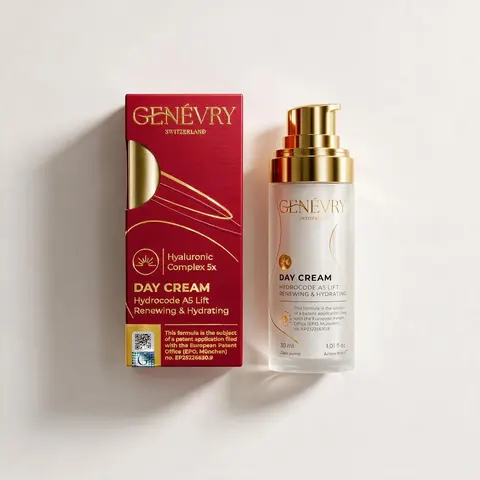 Hydrocode A5 Lift리뉴잉 데이 크림₩55,000Discover the formula →
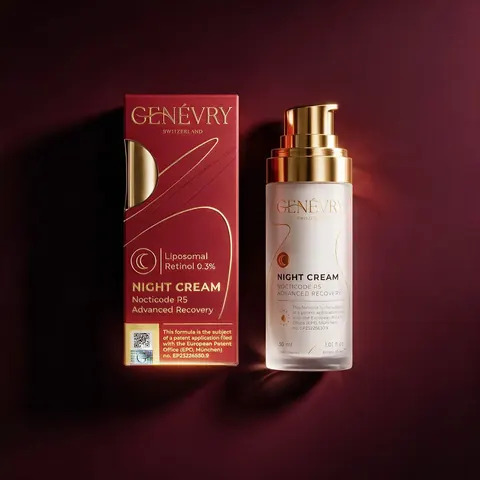 Nocticode R5어드밴스드 나이트 크림₩55,000Discover the formula →
Cosmetic product. Individual results may vary.
 English / EUR
 English (US) / USD
 English (UK) / GBP
 Deutsch / EUR
 Deutsch (Schweiz) / CHF
 Français / EUR
 Italiano / EUR
 Español / EUR
 Nederlands / EUR
 Polski / PLN
 日本語 / JPY
 한국어 / KRW
 中文 / CNY
 العربية / AED
 English (Australia) / AUD
 English (Canada) / CAD
 Svenska / SEK
 Dansk / DKK
 Norsk / NOK
 Suomi / EUR
 Português / EUR
 Türkçe / TRY
 Čeština / CZK
 Magyar / HUF
 Română / RON
 Ελληνικά / EUR
 Slovenčina / EUR
 Hrvatski / EUR
 Slovenščina / EUR
 Lietuvių / EUR
 Latviešu / EUR
 Eesti / EUR
 Български / EUR
 Українська / EUR