Retinol and Sun Exposure — Why SPF Is Non-Negotiable in the Morning
The retinoid works at night, UV works by day — and they pull in opposite directions. Why sunscreen is part of a retinol routine rather than an optional extra.
Retinol and sun exposure is a pairing most guides dispose of in a single line — “use it at night, wear sunscreen in the morning” — without explaining where the rule came from. There are in fact two reasons, entirely independent of each other, and only together do they add up to a routine that makes sense.
What retinol does to skin
Retinol belongs to the retinoids, the derivatives of vitamin A. In the skin it passes through several conversion steps before it reaches its active form, which is precisely why it acts more gently and more slowly than the retinoids a dermatologist prescribes. In plain terms: it speeds up the natural turnover of cells in the epidermis and changes how skin looks — surface smoothness, evenness of tone, how legible fine lines are.
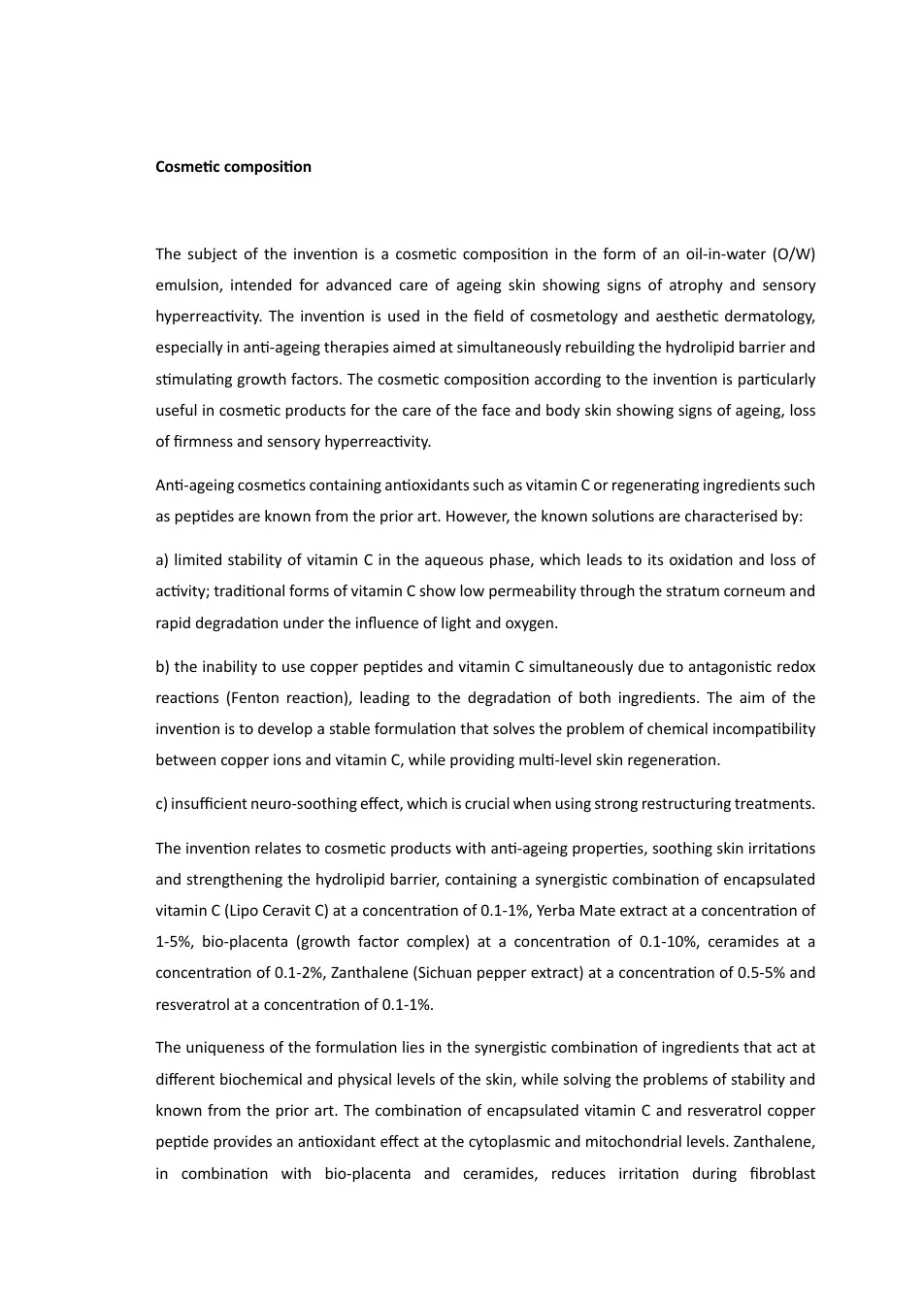
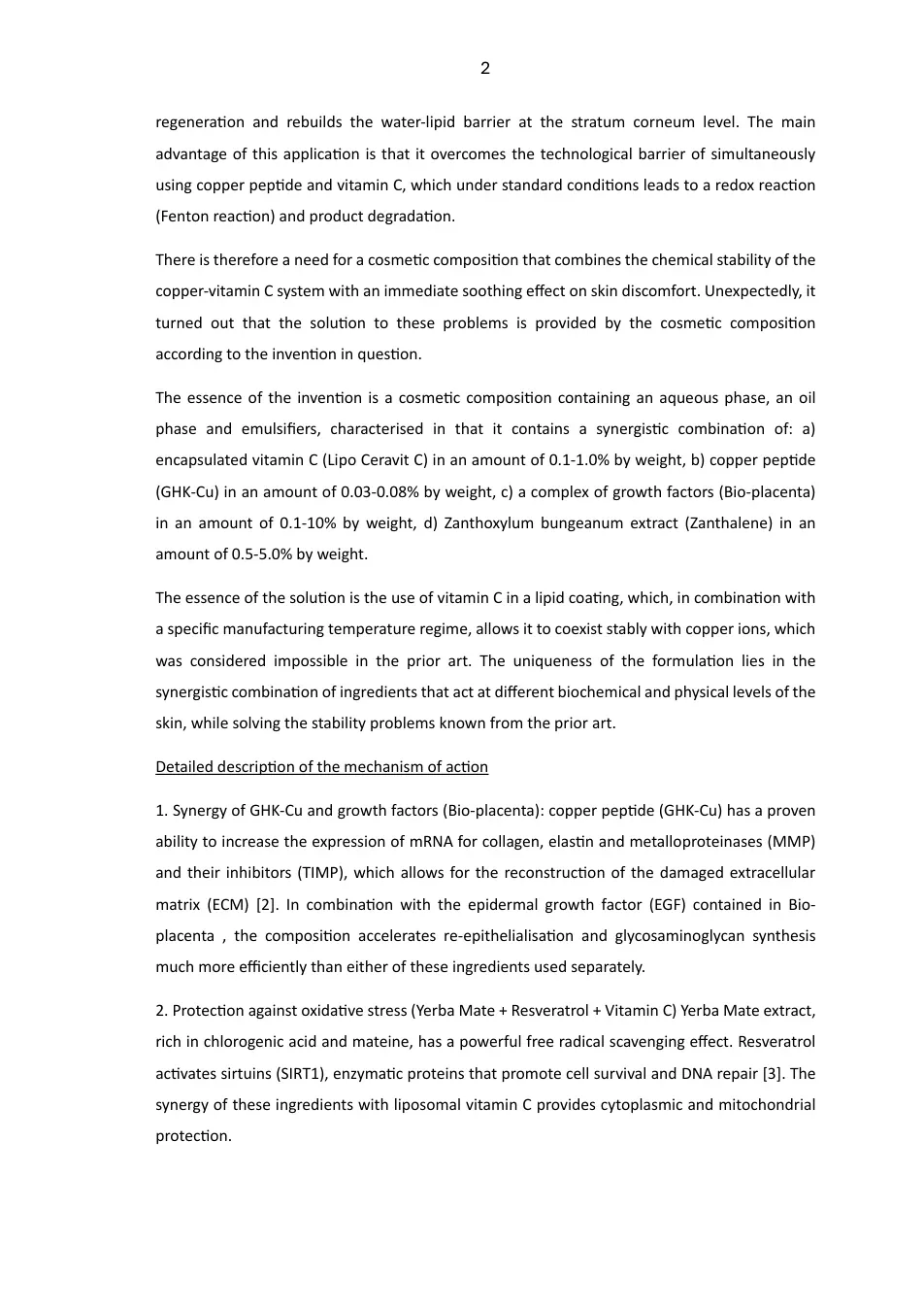
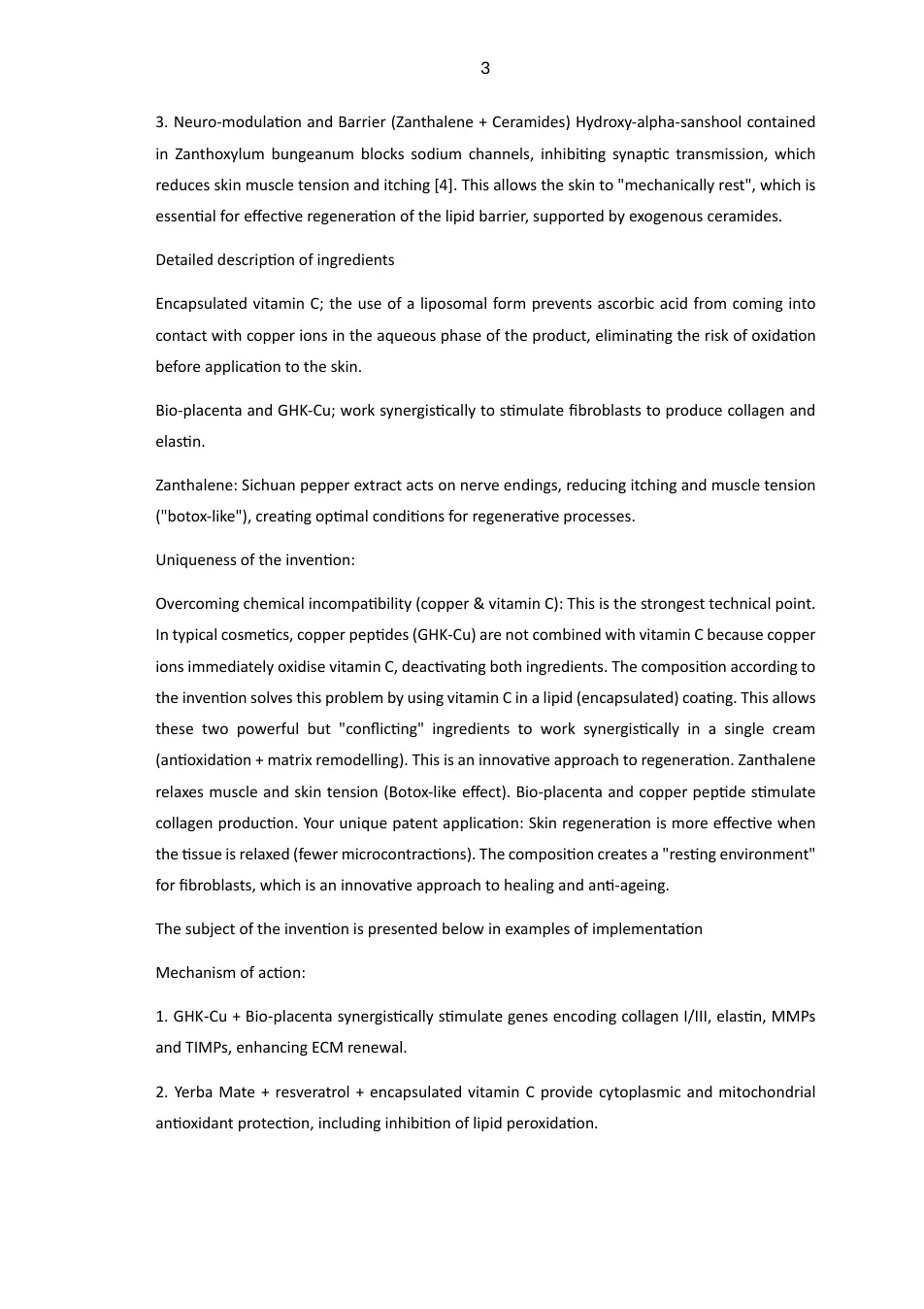
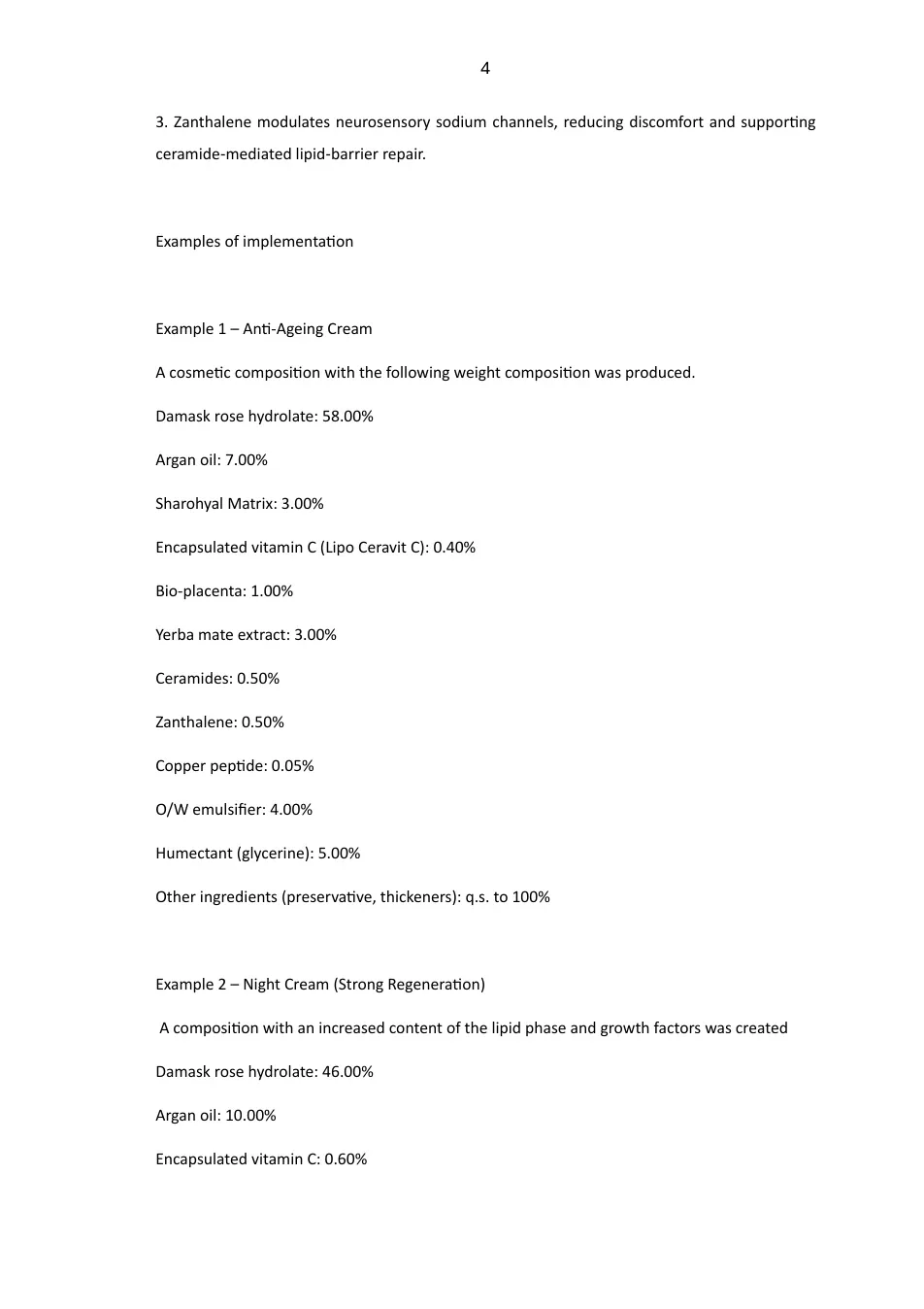
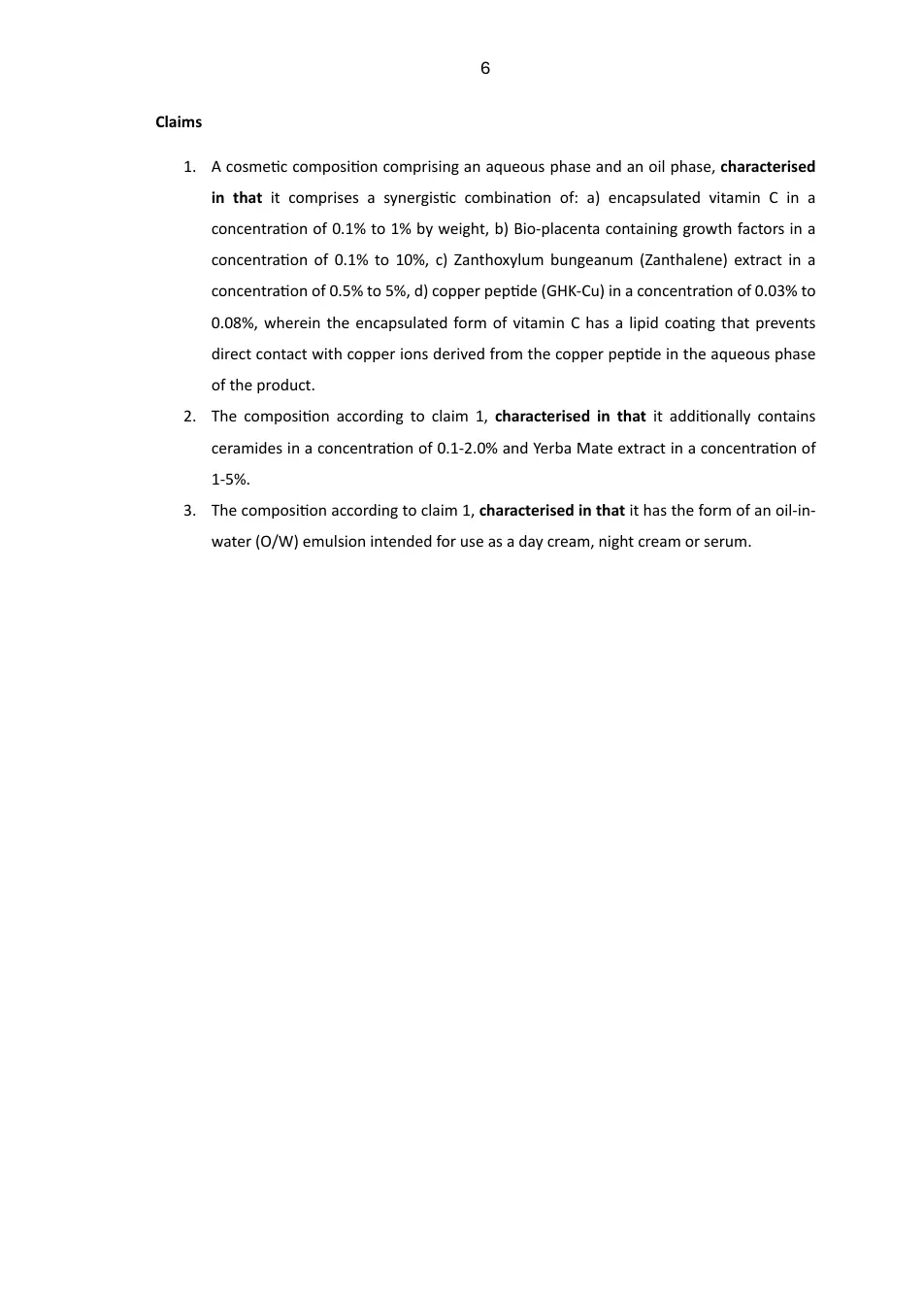
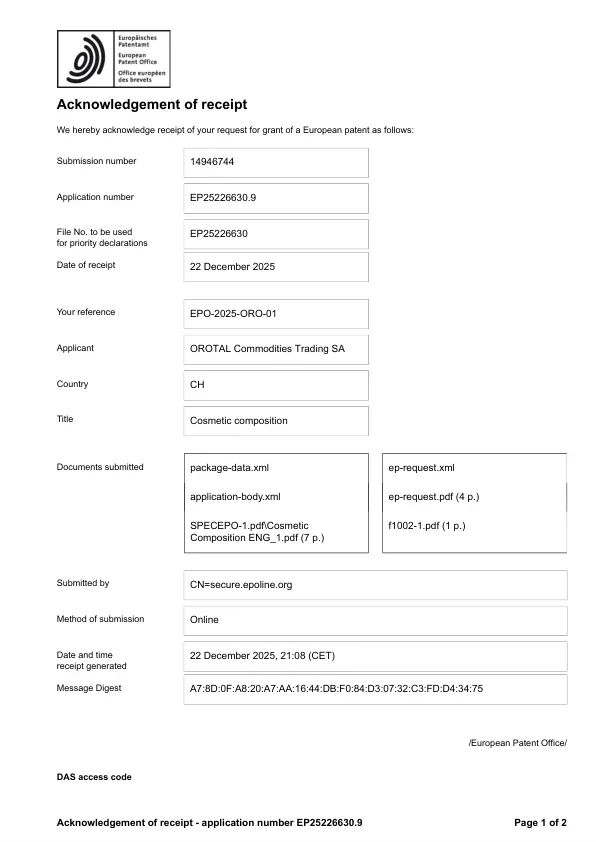
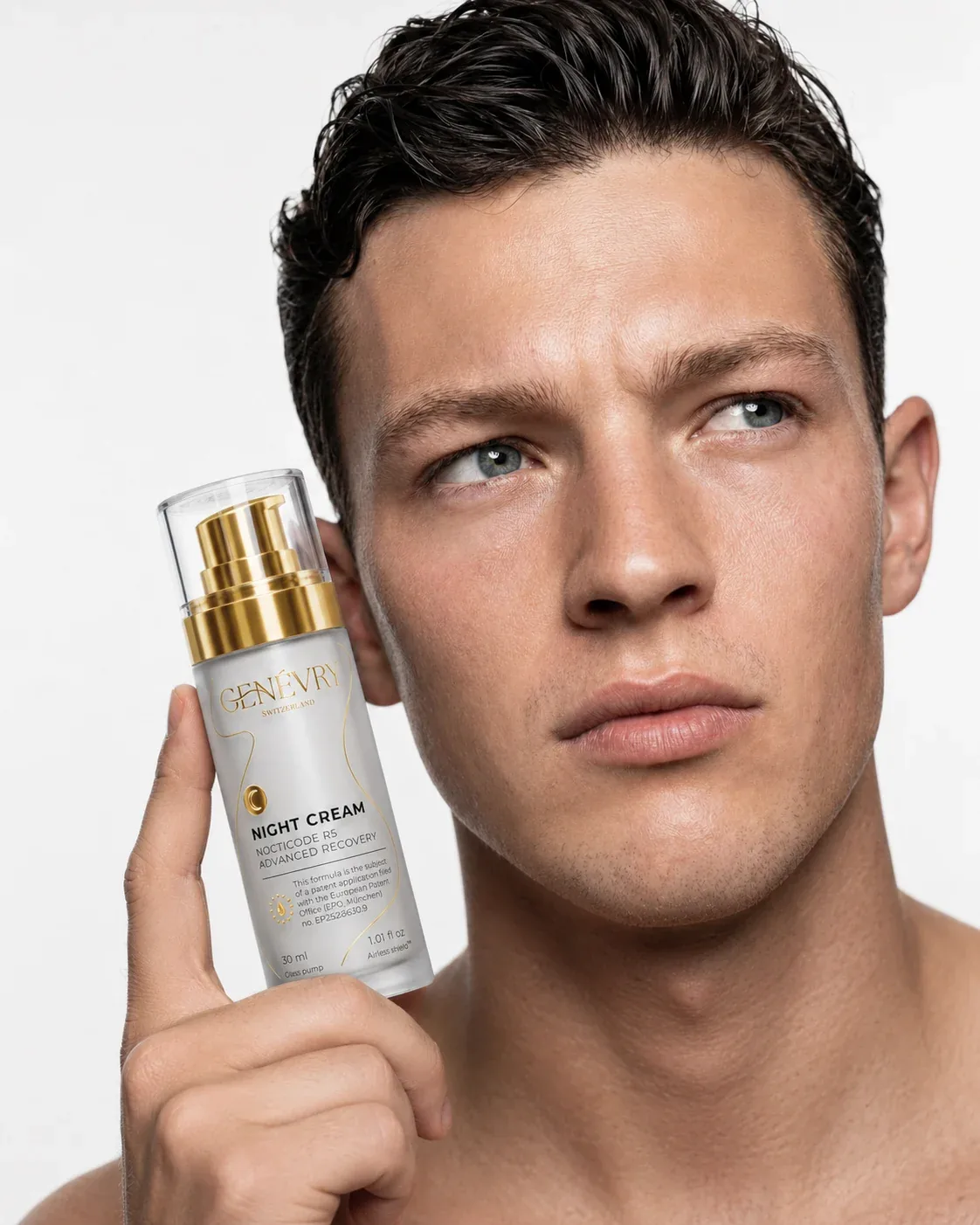
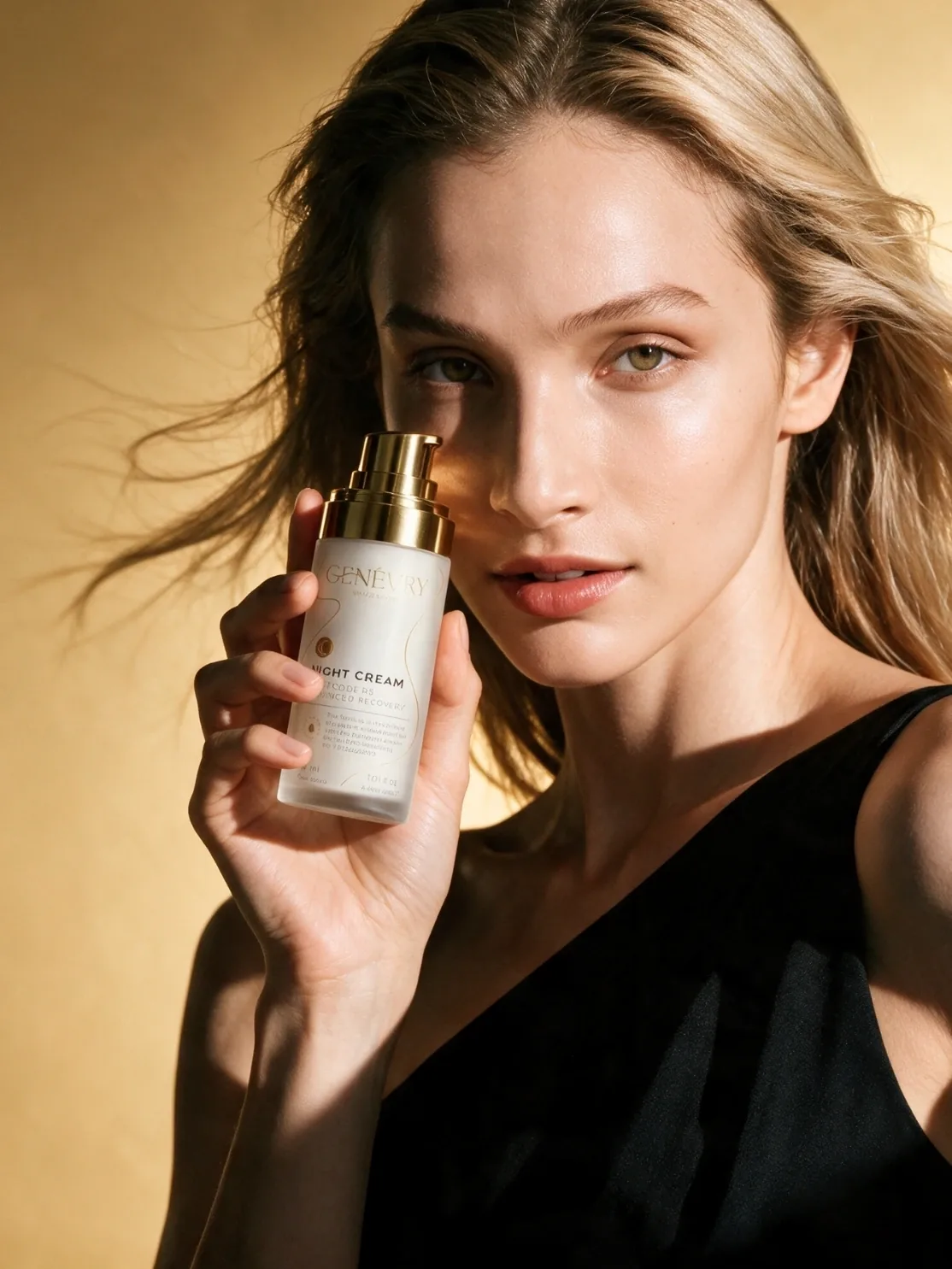
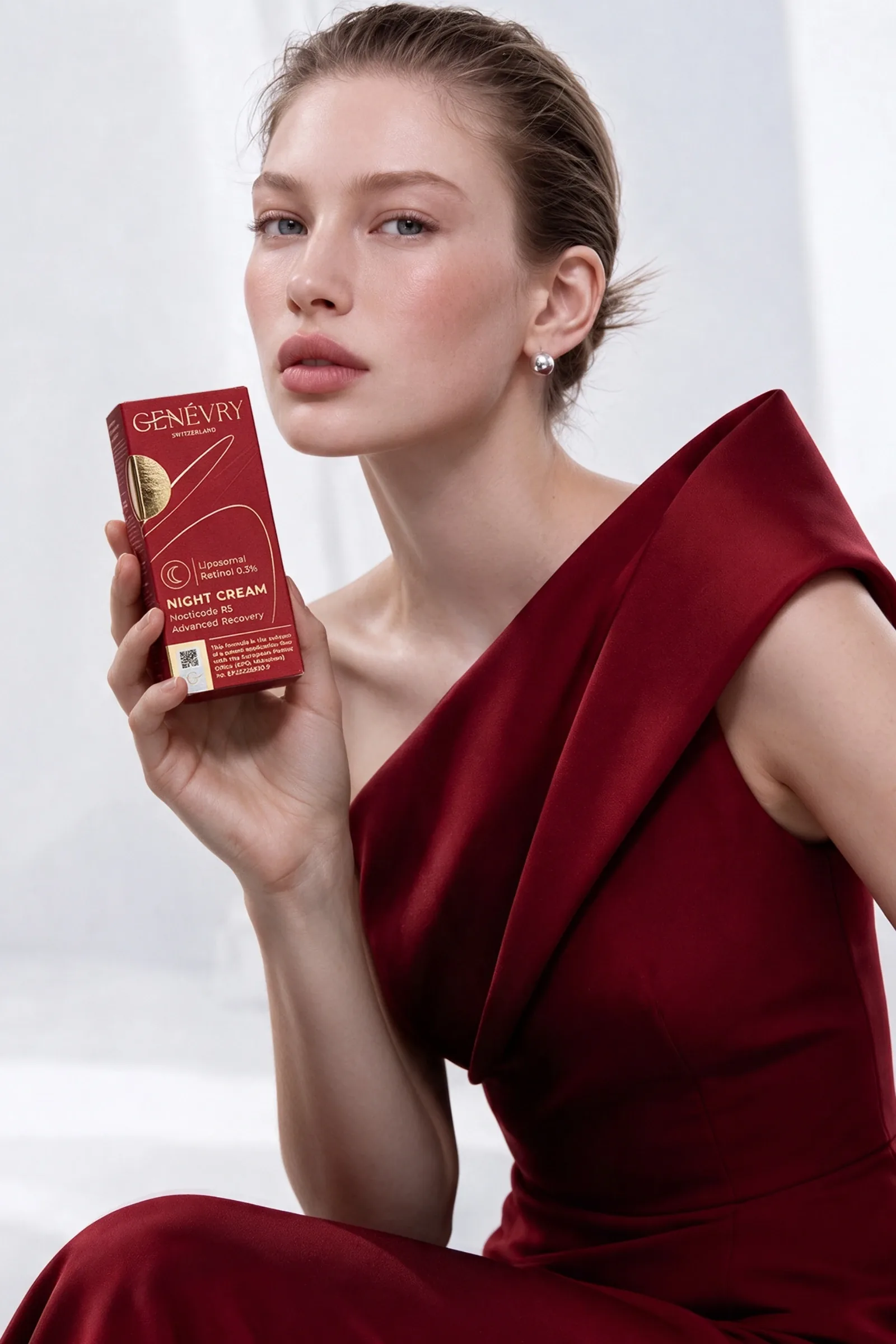
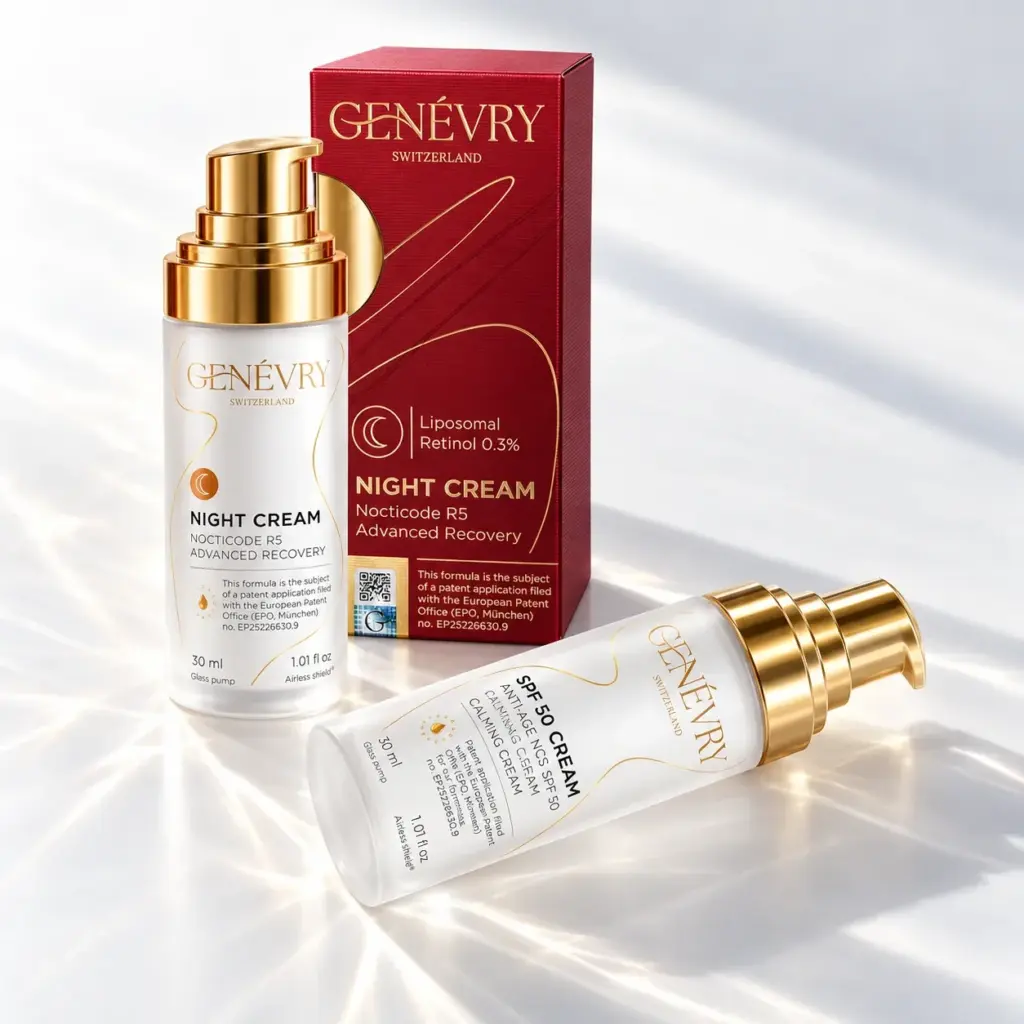
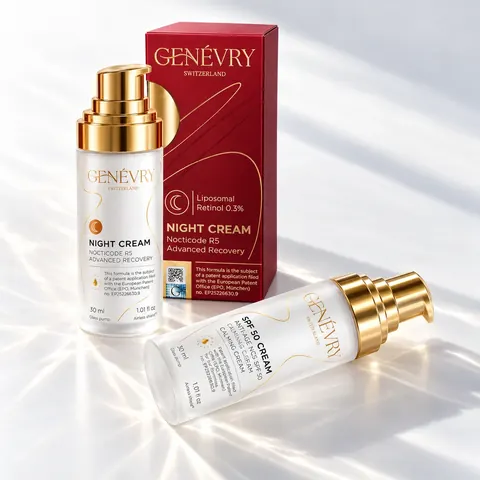
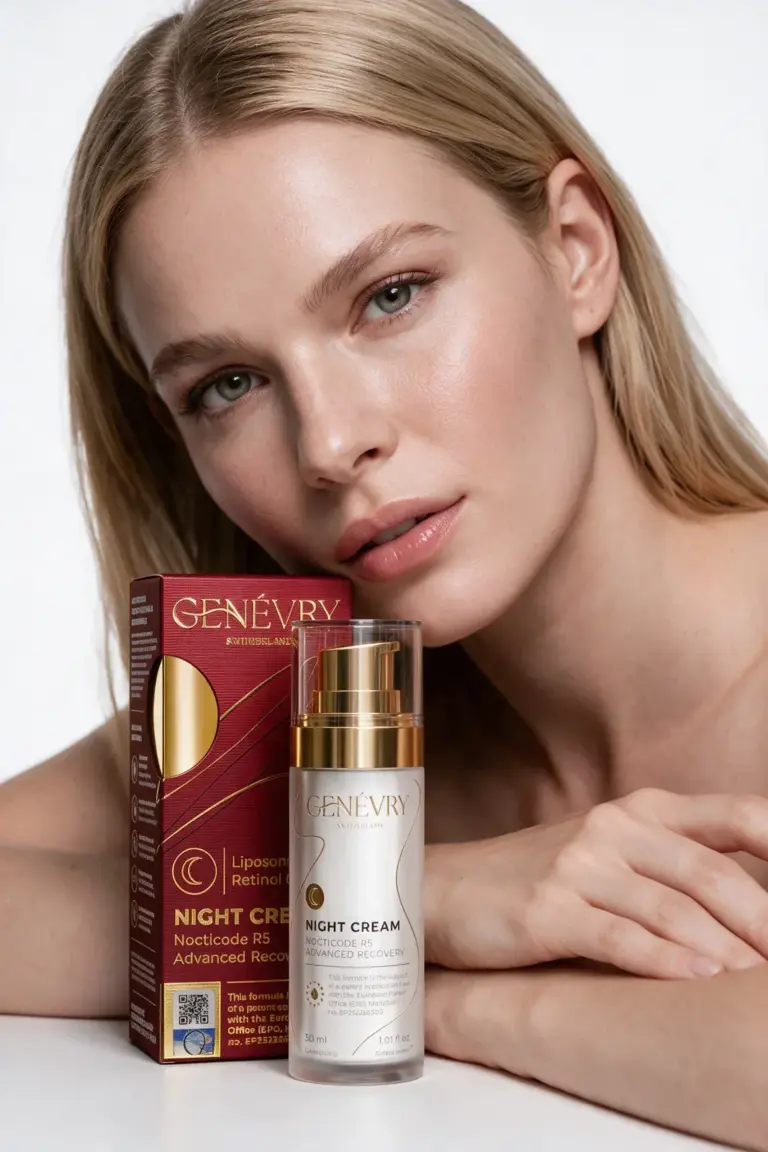
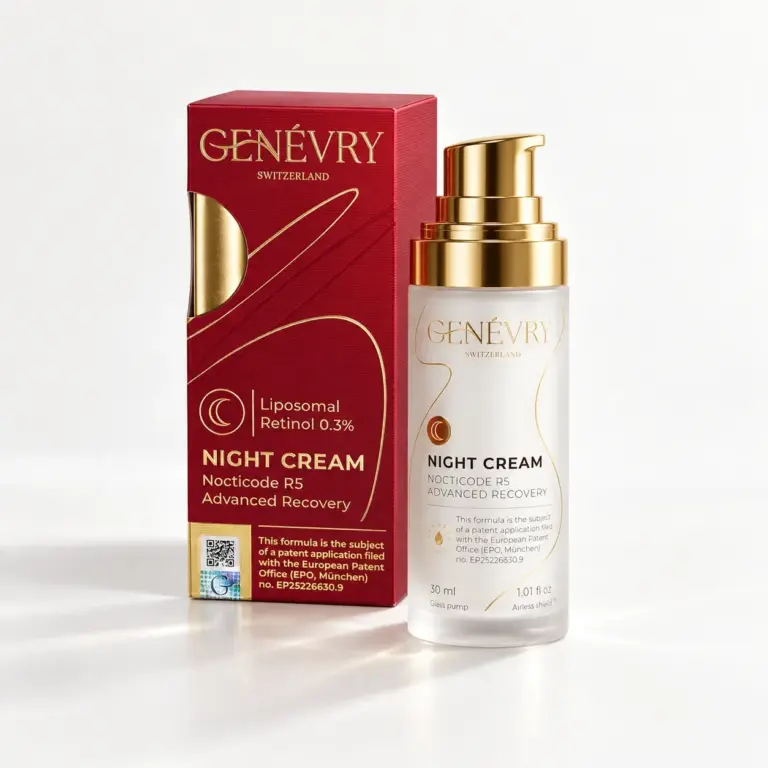
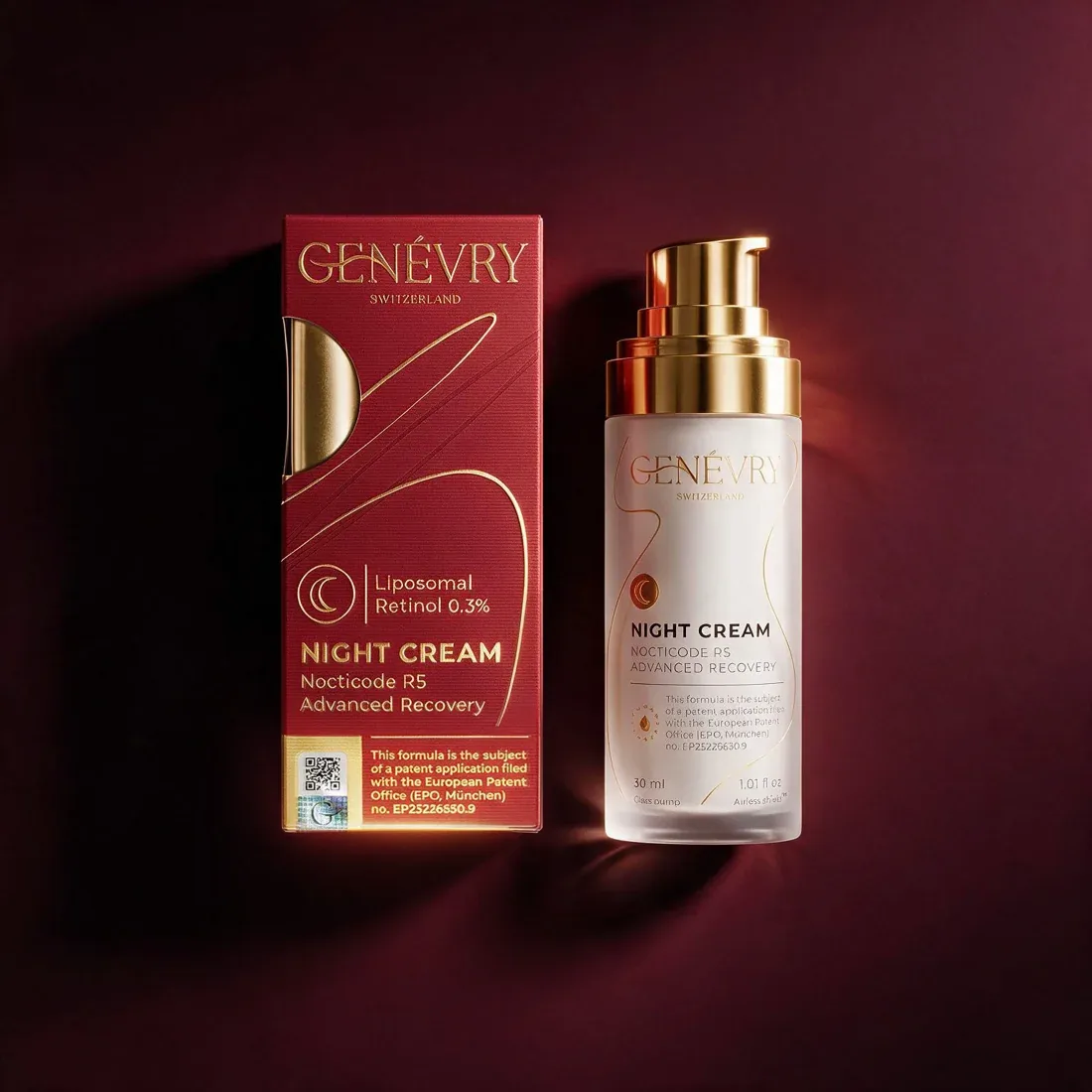
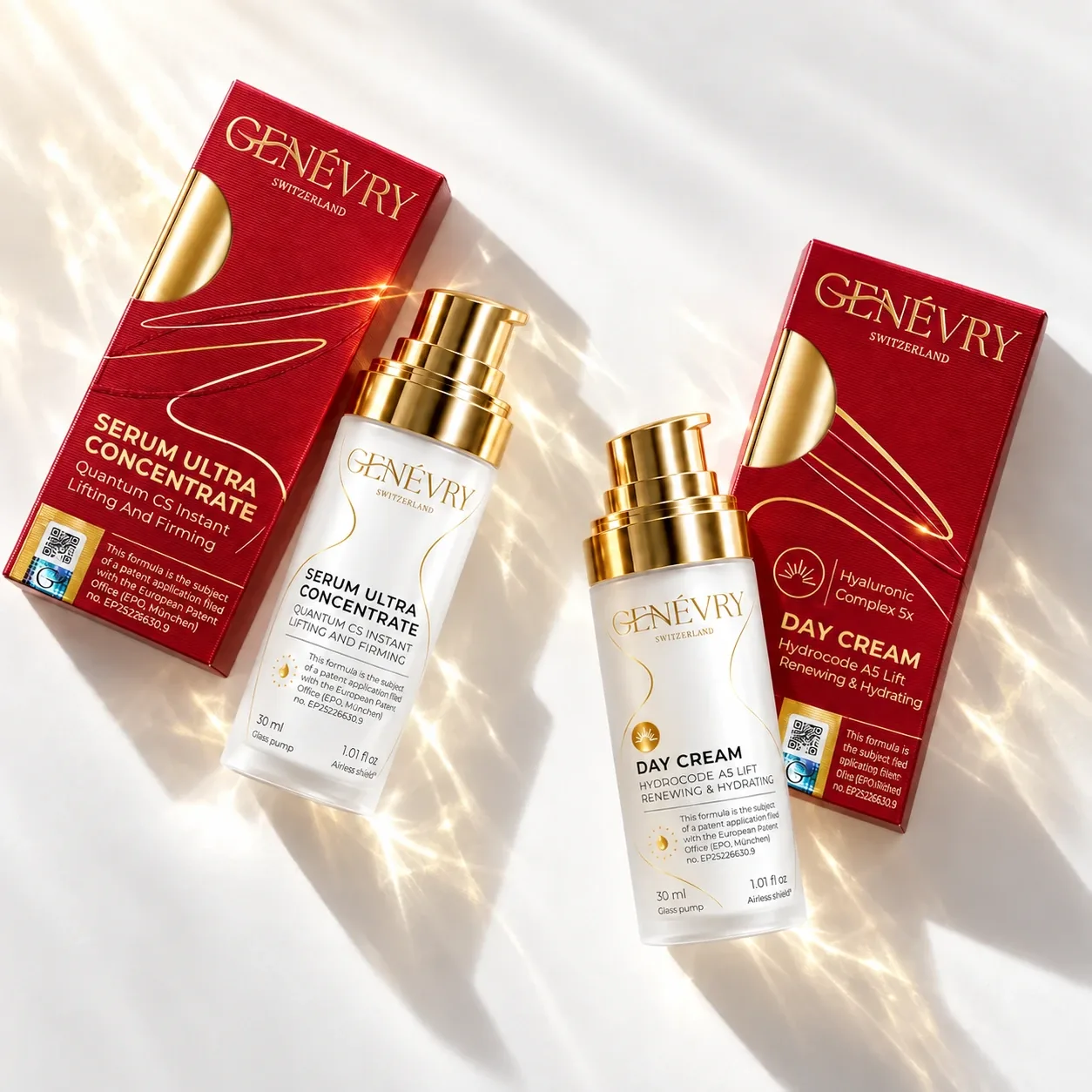
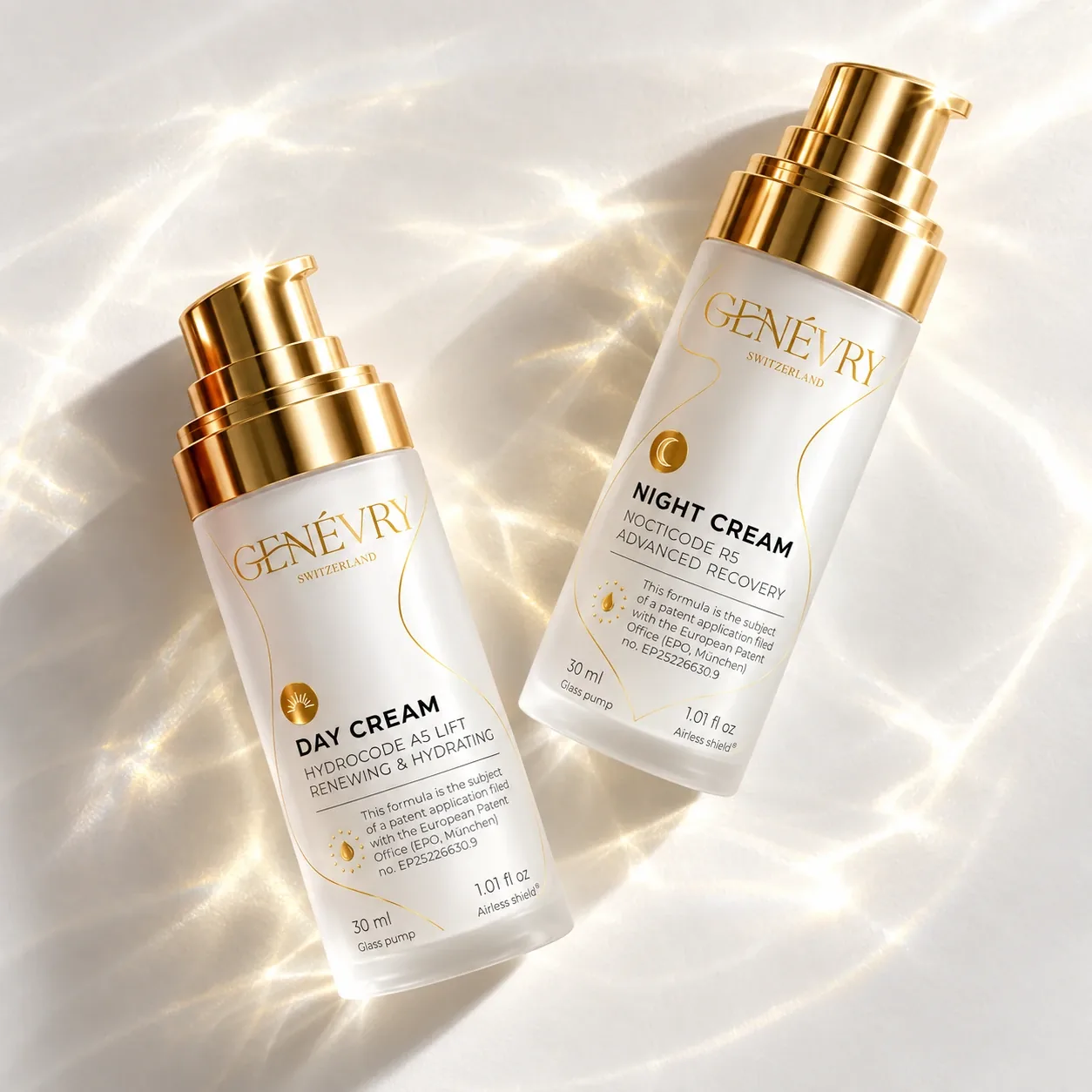
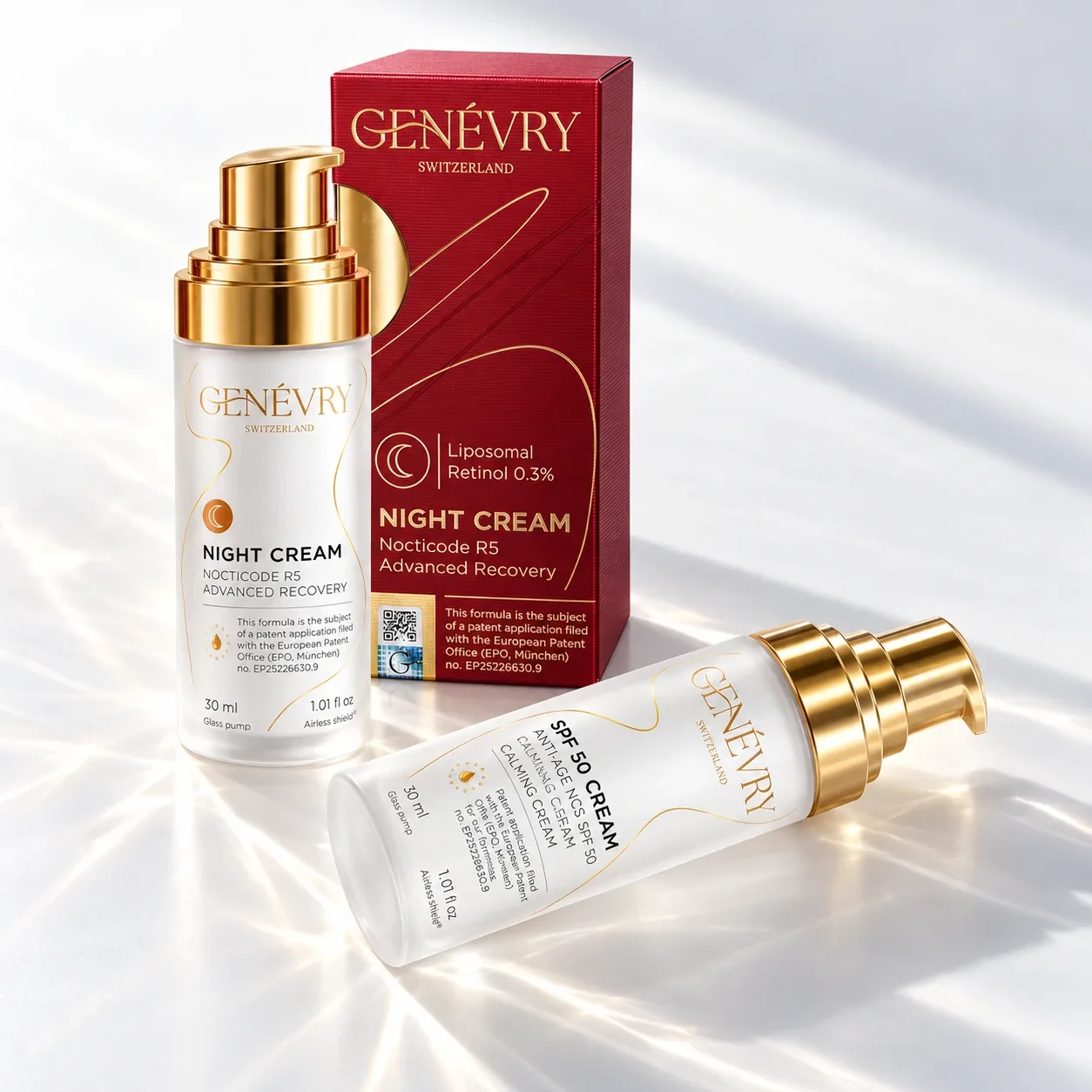
In the GENÉVRY ritual the retinoid has exactly one slot, the evening one. Nocticode R5 Advanced Recovery is a night cream with 0.3% liposomal retinol; the liposomal form means the ingredient sits inside a lipid shell, which is intended to shield it from oxidation and release it gradually. The formula is the subject of patent application EP25226630.9 (patent pending).
Retinol and sun exposure: two different mechanisms
The first mechanism is about the molecule. Retinol is photolabile — under UV and in contact with oxygen it breaks down relatively quickly. That is the one genuine reason retinoids are applied in the evening rather than the morning: not because “skin repairs itself at night”, but because in daylight the ingredient simply loses its stability. The same property explains the packaging — opaque bottles with an airless pump, never an open jar you dip a spatula into.
The second mechanism is about the skin. Retinol is not a classic photosensitiser in the pharmacological sense — it does not behave like certain medicines, where a quarter of an hour outdoors is enough to produce a reaction. But skin in the adjustment phase has a thinner, freshly renewed stratum corneum and responds more briskly: it flushes sooner, registers discomfort sooner, and copes less well with wind and cold. In practice that means lower sun tolerance for the first few weeks, not permanent hypersensitivity.
Why morning SPF is part of the course, not an add-on
There is a third reason, the least obvious and in practice the most important. A retinoid works on how fine lines and tone look — and UV radiation accounts for most of the visible change people tend to attribute to the passage of time alone. These are two processes pulling in opposite directions. Using retinol at night without sunscreen in the morning is working two shifts, one of which dismantles what the other built.
UVA deserves a note of its own here. Unlike UVB it does not swing dramatically between summer and winter, it passes through cloud, and it passes through glass — the car windscreen and the office window included. Which is why sunscreen in a retinol routine is not seasonal: if the retinoid comes back in November, the sunscreen comes back with it.
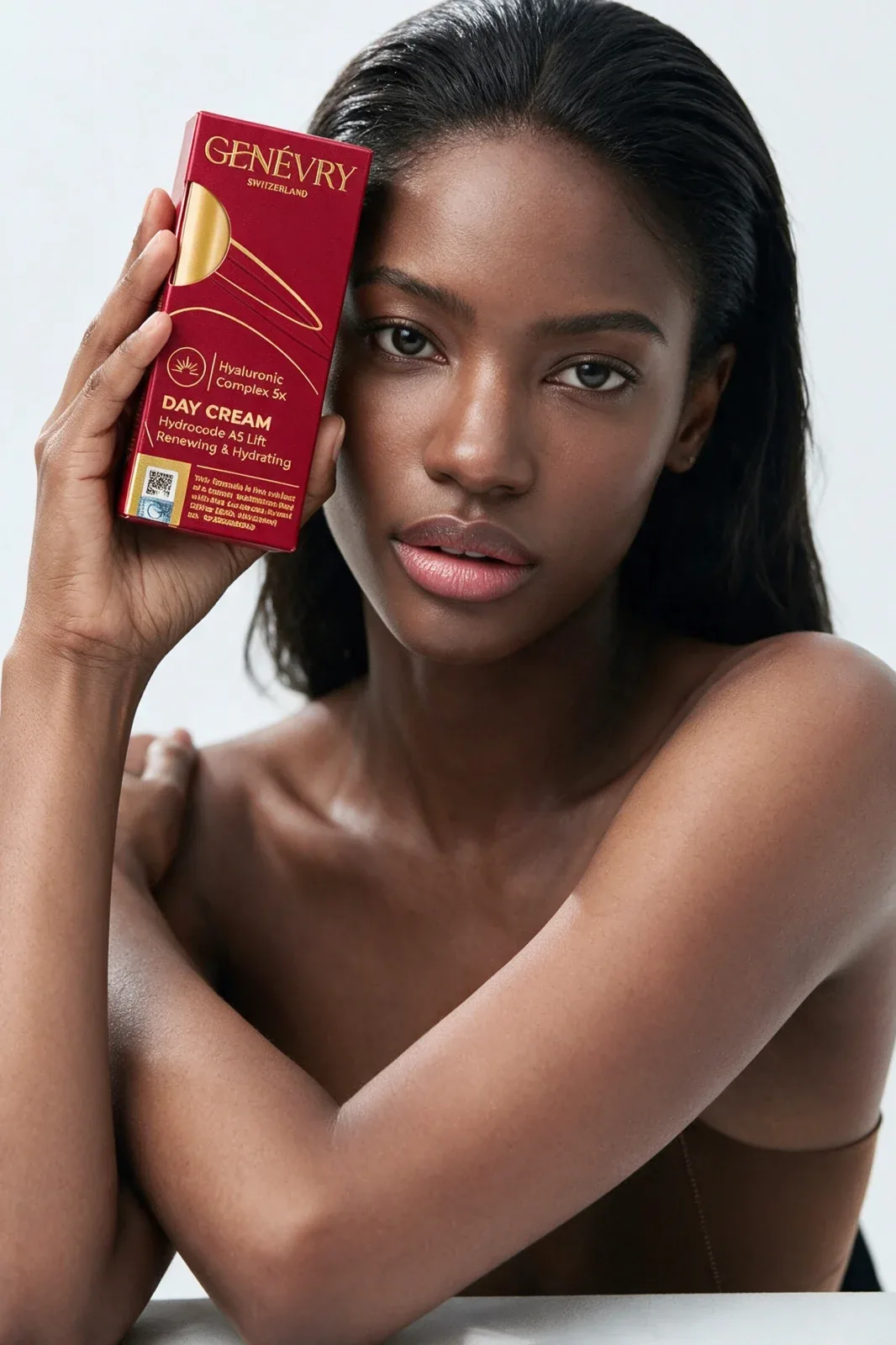
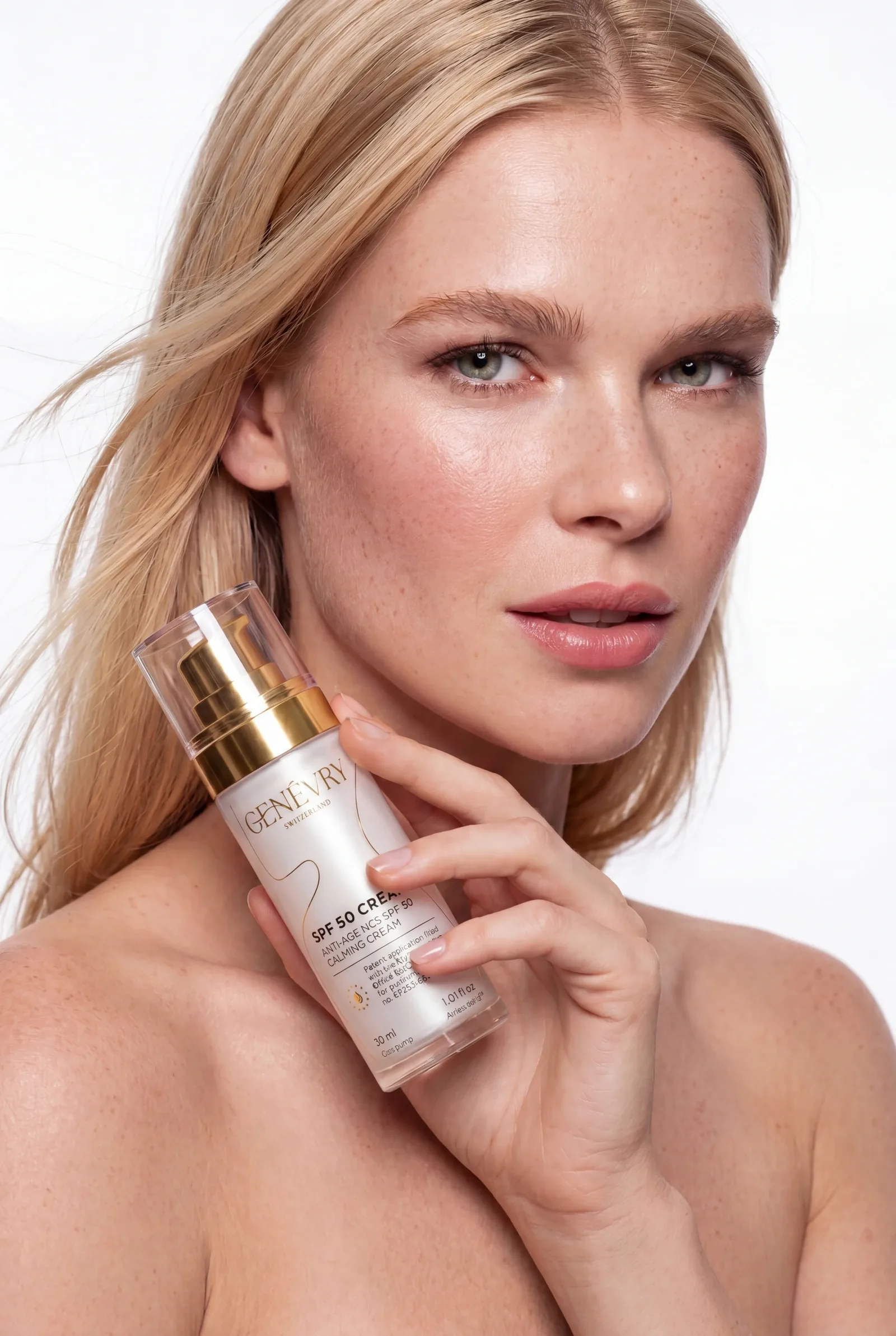
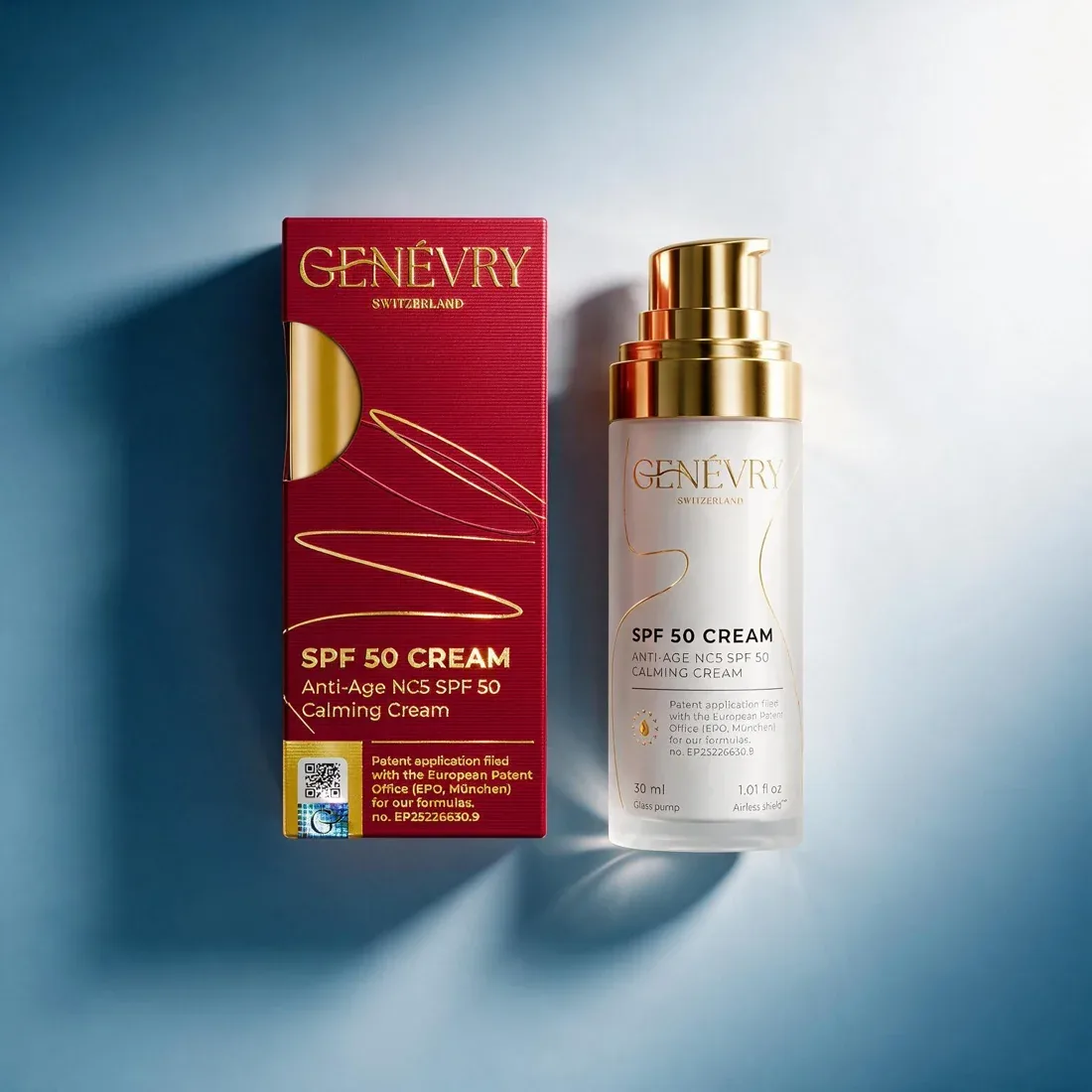
In this collection that step is Anti-Age NC5 SPF 50, the protective day cream applied as the final step of the morning routine. Both products are available together as The Night & Light Duo, 2 × 30 ml, and the pairing is not a marketing device: an evening retinoid and a morning filter are one routine running across twenty-four hours.
A four-week plan
The commonest mistake at the start is pace. The plan below is deliberately slow: it should get skin to daily use without a week lost to irritation halfway through.
| Week | Evening | Morning | What to watch |
|---|---|---|---|
| 1 | Nocticode R5 twice a week, on dry skin | Cleanse → SPF 50 as the last step | A mild tight feeling after application can be normal; stinging and burning redness are not |
| 2 | Every other evening | Unchanged | If flaking starts, skip one evening and return to the rhythm rather than stopping altogether |
| 3 | Four to five evenings a week | Unchanged | Do not add acids, scrubs or cleansing brushes on the same evenings |
| 4 | Nightly, if skin tolerates it | Unchanged | The instrumental measurements were taken at four weeks — that is the honest horizon for judging anything |
How much sunscreen, and how to apply it
A declared SPF value comes from a test in which the product is applied at 2 mg per square centimetre of skin. That is considerably more than most people use day to day, and protection does not scale linearly — a thin layer delivers a fraction of the declared figure.
In practical terms: for the face alone that is roughly a quarter of a teaspoon, visibly more than a dot on each cheek. An easier measure is the two-finger rule — two strips of product squeezed along the length of the index and middle fingers. Add the neck, the ears and the hairline, and with short hair the nape as well.
Sunscreen always goes last, after serum and cream, and it needs a moment to spread — do not work it in point by point, distribute it evenly. Under strong exposure the layer is renewed roughly every two hours, and after swimming or after drying your face with a towel. And one distinction that rescues the most routines: a day care cream does not replace a product with a declared SPF — they are two separate steps.
What the instrumental studies showed
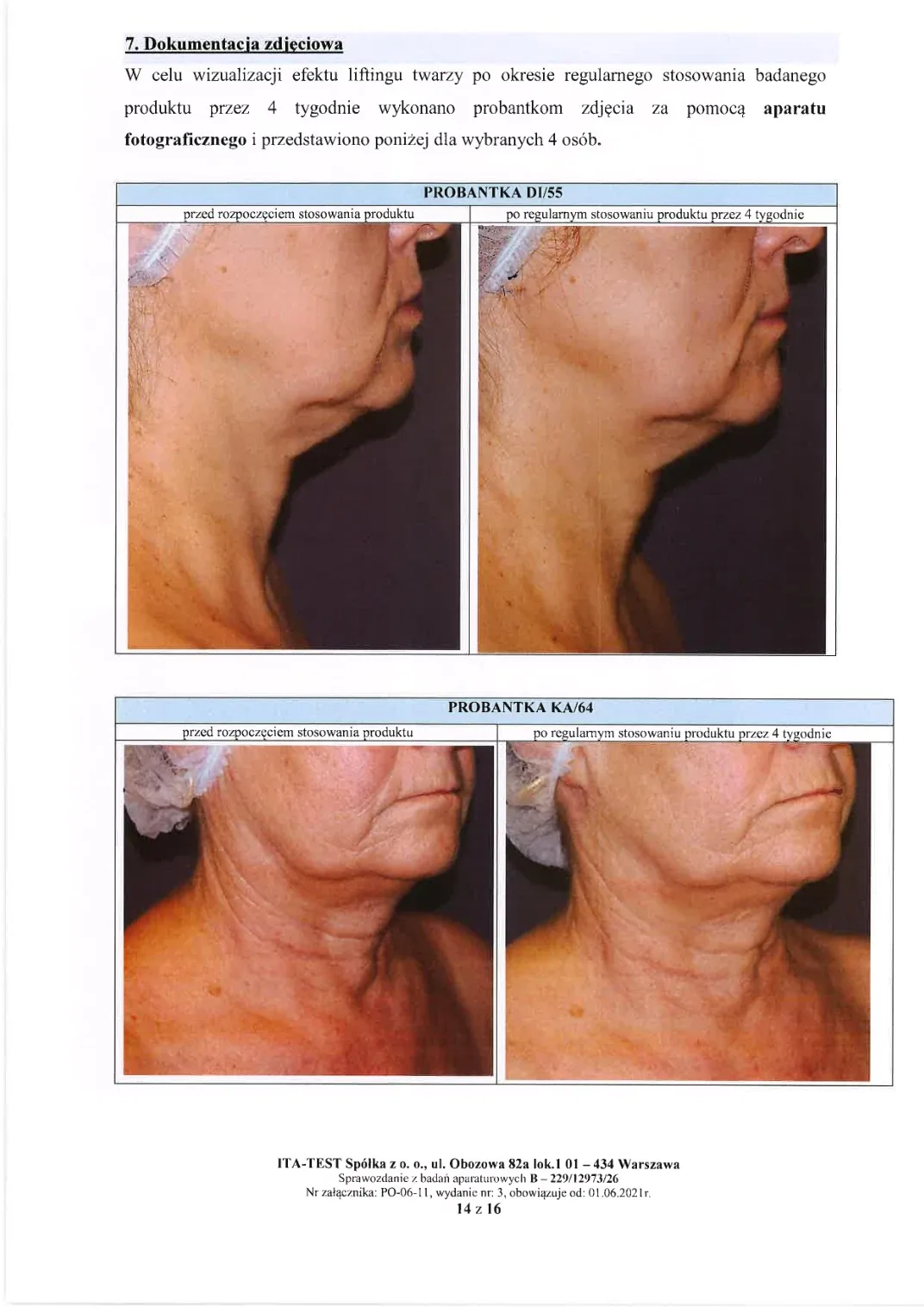
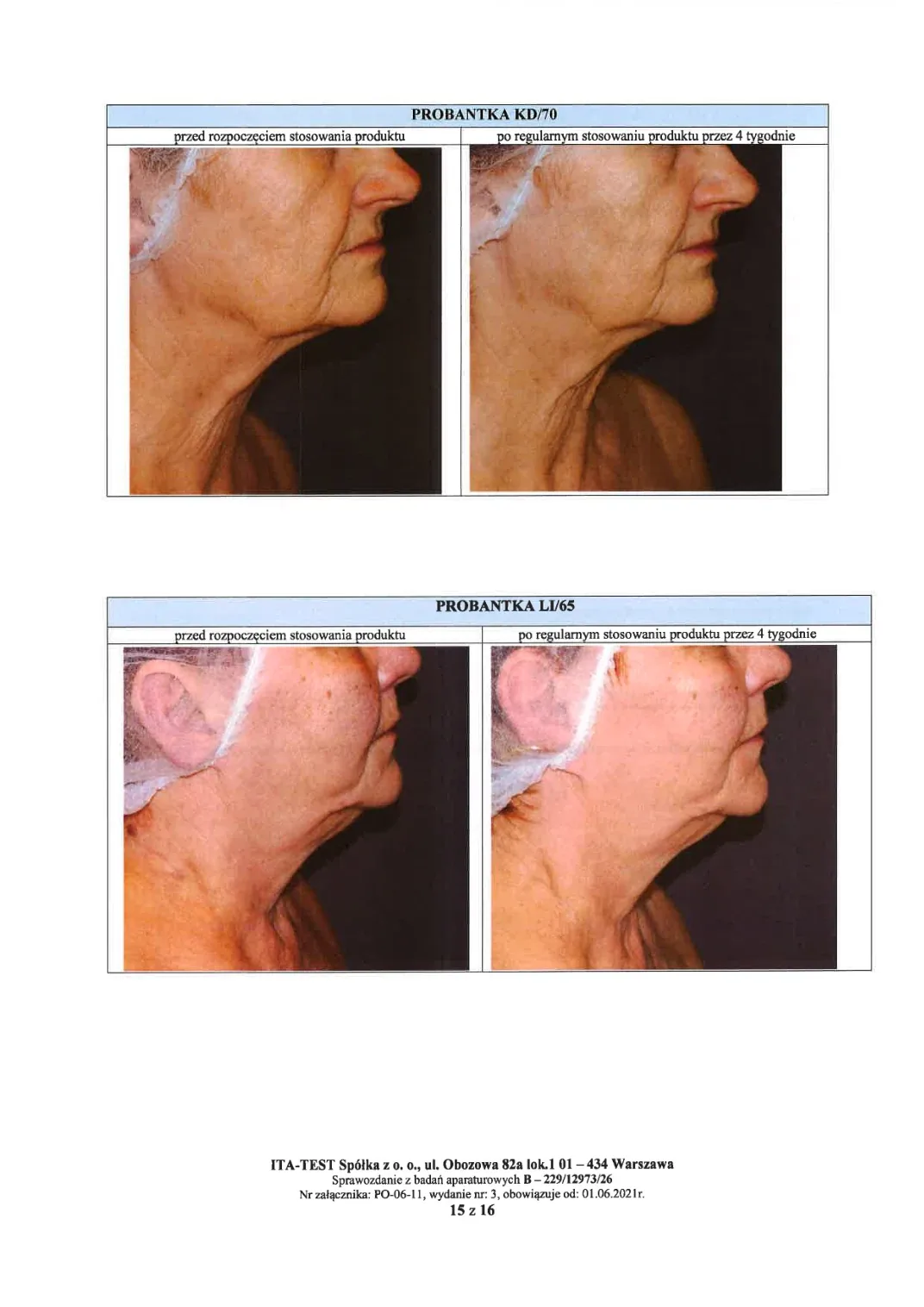
The results for both products in this pair. These are measurements on small groups — n=10 — so read them as a direction rather than a promise.
| Product | Result | Measurement context |
|---|---|---|
| Nocticode R5 (night cream) | −10% mean wrinkle length | 4 weeks · instrumental · n=10 · VISIOLINE VL650 |
| Nocticode R5 (night cream) | −8% mean wrinkle depth | 4 weeks · instrumental · n=10 · VISIOLINE VL650 |
| Nocticode R5 (night cream) | +38% mean skin hydration | 4 weeks · instrumental · n=10 · Corneometer CM 825 |
| Nocticode R5 (night cream) | skin firmness 5–23%, mean +14% | 4 weeks · instrumental · n=10 |
| Anti-Age NC5 SPF 50 | +23% mean facial skin hydration | 3 weeks · instrumental · n=10 · Corneometer CM 825 |
| Anti-Age NC5 SPF 50 | +21% mean skin smoothing | 3 weeks · instrumental · n=10 |
| Anti-Age NC5 SPF 50 | −7% mean melanin in pigmentation spots | 3 weeks · instrumental · n=10 |
Mean wrinkle length fell from 2.08 to 1.88 mm, and a reduction in length and depth was recorded in 9 of 10 participants. Two figures are often read the wrong way: on the sunscreen, +23% refers to hydration and not to sun protection — protection is a separate declared value, SPF 50; and −7% is the change in melanin measured inside pigmentation spots, not seven per cent fewer spots.
Frequently asked questions
Does retinol really make skin sun-sensitive?
Not in the way certain photosensitising medicines do. For the first weeks of a course, though, skin is more reactive, because the stratum corneum is freshly renewed and thinner. Add the photolability of the molecule itself and the rule holds regardless of how well your skin tolerates the product: retinoid at night, sunscreen in the morning.
Can I use retinol in summer and on holiday?
For ordinary city life, yes, provided the sunscreen is consistent. For several days of intense exposure — a beach, the mountains — it is more sensible to pause and return to the retinoid afterwards at a reduced frequency. Freshly tanned or sun-irritated skin is a poor moment for retinol.
Retinol in pregnancy and while breastfeeding?
Retinoids are not used during pregnancy or breastfeeding. The same applies if you are under dermatological treatment, taking photosensitising medication, or living with a skin condition — in each of those cases make the decision with your doctor or dermatologist rather than on the strength of an article.
How long before anything shows?
Hydration responds fastest, within days. The parameters covering smoothness and the look of wrinkles were measured at three and four weeks of regular use, and that is the fair moment to assess anything. The first fortnight is mostly the skin adjusting.
Retinol and sun exposure, then, is not a prohibition but a question of scheduling. The retinoid at night, because that is when it is stable. Sunscreen in the morning, because without it the routine works against itself. Everything else — concentration, brand, price — only starts to matter once those two are in place.
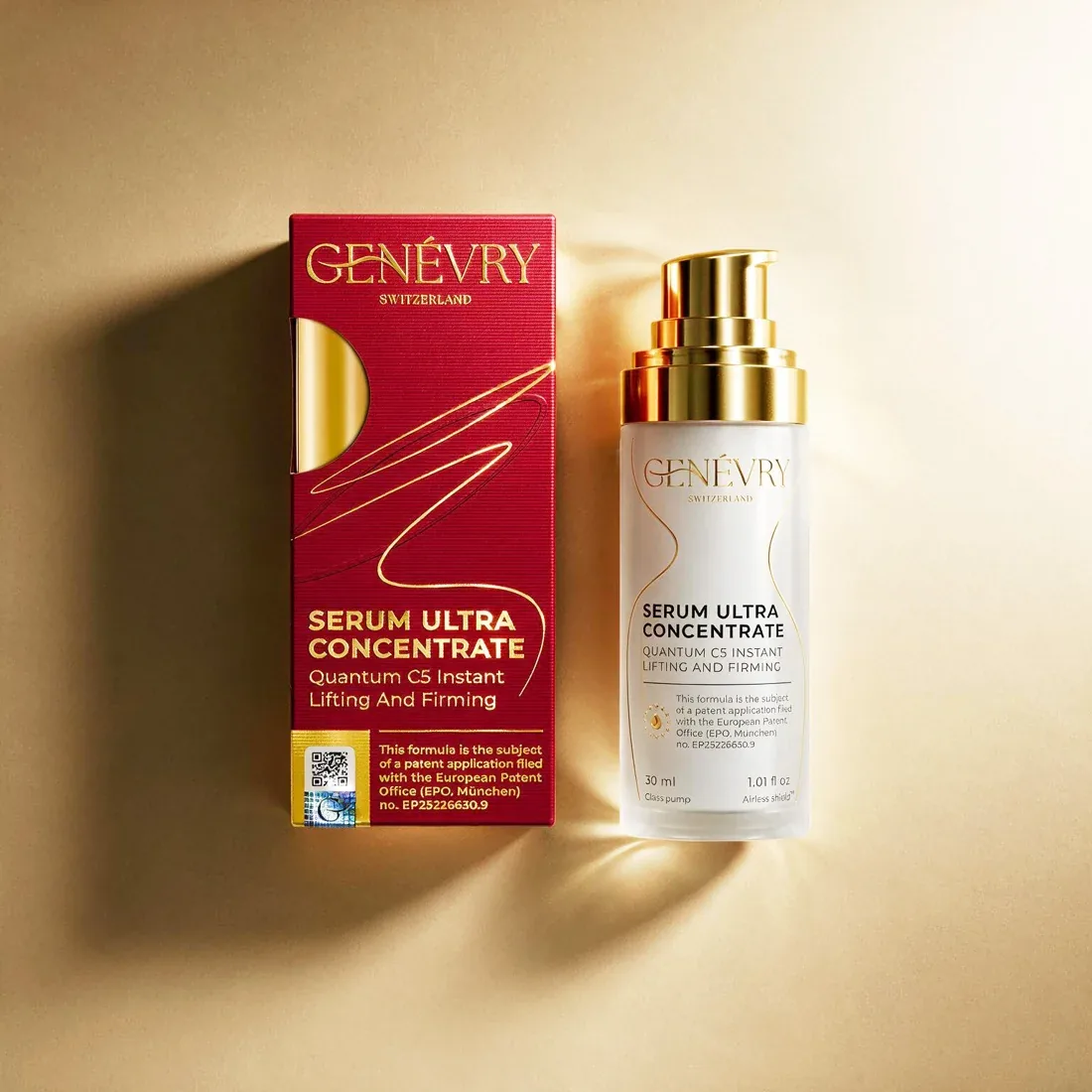
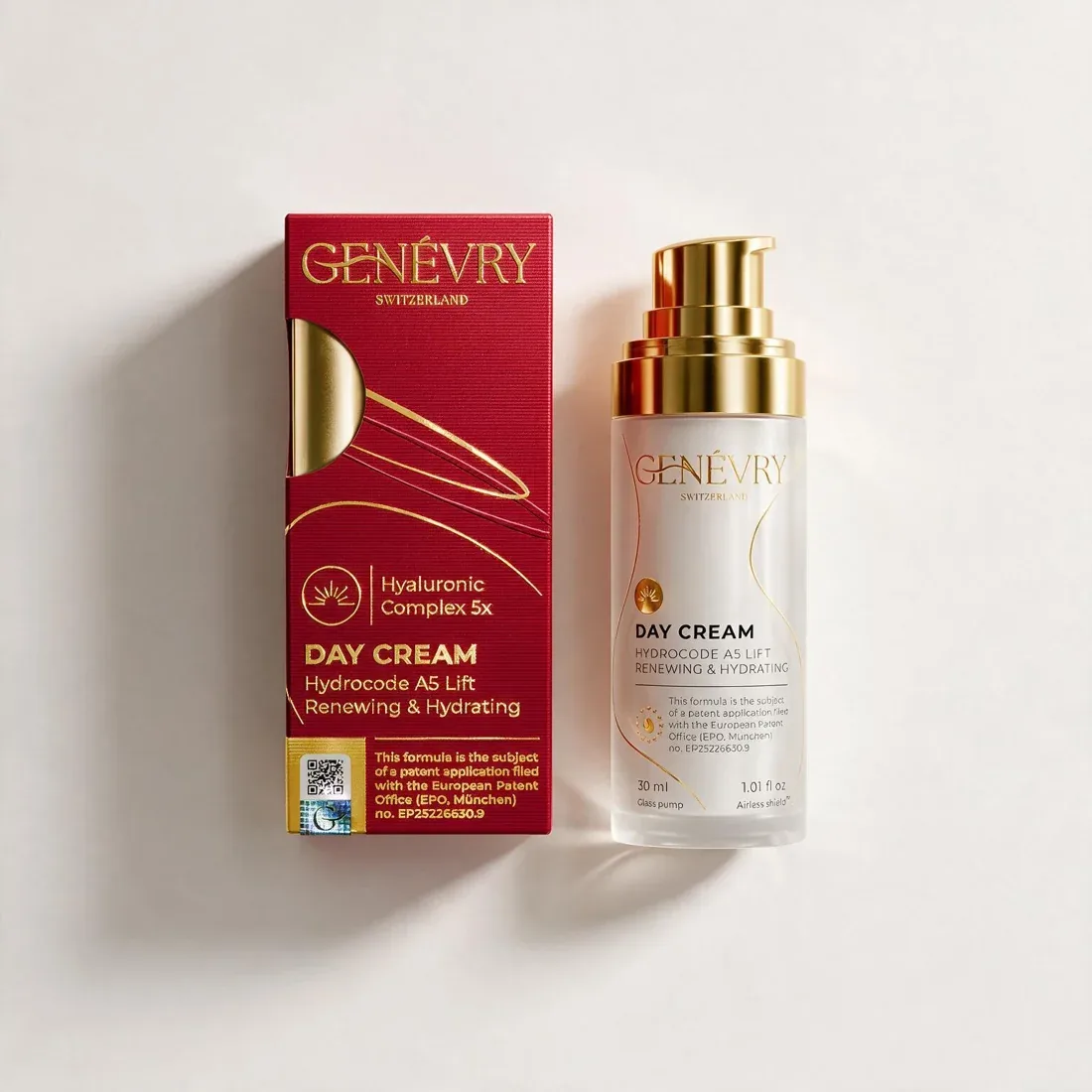
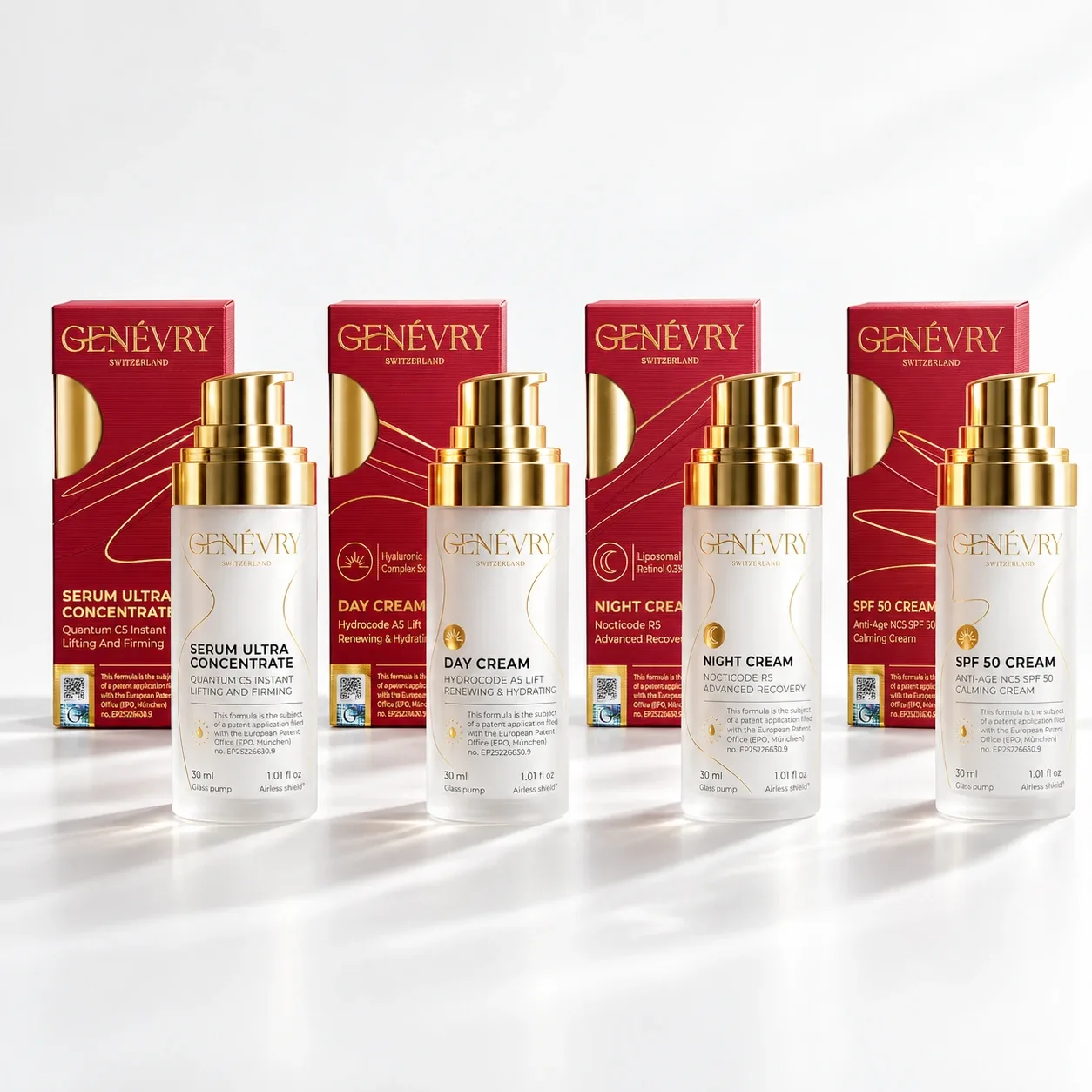
The formulas in this article
Cosmetic product. Individual results may vary.

 English / EUR
 English (US) / USD
 English (UK) / GBP
 Deutsch / EUR
 Deutsch (Schweiz) / CHF
 Français / EUR
 Italiano / EUR
 Español / EUR
 Nederlands / EUR
 Polski / PLN
 日本語 / JPY
 한국어 / KRW
 中文 / CNY
 العربية / AED
 English (Australia) / AUD
 English (Canada) / CAD
 Svenska / SEK
 Dansk / DKK
 Norsk / NOK
 Suomi / EUR
 Português / EUR
 Türkçe / TRY
 Čeština / CZK
 Magyar / HUF
 Română / RON
 Ελληνικά / EUR
 Slovenčina / EUR
 Hrvatski / EUR
 Slovenščina / EUR
 Lietuvių / EUR
 Latviešu / EUR
 Eesti / EUR
 Български / EUR
 Українська / EUR