Liposomes in skincare: what they are and why formulators use them
A phospholipid vesicle smaller than a micrometre. What encapsulation changes in a formula, how to recognise it on an INCI list and where it works in the GENÉVRY ritual.
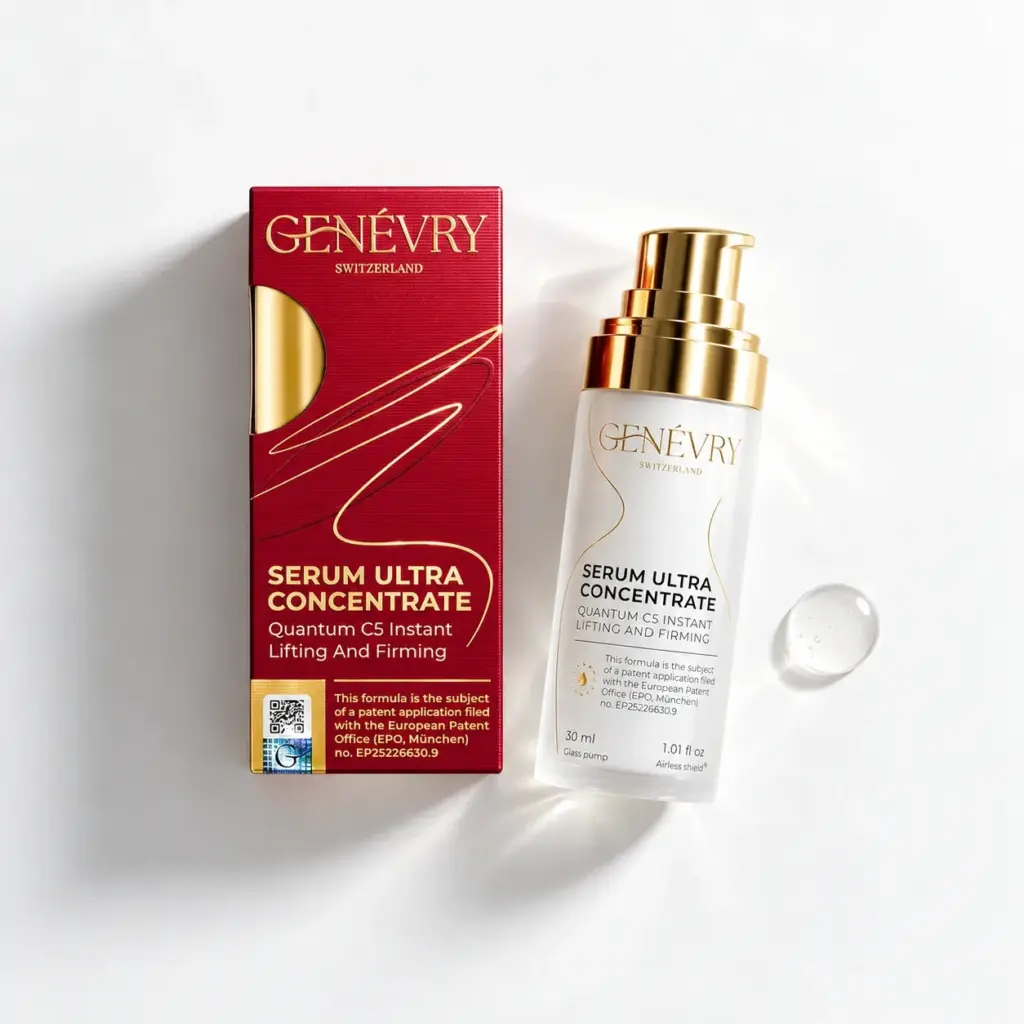
Liposomes in skincare turn up on packaging as shorthand for a modern formula, usually without a word of explanation. They are not an active ingredient but a way of packing one: a microscopic vesicle in which an active waits out the months inside the bottle, then spreads across the skin. Quite often the quality of a cream is decided right here: not by what made it onto the ingredient list, but by the state it is in at the last dose.
What liposomes in skincare actually are
A liposome is a vesicle built from a phospholipid bilayer — the same architecture that forms the membranes of our own cells. A single phospholipid has a head that likes water and two tails that avoid it. Dropped into a water phase, the molecules line up tail to tail with their heads facing out, and close themselves into a sphere. What is left in the middle is a watery core.
That simple geometry gives the liposome its most useful property: two different compartments at once. The aqueous core holds a water-soluble substance, ascorbic acid for example. The fatty wall holds a fat-soluble one, such as retinol. Diameters are measured in nanometres, millionths of a millimetre, and cosmetic vesicles typically run from a few dozen to a few hundred. The structures were described in the early 1960s by the British biophysicist Alec Bangham, and pharmaceutical science has been using them for decades. There is a fuller account in the Wikipedia entry on liposomes.
The phospholipids themselves usually come from lecithin, soy or sunflower. It is the same raw material that holds a sauce together in the kitchen; purified and forced into fine vesicles under high pressure, it becomes a carrier.
Why encapsulate an ingredient at all
Encapsulation is not decoration. It solves four concrete problems for the formulator, and each of them is visible to the naked eye in a badly made product.
Stability. Vitamin C oxidises on contact with oxygen, light and trace metal ions, and its breakdown products tint the formula yellow, then amber. A lipid shell limits that contact and slows the process down.
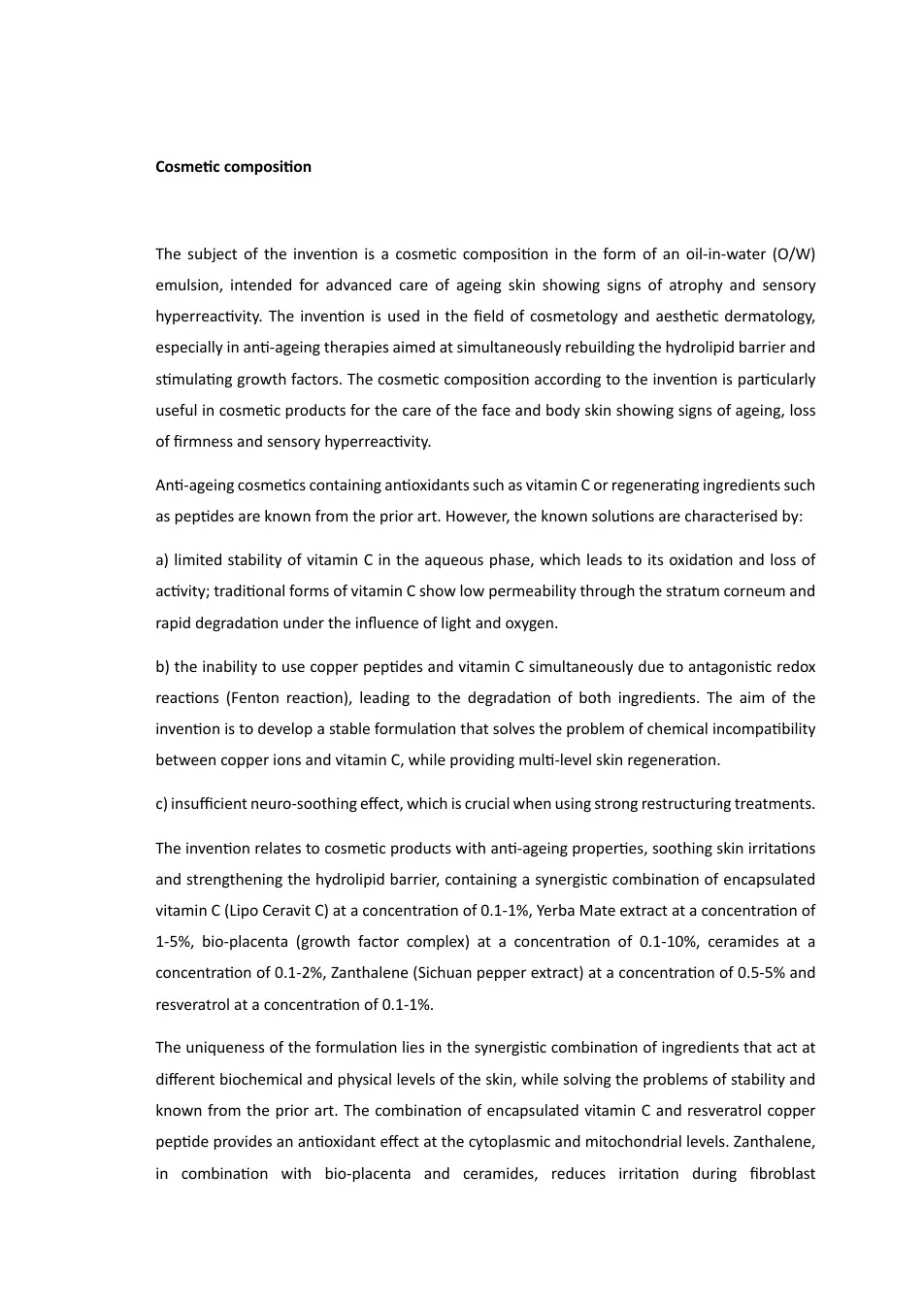
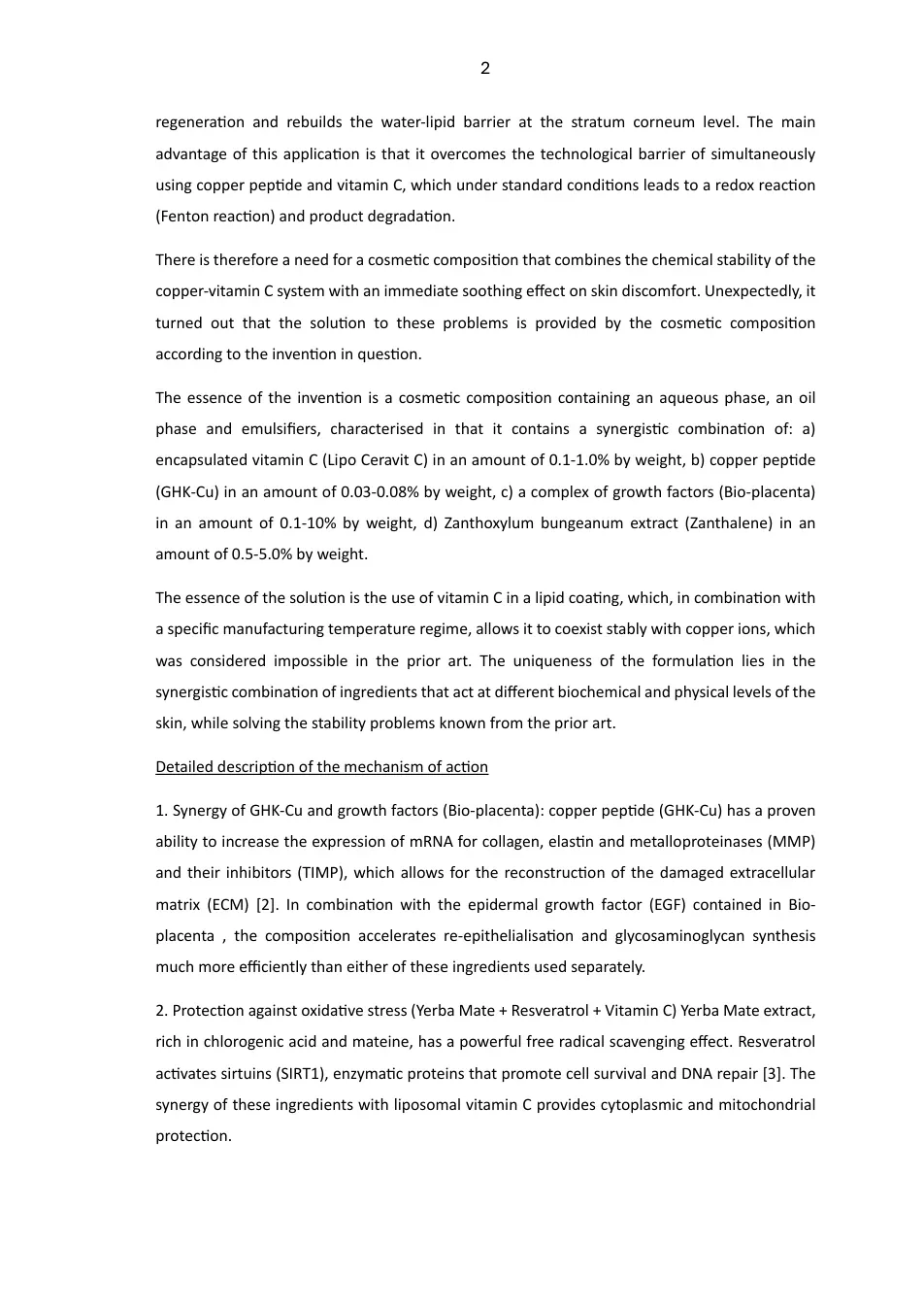
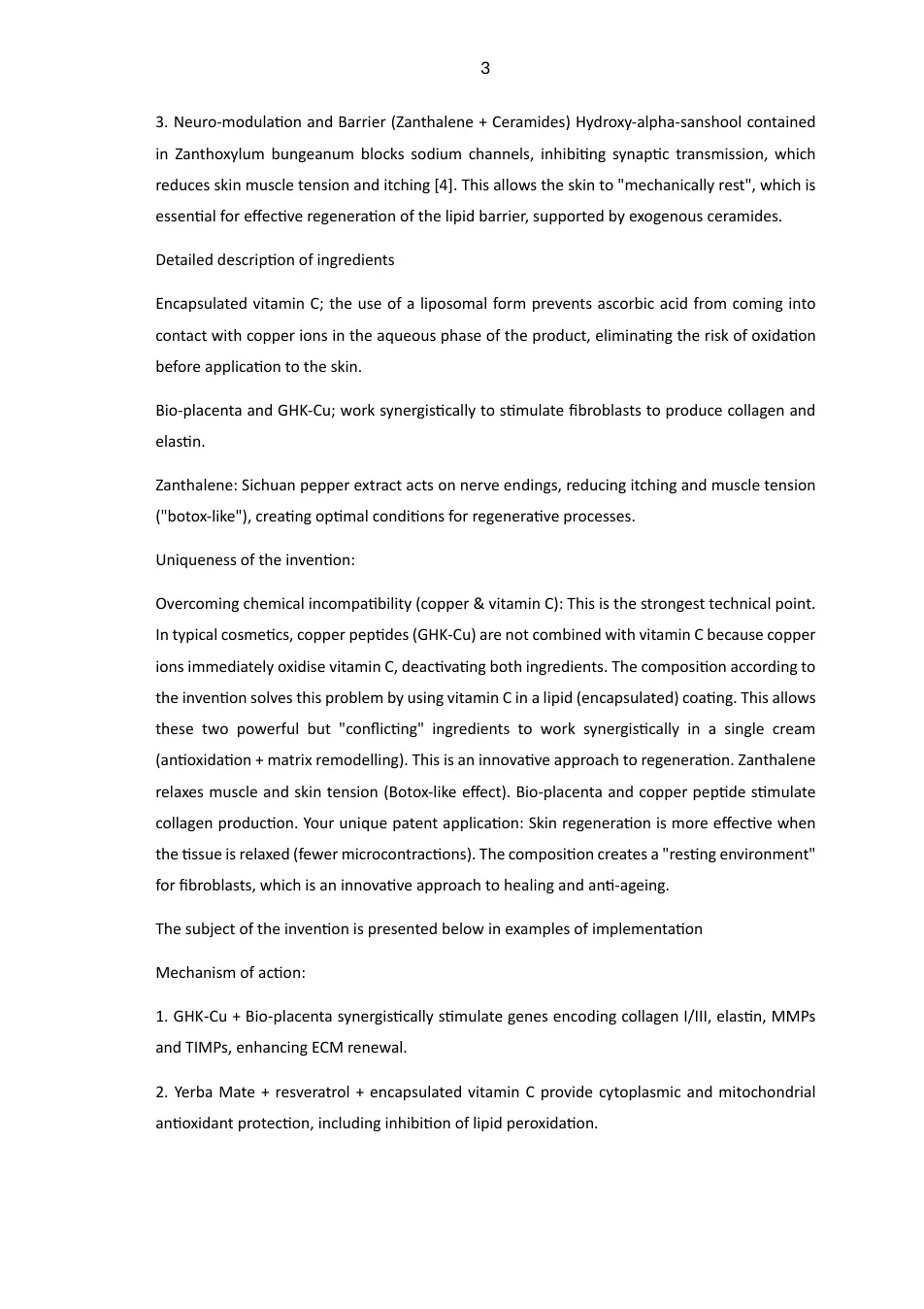
Compatibility. Some ingredients spoil each other. The classic case is copper ions, which accelerate the oxidation of vitamin C. Enclosing one of the two in a vesicle makes it possible to put both in the same bottle.
Release rate. An ingredient held inside a vesicle reaches the skin gradually rather than all at once. With retinol this matters in practice: skin takes that kind of introduction more easily.
Spread. Phospholipids are chemically related to the lipids of the stratum corneum. The formula distributes evenly and sinks in faster instead of sitting on the surface as a tacky film.
| The formulation problem | What encapsulation changes |
|---|---|
| Vitamin C oxidising and darkening | The shell limits contact with oxygen and light |
| Copper and vitamin C in one bottle | The two are physically separated within the formula |
| Retinol felt from the first evening | Gradual release, a calmer introduction |
| Stability forcing a low pH | More freedom to set pH closer to the skin’s own |
| A sticky layer left on the surface | Affinity with skin lipids, quicker, more even spread |
Liposome, emulsion and micelle — the difference
The three words get used interchangeably although they describe different things. An emulsion is a suspension of oil droplets in water, or the reverse; that is how most creams are built. A micelle is a single layer of surfactant molecules around an oily centre, which is what micellar water relies on. Only the liposome has a complete bilayer and an aqueous core — a partition that genuinely encloses something. Its close relative, the niosome, builds that wall from non-ionic surfactants instead.
How to spot liposomes on an INCI list
“Liposomal” is not an INCI name and does not have to appear anywhere on the box. Look for phospholipids instead: Lecithin, Hydrogenated Lecithin, Phosphatidylcholine, sometimes Hydrogenated Phosphatidylcholine. Their presence is necessary but not sufficient, since lecithin also serves as an ordinary emulsifier.
The second clue is position. Ingredients are listed in descending order of content down to the 1% threshold; below that line the order is free. A phospholipid right at the end, behind the colourants, is unlikely to be carrying the whole formula.
The third is what the brand is willing to say. An honest description names what has been enclosed and at what concentration; a formula sold on the phrase “liposomal technology” alone tells you nothing. Keep the claim in proportion, too: encapsulation helps a formula, it does not turn a cosmetic into a medicine.
Liposomes in the GENÉVRY ritual
In the GENÉVRY collection encapsulation does two jobs, one in the morning and one at night, for different reasons each time.
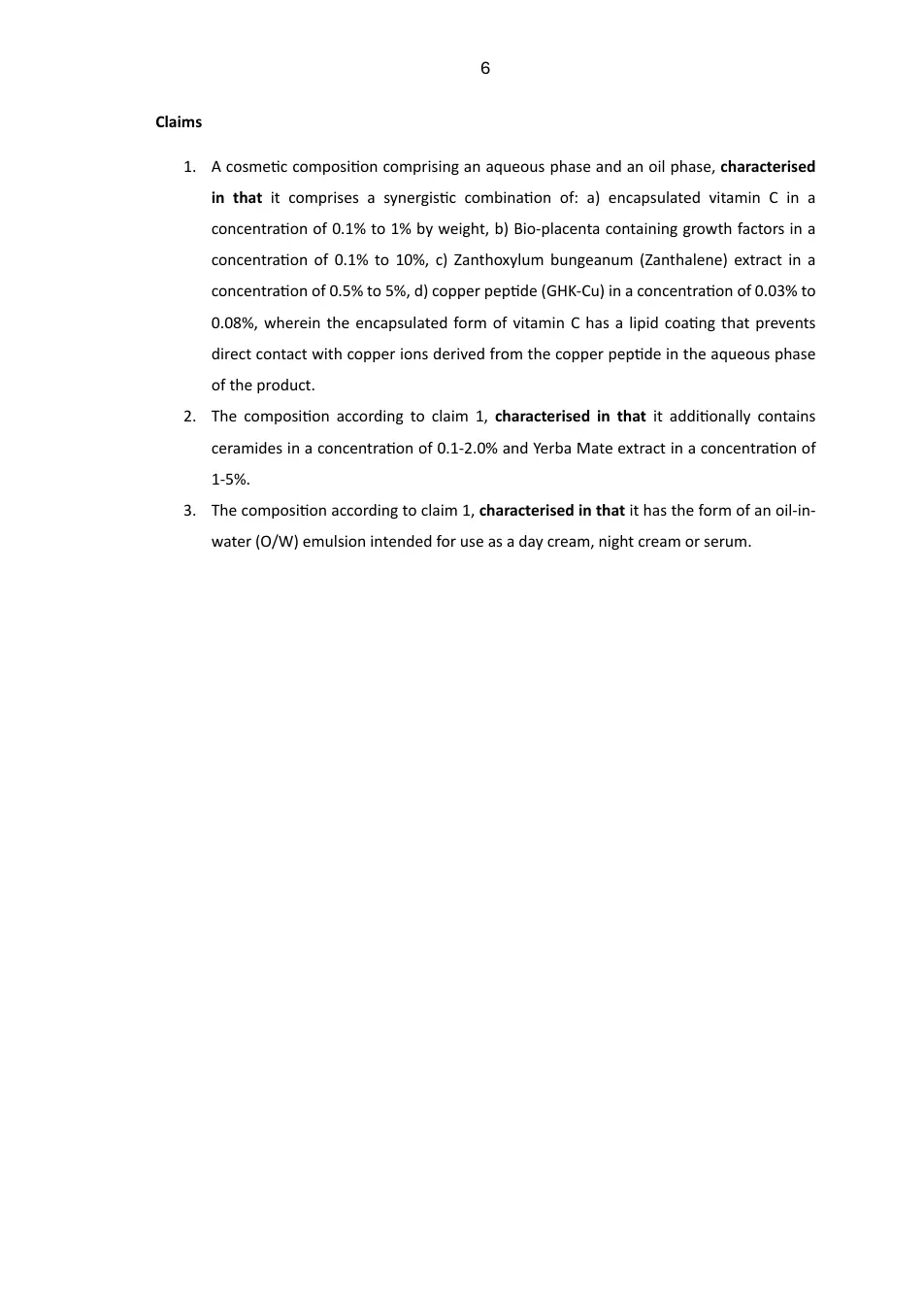
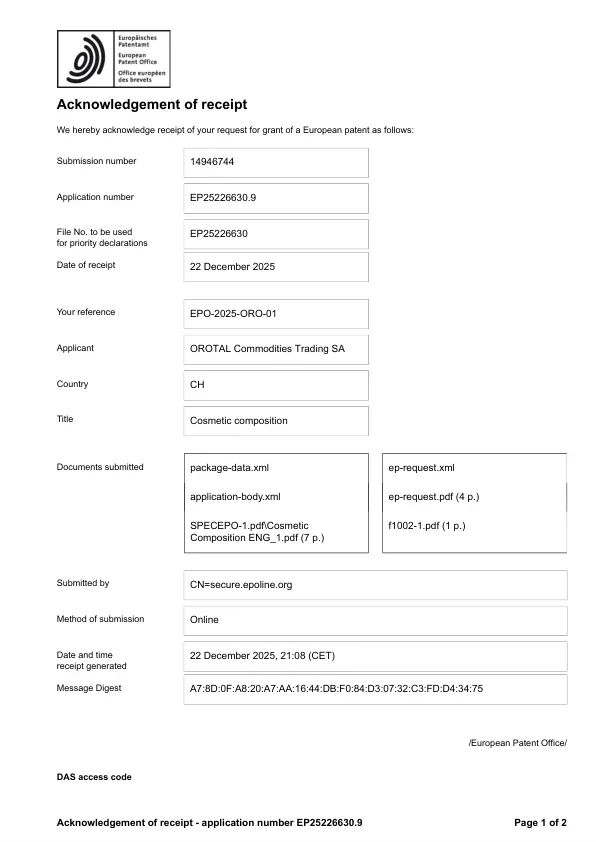
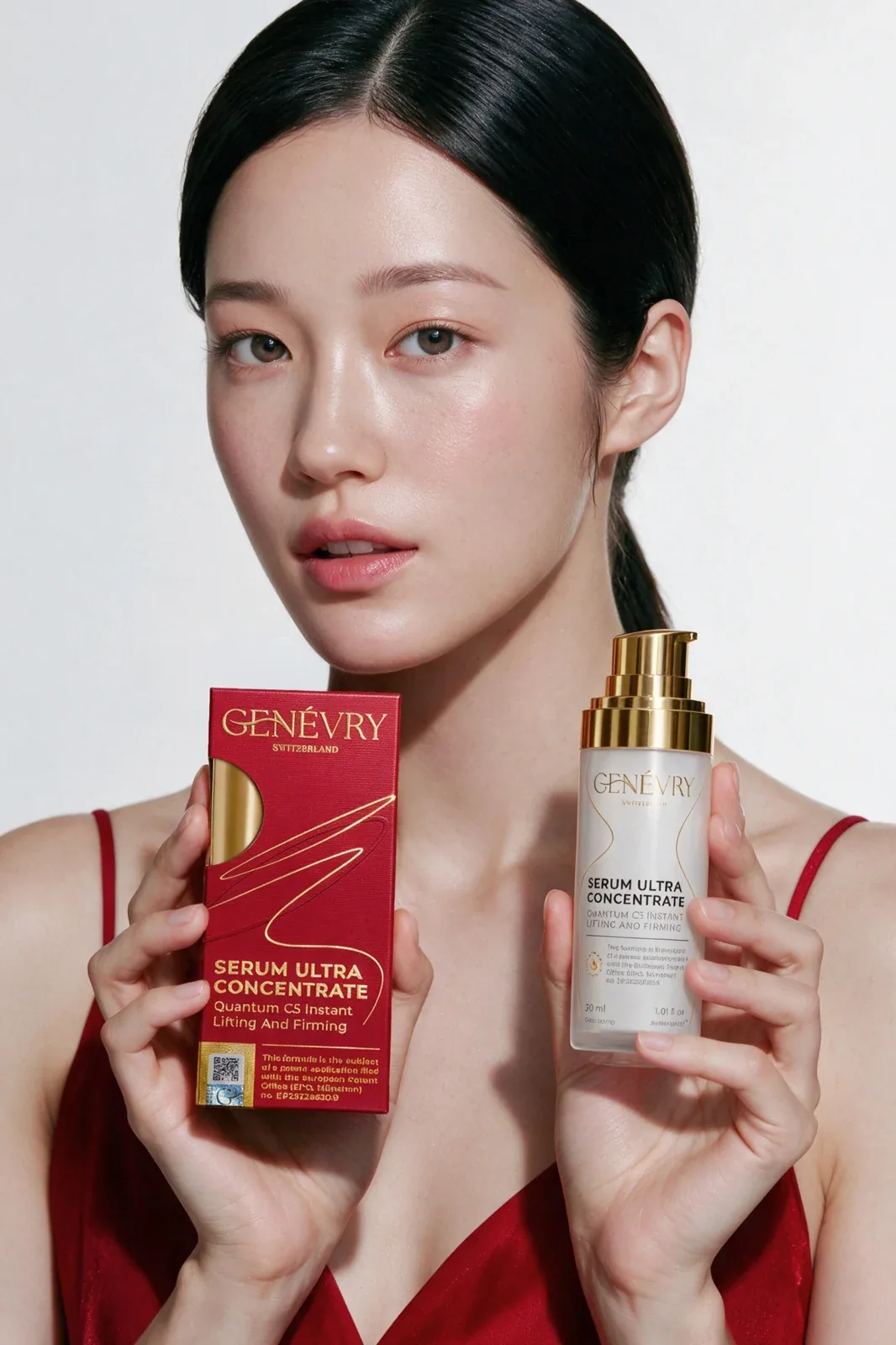
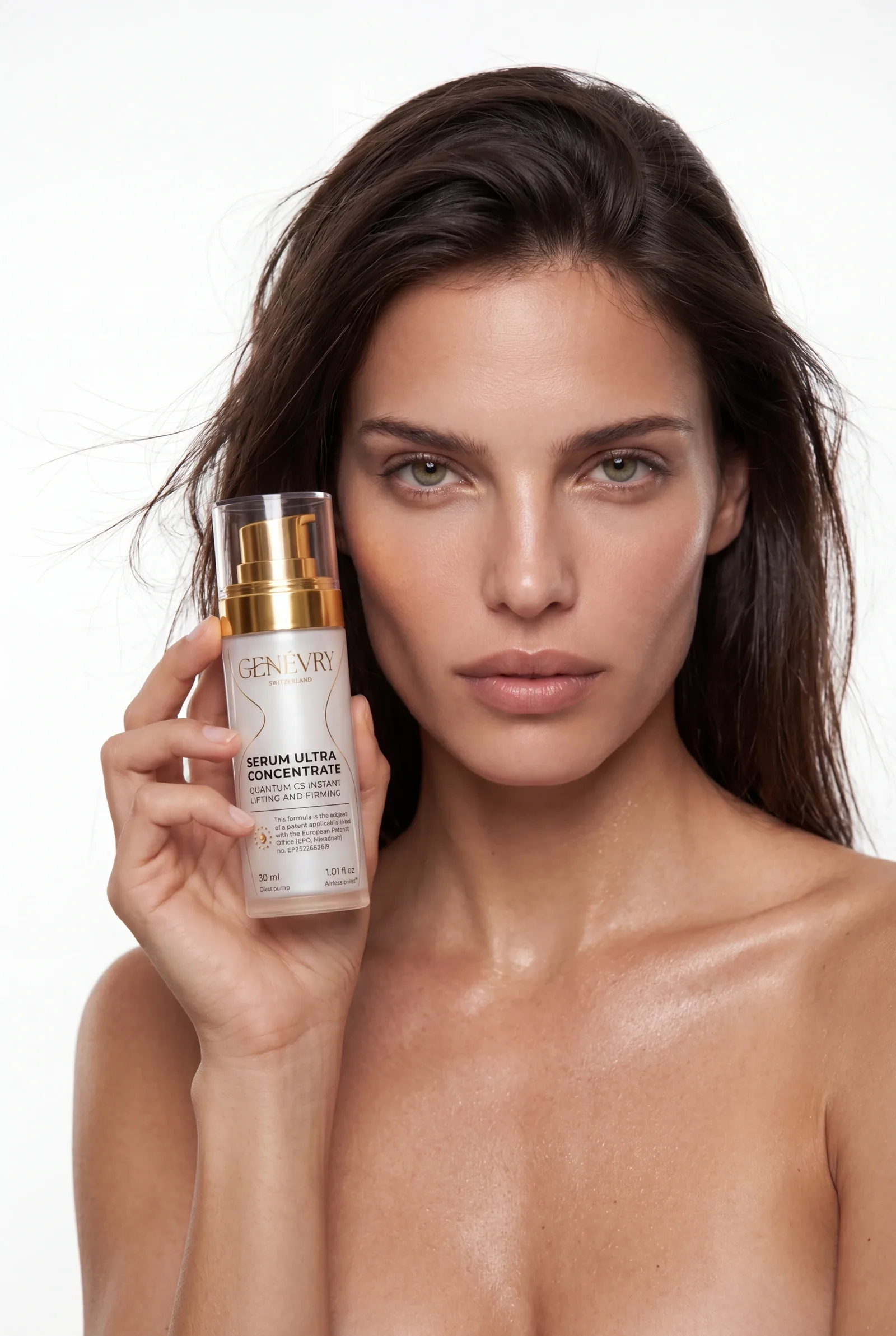
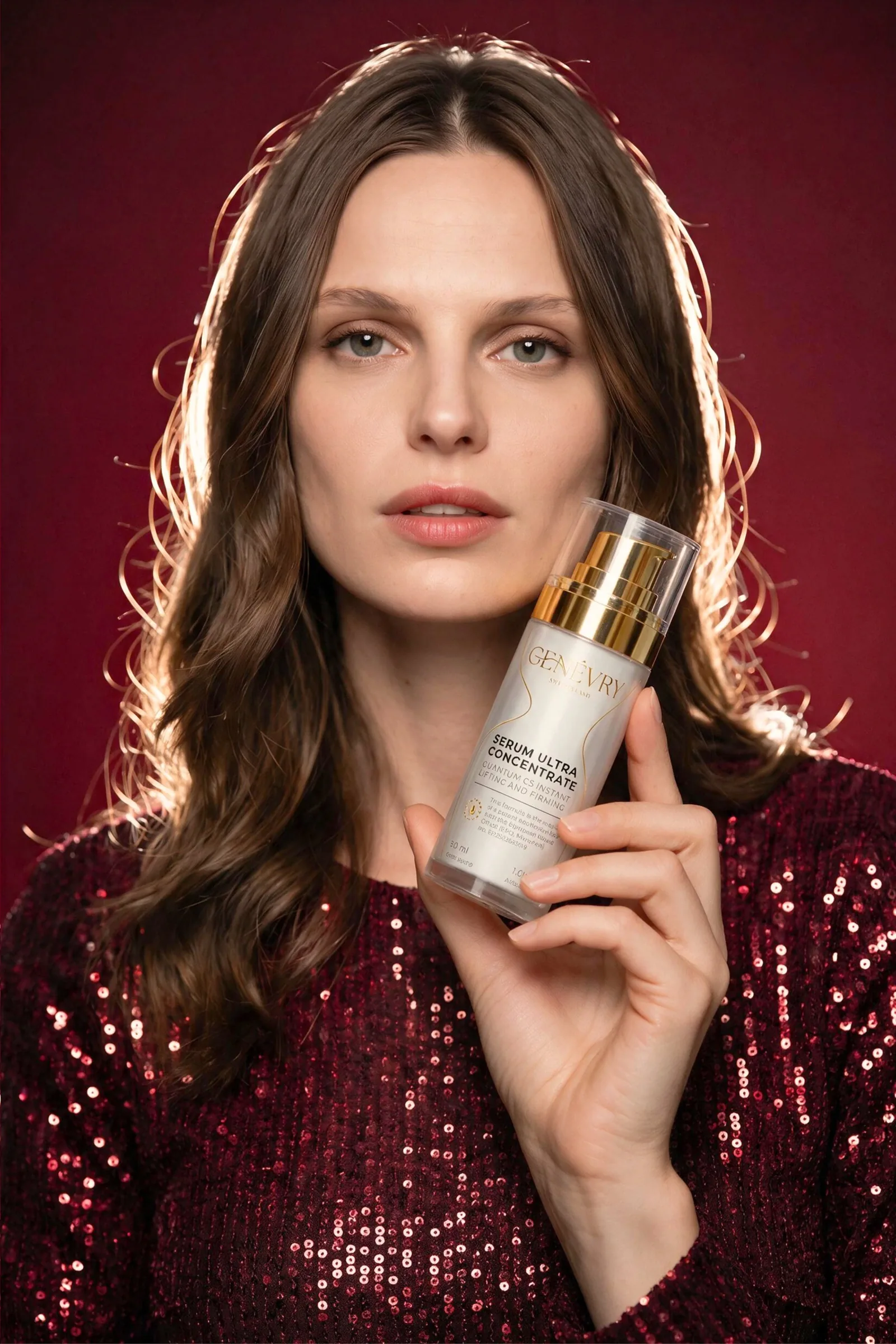
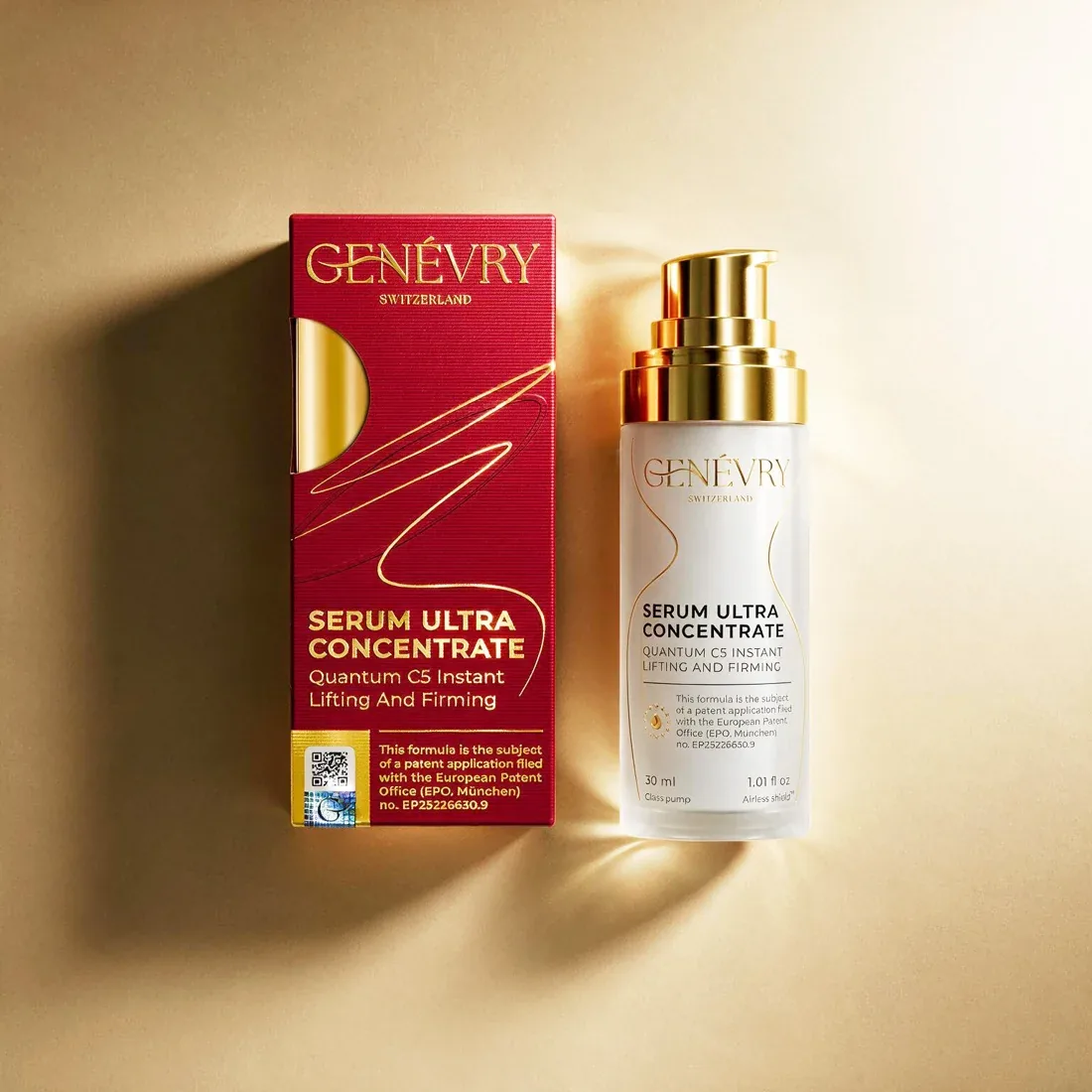
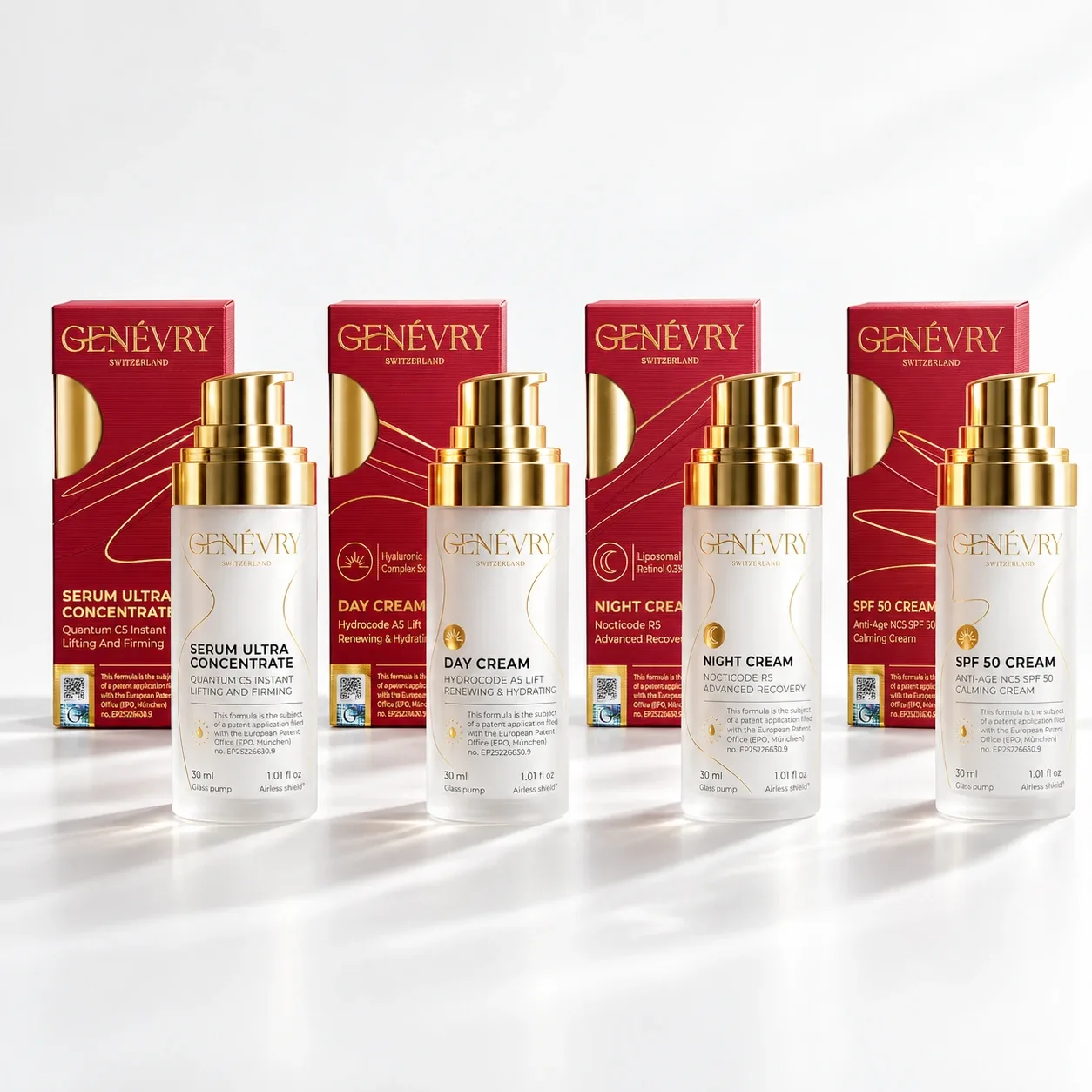
Morning: the Quantum C5 serum brings together the copper peptide GHK-Cu and liposomal vitamin C. The lipid shell is there to settle exactly the chemical conflict described above — copper ions against vitamin C. The approach is the subject of patent application EP25226630.9 filed with the European Patent Office, patent pending; an application, not a granted patent. In a four-week instrumental study with 10 participants, mean skin hydration rose by 33% from baseline (Corneometer CM 825), with an increase recorded in every participant. The SEsm smoothing parameter improved by 5–26%, with a group average of +12% (Visioscan VC 98). The figures describe the finished formula, not the carrier on its own.
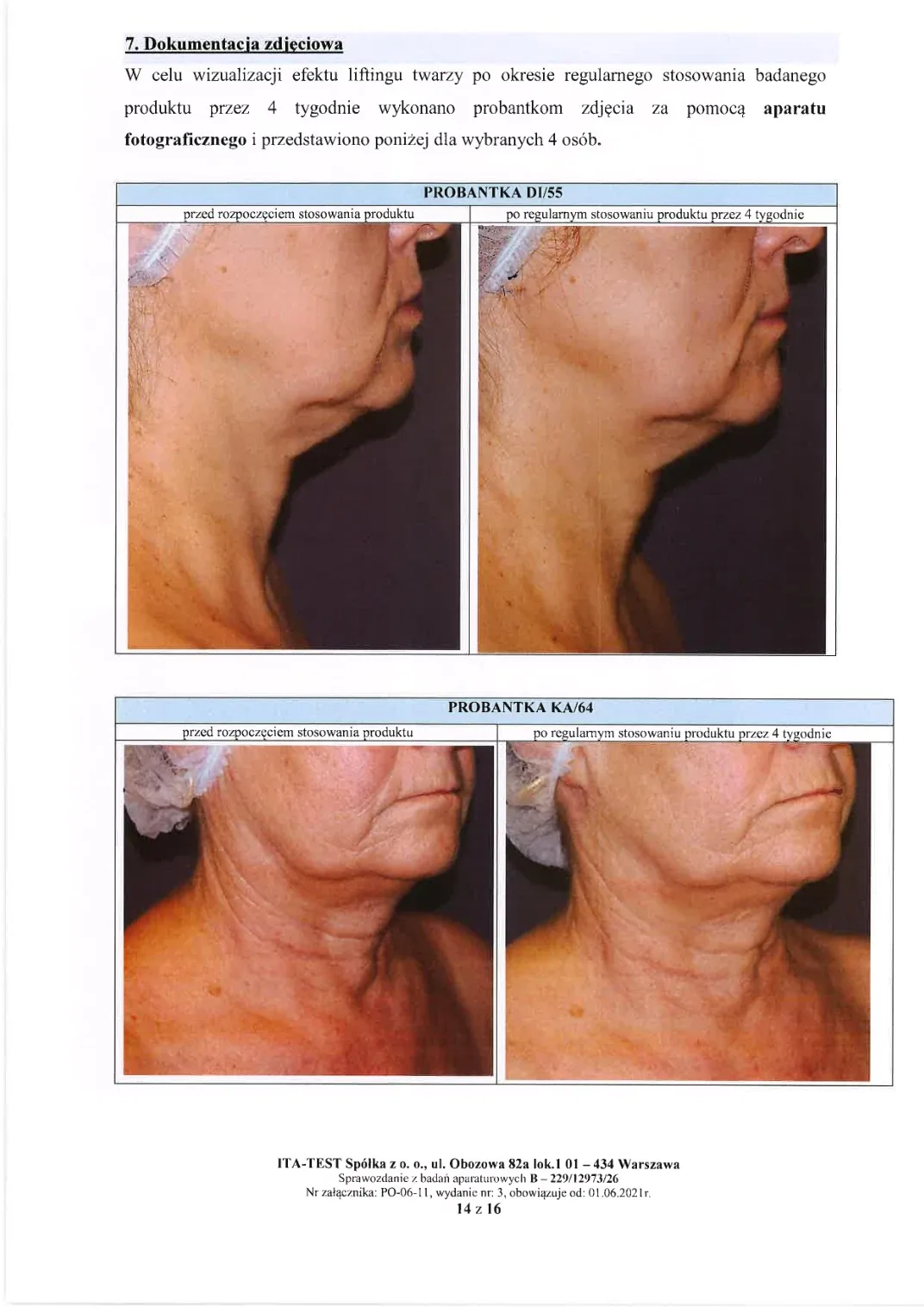
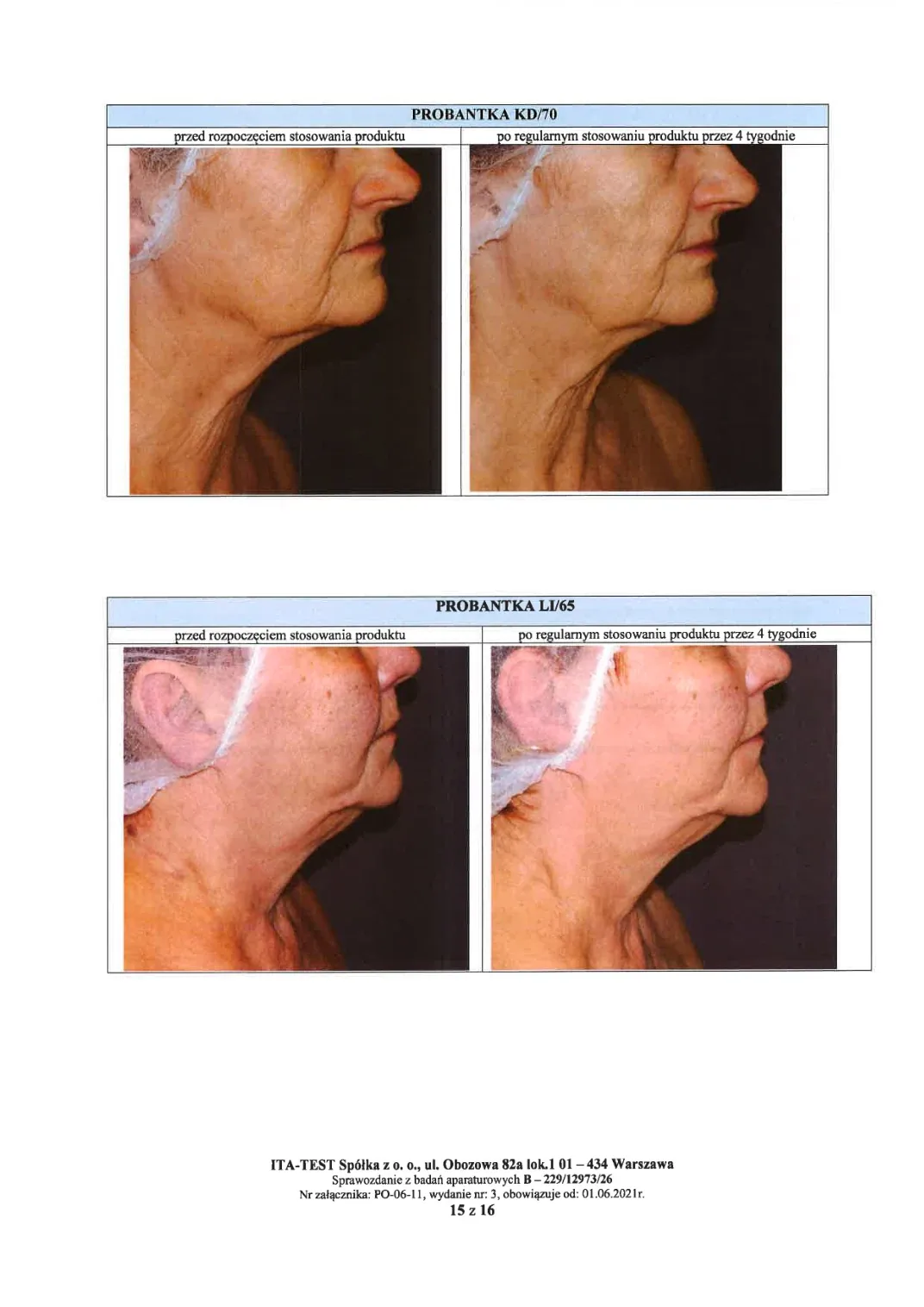
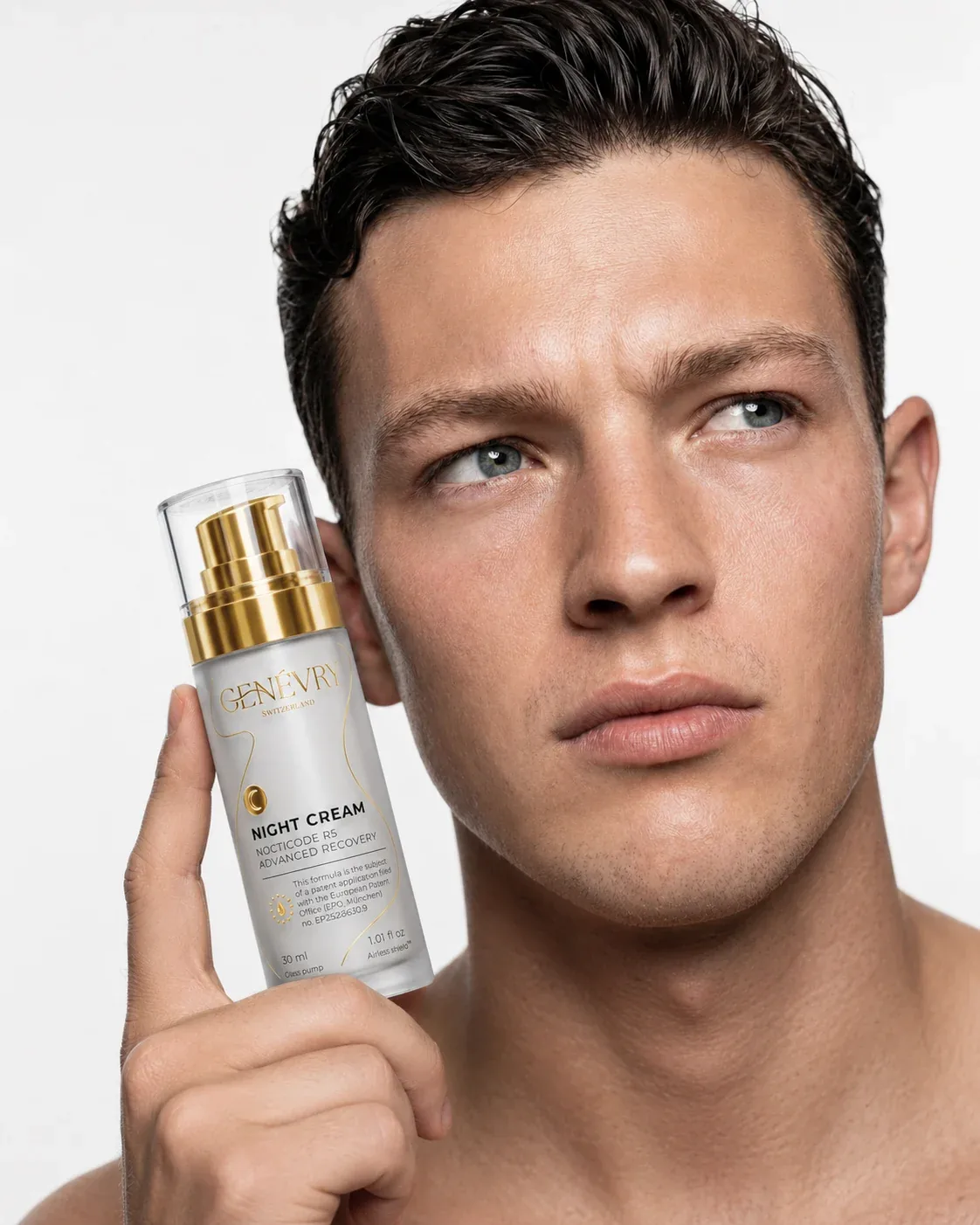
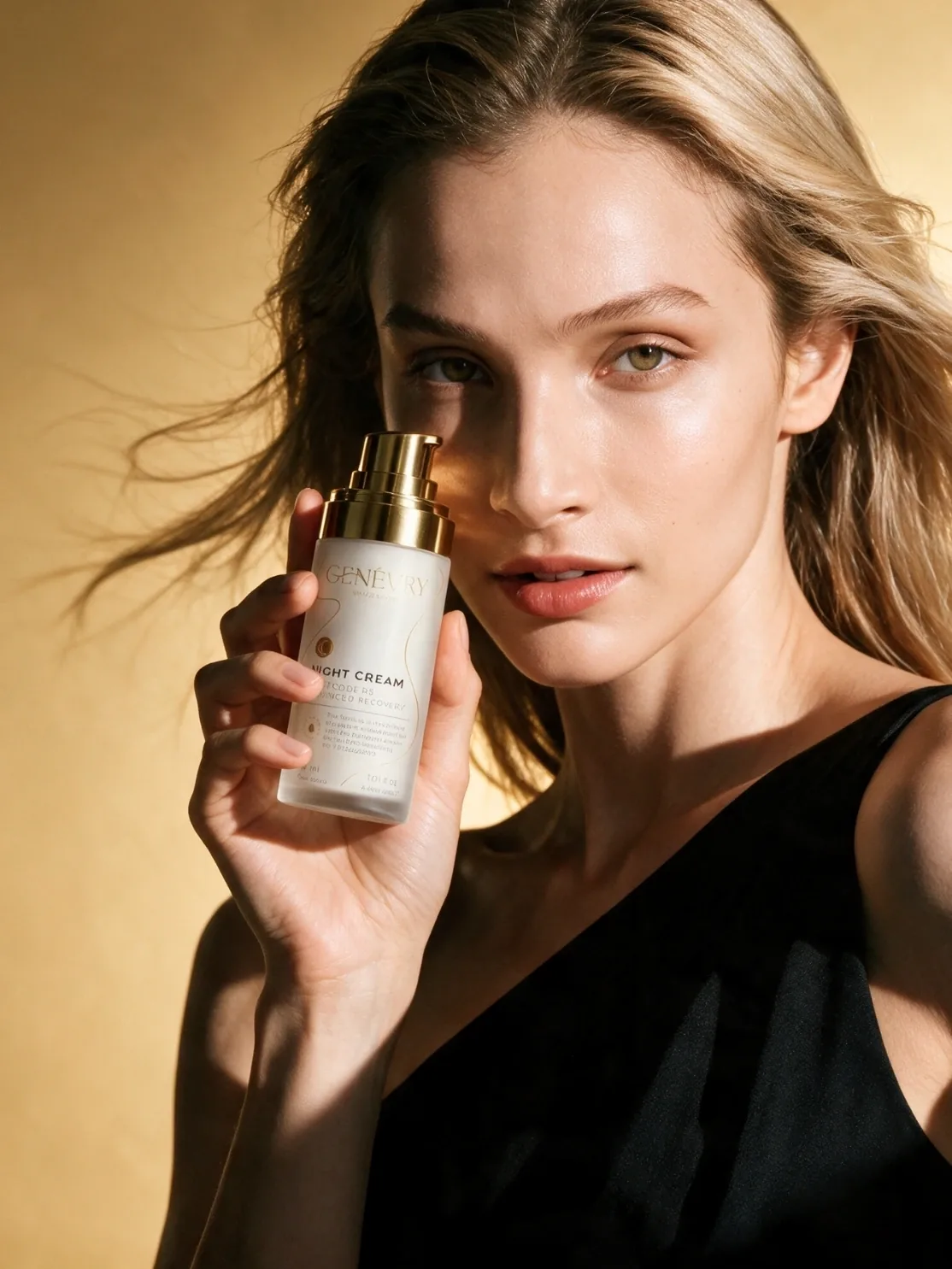
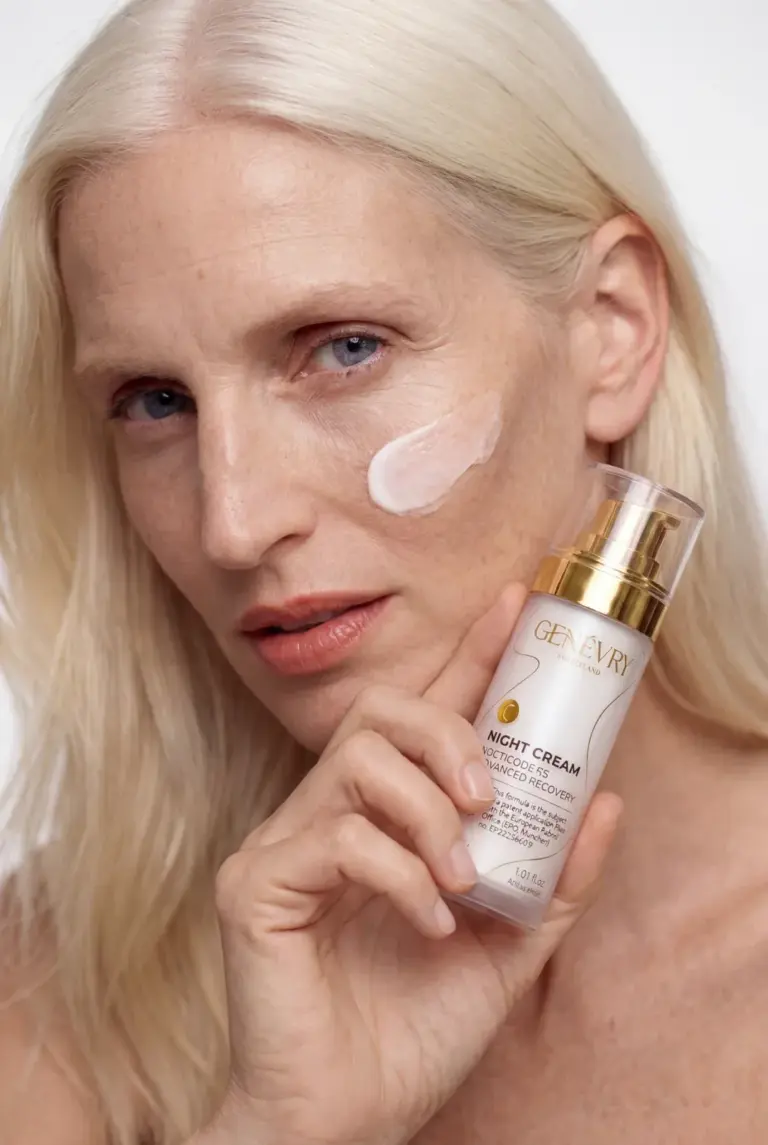
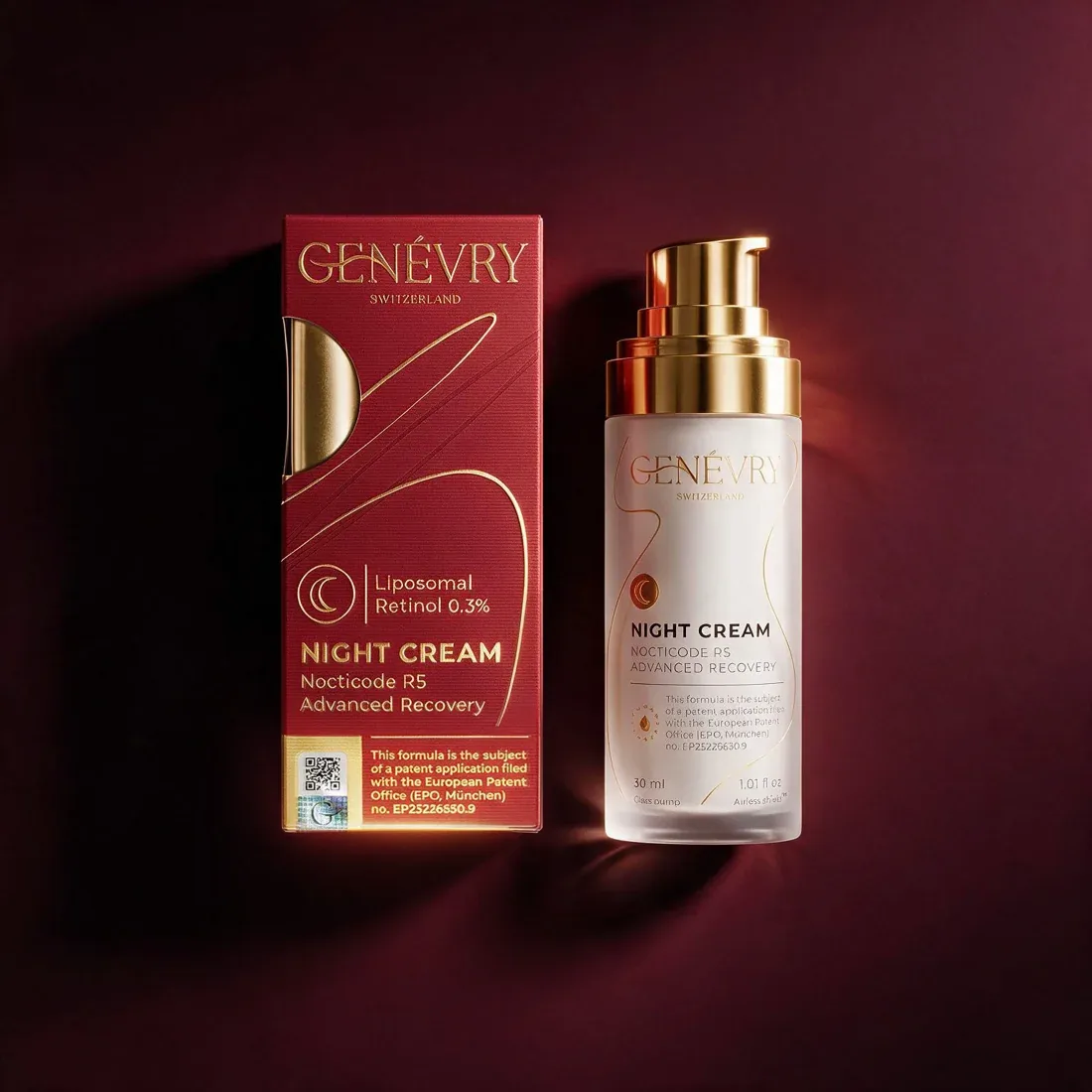
Evening: the Nocticode R5 night cream contains liposomal retinol at 0.3%, where the release rate is what counts. In a four-week instrumental study (n=10) mean wrinkle length fell by 10%, from 2.08 to 1.88 mm, with a reduction recorded in 9 of the 10 participants (silicone replicas, VISIOLINE VL650). Mean skin hydration rose by 38% (Corneometer CM 825), and instrumental firmness improved by 14% on average, with individual results ranging from 5% to 23%.
How to use products built on liposomes
- On cleansed skin. Wash with a gentle cleanser and pat dry rather than rubbing. A formula spreads more evenly on dry skin.
- A thin layer. A carrier does not need a generous dose; more product usually buys nothing but a longer wait.
- Serum in the morning, retinol at night. Splitting the two steps across the day keeps the ritual orderly and gives skin a pause.
- Introduce retinol slowly. Start with two or three evenings a week and build up only once your skin is taking it calmly.
- SPF every morning. With retinol in the evening routine, sunscreen the next day is not optional.
- Storage. Keep the pack closed, away from sunlight and radiators. The shelf above a heater is the worst place in the house.
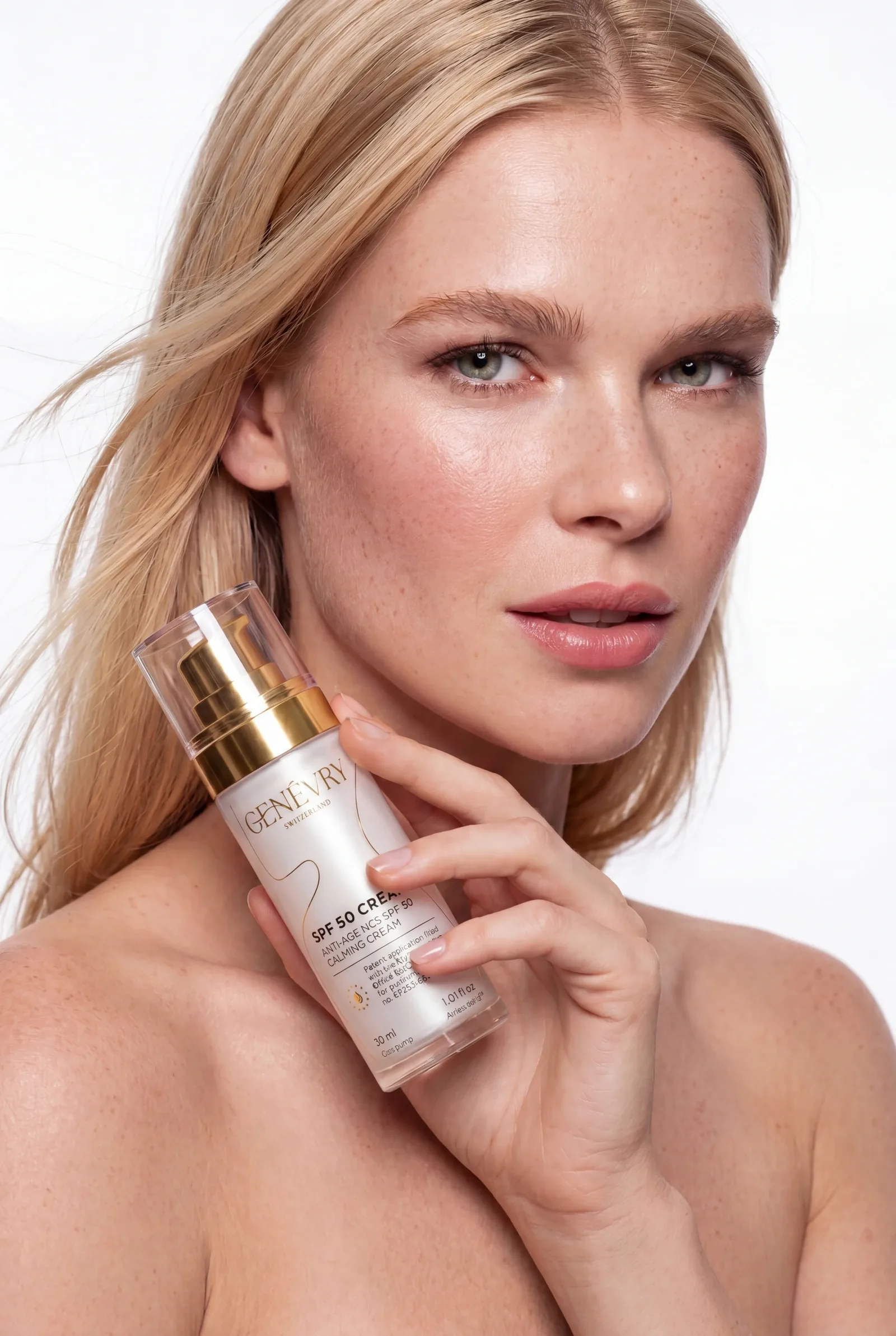
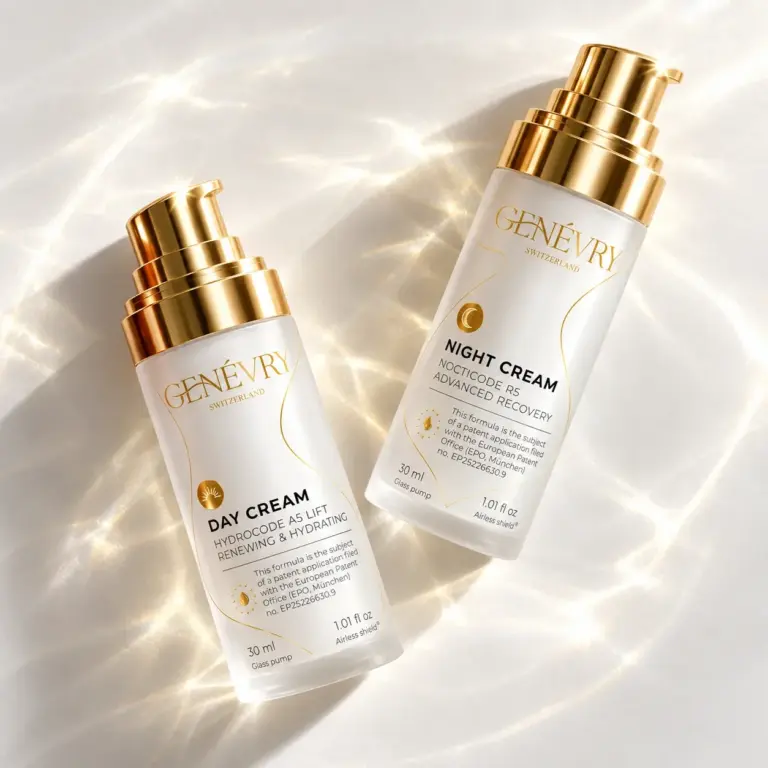
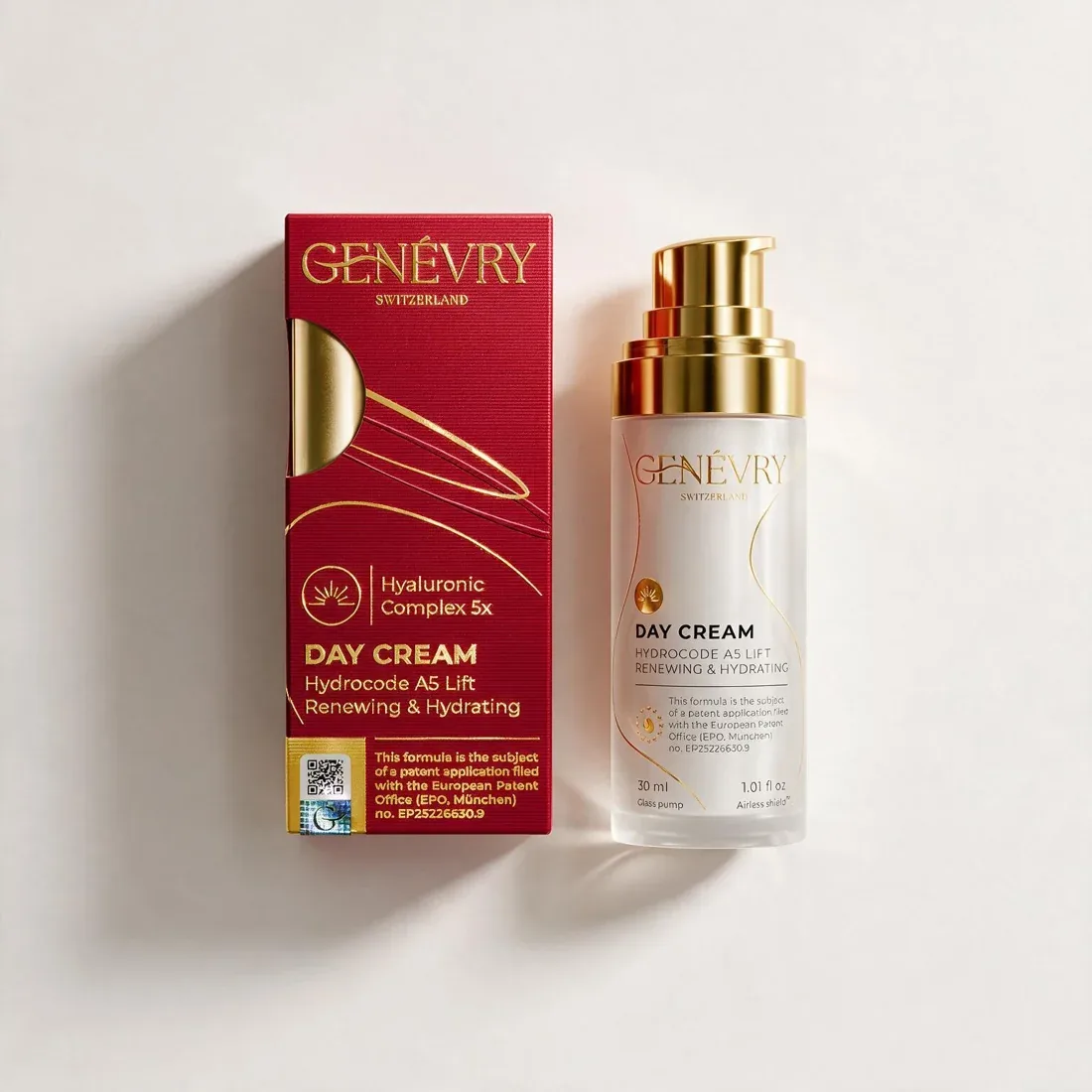
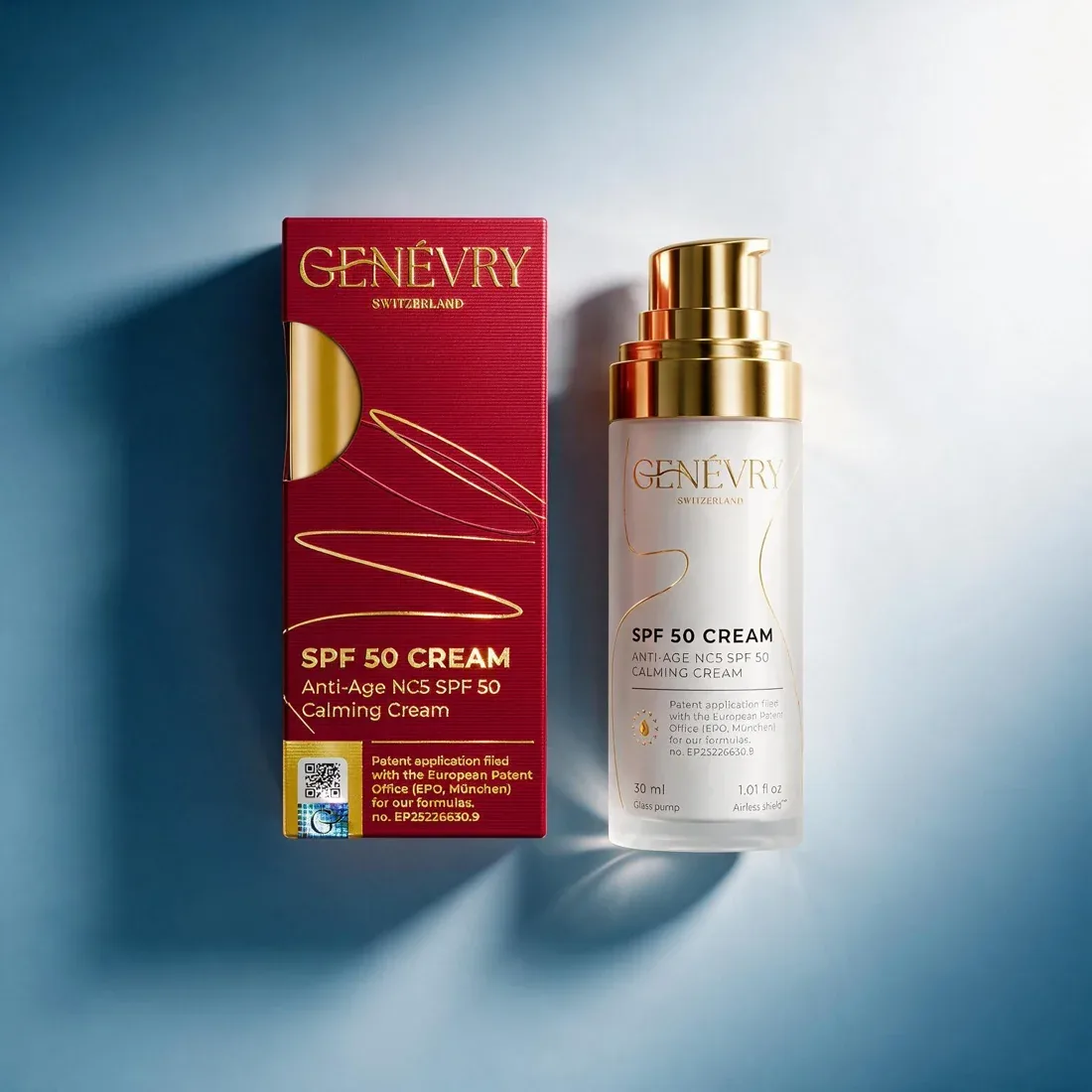
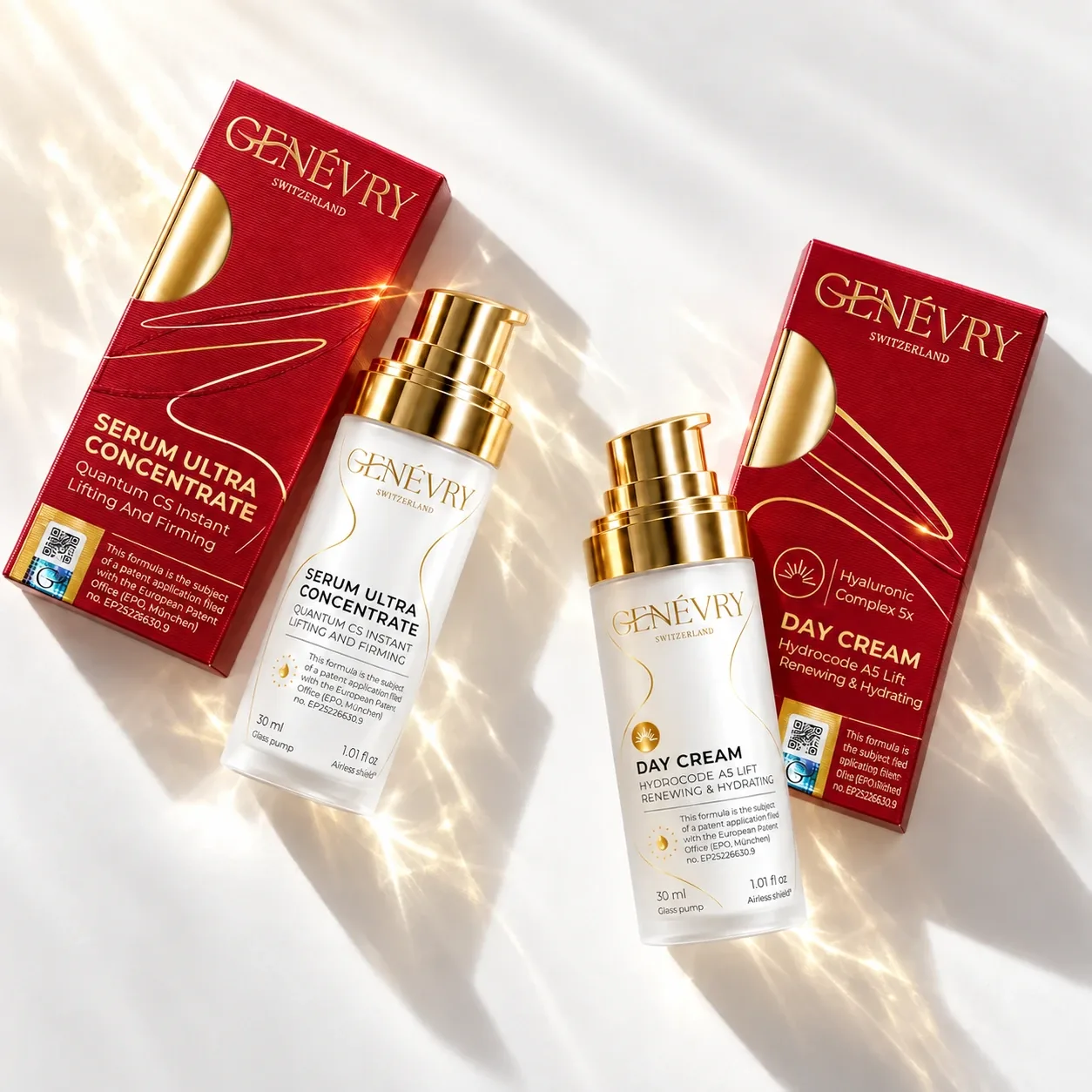
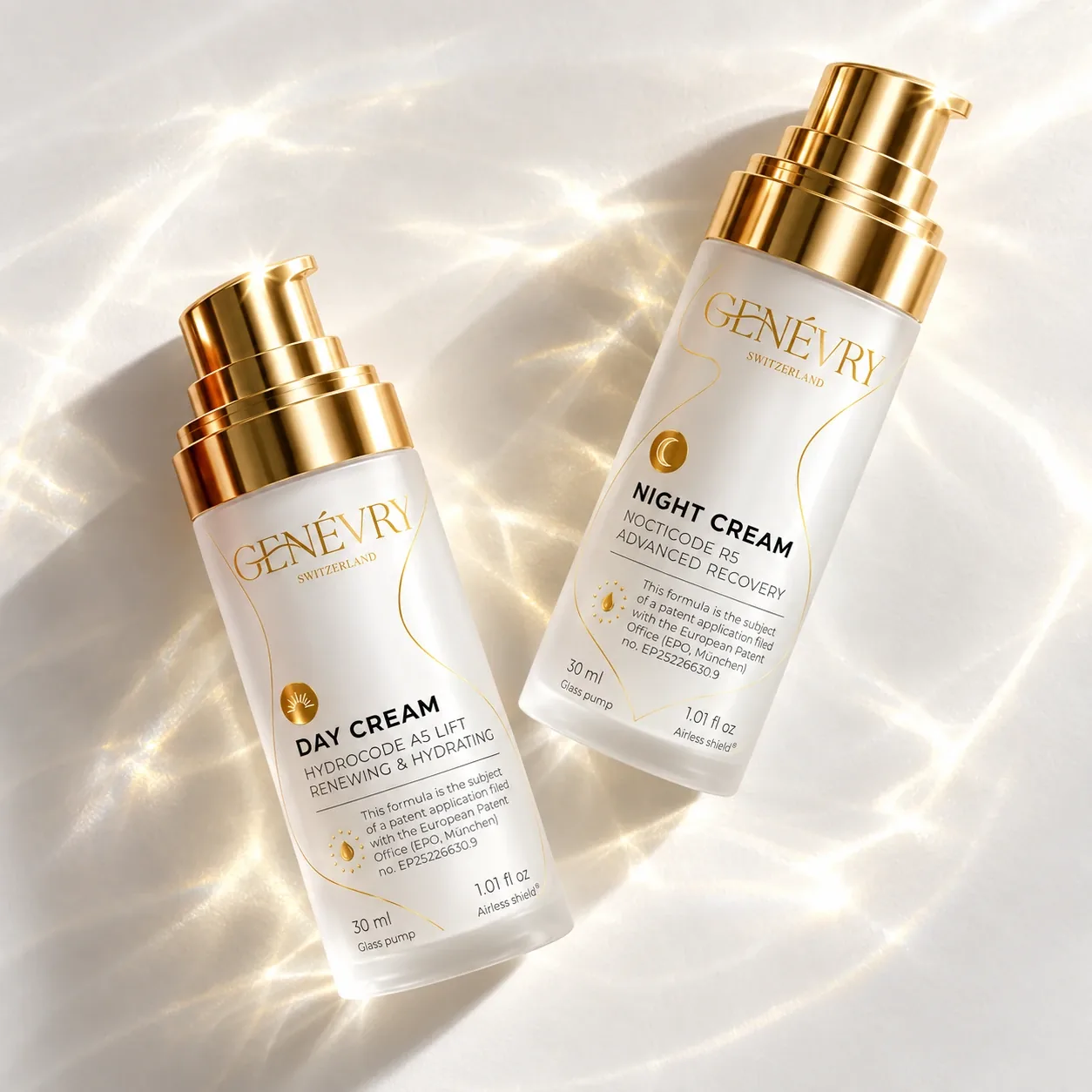
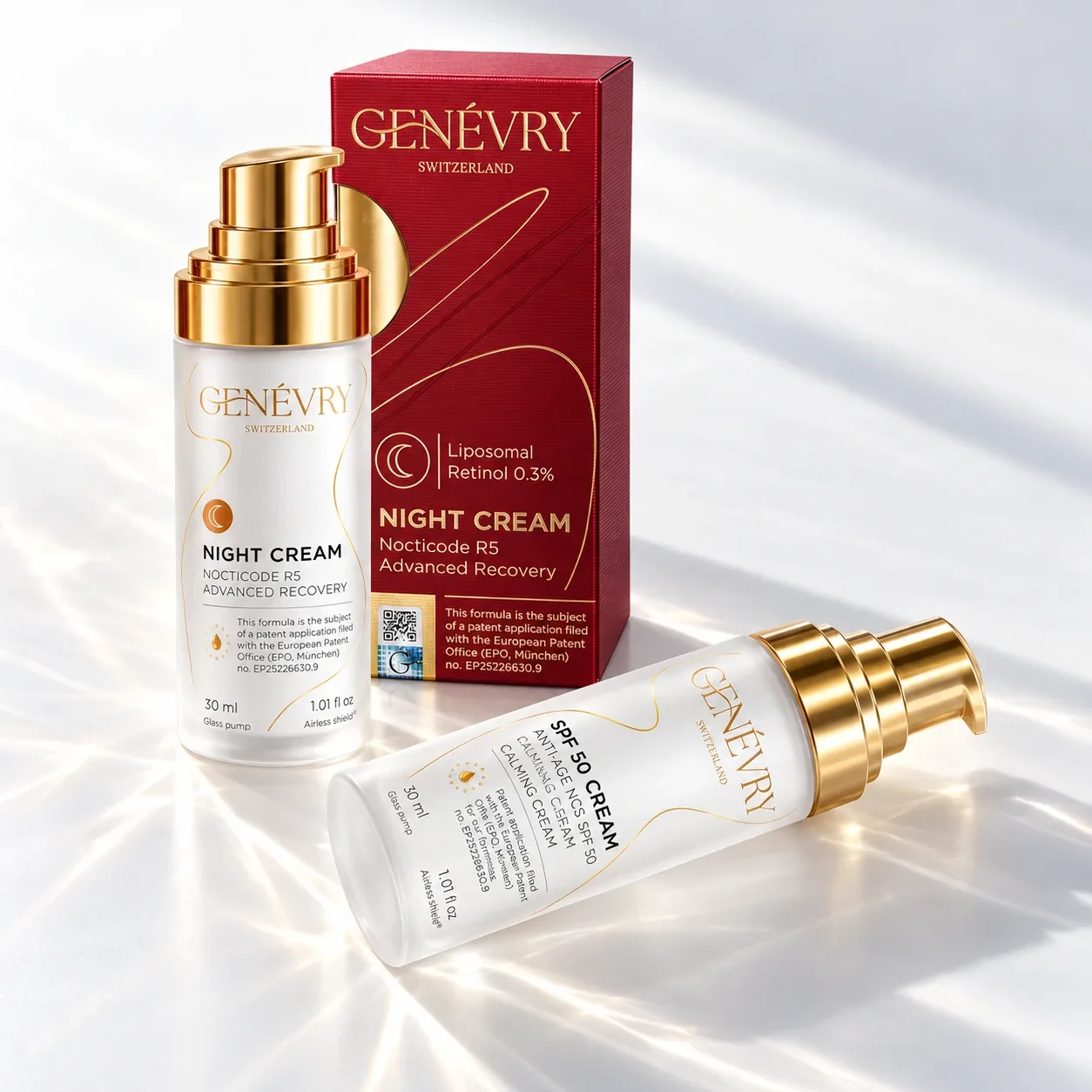
If the two steps are meant to work as a pair, a straightforward starting point is The Skin Code Protocol, where the serum and the night cream stand alongside the day cream and SPF 50.
Patch-test any new product on a small area and wait a day before full use. In pregnancy and while breastfeeding, with skin conditions, or on medication that affects the skin, discuss changes to your routine with a doctor or dermatologist.
Liposomes in skincare: common questions
Do liposomes carry ingredients deep into the skin?
Not in the way the advertising implies. An intact vesicle does not pass through the stratum corneum as if through a door; it generally breaks apart at the surface, releasing both its contents and its own lipids. The practical benefit lies elsewhere — in the stability of the formula, in an even spread and in the rate of release.
Does a liposomal product work more strongly?
“Stronger” is the wrong axis. A carrier does not change the molecule, only the conditions in which it reaches the skin. Stability, comfort in use and how the formula behaves a few weeks after opening are far easier things to judge.
Are liposomes suitable for sensitive skin?
Phospholipids on their own are well tolerated and closely related to skin lipids. What governs the reaction is the ingredient inside and the formula as a whole. With sensitive skin, start at a low frequency and watch how your skin answers.
How can I tell the technology is just a slogan?
By the absence of detail. If the brand will not say what has been encapsulated and at what concentration, and there are no phospholipids in a meaningful position on the INCI list, there is nothing to verify.
Can liposomal retinol be used during pregnancy?
No. Retinol and its derivatives are set aside during pregnancy and breastfeeding, whatever carrier they come in. If in doubt, ask your doctor.
In closing
A liposome is neither a promise nor an active. It is an engineering answer to a narrow question: how do you deliver a temperamental molecule to the skin in the state it left the laboratory in, and how do you place two substances side by side that an open formula would have interfering with each other. The rest, as always, comes down to consistency and to sunscreen every morning.
The formulas in this article
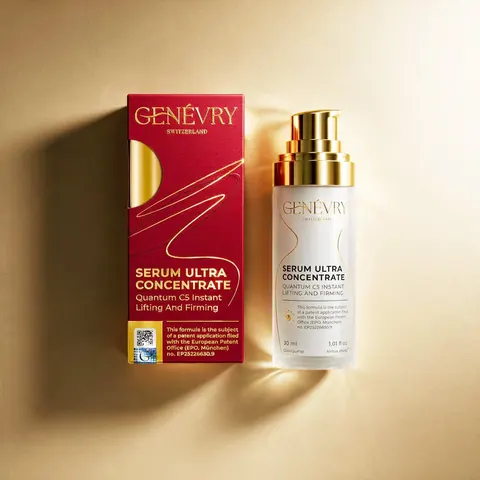 Quantum C5Ultrakoncentreret serum239 kr.Discover the formula →
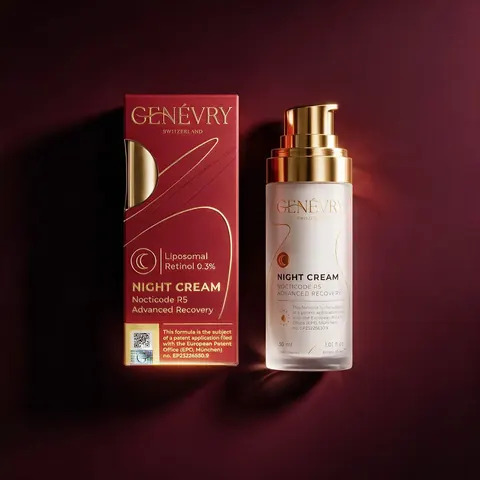 Nocticode R5Avanceret natcreme269 kr.Discover the formula →
Cosmetic product. Individual results may vary.


 English / EUR
 English (US) / USD
 English (UK) / GBP
 Deutsch / EUR
 Deutsch (Schweiz) / CHF
 Français / EUR
 Italiano / EUR
 Español / EUR
 Nederlands / EUR
 Polski / PLN
 日本語 / JPY
 한국어 / KRW
 中文 / CNY
 العربية / AED
 English (Australia) / AUD
 English (Canada) / CAD
 Svenska / SEK
 Dansk / DKK
 Norsk / NOK
 Suomi / EUR
 Português / EUR
 Türkçe / TRY
 Čeština / CZK
 Magyar / HUF
 Română / RON
 Ελληνικά / EUR
 Slovenčina / EUR
 Hrvatski / EUR
 Slovenščina / EUR
 Lietuvių / EUR
 Latviešu / EUR
 Eesti / EUR
 Български / EUR
 Українська / EUR