Hyaluronic acid: low and high molecular weight, how to apply it, and the myths
A small molecule travels further, a large one stays on the surface. What that means for your skin, how to apply the serum so it works, and which myths to drop.
Hyaluronic acid in a serum or cream does one job well: it binds water in the outer layers of the epidermis and holds it there for a few hours. It does not fill wrinkles from within, it does not replace an injectable treatment, and it is not a permanent fix for dry skin. What it is, is one of the very few ingredients that works from the first application — and one of the easiest to waste by applying it the wrong way.
On labels it turns up under several names and in several molecular sizes. Size is where most of the questions start: does small hyaluronic acid really reach deeper, does the large kind just sit on the surface, and is a product with five different fractions worth the premium? Here is the whole picture — where the ingredient comes from, what the research says about molecular weight, how to apply it morning and evening, what to pair it with, and the five myths that keep coming back in the comments.
- What it is: a glycosaminoglycan found naturally in the extracellular matrix of the dermis. INCI: Hyaluronic Acid, Sodium Hyaluronate, Hydrolyzed Hyaluronic Acid, Sodium Acetylated Hyaluronate.
- How it works: as a humectant. A single molecule can bind roughly 250 water molecules.
- Molecular weight: in Franz-cell testing, the 50 kDa fraction crossed the skin about 3.5 times more readily than 300 kDa and more than twenty times more readily than 1500 kDa.
- How to apply: on slightly damp skin, always sealed with a cream on top. On dry skin, in dry air, with nothing over it, the step loses most of its point.
- Concentration: typically 0.1–2%. Past that you gain viscosity, not performance.
- Pairs with: almost everything — retinol, vitamin C, niacinamide, exfoliating acids. One of the least demanding partners in a routine.
- What not to expect: lasting wrinkle filling. A cosmetic is not a cosmetic version of an injectable.
What hyaluronic acid is and where it comes from in a cosmetic
Hyaluronic acid is a long sugar chain from the glycosaminoglycan family, built from repeating pairs of glucuronic acid and N-acetylglucosamine. In the human body it sits in synovial fluid, in the vitreous humour of the eye, and — the part that matters here — in the extracellular matrix of the dermis, where it keeps space between collagen fibres and holds water. The Wikipedia entry on hyaluronic acid covers the chemistry and distribution in detail.
The version in your bathroom cabinet no longer comes from rooster combs, as it did in the nineties. Bacterial fermentation is the standard now — usually Streptococcus or Bacillus subtilis strains — which yields material free of animal protein and with a consistent molecular weight. Lower-weight fractions are made from the same raw material by controlled hydrolysis: high-molecular-weight powder is heated under defined conditions until the chains shorten to a target viscosity.
What the names on the label mean
Several forms of the same ingredient hide behind the INCI list, and the differences are more than cosmetic:
- Hyaluronic Acid — the acid form, used less often in finished formulas because it dissolves less readily in water.
- Sodium Hyaluronate — the sodium salt and the most common form in skincare. Better solubility, better stability, a smaller molecule than the acid form.
- Hydrolyzed Hyaluronic Acid — chains cut into short fragments, usually below 50 kDa.
- Sodium Acetylated Hyaluronate — an acetylated, more lipophilic form that lingers longer on the surface of the stratum corneum.
No manufacturer is required to print molecular weight on the carton, so you will usually find it in the product description or not at all. When a brand advertises a “multi-molecular complex”, that normally means a blend of two to four fractions of different chain length.
Low and high molecular weight hyaluronic acid — what size actually changes
Molecular weight determines how far the ingredient travels and how long it stays. Shorter fragments cross the stratum corneum far better than long chains, and that has been measured. In a study by Farwick and colleagues (Skin Pharmacol Physiol 2011), radiolabelled hyaluronan of four different weights was applied to dermatomed porcine ear skin in Franz diffusion cells, with the amount that passed through recorded at 5 and 22 hours.
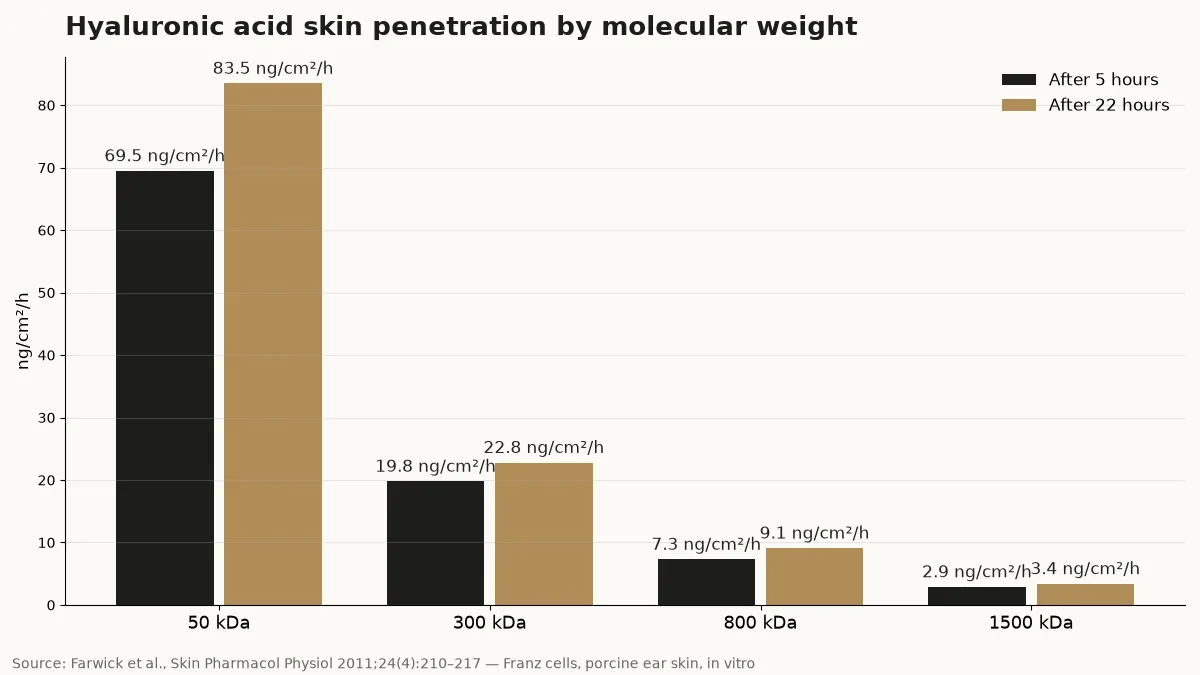
The gaps are wide. The 50 kDa fraction gave a flux of 69.5 ng/cm²/h at five hours and 83.5 ng/cm²/h at twenty-two. For 300 kDa the figures were 19.8 and 22.8, for 800 kDa 7.3 and 9.1, and for 1500 kDa only 2.9 and 3.4 ng/cm²/h. Put plainly: a long chain barely crosses the epidermal barrier at all. It stays on the surface, and that is where it works.
Two caveats that rarely make it into marketing copy. This was an in vitro study on animal skin rather than a measurement on a human face, so it shows direction and proportion rather than numbers to transfer one-to-one. And “deeper” does not automatically mean “better” — a fragment reaching the living epidermis is not proof that it did anything useful once it arrived.
What that means for how skin looks
A clinical study by Pavicic and colleagues (J Drugs Dermatol 2011) fills in the other half. Seventy-six women aged 30 to 60 applied a cream containing 0.1% hyaluronan twice daily for 60 days, at one of five molecular weights: 50, 130, 300, 800 or 2000 kDa. Every formulation significantly improved skin hydration and elasticity against baseline. Reduction in the depth of periocular wrinkles, measured as Ra and Rz roughness, reached significance only in the 50 and 130 kDa groups.
Read together, the two papers give one practical conclusion. If you only want hydration and a smoother feel, molecular weight is a secondary concern. If you are hoping to influence the look of fine lines, a product with a declared low-molecular-weight fraction is the more sensible buy. That is also why good formulas blend fractions: large chains build a film on the surface, small ones travel further down.
Molecular weight, where it acts and what you get
| Fraction | Where it mainly acts | What it delivers | What it does not |
|---|---|---|---|
| Below 50 kDa (hydrolysed) | Stratum corneum and deeper in the epidermis | Longer-lasting hydration; in trials, an effect on the look of fine lines | An instant “filled” look or a visible film |
| 50–300 kDa | Stratum corneum | A good compromise: hydration and softness without tack | Smoothing on the scale of a clinic treatment |
| 300–800 kDa | Surface of the epidermis | A smooth base under cream and make-up | Any action in the deeper epidermis |
| Above 1000 kDa | Surface only | A film that limits water loss; a taut, smoothed feel | Penetration — only trace amounts crossed in vitro |
| Blend of fractions | From the surface down into the epidermis | Hydration on several levels; the usual choice in well-built formulas | Miracles — it remains a humectant, not a filler |
How to apply hyaluronic acid, step by step
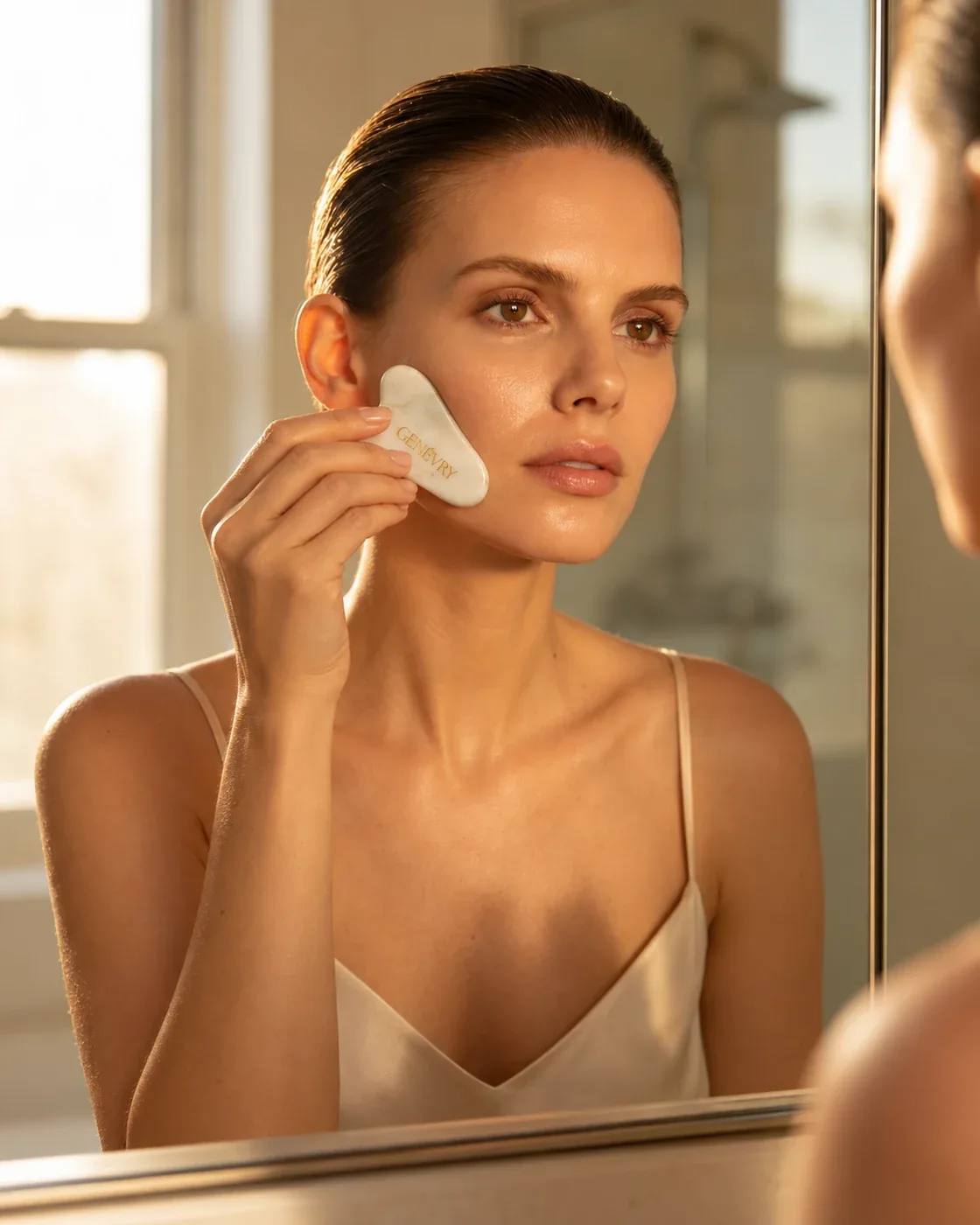
Apply hyaluronic acid to slightly damp skin and always cover it with a cream. That is the whole technique, and it is where most people go wrong — patting serum into a dry face, waiting for it to “sink in”, then wondering why the skin feels tighter than before.
The mechanism is straightforward. A humectant binds water from whatever is available. If there is moisture on the surface from washing or a toner, it will bind and hold it. If the skin is dry and the surrounding air is dry too — in a heated flat in winter, indoor humidity can drop below 30% — a layer of hyaluronic acid behaves like a sponge with nothing to soak up. The cream on top is not an optional extra; it is part of the same step.
Morning
- Wash with lukewarm water. Do not towel dry completely — leave the skin slightly damp, a quick press with the towel is enough.
- Apply the hyaluronic acid serum. Two or three drops cover the whole face; spread with fingertips rather than rubbing.
- Wait fifteen seconds or so, until the layer stops feeling slippery, then apply day cream. That is what seals the water underneath.
- Finish with sunscreen if your day cream does not include SPF.
Evening
- Cleanse and, as in the morning, do not dry the skin completely.
- If retinol or acids are part of your routine, apply them to dry skin on your usual schedule, then come back to hydration.
- Hyaluronic acid serum, a short pause, night cream.
- In very dry air, add a thin layer of a richer, more lipid-heavy cream on top, especially over the cheeks and around the nose.
One practical note, because this comes up constantly: hyaluronic acid in a toner, a serum and a cream at once is not triple hydration. Skin binds as much water as the stratum corneum can hold, and the surplus product ends up as tackiness and make-up that pills. One well-chosen product carrying this ingredient is plenty.
What to pair hyaluronic acid with, and what to watch
Hyaluronic acid is among the easiest ingredients in cosmetics to live with — no meaningful interactions with other actives, no effect on the pH of a formula. The problems you read about come from layer order and texture, not from the molecule itself.
| Ingredient | Combine? | Time of day | What to watch |
|---|---|---|---|
| Vitamin C, including liposomal | Yes | Morning | Vitamin C first, hyaluronic acid after — it will not interfere |
| Niacinamide | Yes | Morning or evening | No restrictions; the two complement each other well |
| Retinol | Yes | Evening | Retinol on dry skin, hydration a few minutes later — this eases the adjustment phase |
| AHA/BHA acids | Yes | Evening | Acid first, hydration after; do not mix them in your palm |
| Peptides, including copper peptides | Yes | Morning or evening | No known conflicts |
| Ceramides and lipids | Yes, ideally | Morning and evening | The natural partner — humectant underneath, lipids on top |
| Harsh foaming cleansers | With care | — | Skin stripped by aggressive washing holds water poorly; hyaluronic acid will not compensate |
If you have wondered why some brands package this ingredient in liposomes or other carriers, molecular size is exactly why. We covered that separately in the piece on liposomes in skincare. The entry on niacinamide is worth a look too, since it is the most frequent companion to hyaluronic acid in hydrating formulas.
Which skin types suit hyaluronic acid
All of them, as long as the texture matches. This is one of the few actives where no skin type counts as a contraindication.
Oily and combination skin. A light watery serum instead of a rich cream is often the entire change that skin oily through the T-zone needs. Hydration without added oil is frequently the missing piece.
Dry skin. Hyaluronic acid alone will not be enough here, because the shortfall is in barrier lipids rather than water. A cream with ceramides, cholesterol and fatty acids on top is the other half of the answer.
Dehydrated skin. This is a state rather than a type, and it affects oily complexions as readily as dry ones. Hyaluronic acid works fastest and most visibly here, usually within a few days.
Sensitive skin. Sodium hyaluronate is very well tolerated. Reactions are rare and usually trace back to preservatives or fragrance in the same formula rather than to the hyaluronic acid.
Mature skin. Hyaluronan content in the dermis falls with age, which shows up as less bounce and weaker water binding. Topical care does not rebuild that reservoir, but it does improve hydration of the stratum corneum — and that changes how skin looks: smoother, with fine lines less obvious in side lighting.
Five myths about hyaluronic acid
Myth 1: it pulls water out of the deeper skin and dries you out. In its strong form this is not true — there is no evidence that a topical product dehydrates the dermis. There is a grain of practical truth to it, though: applied to a dry face, in dry air, with nothing sealing it in, it has no water source and the result can be the opposite of what you wanted. Hence the damp-skin rule and the layer on top.
Myth 2: the higher the concentration, the better. Typical formulas contain 0.1 to 2% hyaluronan and that is sufficient. Above that threshold what rises is mostly viscosity. A serum claiming “10% hyaluronic acid” would be difficult to spread and would not hydrate proportionally better.
Myth 3: a hyaluronic acid cream works like a filler. These are two different things. A filler is a cross-linked gel placed in the dermis with a needle by a physician, and it stays there for months. A cosmetic acts in the stratum corneum and its effect washes off. Neither replaces the other.
Myth 4: hyaluronic acid rebuilds collagen. It does not. Different molecule, different role in the skin. A hydrated stratum corneum reflects light more evenly, which is why skin looks smoother — but that is an optical and physical effect, not matrix remodelling.
Myth 5: oily skin does not need it. The opposite. Excess sebum and a water shortfall are two independent phenomena that often travel together. A light hydrating serum is frequently a better choice for that skin than a mattifying cream.
How to build hyaluronic acid into a GENÉVRY ritual
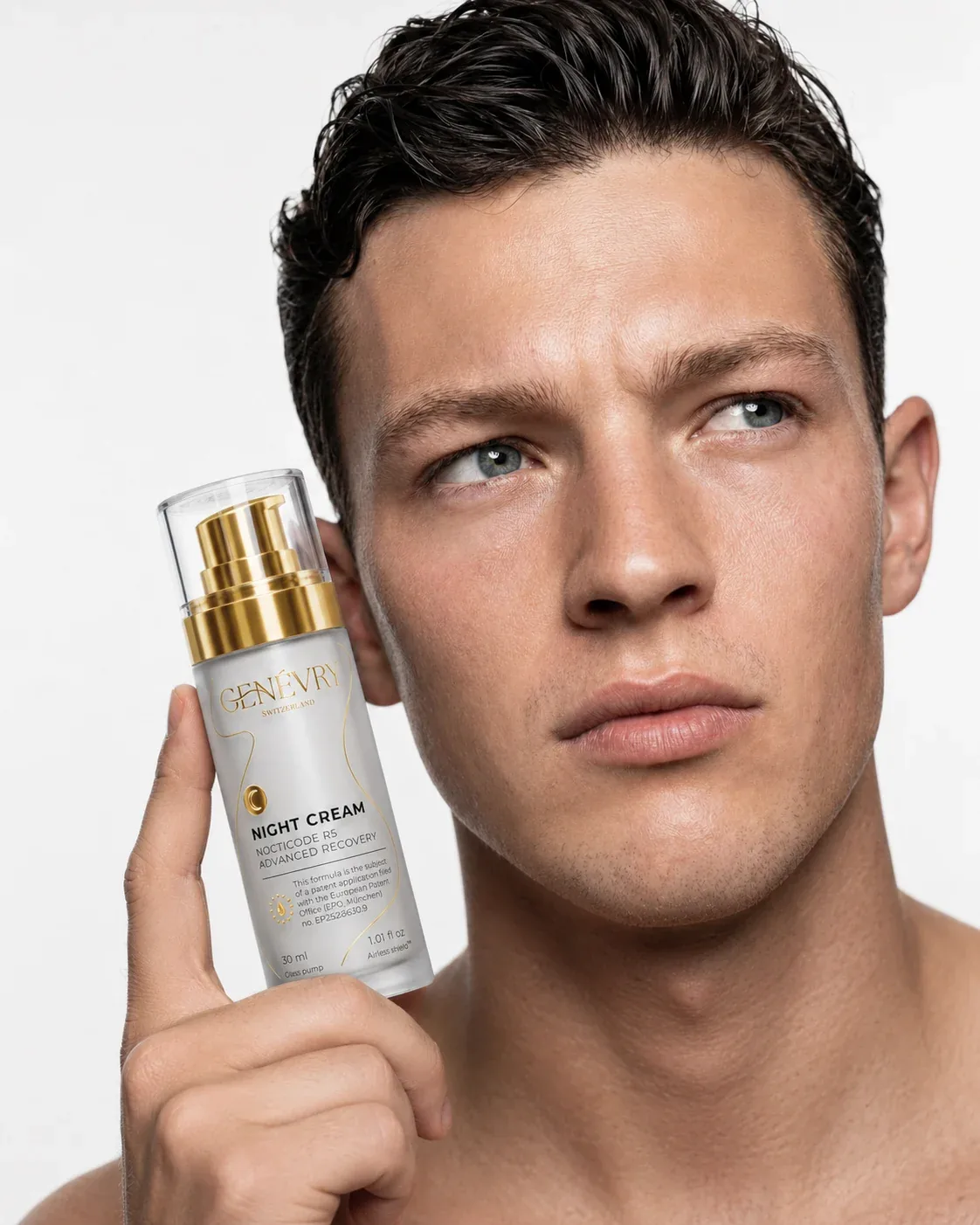
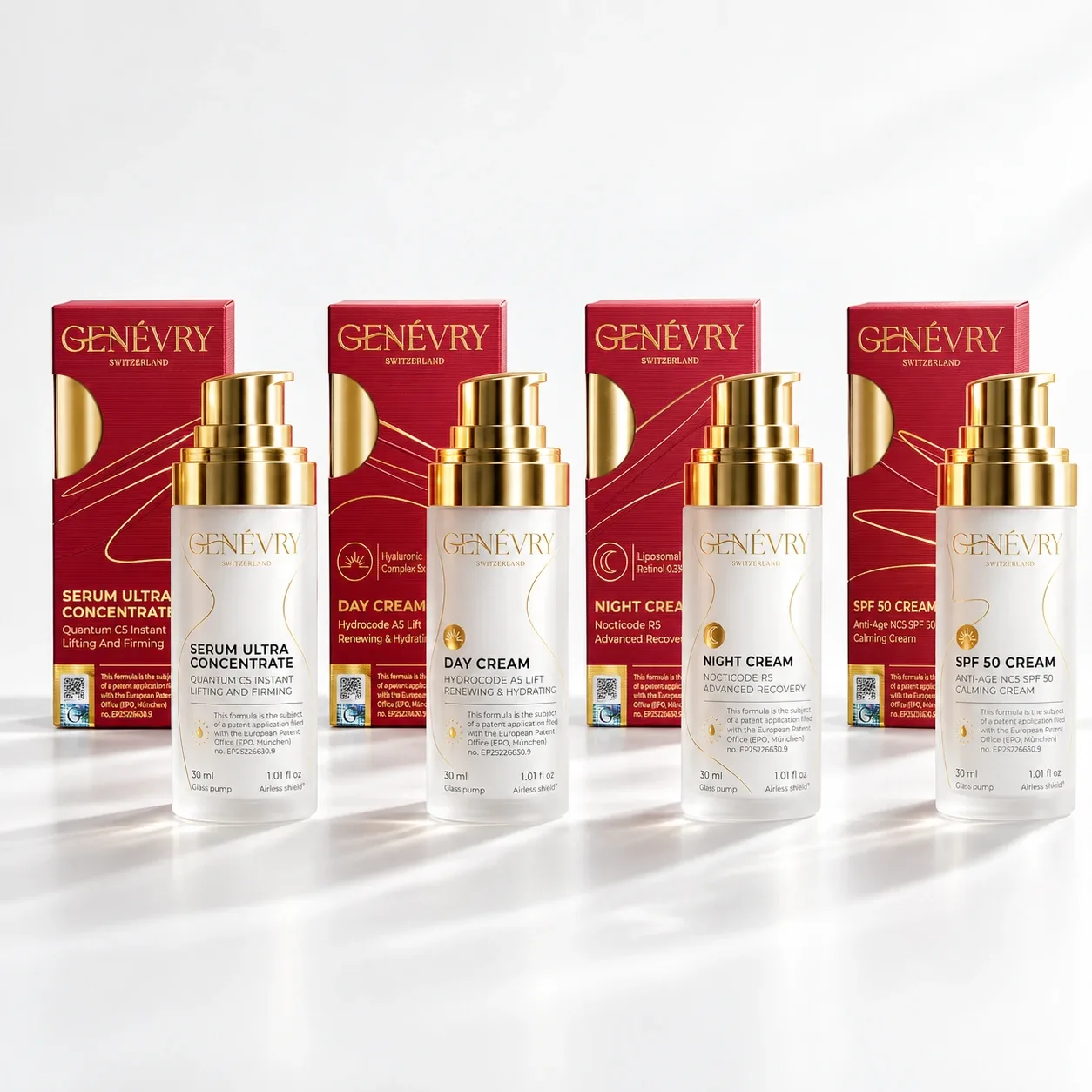
Hyaluronic acid belongs to the GENÉVRY collection’s ingredient palette, listed by the brand alongside the GHK-Cu copper peptide, liposomal vitamin C, ceramides and liposomal retinol. The full composition of each formula is on its product page, which is also where you can check which step of the ritual carries it.
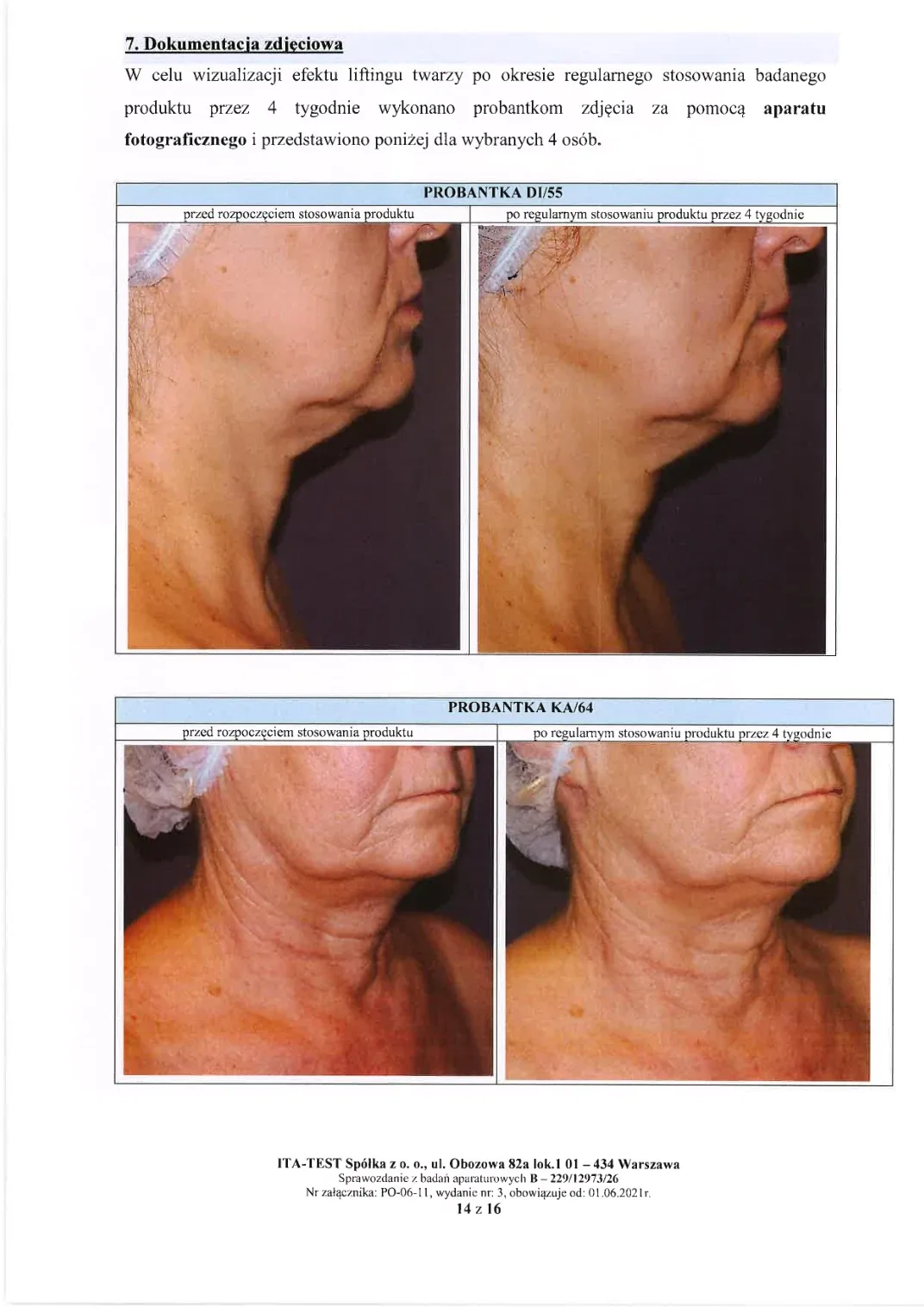
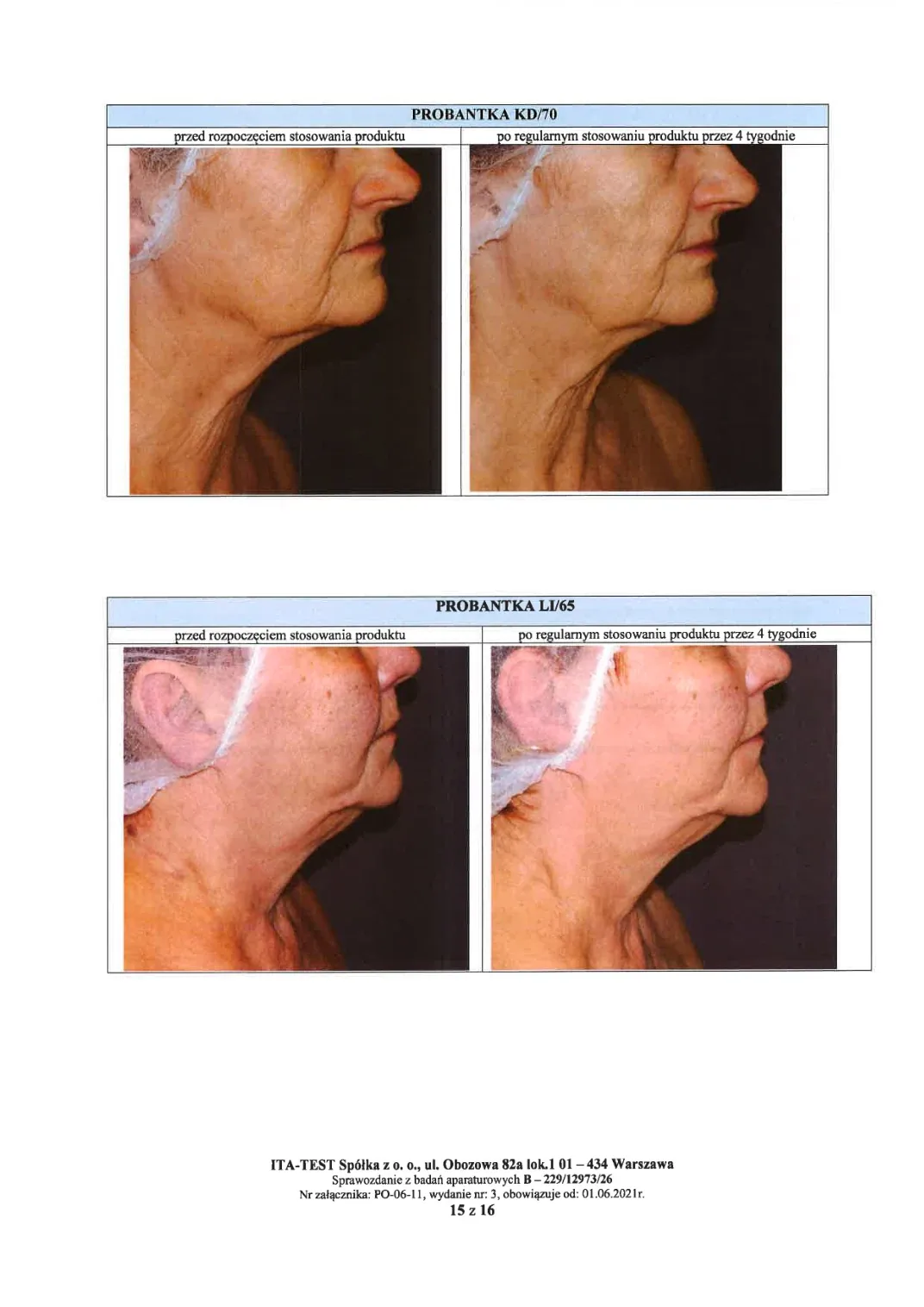
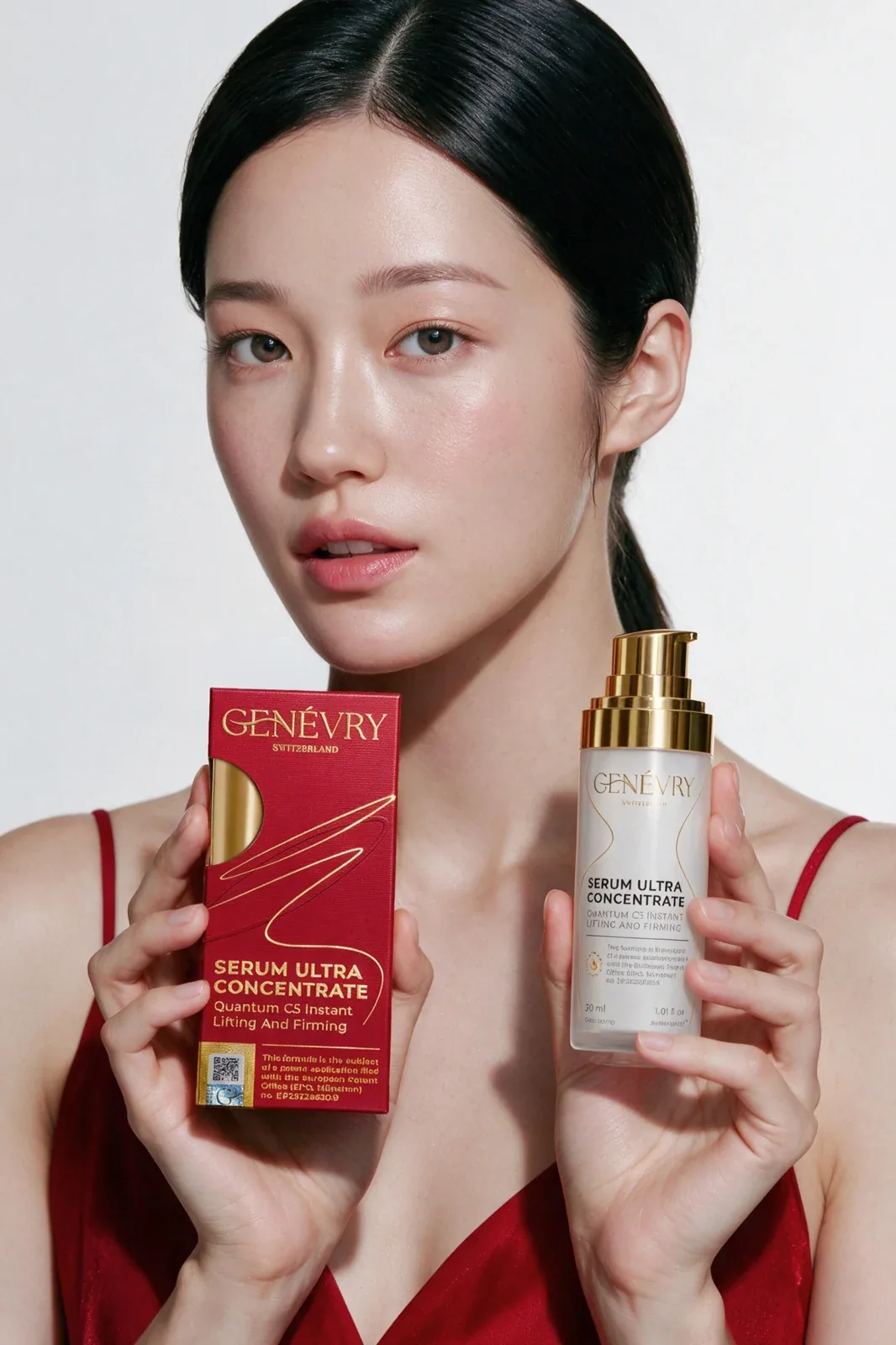
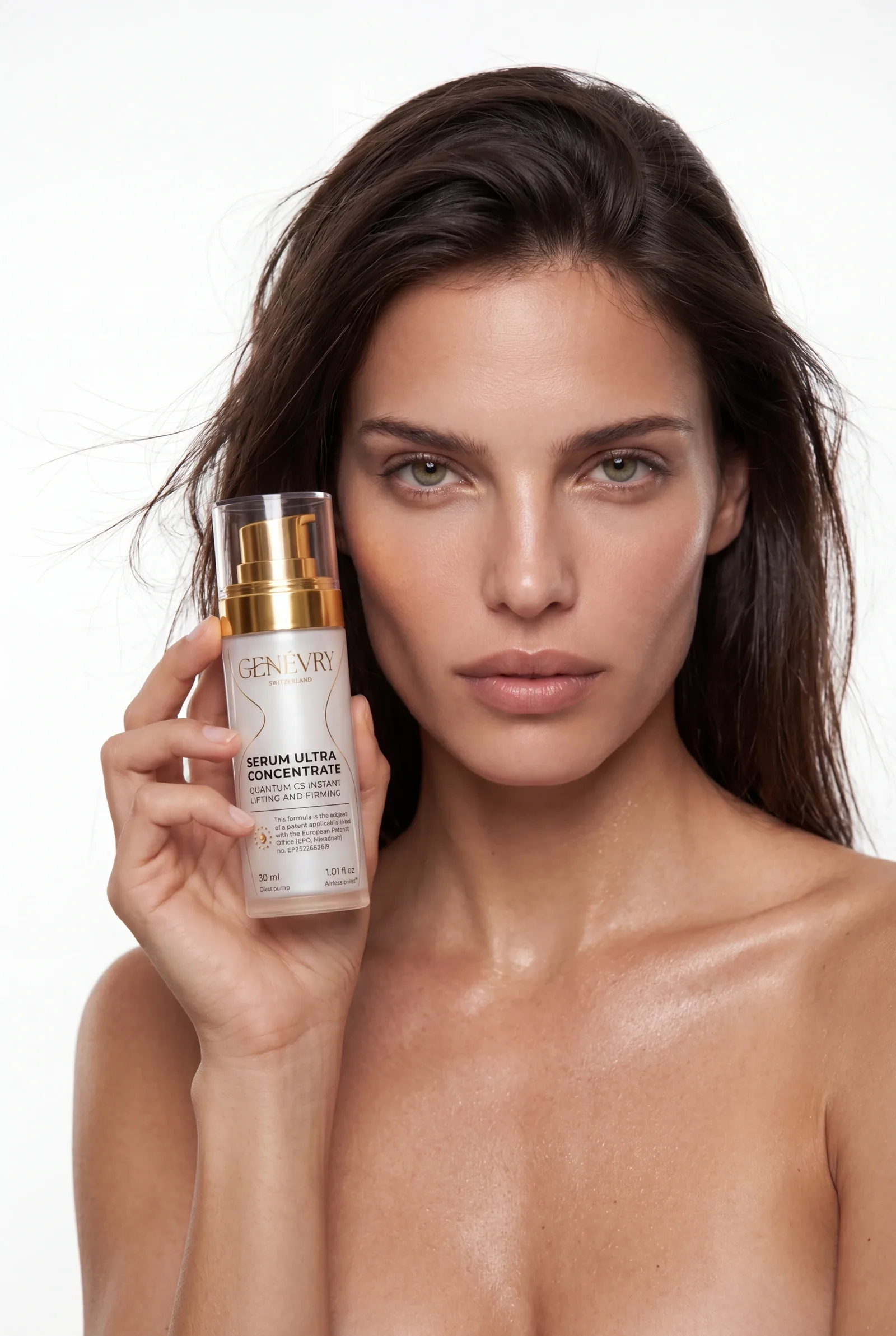
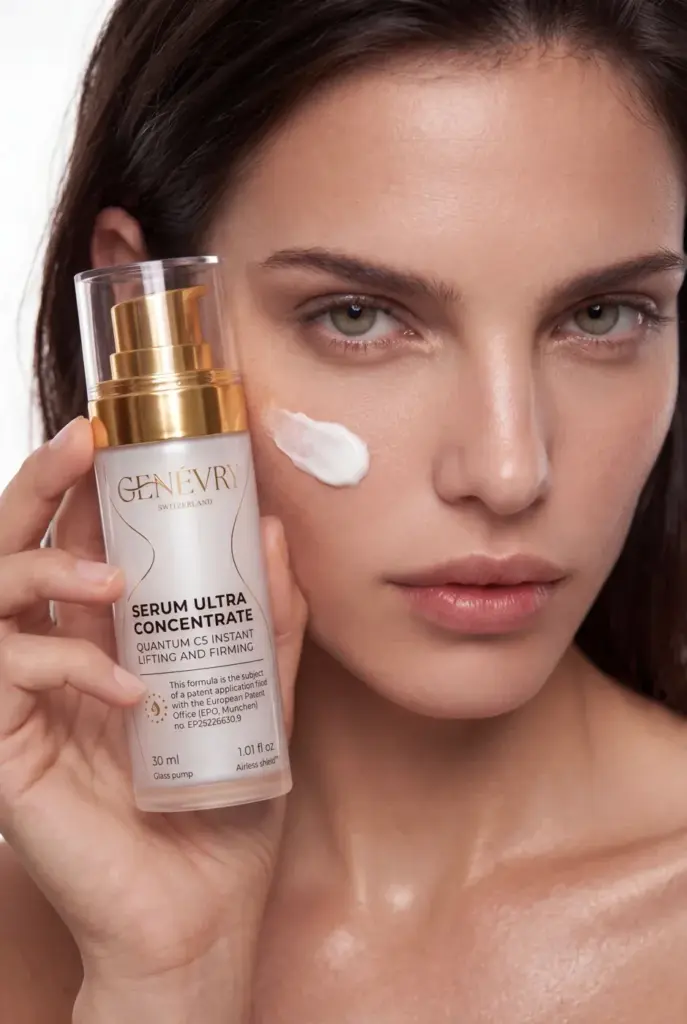
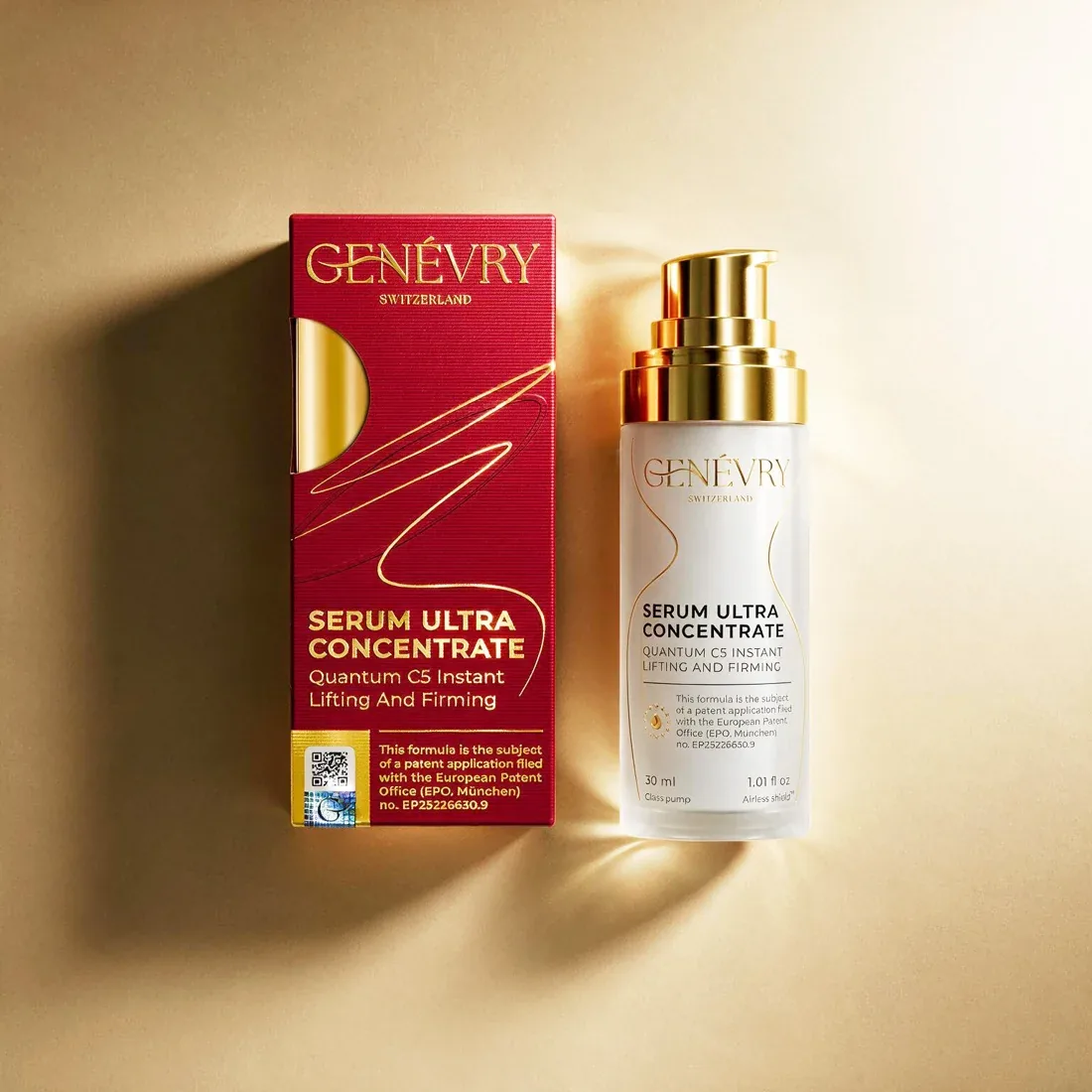
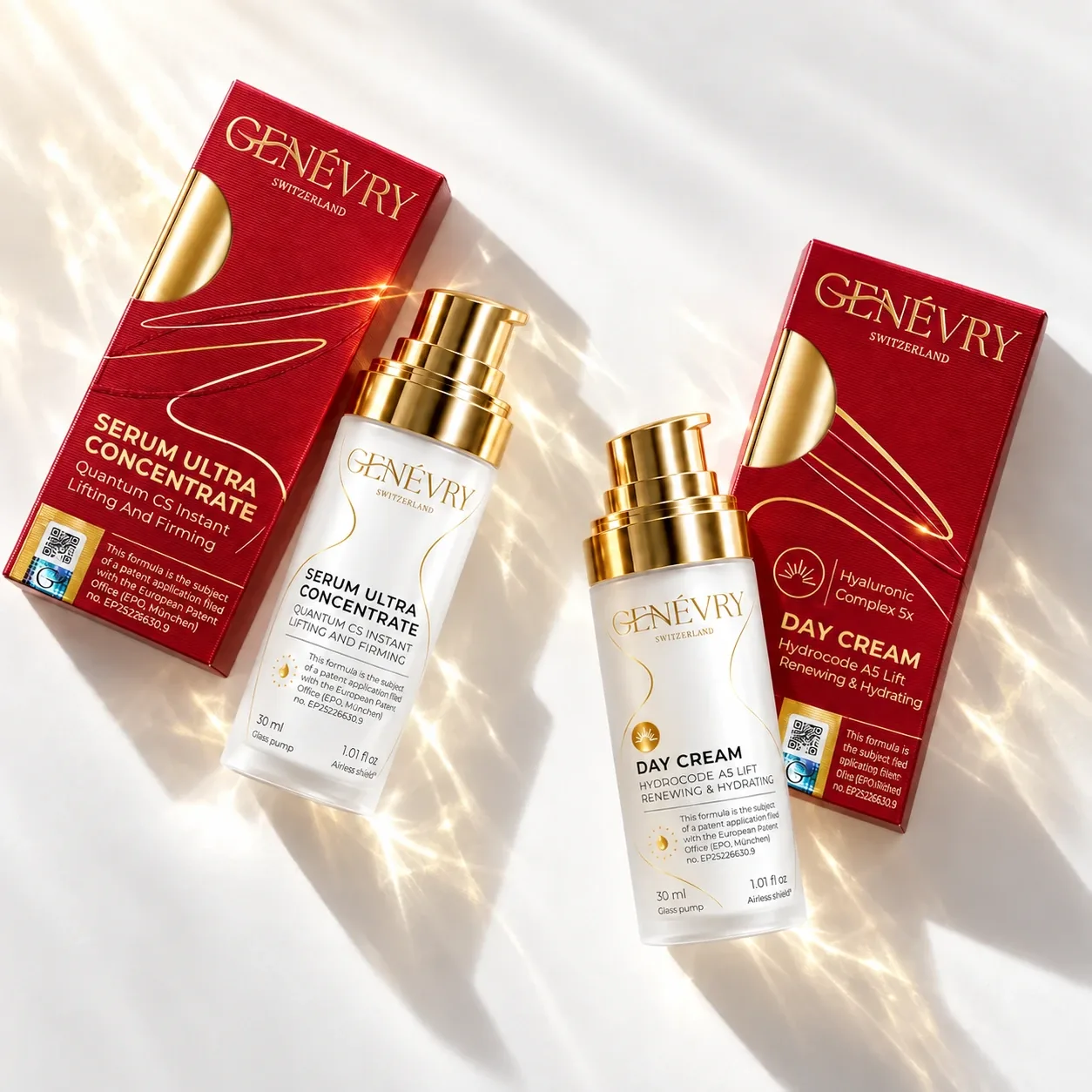
GENÉVRY Quantum C5 Serum is a Swiss ultra-concentrate serum in a 30 ml airless pump bottle, with the GHK-Cu copper peptide and liposomal vitamin C, positioned as the first step of the morning ritual. In instrumental testing, mean skin hydration rose by 33% after four weeks (Corneometer CM 825, n=10; hydration increased in all ten participants). That is the order of magnitude a well-built hydrating step can deliver — not what hyaluronic acid does in isolation.
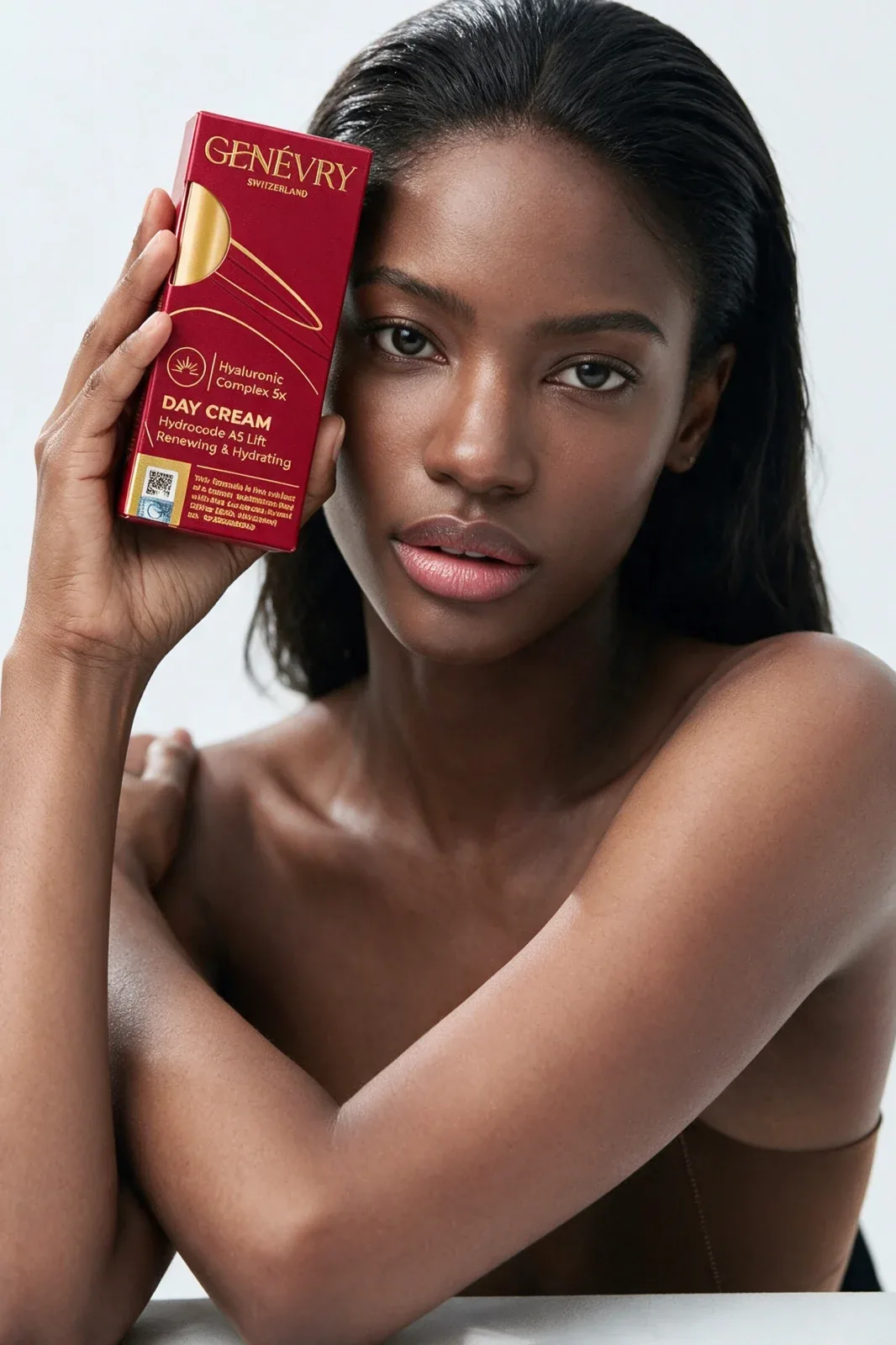
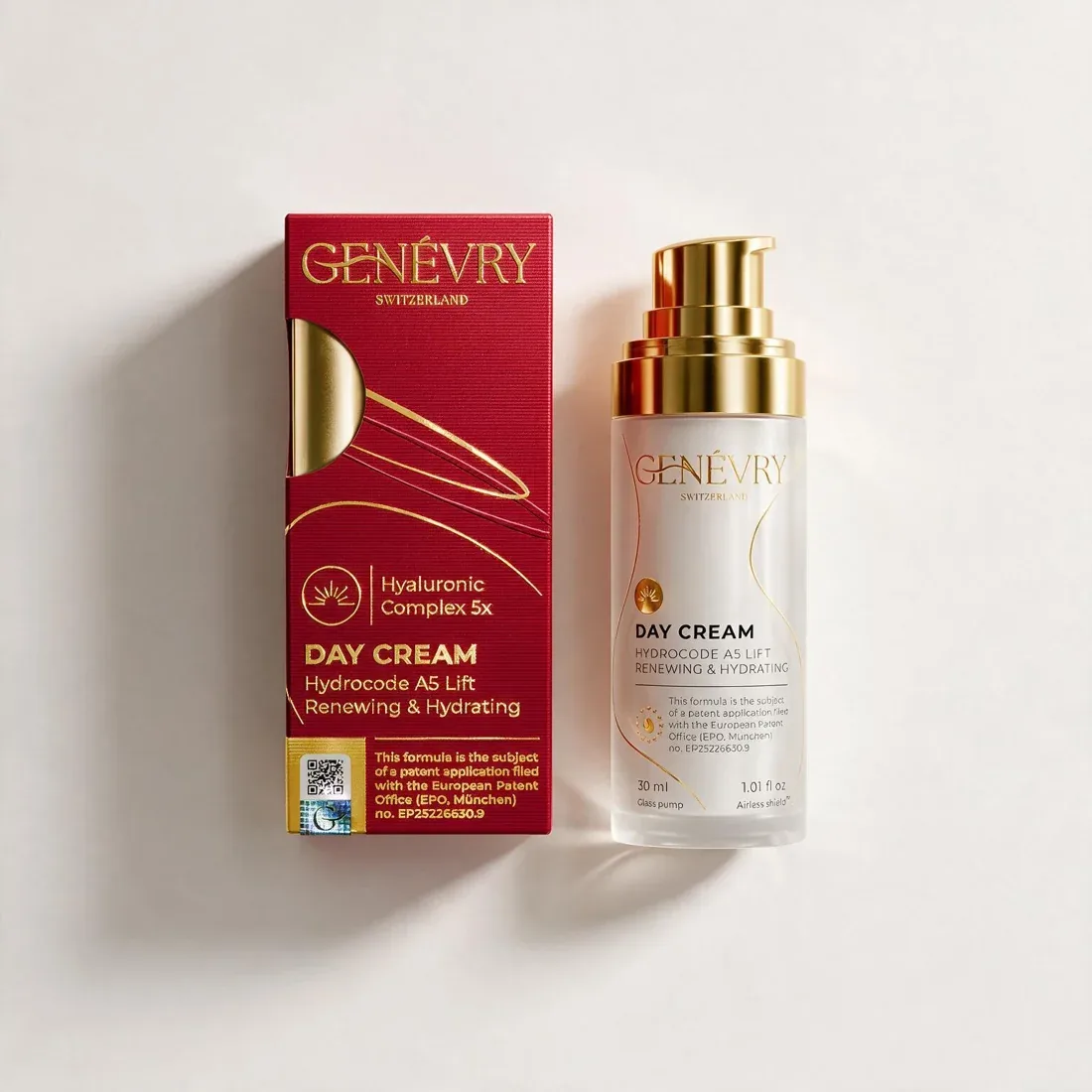
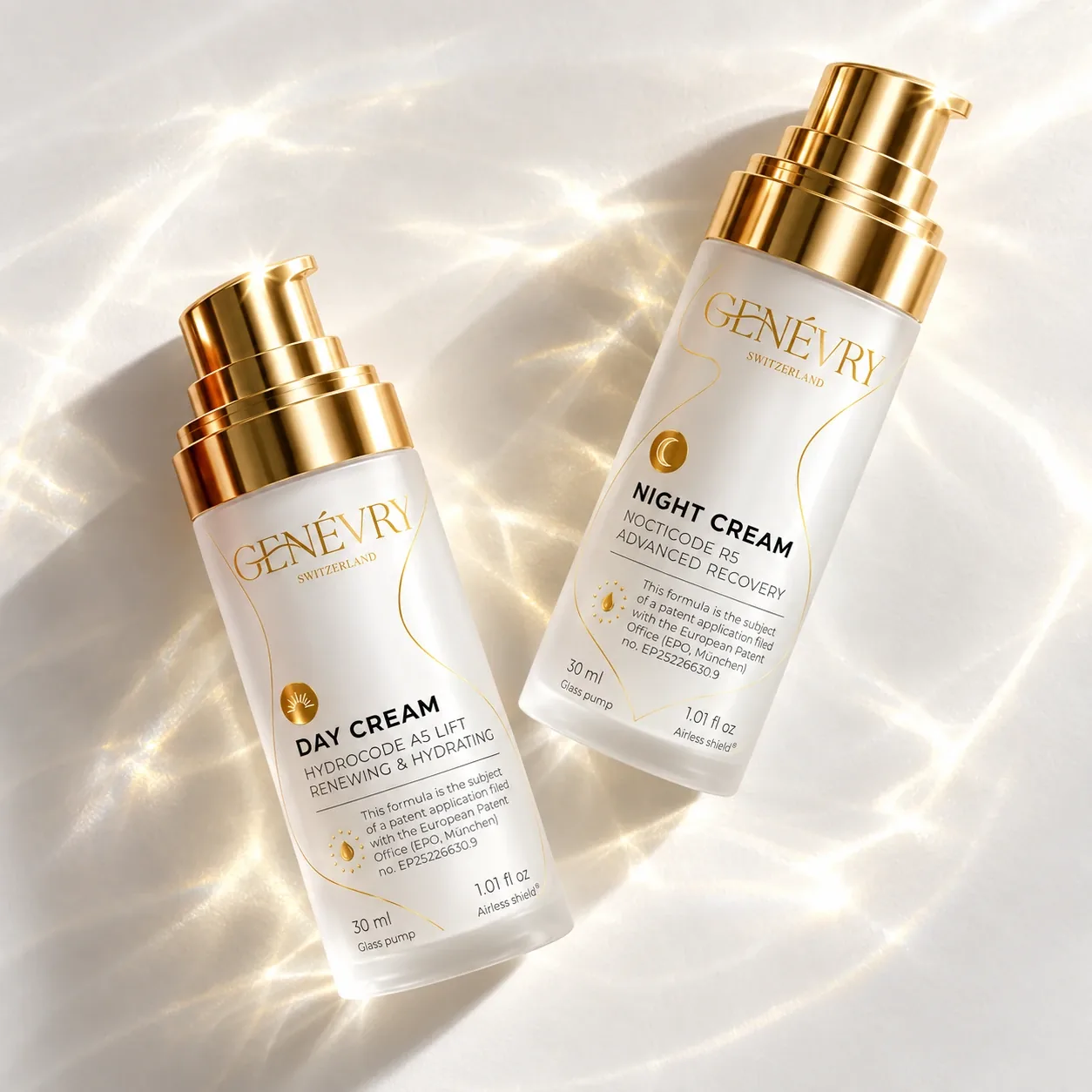
GENÉVRY Hydrocode A5 Lift is the 30 ml day cream, the layer that seals in the water the serum has bound. In instrumental testing, mean skin hydration rose by 41% after four weeks (Corneometer CM 825, n=10), again across all participants. Together the two make up The Morning Duo — serum and day cream in one set, in exactly the order described above.
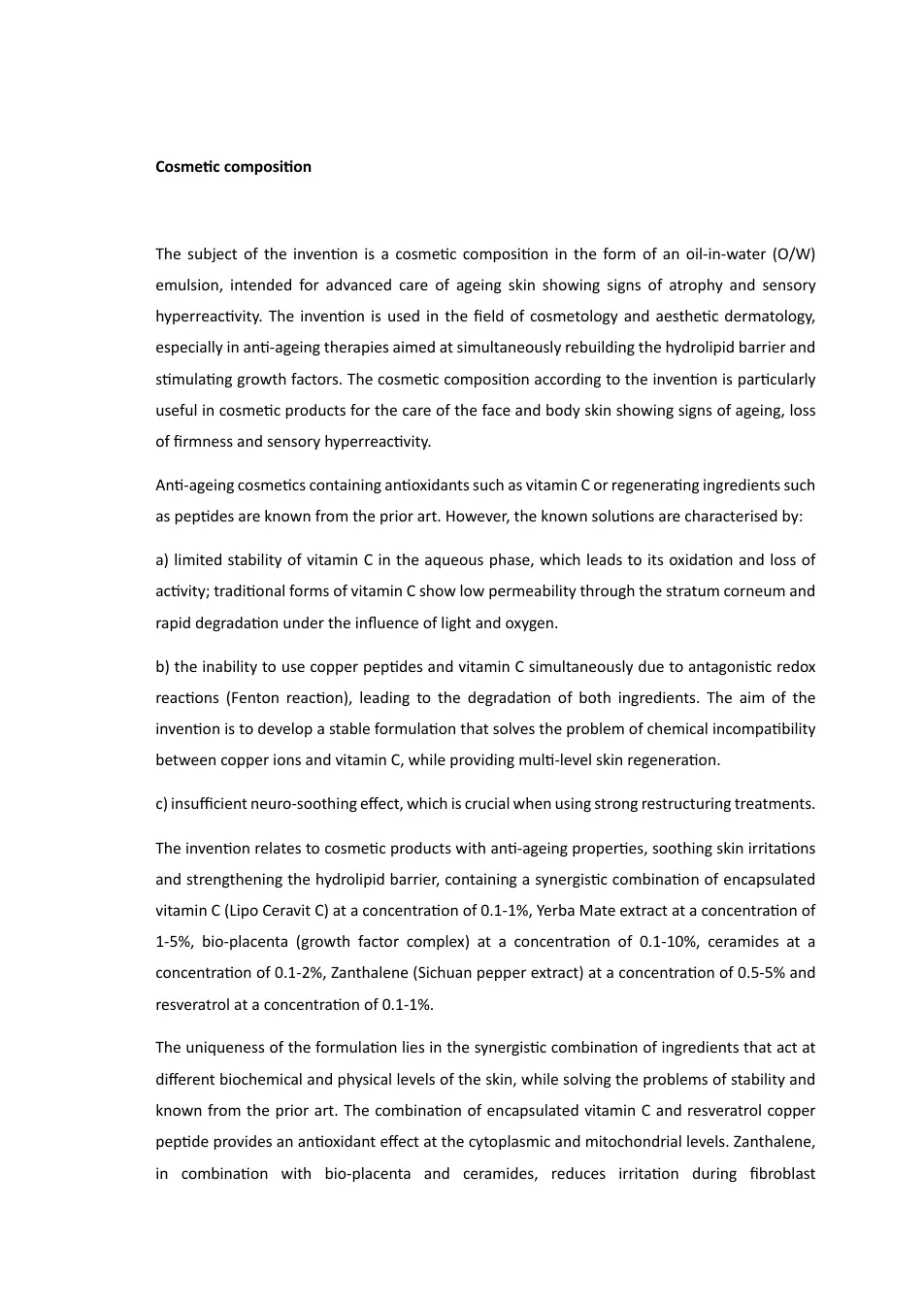
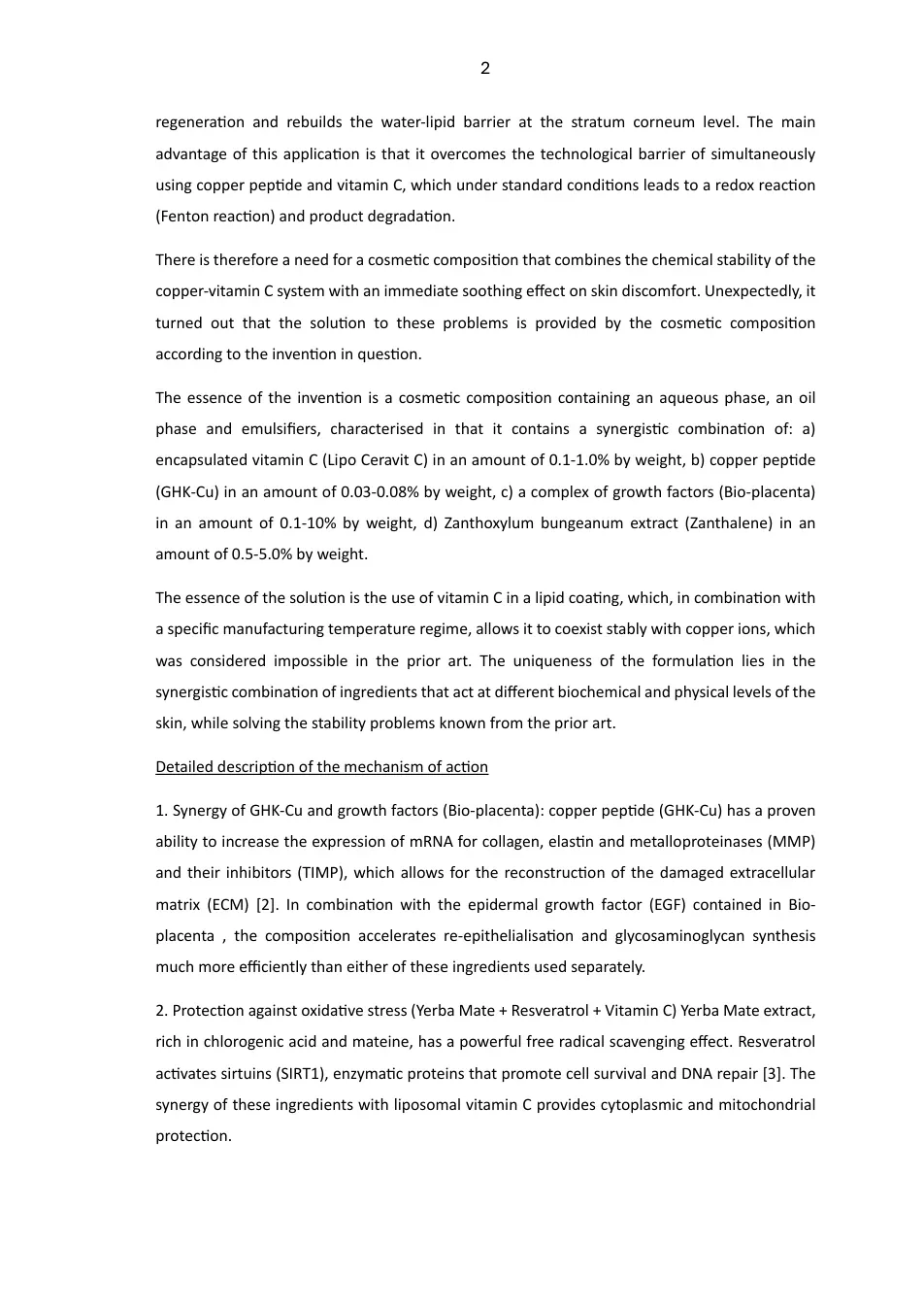
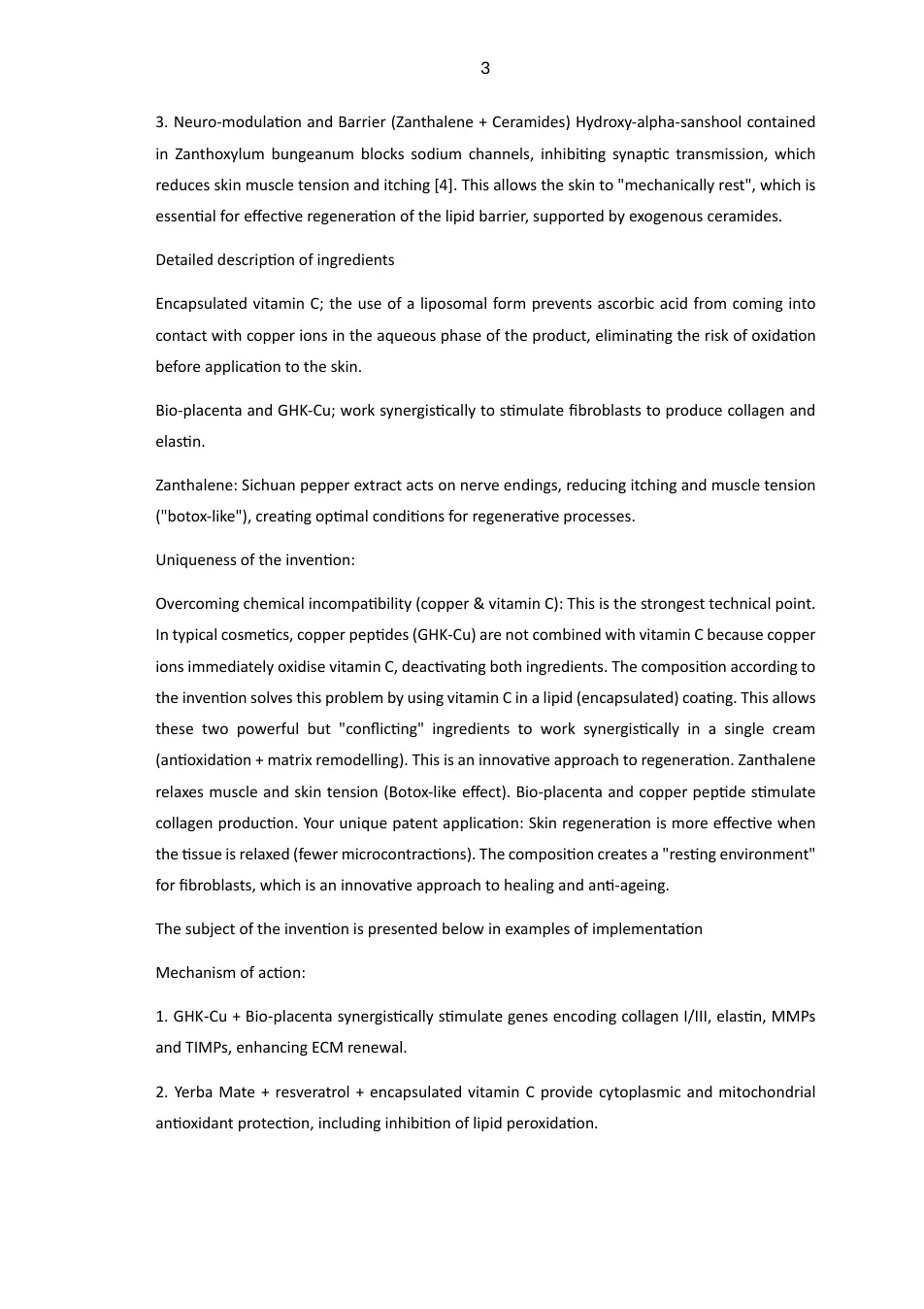
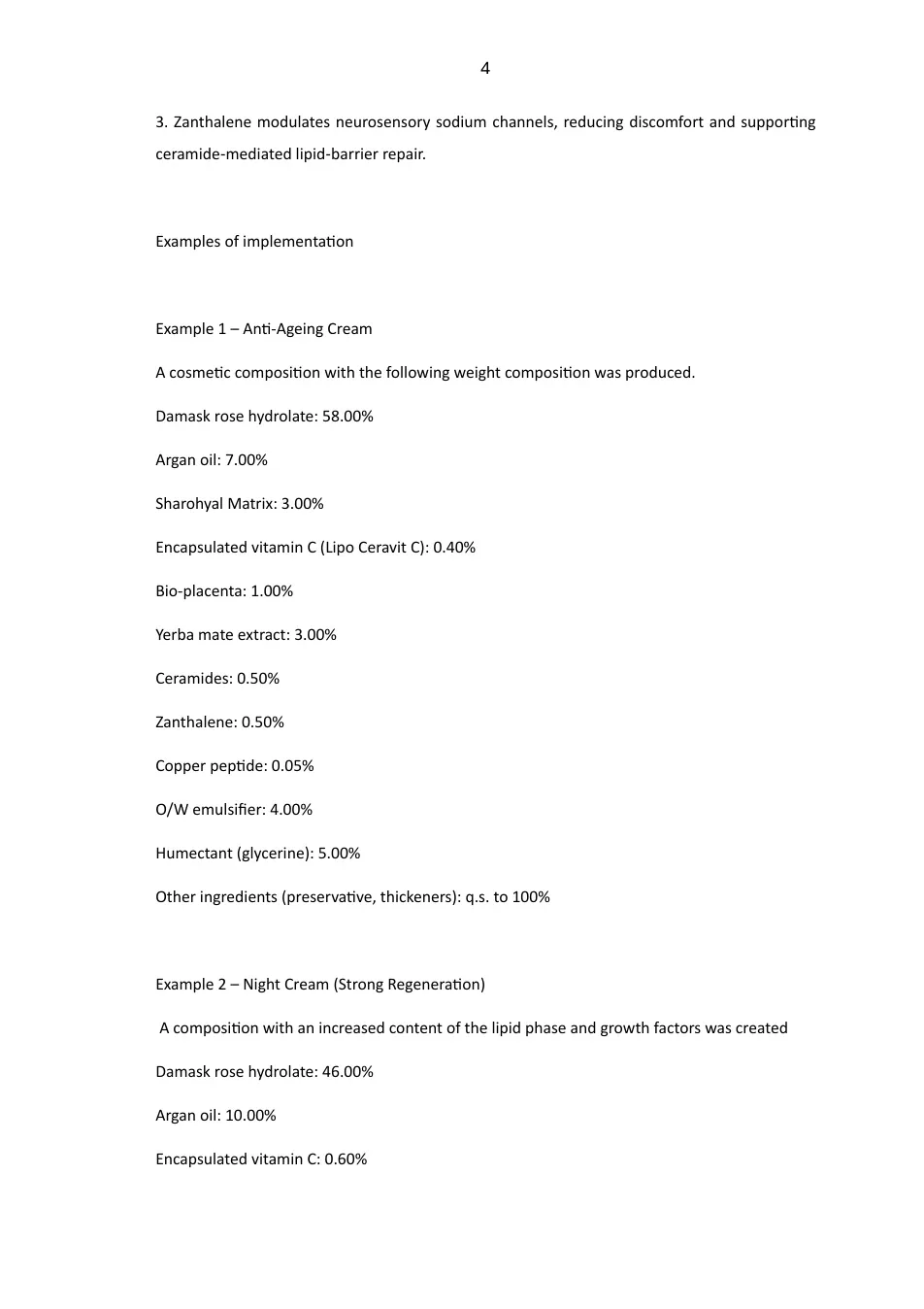
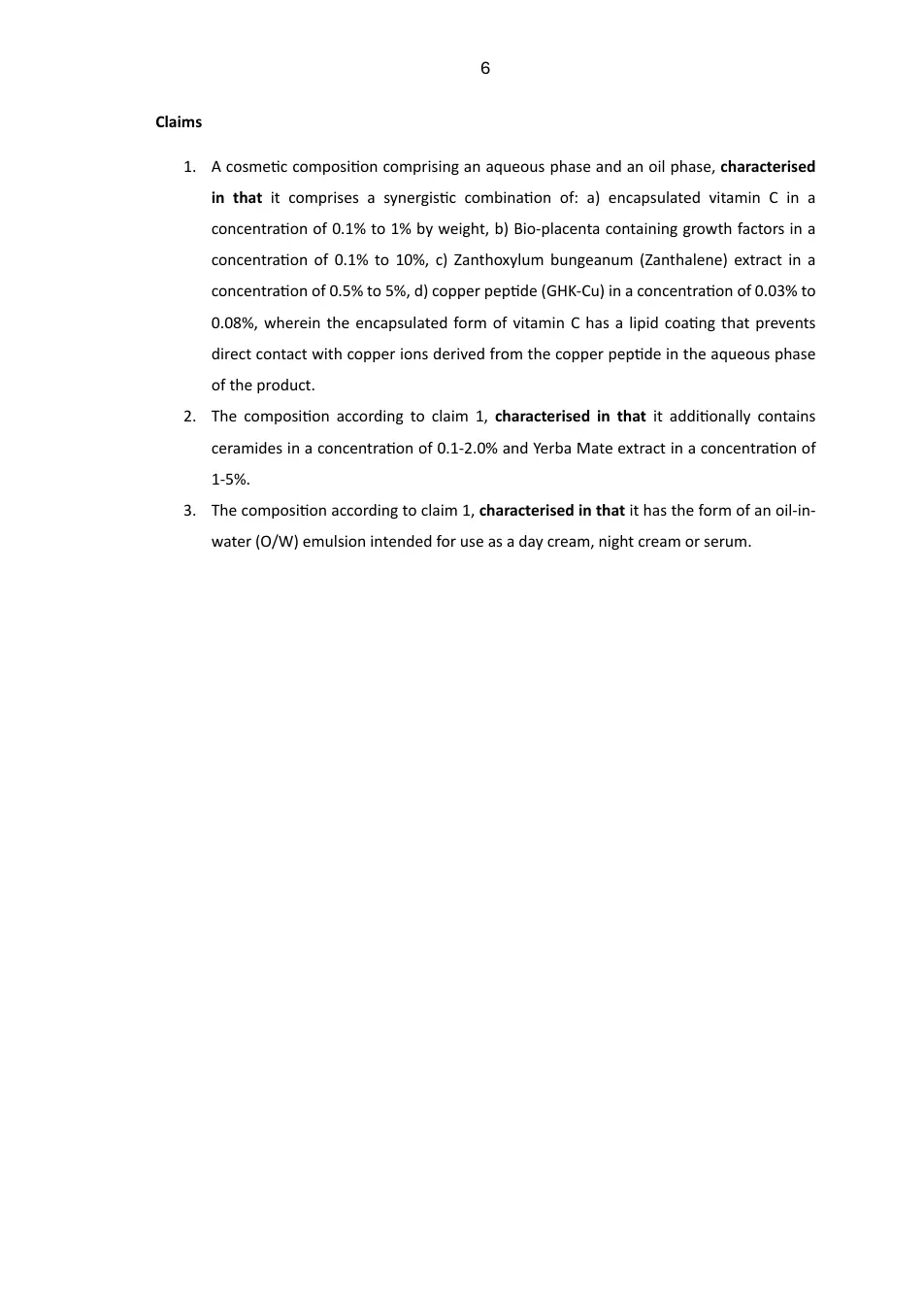
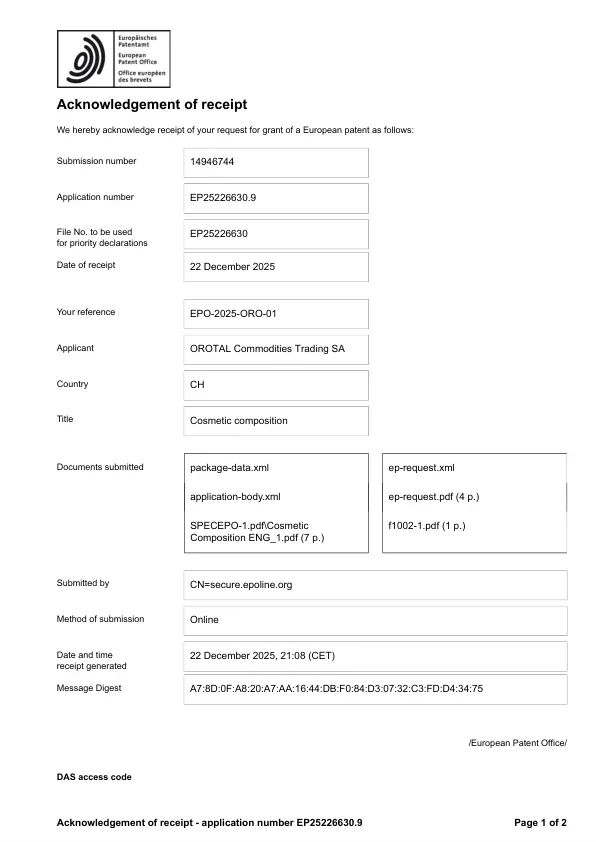
The brand’s formula is the subject of a patent application filed with the European Patent Office (EP25226630.9, patent pending). That is a filing, not a granted patent.
Hyaluronic acid FAQ
Can you use hyaluronic acid every day?
Yes, morning and evening, without breaks. It is a humectant rather than an exfoliant or a dermatologically active substance, so skin does not acclimatise to it and no cycling schedule is needed.
Which molecular weight of hyaluronic acid is best?
A blend. Fractions below 50 kDa penetrate further, and in clinical testing it was the 50 and 130 kDa groups that showed measurable improvement in periocular wrinkle depth. Fractions above 1000 kDa stay on the surface and form a film that limits water loss. A well-built formula does both.
Can hyaluronic acid harm the skin?
Applied topically it is regarded as very well tolerated. The tight feeling some people get after applying it usually comes from putting it on dry skin with nothing over the top, or from very dry indoor air, rather than from the ingredient.
Is hyaluronic acid safe in pregnancy?
The ingredient itself does not appear on lists of substances to avoid during pregnancy, unlike retinoids. During pregnancy and breastfeeding, with skin conditions, or while taking medication, choose your routine in consultation with a doctor or dermatologist.
Hyaluronic acid serum or cream — which should I choose?
A serum if you want hydration alone and already have a cream you like. A hyaluronic acid cream if you want to keep the routine to two products. The worst option is hyaluronic acid with nothing over it, particularly in a heated room in winter.
How long before you see a result?
Hydration and surface smoothness are noticeable from the first application and last several hours. A more durable change in how skin looks — as in the studies cited above — takes four to eight weeks of regular use.
Does hyaluronic acid help with make-up that pills?
Only indirectly. Foundation pills mostly because of too much product, or because make-up went on before the previous layer had settled. Give it a minute after the cream and cut the serum back to two or three drops.
If you change one thing in your routine today, change the timing: apply your hyaluronic acid serum while your face is still damp from washing, and cover it with cream, rather than waiting for the skin to dry. Same product, same amount, different skin by the end of the day.
The formulas in this article
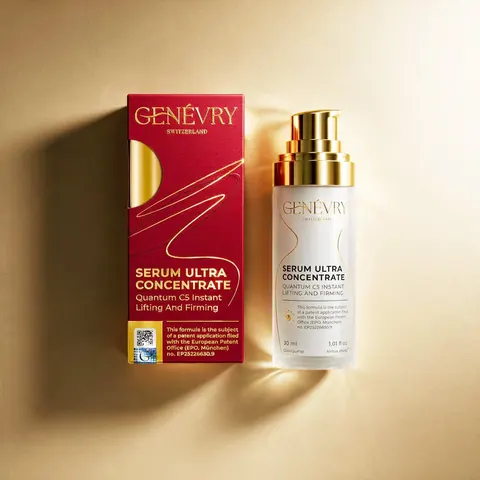 Quantum C5Ultrakoncentreret serum239 kr.Discover the formula →
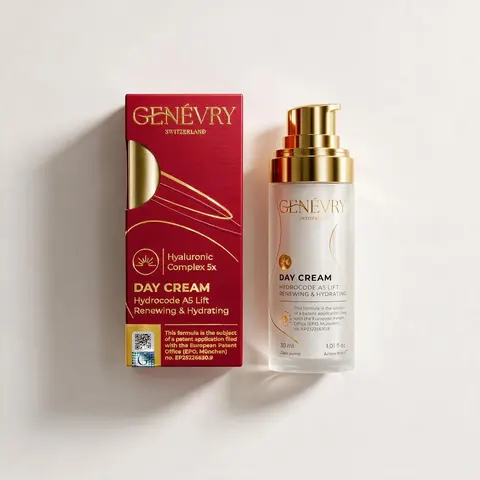 Hydrocode A5 LiftFornyende dagcreme269 kr.Discover the formula →
Cosmetic product. Individual results may vary.

 English / EUR
 English (US) / USD
 English (UK) / GBP
 Deutsch / EUR
 Deutsch (Schweiz) / CHF
 Français / EUR
 Italiano / EUR
 Español / EUR
 Nederlands / EUR
 Polski / PLN
 日本語 / JPY
 한국어 / KRW
 中文 / CNY
 العربية / AED
 English (Australia) / AUD
 English (Canada) / CAD
 Svenska / SEK
 Dansk / DKK
 Norsk / NOK
 Suomi / EUR
 Português / EUR
 Türkçe / TRY
 Čeština / CZK
 Magyar / HUF
 Română / RON
 Ελληνικά / EUR
 Slovenčina / EUR
 Hrvatski / EUR
 Slovenščina / EUR
 Lietuvių / EUR
 Latviešu / EUR
 Eesti / EUR
 Български / EUR
 Українська / EUR