Evening Skincare Routine: 6 Steps Ranked by Importance
Six steps of an evening ritual, ordered not by application but by how much you lose when one of them drops out.
An evening skincare routine still works when you have three minutes for it — as long as you know which three minutes carry the weight. The order of importance is not the order of application. Wash the day off first, then put on the layer that holds water in the skin, then the active ingredient, and leave the massage for last.
We ranked these steps by what happens when one of them drops out. Skip cleansing and you see it the next morning. Skip the gua sha massage and nothing measurable changes at all. That is how the positions were decided. Under each step you will find how to do it and how long it takes, because a ritual that runs twenty minutes loses to tiredness sooner or later.
In short
- Order of importance: 1. cleansing, 2. night cream, 3. a retinoid 2–3 times a week, 4. humectants, 5. neck and eye area, 6. massage.
- Order of application is different: cleanse → serum/humectants → retinoid on its nights → night cream → massage.
- The full routine takes 6–8 minutes. The minimum version, for evenings with nothing left in the tank, takes 2 minutes.
- Introduce a retinoid gradually, avoid it in pregnancy and while breastfeeding, and wear SPF the next morning.
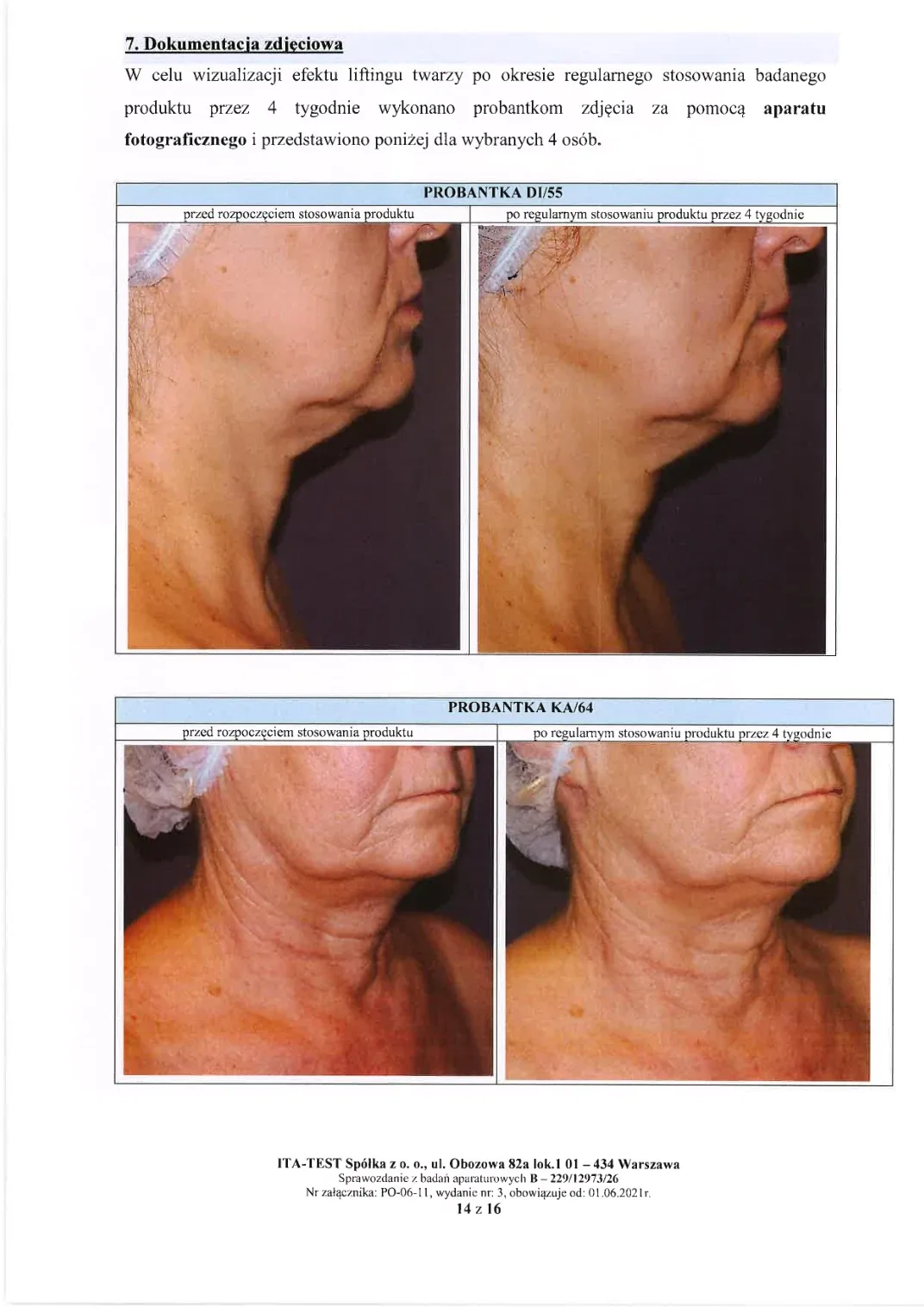
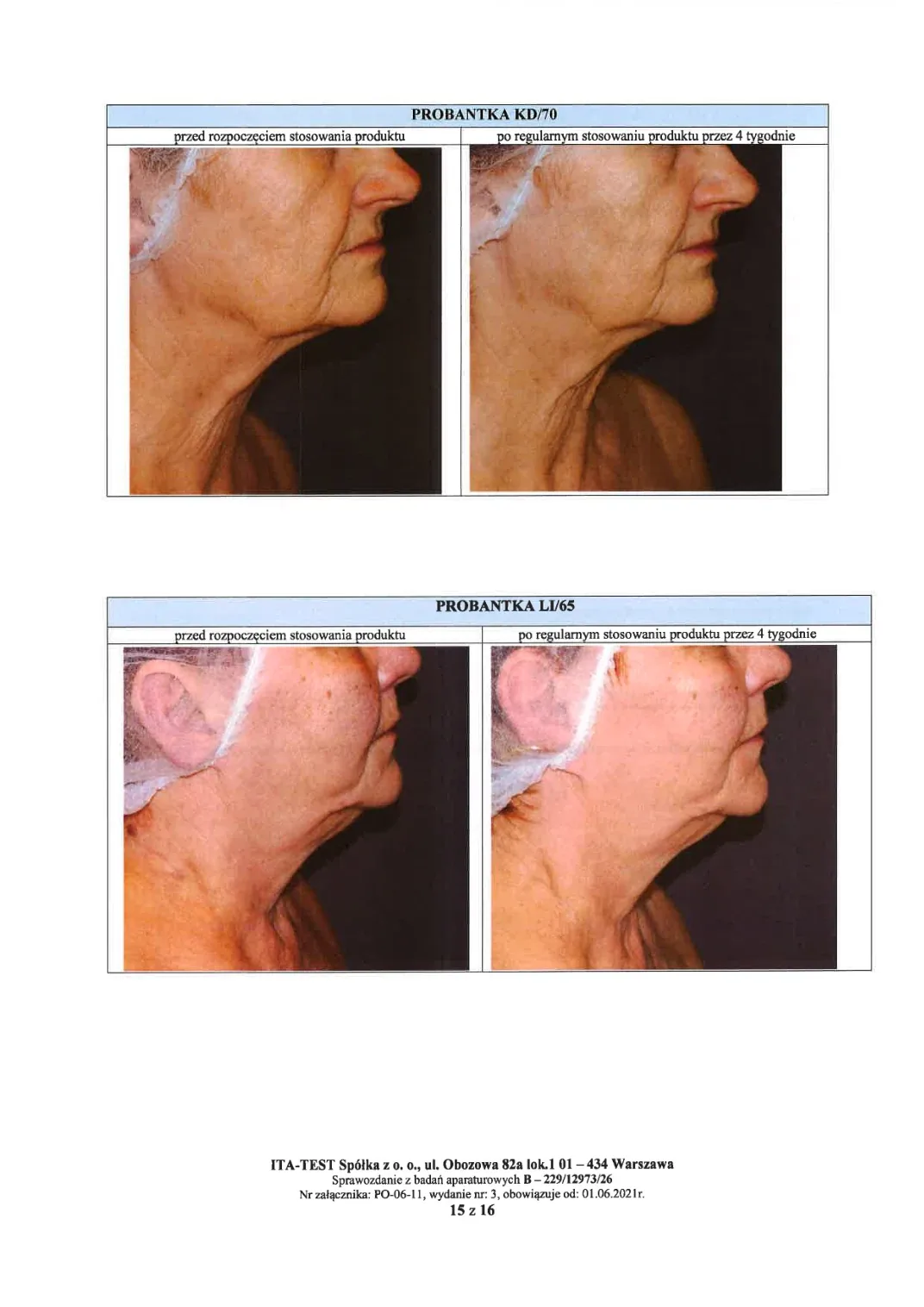
- In an instrumental study of the GENÉVRY Nocticode R5 night cream (n=10, 4 weeks), mean skin hydration rose by 38% and mean firmness by 14%.
- Skin permeability is higher at night than in the morning, which is an argument for giving it the repairing ingredients after dark.
Why an evening skincare routine matters more than the morning one
An evening skincare routine matters more than the morning one because mornings are about protection and evenings are about repair. The morning ritual holds off what comes from outside: UV, dry air from air conditioning or radiators, city particulates. In the evening there is nothing left to block. What remains is time for ingredients you would not wear in daylight, and for a layer that will not rub off onto a scarf within the hour.
There is a physiological reason too. In a study published in the Journal of Investigative Dermatology, Yosipovitch and colleagues measured transepidermal water loss, skin surface pH and skin temperature every two hours across a full day in sixteen healthy volunteers. A circadian rhythm showed up in most of the measured variables, and the authors concluded that skin permeability is higher in the evening and at night than in the morning (Yosipovitch et al., J Invest Dermatol 1998, PMID 9424081).
That cuts both ways for your routine. Ingredients go in more readily — including the ones that sting, which is why a retinoid is introduced slowly. And the skin lets more water out at the same hours, so the layer that keeps that water in does more good at eleven at night than the same layer does at eight in the morning.
How we ranked the six steps
Three criteria, all of them versions of one question: what do you lose if you drop this step for a month. First, how well the step is described in the literature. Second, whether skipping it breaks the steps around it. Third, how long it actually takes. A step that costs thirty seconds and protects the rest of the routine ranks above one that takes five minutes and shows for an hour.
| Rank | Step | What it does | Strength of evidence | Time | If you skip it |
|---|---|---|---|---|---|
| 1 | Cleansing | Removes sunscreen, make-up, sebum and the day’s grime | Very strong — the base of every protocol | 60–90 s | Everything else sits on a dirty layer; skin looks dull by morning |
| 2 | Night cream | Seals water and lipids into the stratum corneum overnight | Strong — emollients and occlusion are well described | 30 s | Skin wakes up tight, and actives are tolerated worse |
| 3 | Retinoid 2–3 × a week | The best-documented active in anti-ageing care | Strong, but results are counted in months | 20 s | The routine stays hydrating, with no repairing part |
| 4 | Humectants on damp skin | Bind water in the stratum corneum, improve comfort | Good, with short-term measurable effects | 30 s | The cream has less water to seal in; tightness returns sooner |
| 5 | Neck, décolleté, eye area | Brings the areas that age faster into the ritual | Moderate — from anatomy and practice | 30 s | The line between face and neck becomes visible over the years |
| 6 | Gua sha massage | Relaxes jaw and temple muscles; skin looks fresher for a while | Limited, and the effect is temporary | 3–5 min | Nothing bad happens — this one is for pleasure |
1. Washing the day off — the step nothing replaces
Evening cleansing is the one step with no substitute. Sunscreen and foundation are built to stay put for hours, through humidity and movement, so water alone will not lift them. Whatever stays behind mixes with sebum and dust and spends the night underneath your cream.
The mistake we hear about most often is a micellar pad instead of a wash. Micellar water dissolves make-up, but it leaves surfactants sitting on the skin. If you use it, treat it as the first stage and rinse afterwards with a gel or a foam.
A simple pattern that holds up all year:
- If there is sunscreen or make-up on your face, start with an oil or a milk, massage it into dry skin for about a minute, then add water and emulsify.
- Second wash: a gentle gel or foam, 30–40 seconds, fingertips only, no scrubbing.
- Lukewarm water, never hot. Hot water feels wonderful and leaves the skin tighter.
- Blot your face with a towel instead of rubbing it, and move straight on to the next step.
- On a bare-faced evening with no SPF and no make-up, one wash is enough.
Microfibre cloths, a sonic brush every night, a scrub every day — these are extras that usually do more harm than good on sensitive skin. Exfoliation belongs in the week, not in every evening.
2. Night cream — the layer that keeps water in
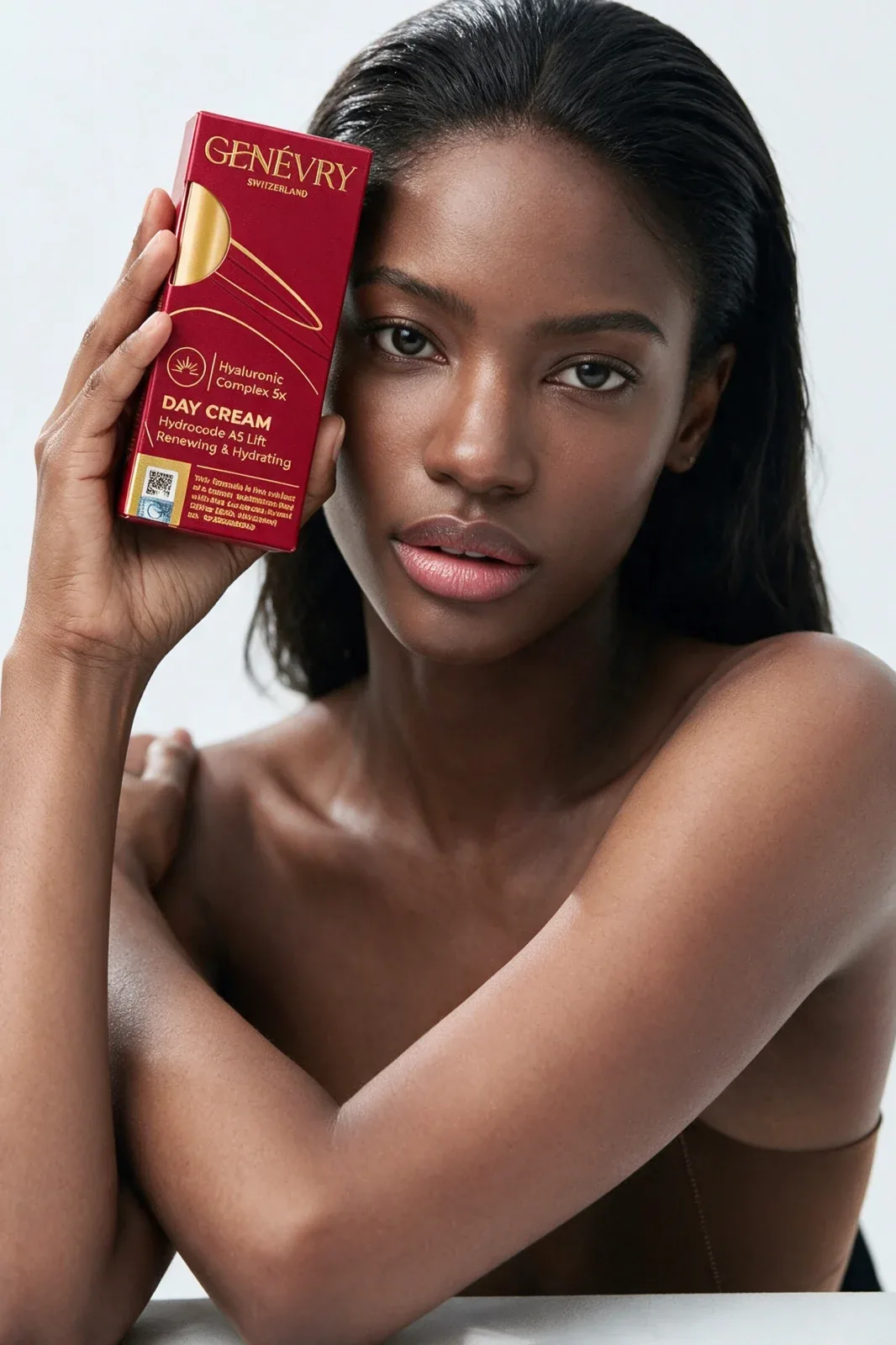
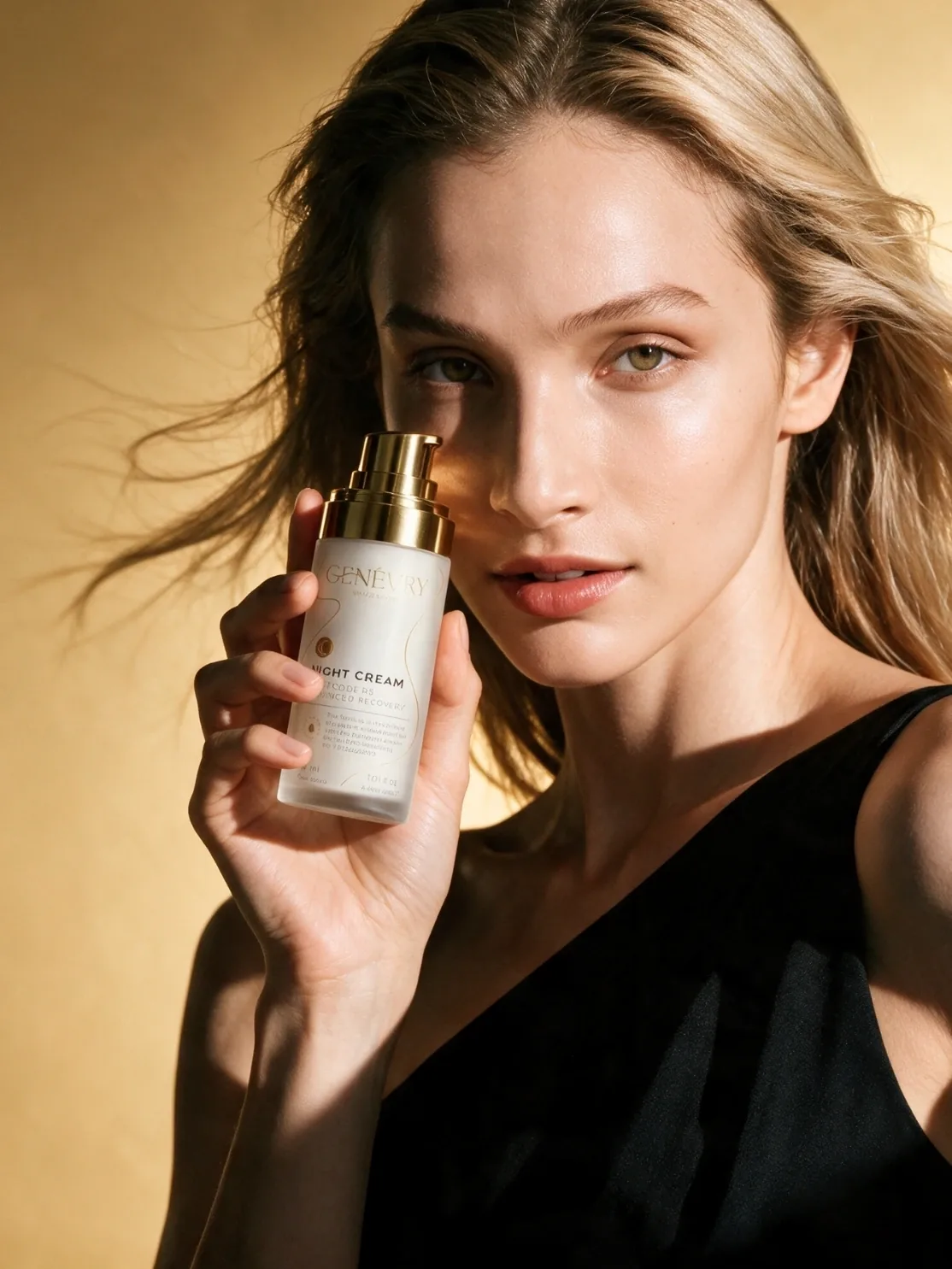
The night cream comes second because it seals in everything you applied before it and then works undisturbed for eight hours. It is a layer of emollients and occlusive ingredients that slows water loss from the epidermis exactly when that loss is at its highest. A day cream does the same job, but it also has to live under sunscreen and make-up, so it tends to be lighter.
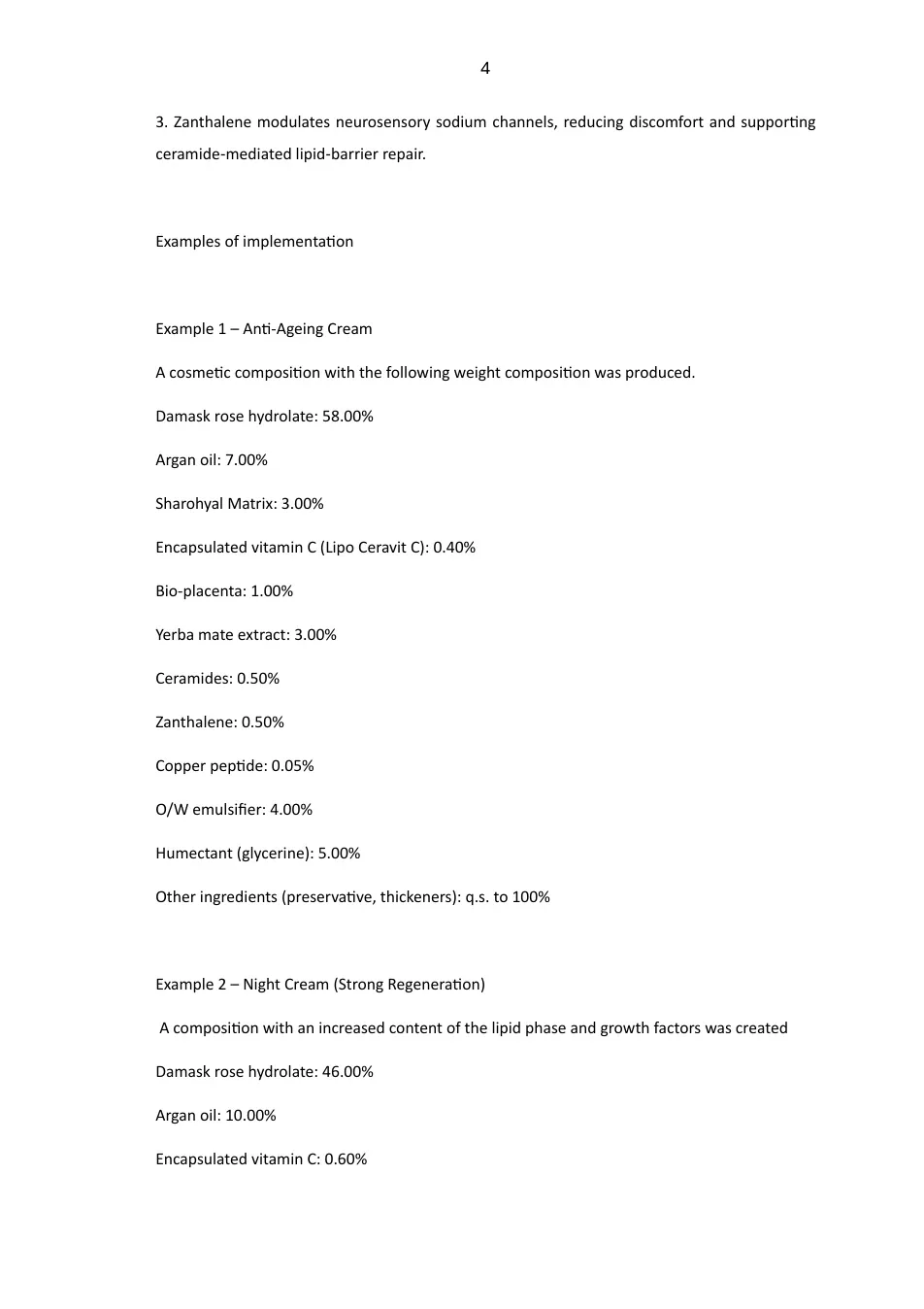
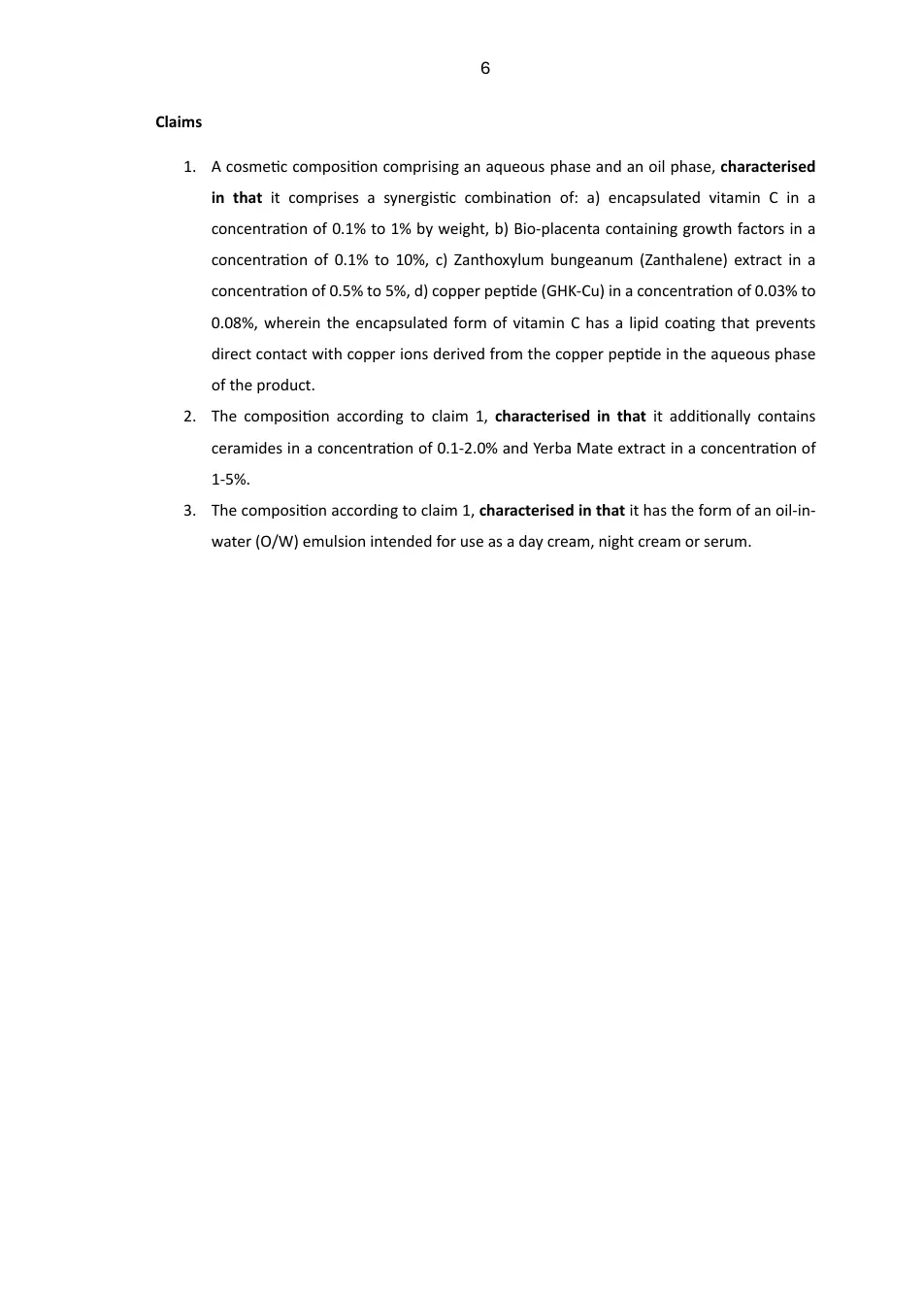
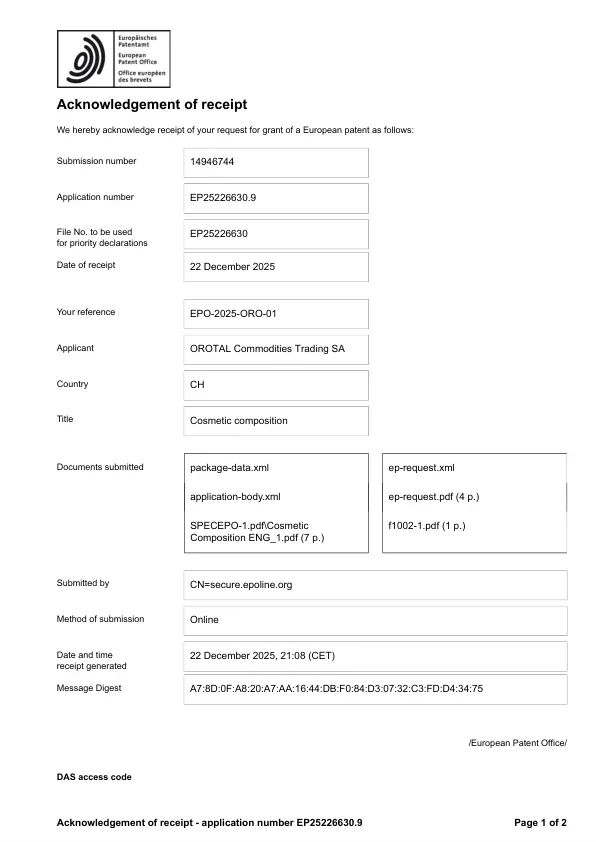
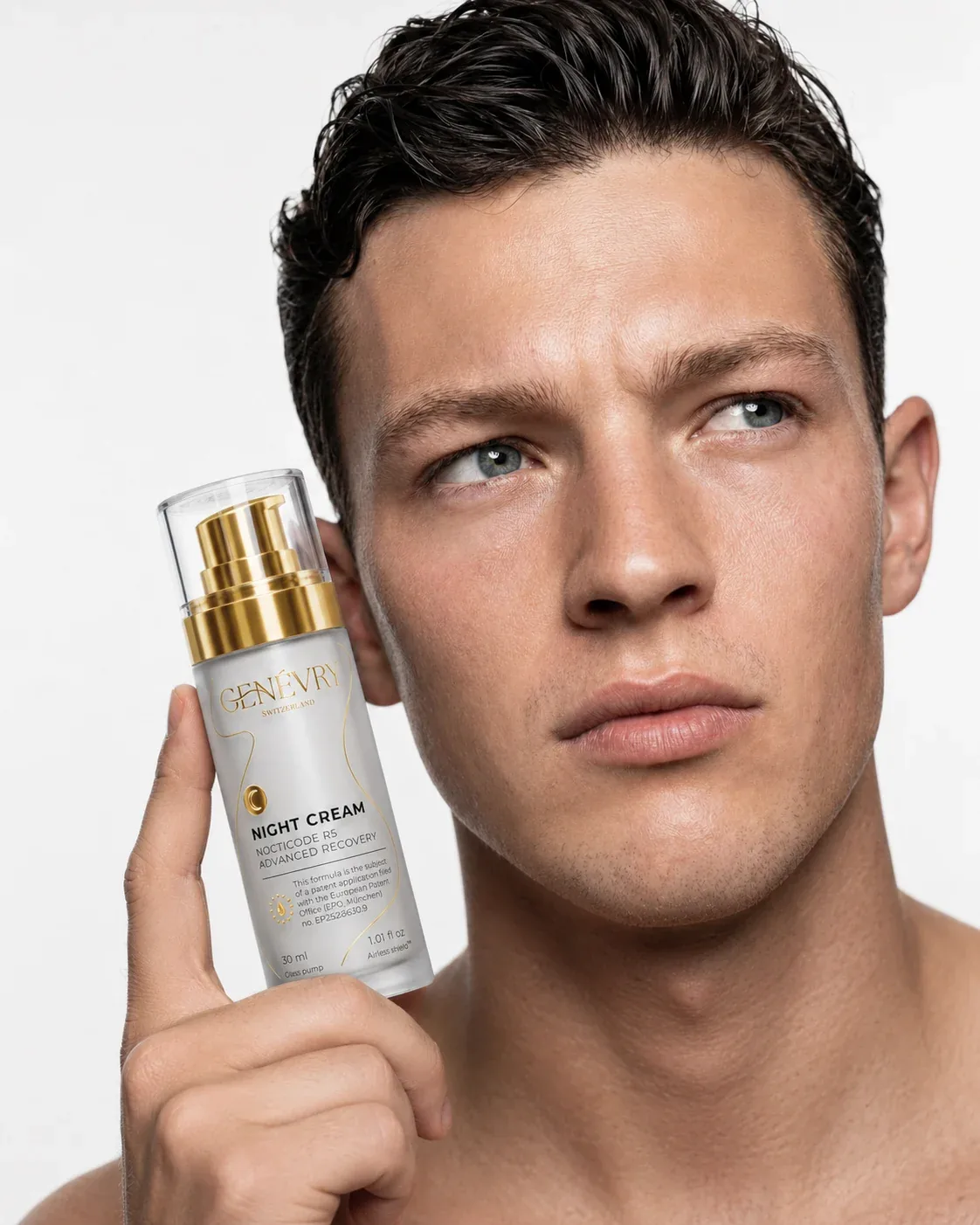
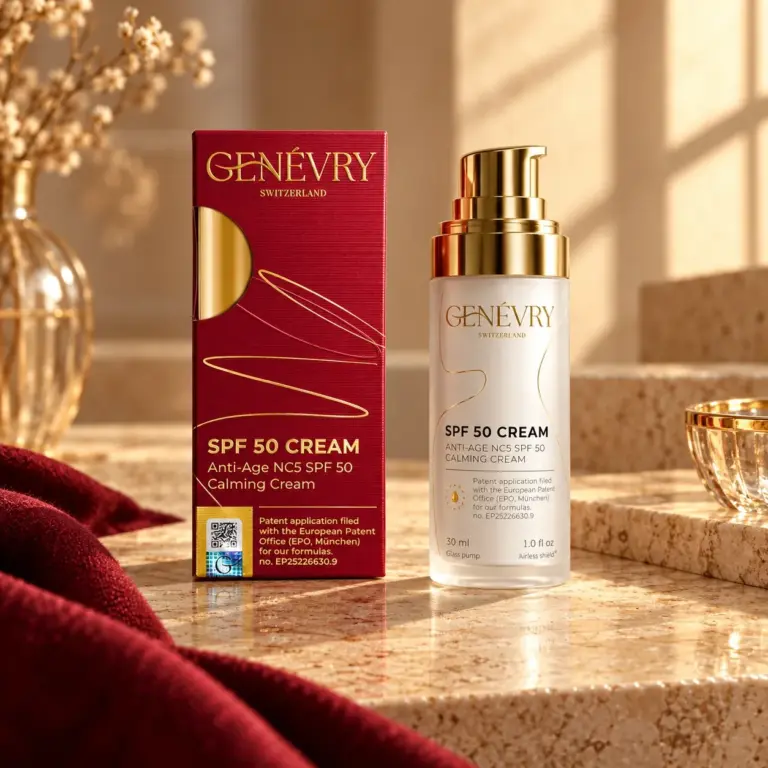
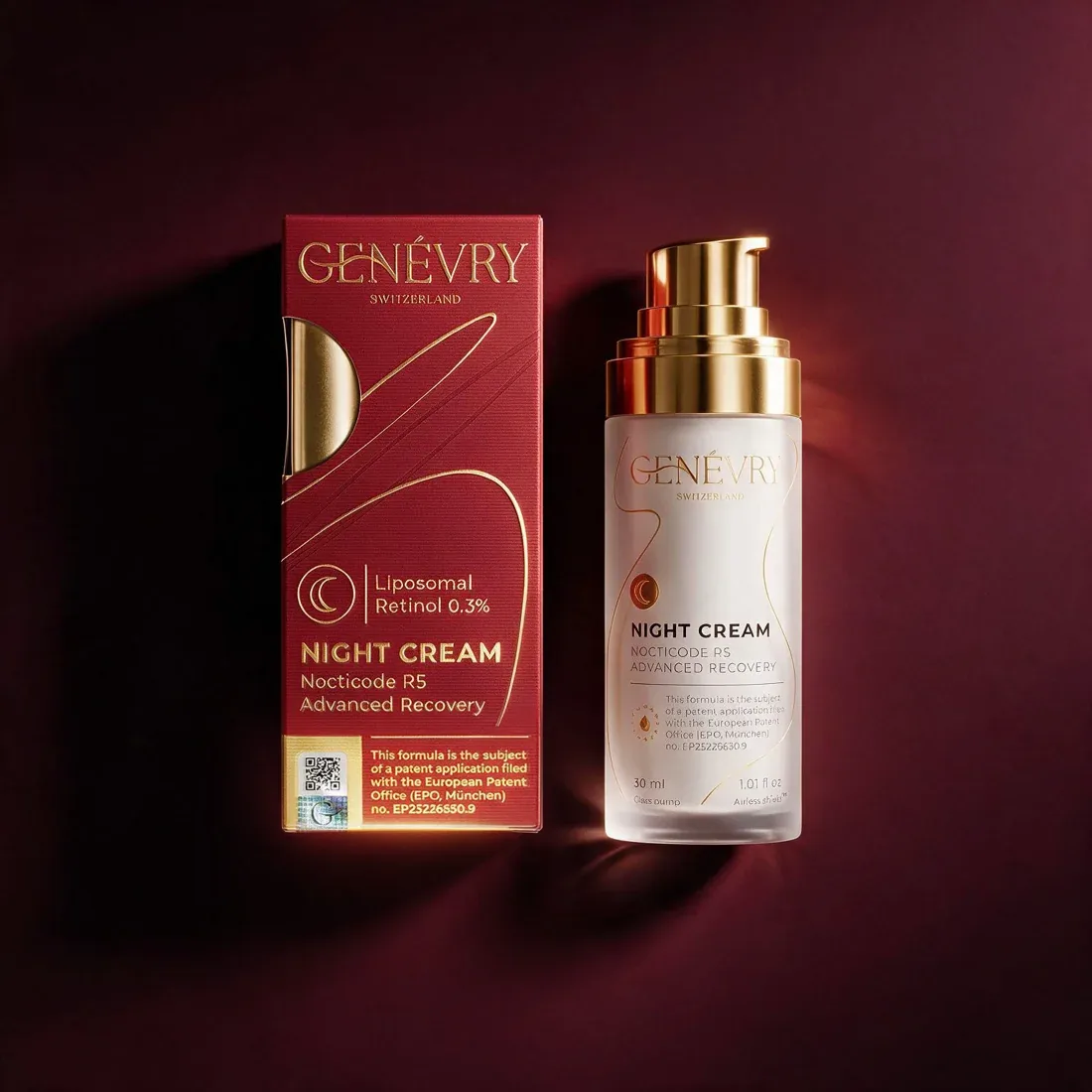
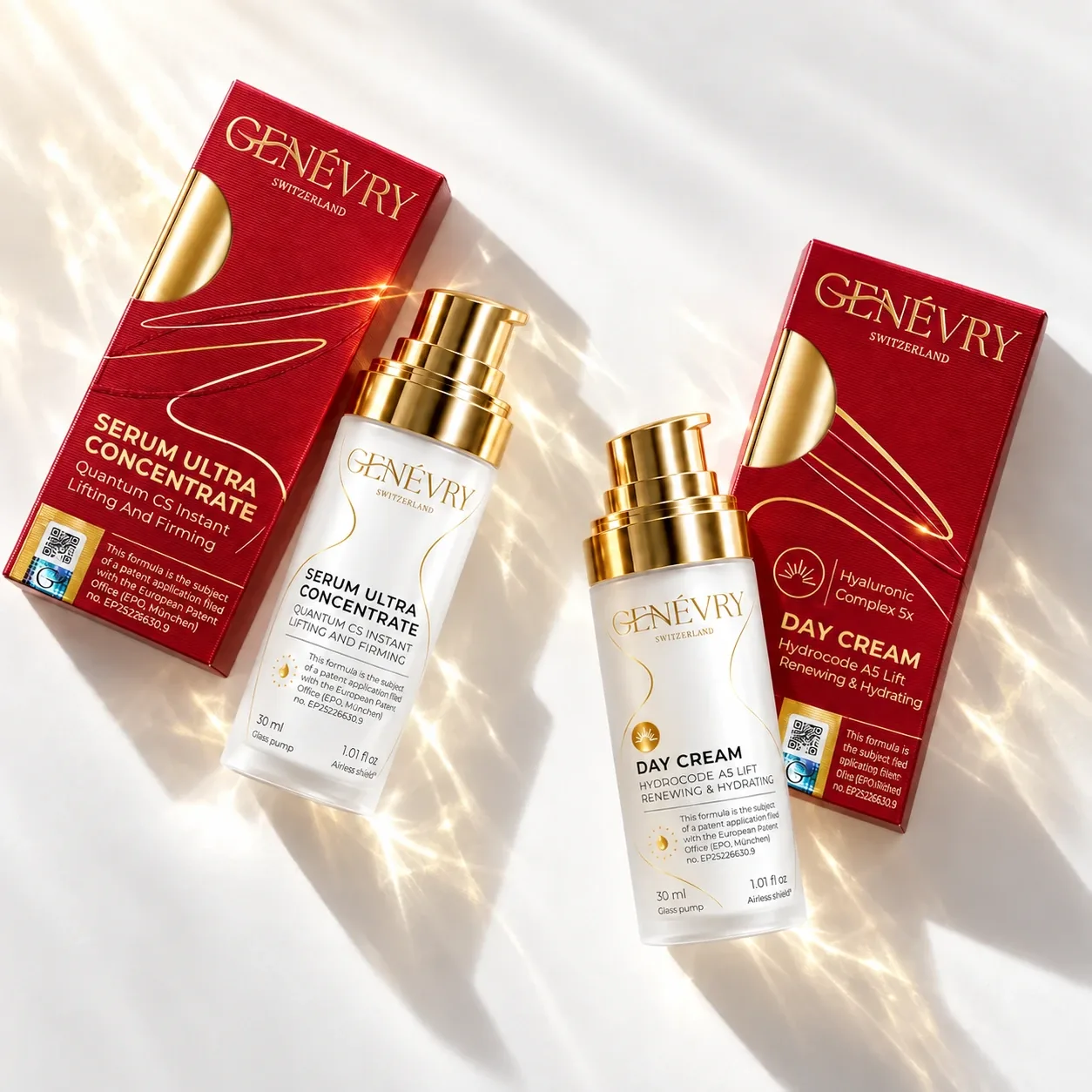
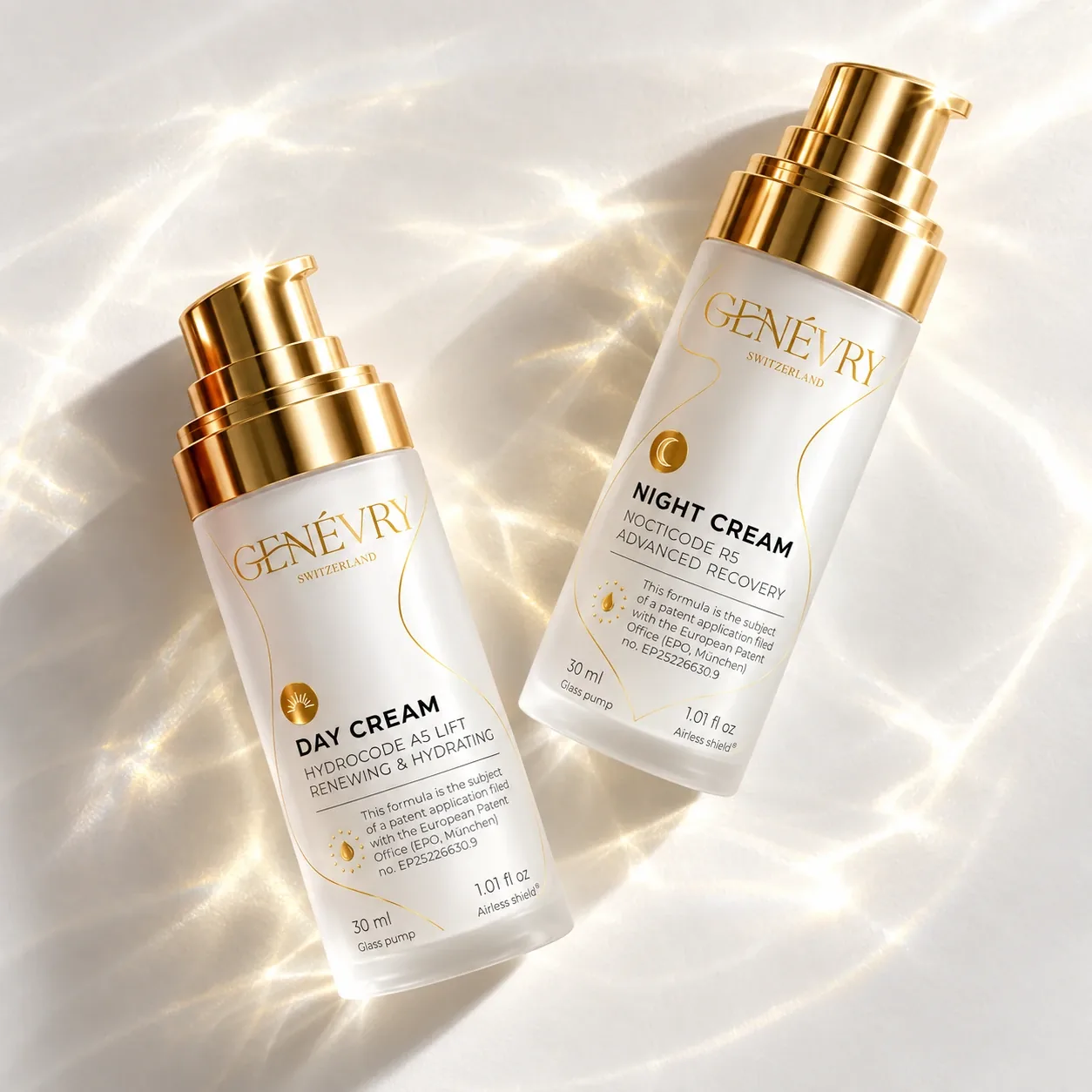
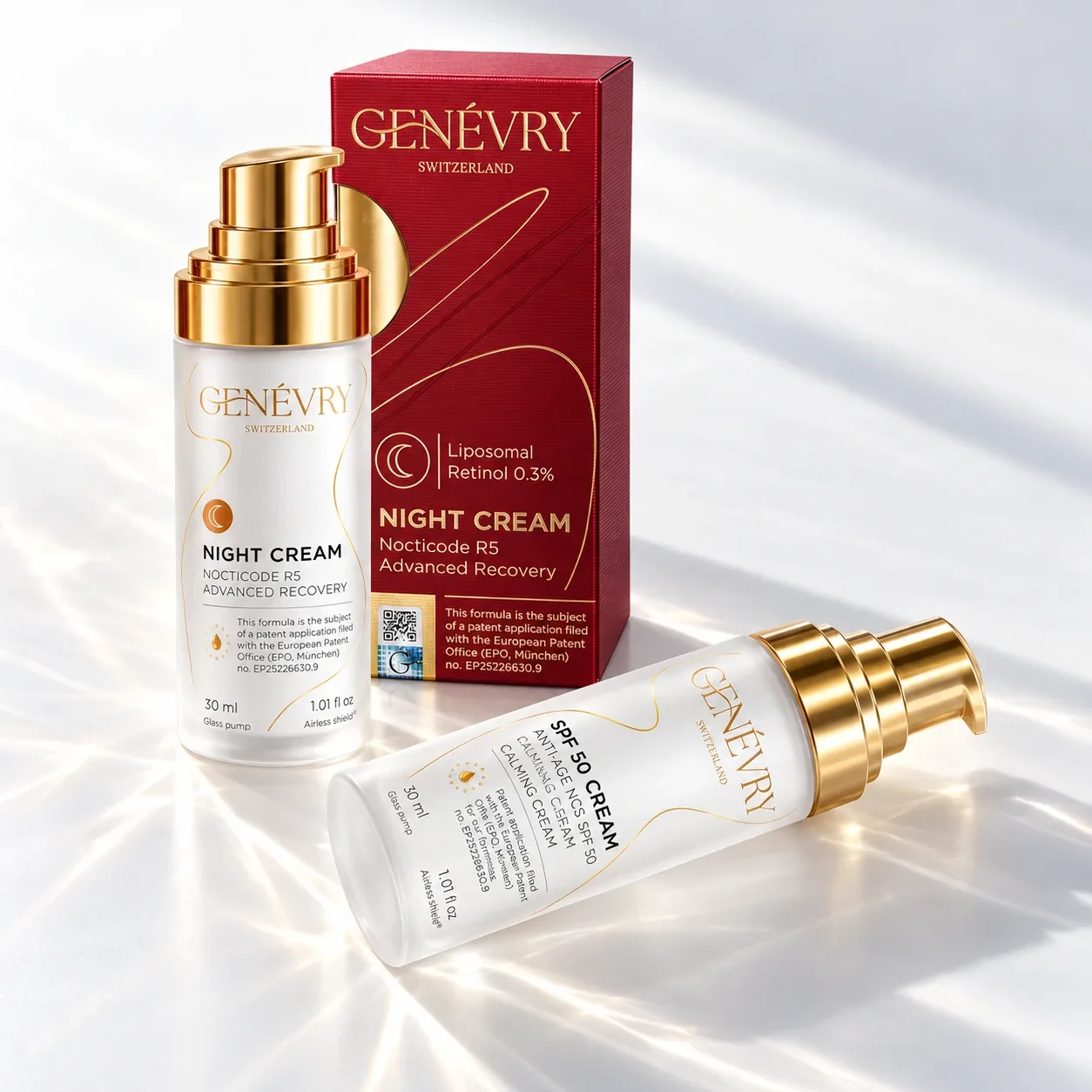
Our evening step is the GENÉVRY Nocticode R5 Night Cream — a Swiss night cream with 0.3% liposomal retinol, 30 ml in a glass pump bottle, with the formula covered by patent application EP25226630.9 (patent pending). In an instrumental study on 10 participants over 4 weeks, mean skin hydration increased by 38% and mean firmness by 14% (individual maximum +23%). Mean wrinkle length decreased from 2.08 to 1.88 mm, with a reduction recorded in 9 of the 10 participants.
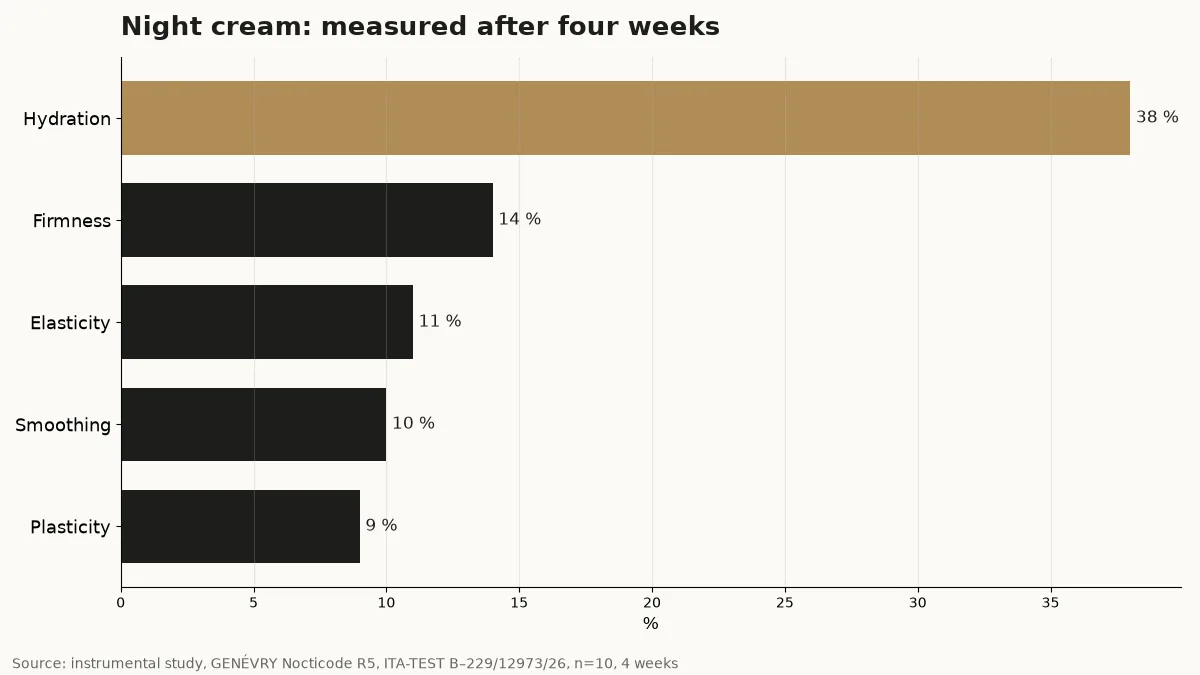
Read numbers like these carefully: ten people is a small group and four weeks is a short run. They show the direction of change measured by an instrument, not a promise for every skin.
How much cream, and how to spread it
A pea-sized amount covers the whole face with a light texture; with a richer formula, use twice that. Warm the cream between your fingers, work from the centre of the face outwards, and carry it down onto the neck. If your skin still looks matte and tight ten minutes later, add a thin second layer rather than changing the product.
3. A retinoid two or three nights a week
Retinoids have the best-documented record of any ingredient used in anti-ageing care, which is why they sit this high. They sit below the cream for practical reasons: a retinoid applied to irritated, poorly moisturised skin ends in flaking and a routine abandoned after a fortnight. Calm base first, active ingredient second.
The schedule that is least likely to end in giving up:
- Weeks 1–2: two evenings a week, a pea-sized amount for the whole face.
- Weeks 3–4: three evenings, if there is no stinging and no flaking.
- The sandwich method for sensitive skin: a thin layer of cream, then the retinoid, then cream again.
- Stay away from the eyelids, the corners of the nose and the lips, where the skin is thinnest.
- SPF the next morning is not optional, winter included.
Retinol is a form of vitamin A; for the chemistry see the Wikipedia entry on retinol, and for a practical starting plan read our guide to retinol for beginners. Retinoids are not used during pregnancy or breastfeeding. If you take prescription skin medication or have a diagnosed skin condition, talk to a dermatologist before adding anything to your routine.
4. Humectants while the skin is still damp
A hydrating serum works best applied within a minute of washing, onto skin that is still slightly damp. Humectants — glycerin, hyaluronic acid, panthenol, urea at low concentrations — bind water in the stratum corneum. Put them on bone-dry skin in a dry room and they can pull water from deeper layers instead of from the air, which is the opposite of what you wanted.
This step is fourth rather than second because the routine survives without it: a cream already contains humectants of its own. With it, comfort arrives faster and the difference shows sooner, especially in winter in a heated flat.
One practical note on layering: thinnest texture first, thickest last. Toners and essences, then serum, then the retinoid on its nights, then cream. Half a minute between layers is enough, unless you are using acids — then give the skin a few minutes.
5. Neck, décolleté and the eye area
The skin on the neck and chest is thinner than facial skin and has fewer sebaceous glands, so it dries out faster and shows change sooner. Products that stop at the jawline leave a visible border after a few years. You do not need a separate product — take whatever is left on your hands and sweep it upwards along the neck and horizontally across the décolleté.
The eye area has its own rules. The skin there is the thinnest on the face and stretches easily. Apply with your ring finger, tapping gently, onto the orbital bone rather than right at the lash line. A rich cream pressed into the eyelid at eleven at night is a common reason for puffiness at seven in the morning — not an allergy, just too much product.
6. Gua sha massage — five minutes at the end
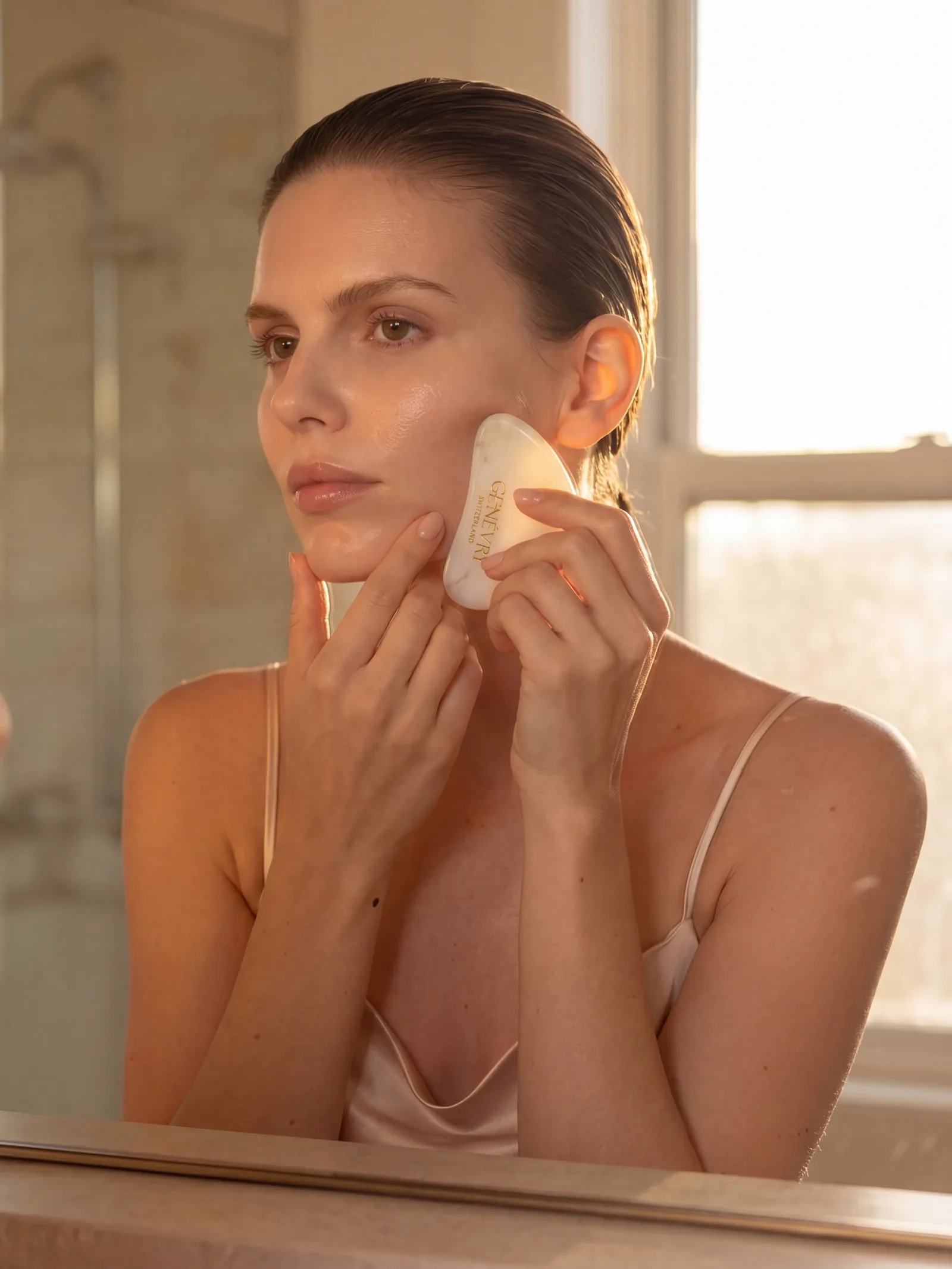
The massage closes the ranking because its effect is pleasant and short-lived: a few minutes with the stone and the face looks more rested, the jaw and temples let go, but this is not a change you will measure in a month. It belongs to the evenings when you feel like it, not to the compulsory list.
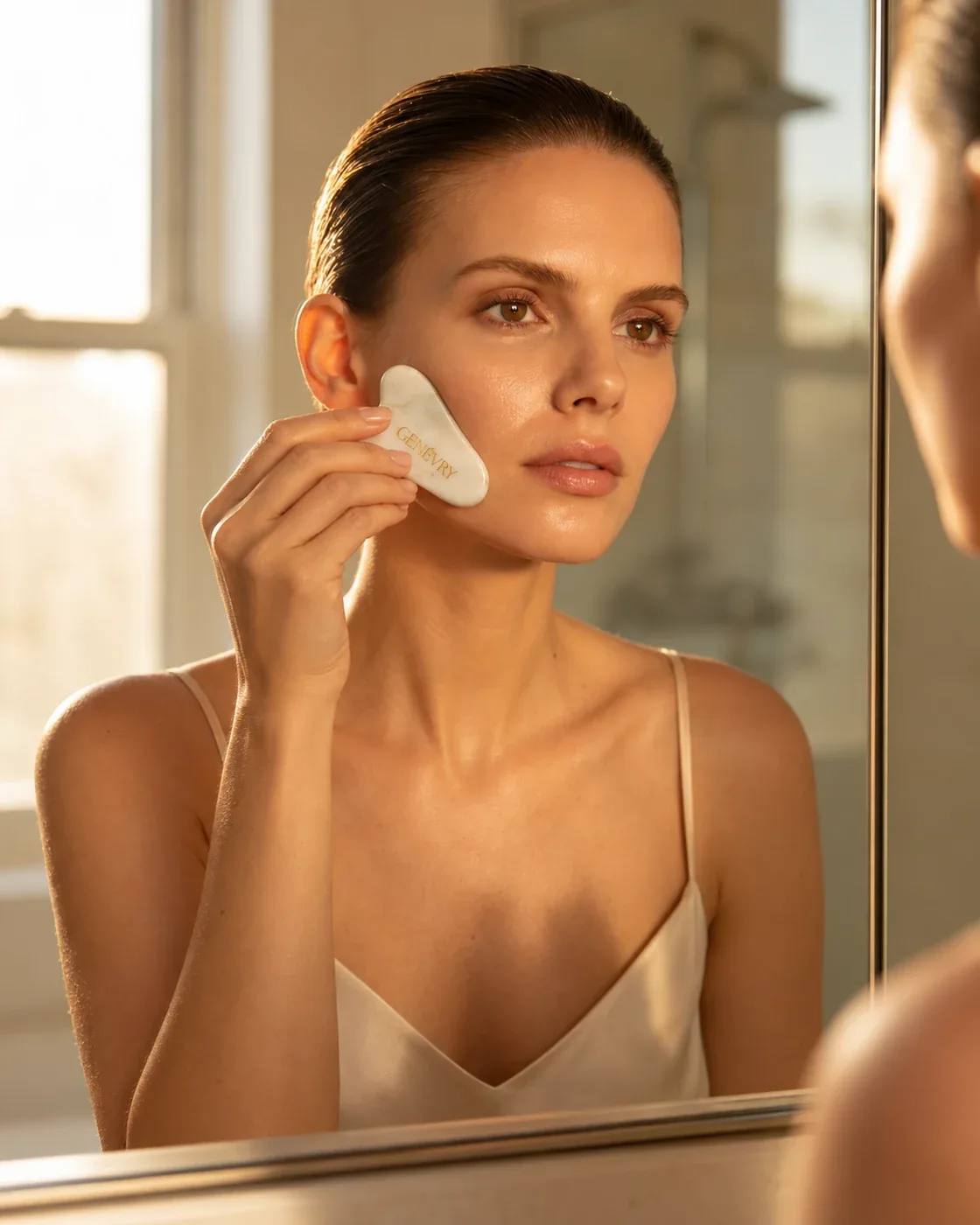
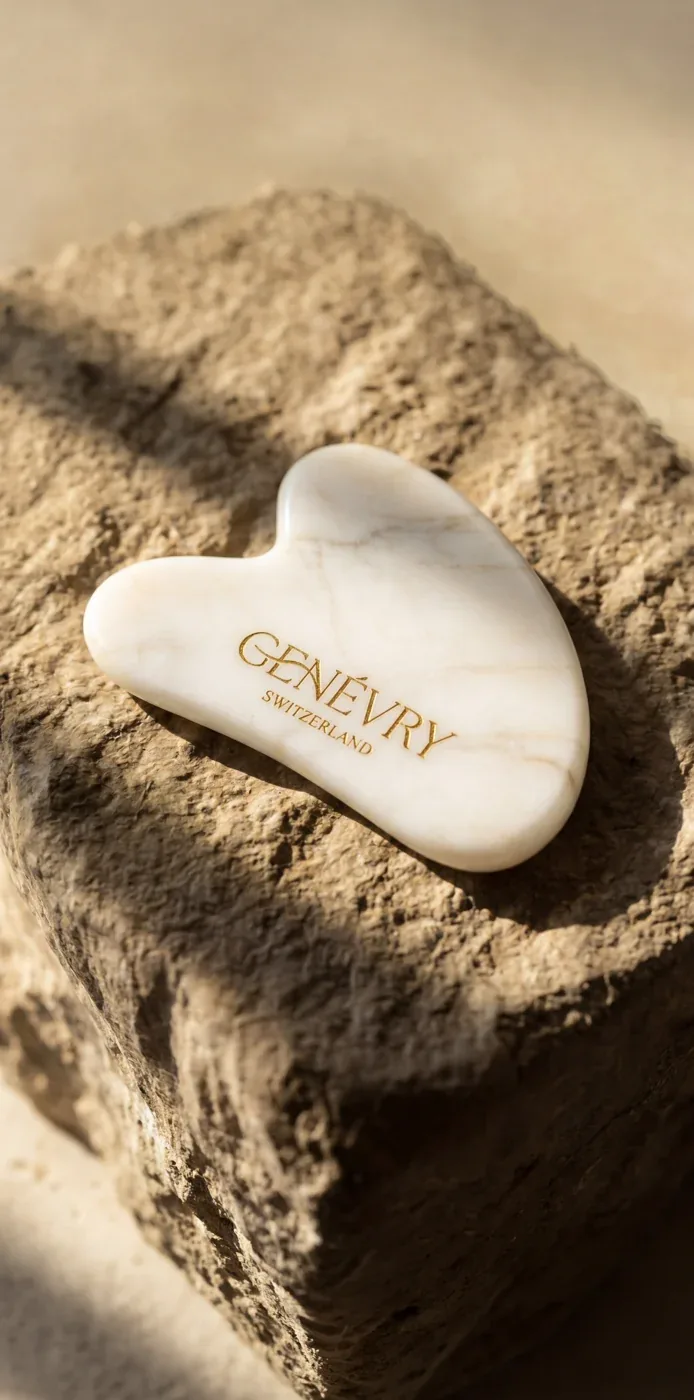
The technique in brief: glide the stone over skin covered with oil or cream, held flat at roughly a 15-degree angle, with light pressure, always from the centre of the face outwards and then down the neck. Three to five passes per area is plenty. Our GENÉVRY Sculpting Gua Sha is a smooth facial massage stone made as the closing step of an evening ritual. The full sequence is written out in our separate guide: how to use a gua sha step by step.
Do not massage irritated skin, active breakouts, or a face that has just had a retinoid on it — friction plus an active ingredient is a combination you do not need.
How to spread the steps across a week
An evening routine does not have to look the same seven nights running. A pattern that works well for normal and mature skin looks roughly like this:
| Evening | What you do | Time |
|---|---|---|
| Monday | Cleanse, serum, retinoid, cream | 5 min |
| Tuesday | Cleanse, serum, cream (a rest night for the skin) | 3 min |
| Wednesday | Cleanse, serum, cream, gua sha massage | 8 min |
| Thursday | Cleanse, serum, retinoid, cream | 5 min |
| Friday | Cleanse, cream — the minimum version | 2 min |
| Saturday | Cleanse, gentle exfoliation (every 7–10 days), serum, cream | 6 min |
| Sunday | Cleanse, serum, cream, neck and décolleté properly | 5 min |
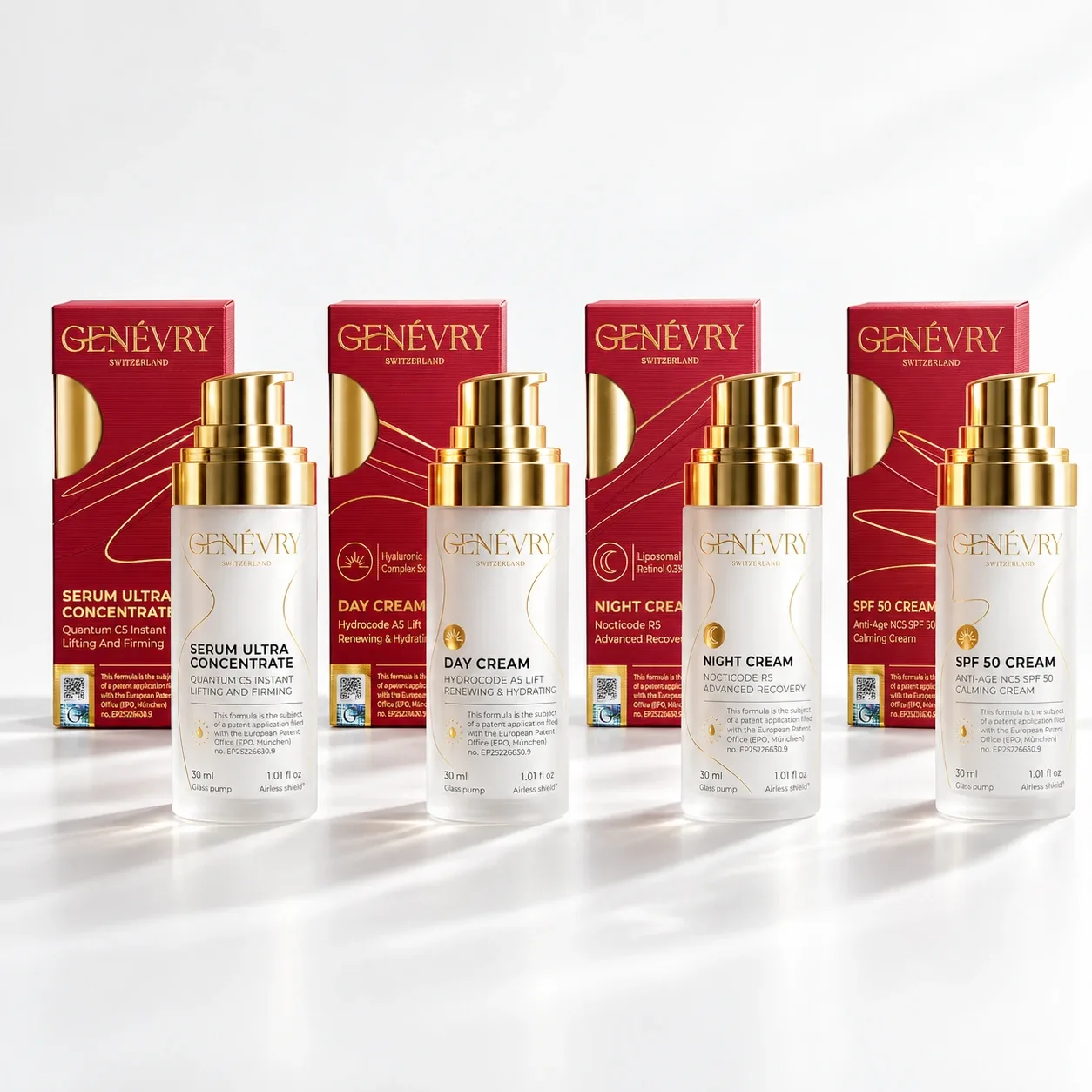
Two evenings a week without actives is part of the plan, not laziness. Skin that gets time to rebuild its barrier handles the retinoid better the following week. If you would rather have all four stages of the day in one set, they are together in The Skin Code Protocol.
How to adjust the order for your skin type
The ranking holds; the textures and the frequency change. On oily and combination skin, choose a light gel-cream for the night and let the serum carry more of the hydration — skipping the cream usually ends with the skin producing more sebum, not less. On dry skin, the opposite: a richer cream, and if there is still tightness afterwards, a few drops of facial oil as the final layer once or twice a week.
Sensitive, reactive skin needs one change in the order: the retinoid slides from third to fourth place, and soothing, barrier-repairing ingredients move ahead of it. Only once two weeks have passed with no stinging after washing is it worth going back to the active — sandwiched, and once a week to start.
On mature skin past fifty, the biggest difference usually comes not from a new ingredient but from doing the first two steps consistently and adding the neck and chest every evening. If you are on hormone therapy or under dermatological treatment, run any new active past your doctor first.
Five mistakes we see most often
- Skincare right before bed. A cream applied a minute before your head hits the pillow ends up half on the pillowcase. Give it ten minutes.
- Changing everything at once. Three new products in one evening and you cannot tell what worked or what stung. One change per fortnight is plenty.
- A retinoid every night from day one. The skin flakes in protest, and the whole tube ends up in a drawer.
- Water that is too hot. Lovely in winter, and it leaves the skin tighter and more easily irritated.
- Skipping cream because the skin is oily. Oily skin loses water overnight as well; the answer is a lighter texture, not no layer at all.
FAQ
How long should an evening skincare routine take?
Between two and eight minutes. The minimum version is washing your face and applying a night cream — two minutes that still deliver most of the benefit. An evening with serum, a retinoid and a gua sha massage runs to about eight. Routines longer than ten minutes rarely survive beyond a month.
Which matters more, serum or night cream?
The night cream, if you have to choose one. It holds water in the epidermis all night and improves comfort from the first evening. A serum brings the active ingredients and works best underneath the cream, not instead of it.
Do I need to double cleanse every night?
No. Double cleansing makes sense when there has been sunscreen, foundation or waterproof make-up on the skin. On a bare-faced evening one gentle wash is enough, and a second one more often dries the skin than helps it.
When in the evening should I apply a retinoid?
After cleansing and after a hydrating serum, onto dry skin, and before the night cream. On sensitive skin the sandwich method works well: a thin layer of cream, the retinoid, then cream again. Retinoids are not used during pregnancy or breastfeeding.
Does gua sha firm the jawline?
Gua sha relaxes tense muscles and improves how the skin looks for a short while, but it does not change the structure of the tissue and does not replace in-clinic treatments. Treat it as the part of the ritual that feels good and helps you wind down.
What should I do on an evening when I have nothing left?
Wash your face and put on cream. Those two things take two minutes and cover what matters most: clean skin and a layer that keeps water in. The rest of the ritual can wait until tomorrow at no cost.
If you want to start with a single change, start with the one at the top: for two weeks, cleanse properly and apply your cream ten minutes before bed. Add the retinoid after that, and keep the massage for the evenings when you feel like it.
The formulas in this article
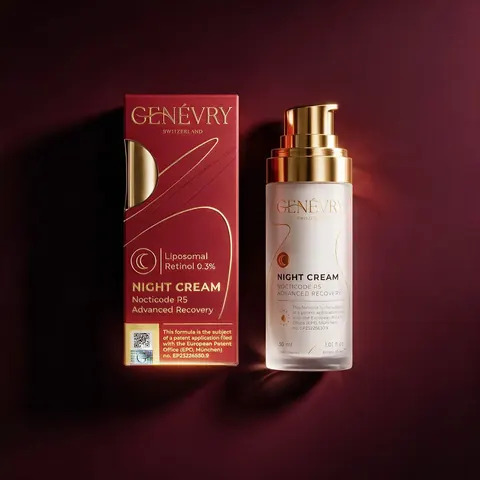 Nocticode R5Advanced night creamA$59.90Discover the formula →
 The Sculpting Gua ShaFacial massage stoneA$42.90Discover the formula →
Cosmetic product. Individual results may vary.
 English / EUR
 English (US) / USD
 English (UK) / GBP
 Deutsch / EUR
 Deutsch (Schweiz) / CHF
 Français / EUR
 Italiano / EUR
 Español / EUR
 Nederlands / EUR
 Polski / PLN
 日本語 / JPY
 한국어 / KRW
 中文 / CNY
 العربية / AED
 English (Australia) / AUD
 English (Canada) / CAD
 Svenska / SEK
 Dansk / DKK
 Norsk / NOK
 Suomi / EUR
 Português / EUR
 Türkçe / TRY
 Čeština / CZK
 Magyar / HUF
 Română / RON
 Ελληνικά / EUR
 Slovenčina / EUR
 Hrvatski / EUR
 Slovenščina / EUR
 Lietuvių / EUR
 Latviešu / EUR
 Eesti / EUR
 Български / EUR
 Українська / EUR